

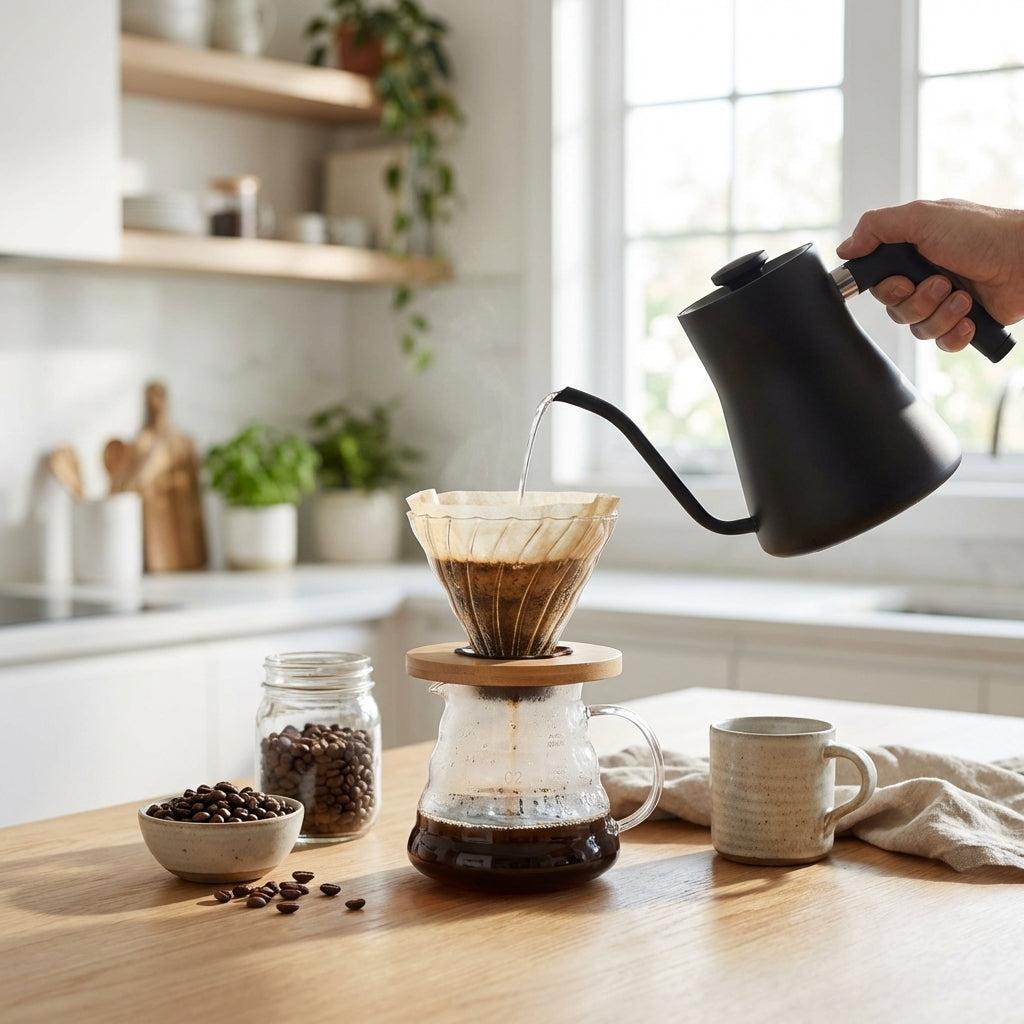
Quick answer: The perfect cup of coffee at home requires four variables: fresh speciality-grade beans (roasted within four weeks), correct grind size matched to your brewing method, the right coffee-to-water ratio (1:16 for filter, 1:2 for espresso), and water between 90-96°C. According to the Specialty Coffee Association Golden Cup Standard, 60g of coffee per litre of water delivers balanced extraction. Our beans are roasted in England to order and stocked in five-star London hotels including Trafalgar St James, so you can brew hospitality-standard coffee in your UK kitchen.
Ready to brew the perfect cup? Shop the Tasting Pack or start a subscription.
Why trust this guide?

Written by: Jeremiah & Raja, Co-founders, The Coffee Twins
Credentials: UK speciality coffee brand with beans roasted in England. Stocked in five-star London hotels including Trafalgar St James, where we also train hotel staff on machine handling, coffee education, and latte art. Previously ran our own coffee shop in Farringdon after training in five-star hotel food and beverage.
Last reviewed: October 2026
The perfect cup of coffee at home is genuinely achievable in any UK kitchen when you understand the four variables that actually matter: freshness, grind, ratio, and temperature. Because most home coffee disappointments come from getting one of these wrong rather than owning the wrong equipment, nailing the fundamentals matters more than upgrading your kit. This guide covers exactly how to brew café-quality coffee at home, the specific numbers that deliver repeatable results, and which of our beans suit which brewing method.
Table of contents
- What makes a perfect cup of coffee at home?
- Why does bean freshness matter most?
- Which brewing method delivers the best home coffee?
- What coffee-to-water ratio should you use?
- Does water temperature really matter?
- How does grind size shape your cup?
- How should you store coffee for the perfect cup?
- Which Coffee Twins beans deliver the perfect cup?
- What common mistakes ruin home coffee?
- FAQ
What makes a perfect cup of coffee at home?
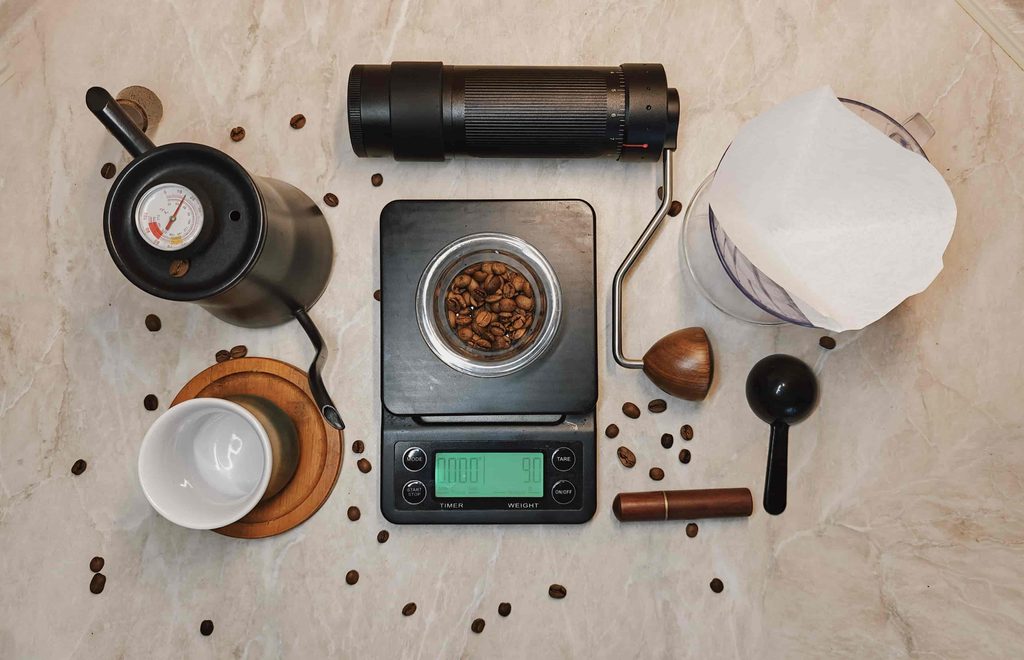
The perfect cup of coffee at home requires four controllable variables working together: speciality-grade bean freshness, correct grind size, accurate coffee-to-water ratio, and ideal water temperature. According to the Specialty Coffee Association, consistent attention to these four variables delivers measurably better extraction than any equipment upgrade alone.
The four fundamentals in order of importance
Freshness matters most because stale beans cannot be rescued by brilliant technique. In particular, correct grind size comes second because it directly controls extraction rate. Then the right ratio determines strength and balance, and water temperature finishes the job by extracting the compounds correctly.
Equipment matters less than you think
A £15 cafetière with fresh speciality coffee beats a £500 espresso machine fed stale supermarket beans. Meanwhile, this is why we focus on fundamentals before equipment because most “my coffee machine is broken” problems are actually bean, grind, or ratio problems in disguise.
The repeatable recipe is the goal
A great home coffee setup produces the same cup tomorrow as today. So the aim is a repeatable recipe you can brew in two minutes rather than hunting for magic. See our Coffee to Water Ratio guide for the full technical breakdown.
Why does bean freshness matter most?
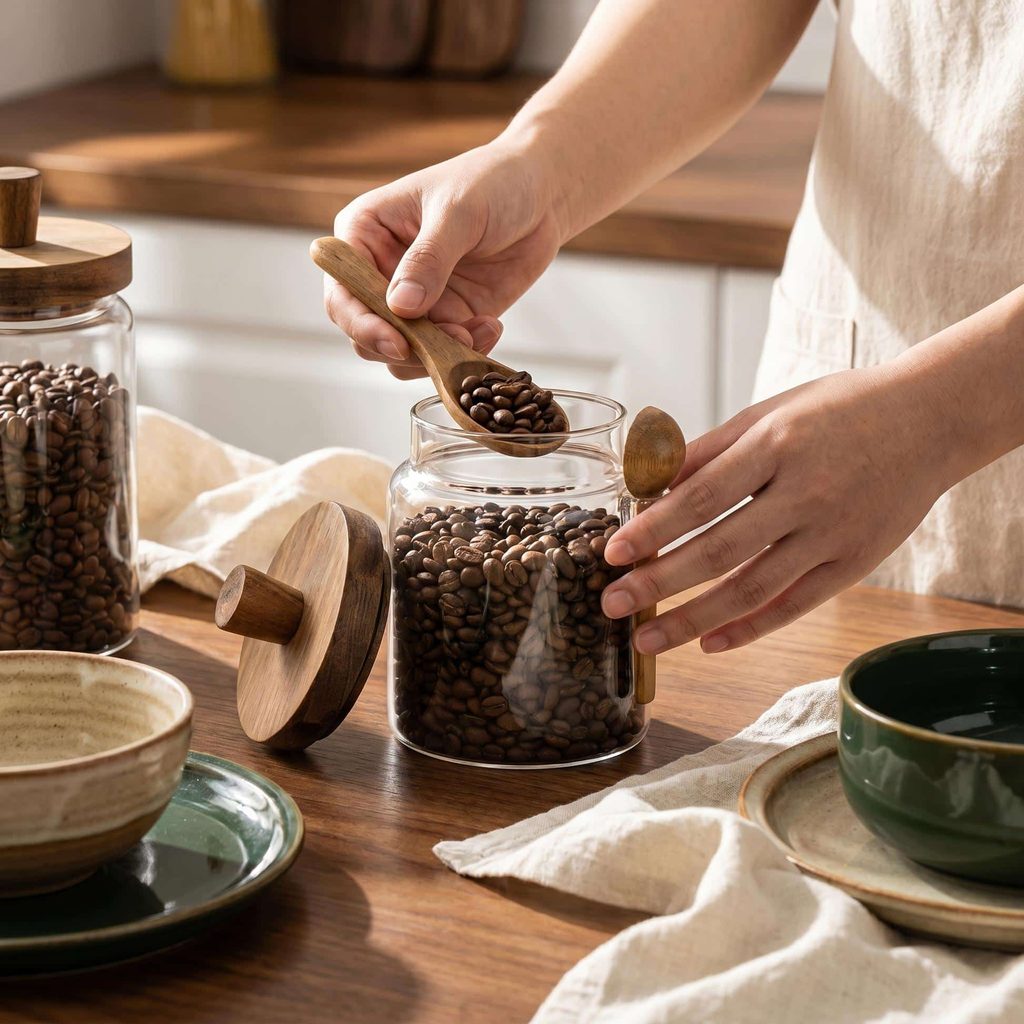
Coffee tastes best within the first four weeks after roasting, according to the National Coffee Association. Because coffee is a fresh food that degrades through oxidation, warehoused supermarket beans deliver flat, lifeless cups regardless of how brilliantly you brew them.
What happens to stale coffee
Stale coffee loses its aromatic compounds, develops cardboard-like flavours, and extracts unevenly. Meanwhile, this is why supermarket coffee with roast dates six months old simply cannot taste like speciality coffee, no matter the brand on the packet.
The roast date test
Check the roast date on every bag you buy. In particular, speciality roasters print exact roast dates, while supermarket brands typically print only “best before” dates that hide warehousing time. If you can’t see a roast date, the coffee is probably already stale.
How The Coffee Twins handle freshness
Our beans are roasted in England to order rather than warehoused. Notably, this means every bag arrives within days of roasting, ready to deliver the aromatic complexity speciality coffee is designed for.
Storage after you receive the bag
Store beans in an airtight container at room temperature, away from light and moisture. Above all, avoid the fridge (moisture damages beans) and the freezer (repeated thawing creates condensation). See our How to Store Coffee Beans UK guide for full detail.
Which brewing method delivers the best home coffee?
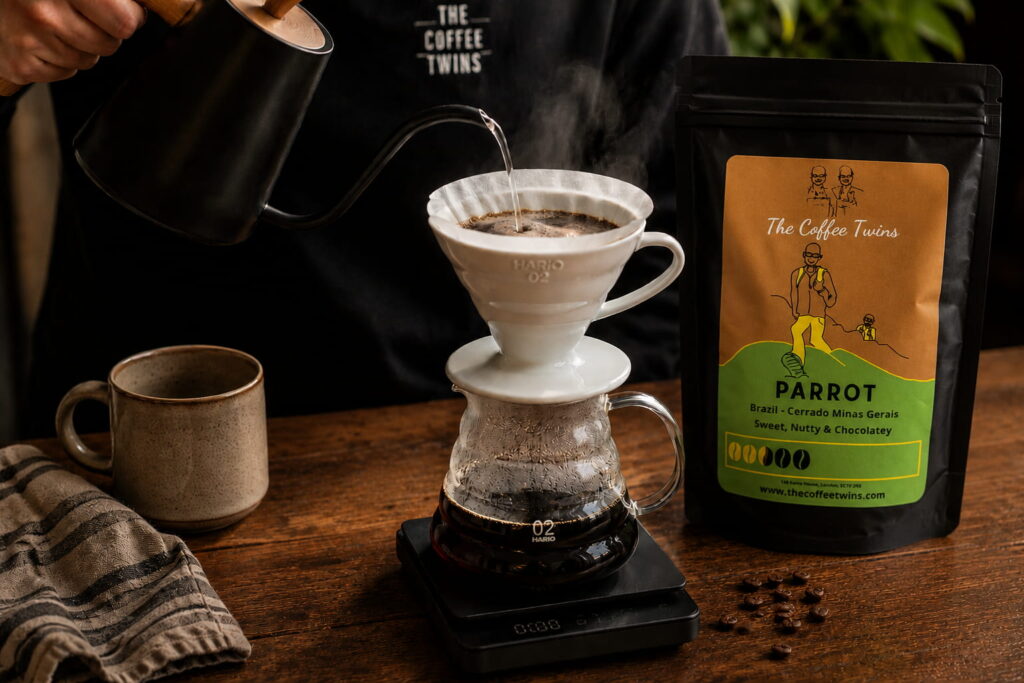
The best brewing method for home coffee depends on what cup you want to drink and how much time you have, with cafetière offering the easiest path to great coffee and pour over delivering the most refined cup. According to SCA brewing guidance, every manual brewing method can deliver a perfect cup when technique matches the method.
Cafetière for everyday ease
Cafetière (French press) is genuinely the easiest route to great home coffee. Because immersion brewing is forgiving of small ratio variations, cafetière suits busy mornings while still delivering the full-bodied cup speciality beans deserve. See our Best Coffee for Cafetière guide.
Pour over for the refined cup
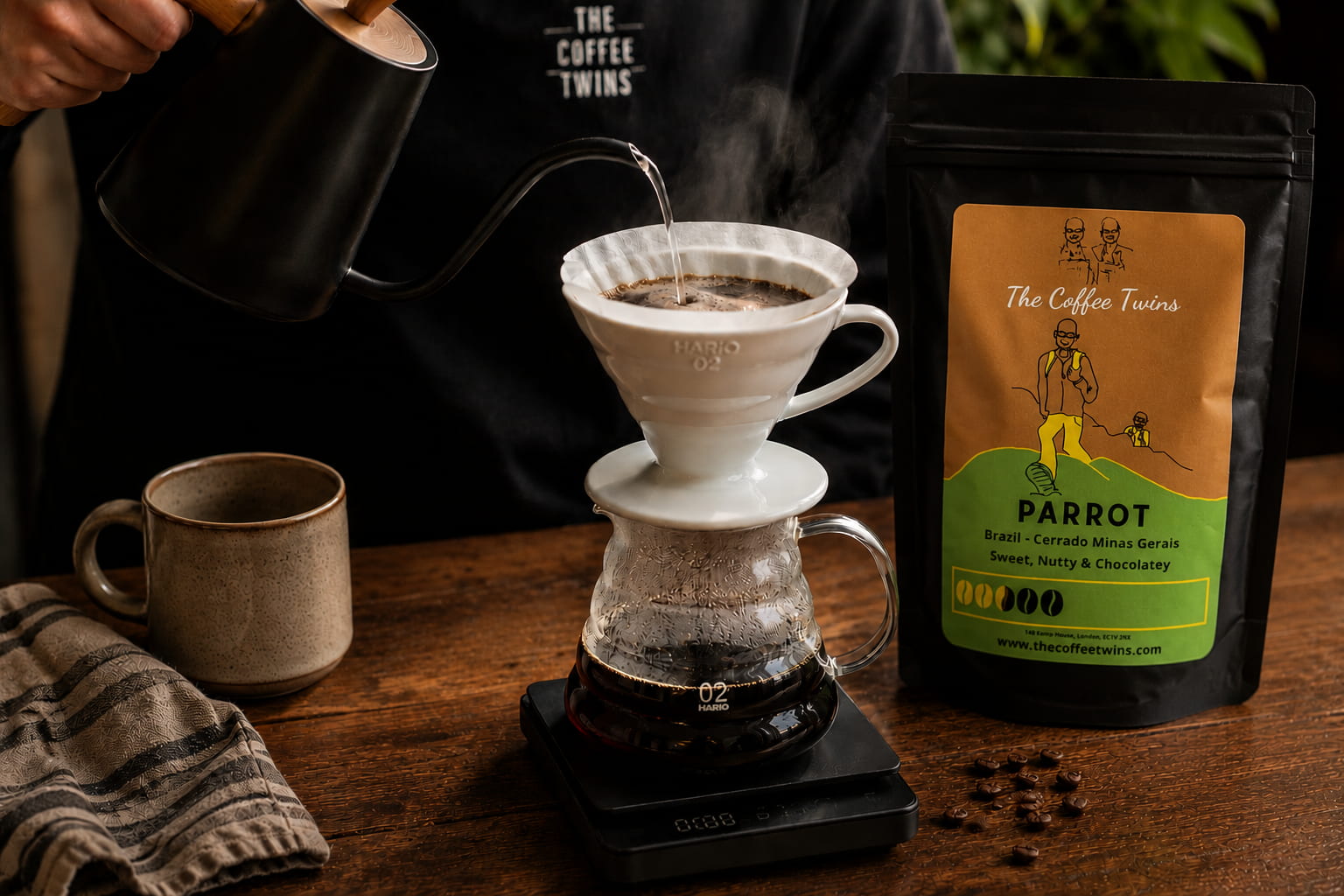
Pour over (V60, Chemex, Kalita Wave) delivers the cleanest, most nuanced cup home brewing can produce. In contrast to immersion methods, pour over showcases delicate flavour characteristics brilliantly. See our Best Coffee for Pour Over guide.
AeroPress for versatility
AeroPress produces either filter-style or espresso-adjacent cups depending on technique. Similarly, this makes AeroPress the most versatile home brewing method and genuinely one of the best coffee gifts you can buy a beginner. See our Best Coffee for AeroPress guide.
Moka pot for espresso-adjacent at home
Moka pot delivers concentrated, espresso-adjacent coffee without an espresso machine. Additionally, Moka pot shines with full-bodied Brazilian and Indonesian single origins. See our Best Coffee for Moka Pot UK guide.
Espresso machine for the full experience
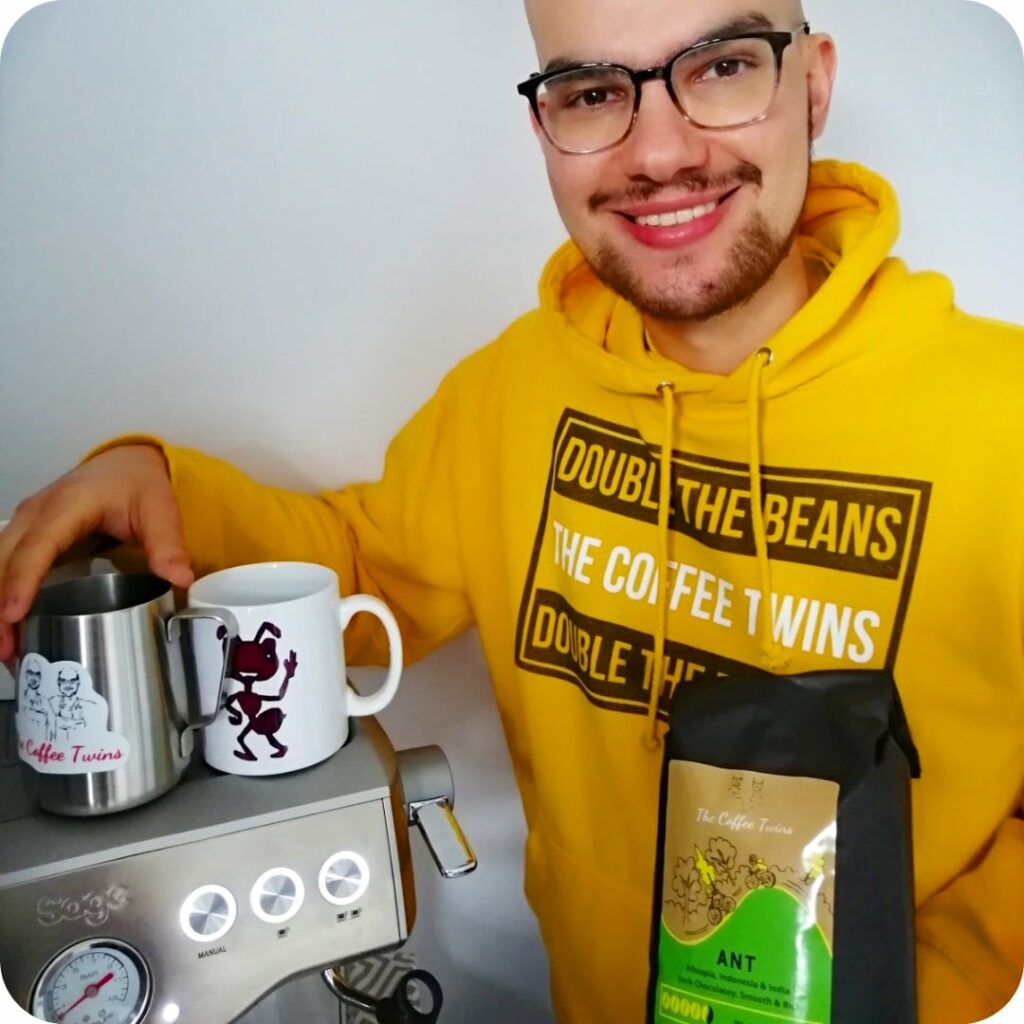
Home espresso delivers the richest, most concentrated cup but requires the most technique. So espresso rewards practice but can produce disappointing results early on. See our Best Espresso Machine UK guide.
What coffee-to-water ratio should you use?
The ideal coffee-to-water ratio for filter brewing is 1:16, meaning 60g of coffee per litre of water, according to the Specialty Coffee Association Golden Cup Standard. Because ratio directly controls strength and balance, getting this right transforms your cup more than any equipment upgrade.
The SCA Golden Cup Standard explained
The SCA Golden Cup Standard recommends 55g of coffee per litre of water (approximately 1:18) as the baseline for filter brewing. Meanwhile, many home drinkers prefer 1:16 for a slightly stronger cup. The exact ratio comes down to personal taste within this range.
Ratios by brewing method
Each brewing method has a specific ideal ratio:
- Espresso: 1:2 (18g coffee produces 36g espresso)
- Pour over: 1:16 (15g coffee to 240g water)
- Cafetière: 1:15 (30g coffee to 450g water)
- AeroPress: 1:15 (15g coffee to 225g water)
- Moka pot: Approximately 1:10 (dictated by the pot size)
- Cold brew: 1:8 concentrate or 1:12 ready-to-drink
Why you need a scale
A digital kitchen scale is the single most important coffee tool you can buy. Because coffee density varies between beans and roasts, scoop measurements produce inconsistent cups. In truth, a £15 scale transforms brewing more than a £300 grinder upgrade would.
Does water temperature really matter?
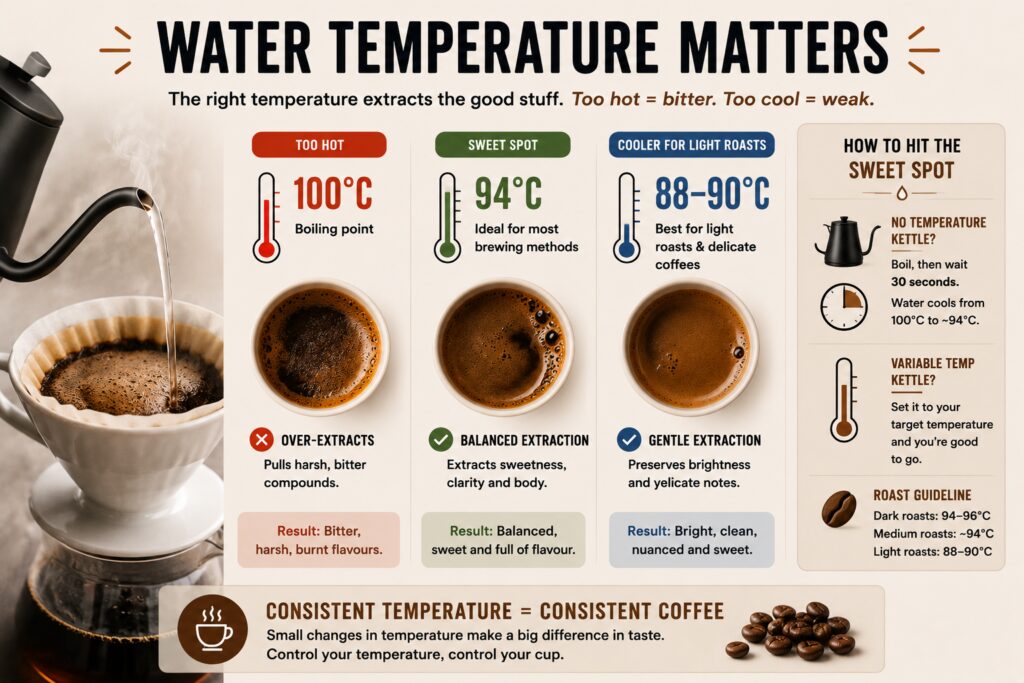
Water temperature between 90-96°C delivers optimal coffee extraction, with 93°C as the sweet spot for most brewing methods, according to SCA brewing protocols. Because temperature controls how quickly flavour compounds extract from coffee, getting this wrong produces either sour or bitter cups regardless of ratio accuracy.
Temperature by brewing method
Each method has an ideal temperature:
- Espresso: 93-95°C
- Pour over: 92-96°C (adjust by roast level)
- Cafetière: 94°C
- AeroPress: 85-93°C (lower for inverted method)
- Moka pot: Water boils in the base, so temperature is dictated
How to hit temperature without a thermometer
Boil the kettle, then wait 30 seconds before pouring. Similarly, this delivers water around 93-94°C in most UK kitchens. For precision, a cheap gooseneck kettle with built-in thermometer costs £30-40 and transforms pour over results.
Why temperature matters more with light roasts
Light roasts need hotter water (94-96°C) to extract properly, while dark roasts need slightly cooler water (90-93°C) to avoid bitterness. In particular, this is why Ethiopian single origins like our Jojo benefit from near-boiling water while dark blends like our Audley suit slightly cooler brewing.
How does grind size shape your cup?
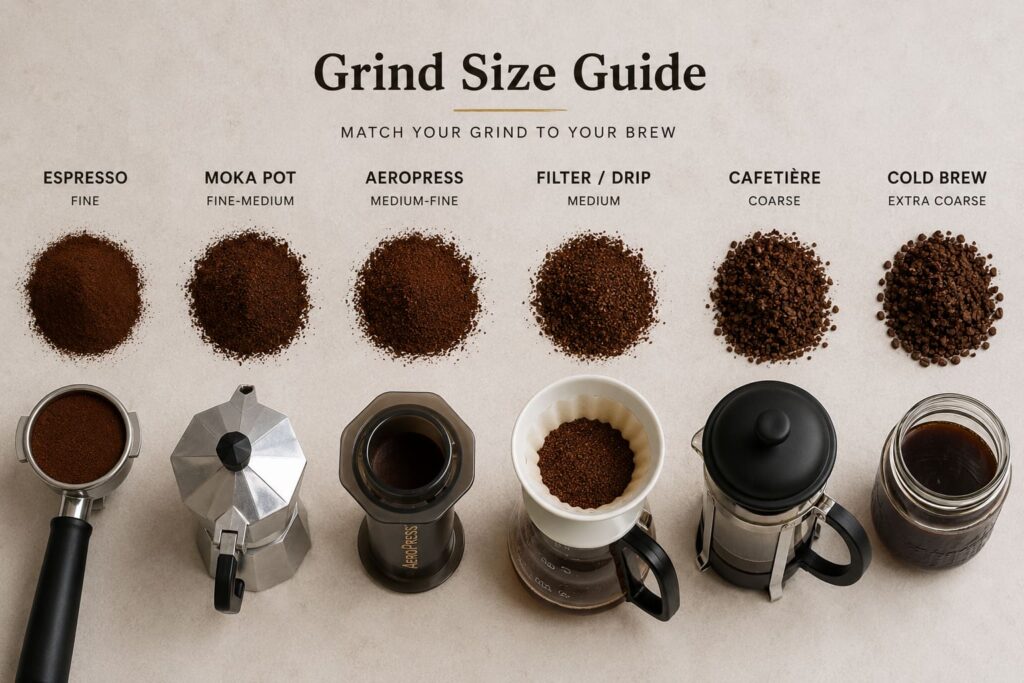
Grind size directly controls extraction speed, with finer grinds extracting faster and coarser grinds extracting slower. According to SCA grinding research, matching grind size to brewing method is essential because the wrong grind cannot be fixed by adjusting other variables.
Grind size by brewing method
Each brewing method requires a specific grind size:
- Espresso: Very fine (like caster sugar)
- Moka pot: Fine to medium-fine (just coarser than espresso)
- AeroPress: Medium-fine
- Pour over: Medium (like coarse sand)
- Cafetière: Coarse (like sea salt)
- Cold brew: Extra coarse
Pre-ground vs home grinding
Freshly ground beans deliver dramatically better results than pre-ground coffee because grinding exposes vast surface area to oxidation. Meanwhile, pre-ground coffee loses significant flavour within days rather than weeks of grinding.
No grinder yet? Order ground at checkout
If you don’t own a grinder, choose the correct grind option at checkout when ordering our beans. Notably, we offer whole bean, espresso, filter, cafetière, and V60 grind options matched to brewing method.
Investing in a grinder
A burr grinder genuinely transforms home coffee quality. See our Amazon Coffee Grinders guide for budget options or our Medium Fine Coffee Grind guide for grind-specific detail.
How should you store coffee for the perfect cup?
Store coffee in an airtight container at room temperature, away from direct sunlight, heat sources, and moisture. According to the National Coffee Association, proper storage can extend coffee peak quality by weeks, while poor storage can degrade premium beans within days.
Airtight container matters
Oxidation is coffee’s enemy, so an airtight container is non-negotiable. Specifically, dedicated coffee storage containers with one-way CO2 valves work best, though any genuinely airtight container (not just a sealed bag) will do.
Room temperature, not fridge
Store coffee at room temperature in a cool cupboard. In contrast, fridge storage introduces moisture that damages beans, and freezer storage creates condensation during thawing that ruins flavour.
Away from light and heat
Light and heat accelerate flavour degradation. So the ideal spot is a cool, dark cupboard away from the oven, kettle, or sunlight exposure.
Whole bean beats ground
Whole beans stay fresh for weeks when stored properly, while ground coffee loses significant flavour within days. Similarly, this is why speciality coffee drinkers typically grind only what they need for each brew session.
Which Coffee Twins beans deliver the perfect cup?
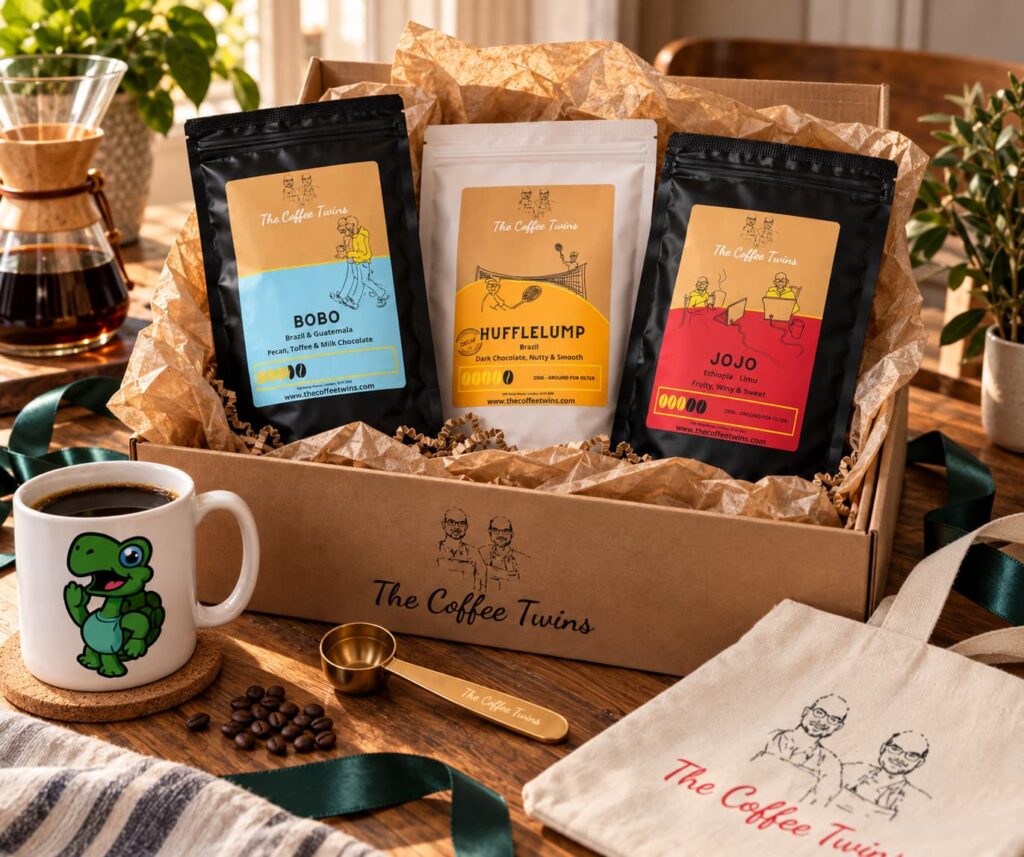
The perfect bean for your cup depends on your brewing method and flavour preference, with five coffees across our range covering the full spectrum from bright single origins to bold dark blends. According to our customers, matching bean choice to brewing method genuinely transforms the home coffee experience.
For pour over: Jojo (Ethiopian single origin)
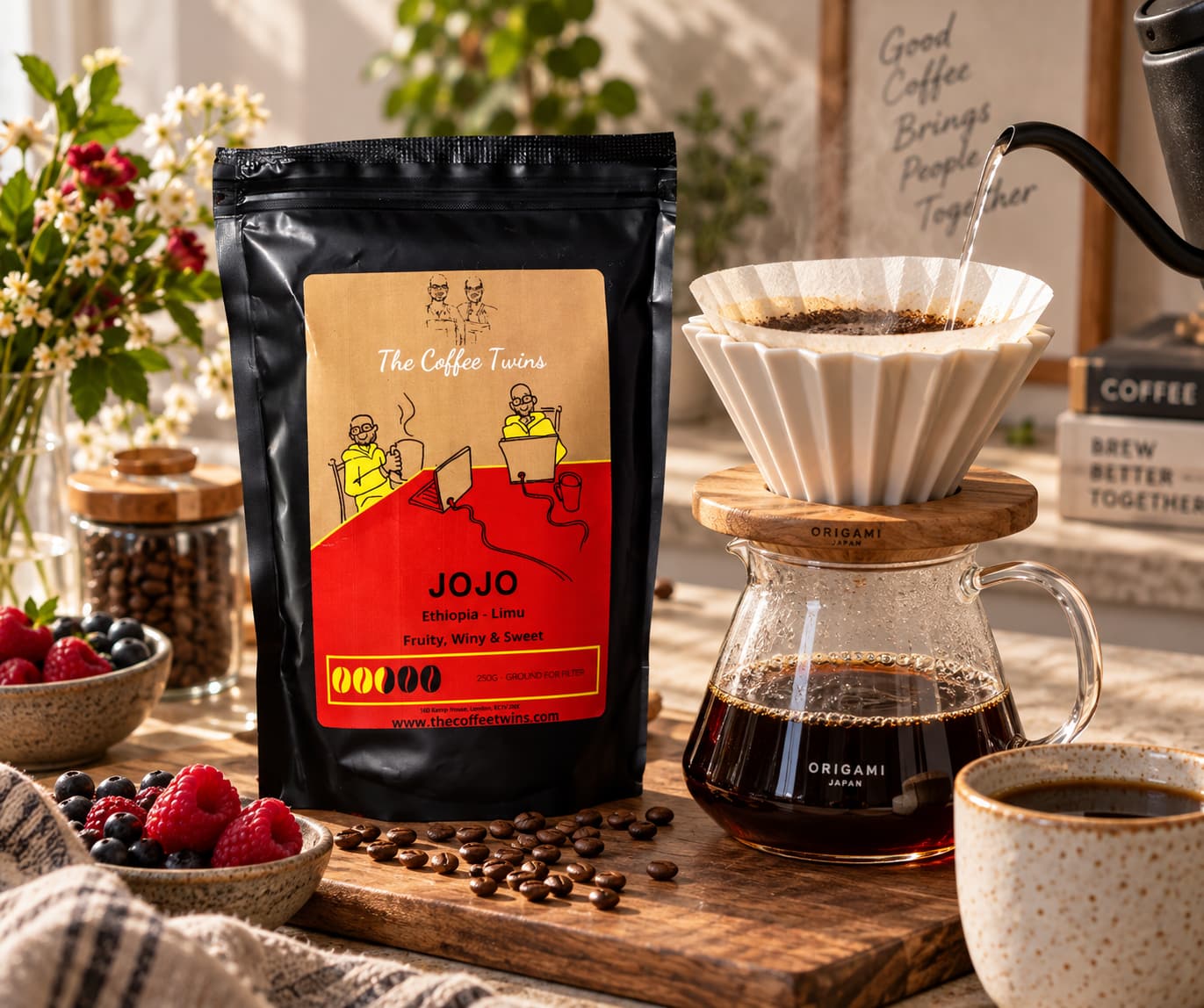
Jojo is our Ethiopian Limu single origin, delivering fruity, winy, and floral complexity. Because pour over showcases delicate flavour characteristics brilliantly, Jojo and pour over are made for each other.
For cafetière: Bobo (Brazilian & Guatemalan blend)
Bobo delivers pecan, toffee, and milk chocolate character that suits cafetière brewing beautifully. Meanwhile, Bobo is our everyday workhorse, versatile across almost every brewing method.
For espresso: Audley (dark blend)
Audley (Brazil, El Salvador, India) delivers caramel and dark chocolate character that shines under espresso extraction. In particular, Audley stands up brilliantly to milk in flat whites and lattes.
For bold flavour lovers: Komodo (Sumatran)
Komodo is our Sumatran single origin delivering spicy, bold, tobacco-hinted character. Notably, Komodo shines through Moka pot and cafetière brewing where its body and depth come through most clearly.
For evening coffee: Hufflelump (Swiss Water decaf)
Hufflelump is our Swiss Water processed Brazilian decaf delivering dark chocolate and nutty character. So Hufflelump lets you enjoy the perfect cup in the evening without the caffeine hit.
Not sure which bean suits your brewing method? Our Tasting Pack covers Audley, Bobo, and Jojo so you can taste the range. Use NEW10 for 10% off your first order.
What common mistakes ruin home coffee?
Five specific mistakes account for most disappointing home coffee experiences, and each one is genuinely easy to fix once identified. According to coffee industry data, these mistakes appear consistently across home brewing complaints regardless of equipment quality.
Using stale supermarket beans
Buying beans without a roast date almost guarantees stale coffee. Meanwhile, speciality roasters like The Coffee Twins print exact roast dates because fresh beans are the foundation of great coffee.
Measuring by scoop rather than scale
Scoops produce inconsistent cups because coffee density varies. In truth, a digital kitchen scale is the single most impactful coffee tool you can buy for £15.
Wrong grind size for method
Espresso grind in a cafetière over-extracts into bitter mud, while cafetière grind in an espresso machine under-extracts into sour water. Specifically, matching grind to method is non-negotiable for the perfect cup.
Water that’s too hot or too cold
Boiling water (100°C) scorches delicate beans while lukewarm water fails to extract properly. Instead, wait 30 seconds after boiling for approximately 94°C in most UK kitchens.
Letting coffee sit on the grounds
Coffee left on grounds (particularly in cafetière) continues extracting into bitter cups. Similarly, decant immediately after brewing to preserve the balance you worked to achieve.
Frequently Asked Questions
How do you make the perfect cup of coffee at home?
The perfect cup of coffee at home requires fresh speciality-grade beans (roasted within four weeks), correct grind size matched to your brewing method, the right coffee-to-water ratio (1:16 for filter, 1:2 for espresso), and water between 90-96°C. According to the Specialty Coffee Association, 60g of coffee per litre of water is the Golden Cup Standard.
What is the best coffee to make at home?
The best coffee to make at home is speciality-grade coffee matched to your brewing method. Pour over suits bright single origins like Jojo. Espresso machines shine with rich blends like Audley, while cafetière benefits from full-bodied blends like Bobo.
How much coffee do I use per cup?
Use 15g of coffee per 240ml cup for a standard 1:16 ratio. For a stronger cup, use 16-18g per 240ml. For espresso, use 18g of ground coffee for a double shot.
What temperature should coffee water be?
Coffee water should be between 90-96°C depending on brewing method and roast level. The sweet spot is 93°C for most methods. Boil the kettle then wait 30 seconds before pouring to approximate this temperature.
Do I need to weigh my coffee?
Yes, for consistent results. Scoop measurements vary by coffee density and roast level, producing inconsistent cups. A £15 digital kitchen scale transforms home brewing consistency more than any equipment upgrade.
What’s the best cheap way to make great coffee at home?
A cafetière with fresh speciality beans delivers excellent coffee for under £30 total investment. The cafetière, scale, and fresh beans matter more than any expensive machine fed stale supermarket beans.
Why does my home coffee taste bitter?
Bitter home coffee usually comes from one of four causes: over-extraction (grind too fine or steep too long), water too hot (above 96°C), too much coffee for the water used, or stale beans that no longer extract properly.
Why does my home coffee taste sour?
Sour home coffee usually indicates under-extraction. Try grinding finer, using slightly more coffee, brewing slightly longer, or using slightly hotter water. Sour notes often resolve with small adjustments to grind or ratio.
How long does coffee stay fresh after opening?
Coffee stays genuinely fresh for two to three weeks after opening when stored in an airtight container at room temperature. Ground coffee loses freshness faster, typically within one week of grinding.
Can I make café-quality coffee at home?
Yes, café-quality coffee at home is achievable with speciality beans, correct ratios, matched grind size, and proper water temperature. Our beans are stocked in five-star London hotels including Trafalgar St James, so the same quality is available for your home kitchen.
Summary
The perfect cup of coffee at home comes down to four controllable variables: fresh beans, correct grind, right ratio, and ideal temperature.
The core recipe to remember:
- Freshness: Within four weeks of roasting
- Ratio: 1:16 for filter (60g per litre), 1:2 for espresso
- Temperature: 90-96°C (boil then wait 30 seconds)
- Grind: Match to method (fine for espresso, coarse for cafetière)
Our beans are roasted in England to order and stocked in five-star London hotels including Trafalgar St James. Start with our Tasting Pack to cover the roast spectrum, or set up a rolling coffee subscription for 10% off every delivery. Use NEW10 for 10% off your first order. Free UK shipping over £30.
Set up a coffee subscription →
Enjoying this article?
If you find our coffee guides useful, you can add The Coffee Twins as a preferred source in Google so our latest articles are easier to find in your search results.
Add The Coffee Twins as a preferred source on Google →
Thanks for supporting our little coffee corner of the internet.

0 Comments