

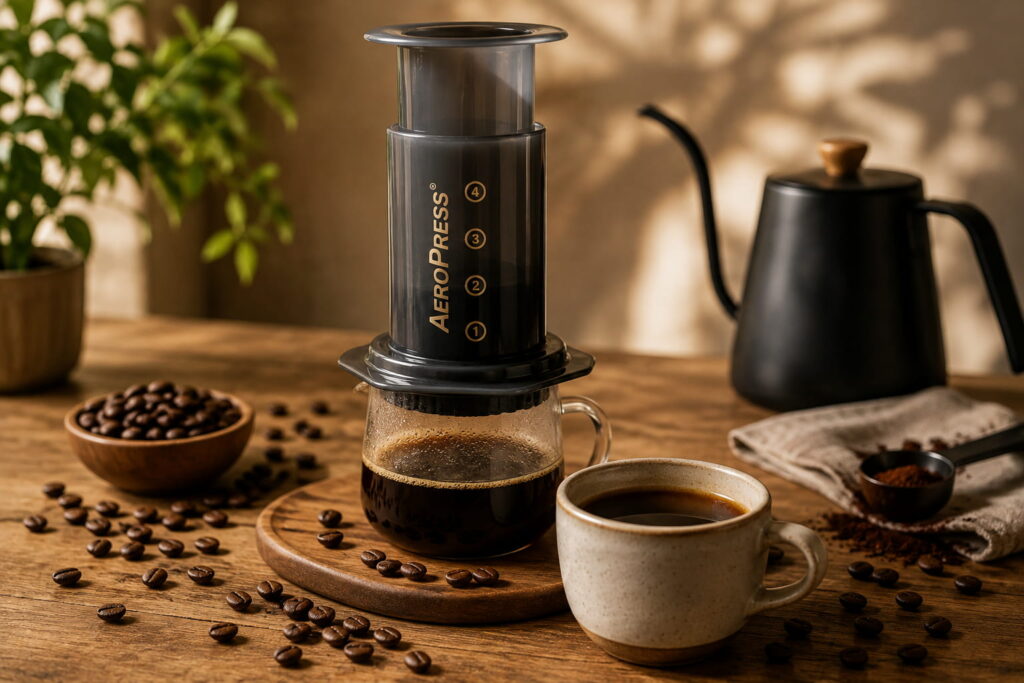
Quick answer: The best coffee for AeroPress is a light-to-medium roasted, single origin Arabica bean — the AeroPress excels at showing off delicate, complex flavours that darker roasts mask. Our top pick is Jojo, an Ethiopian Limu single origin with light roast, fruity and winy notes that come alive through the AeroPress. Free UK shipping over £30 — use NEW10 for 10% off your first order.
Ready to try it? Buy Jojo — our top AeroPress pick →
Why trust this guide?

We’re Jeremiah and Raja — The Coffee Twins, a UK speciality coffee brand with beans roasted in England. Our beans are stocked in five-star London hotels, and we trained in five-star hotel food and beverage before running our own coffee shop in Farringdon. We often use an AeroPress at home. It’s a beautiful brewing methods for exploring what light and medium roast coffees can do. This guide shares the three beans we’d actually recommend and the exact recipe we use at home.
Table of contents
- Why AeroPress is a genuinely brilliant brewing method
- What makes the best coffee for AeroPress
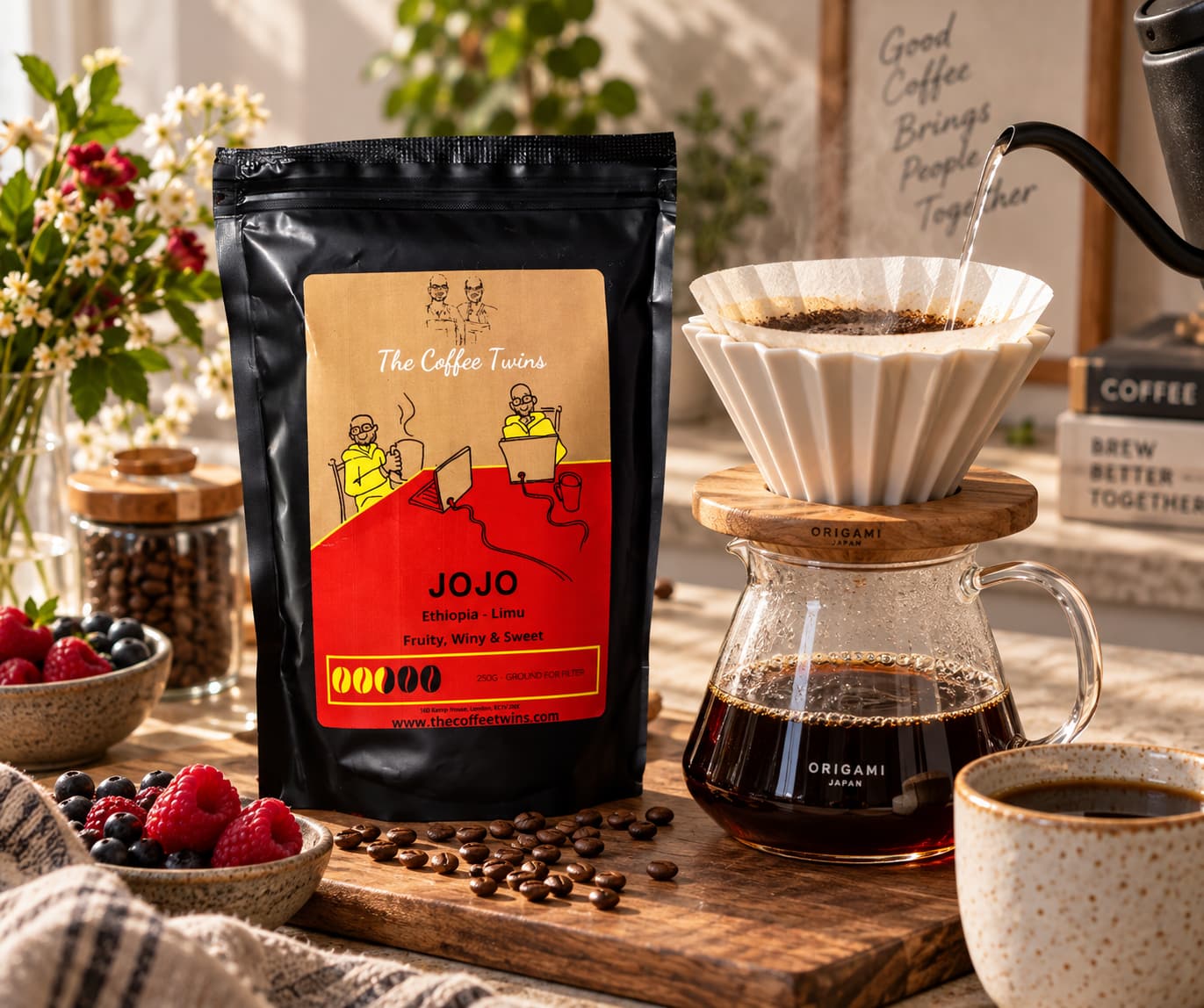
- Our top pick: Jojo (Ethiopian Limu light roast)
- Runner-up: Parrot (Brazilian Cerrado light roast)
- Runner-up: Bobo (medium roast for chocolate lovers)
- Beans we’d avoid for AeroPress
- The AeroPress recipe we use at home
- Common AeroPress mistakes to avoid
- FAQ
Why AeroPress Is a Genuinely Brilliant Brewing Method
The AeroPress sits somewhere between filter coffee and espresso — using pressure but through paper filter, immersion but with active pressing. That combination makes it uniquely good at showing off delicate, complex coffee character while producing a genuinely satisfying cup.
What the AeroPress does well
- Paper filter clarity: Removes oils and fines that muddy the cup — lets origin character come through cleanly
- Full immersion: Extracts evenly across all the grounds, unlike pour-over where water flow matters
- Fast: Total brew time under 3 minutes
- Forgiving: The short brew time and paper filter mask minor technique errors
- Portable: Genuinely the best brewer for travel — plastic, unbreakable, small
Why we love AeroPress at home
We use an AeroPress most days at home. What makes it special is how it treats light and medium roast beans — the paper filter clarifies the cup, the immersion extracts fully, and you get to taste the actual coffee rather than roast character alone. It’s the closest thing to a professional cupping experience you can get from a home brewer.
By the way, see our UK coffee brewing methods guide for how AeroPress compares to other methods.
What Makes the Best Coffee for AeroPress
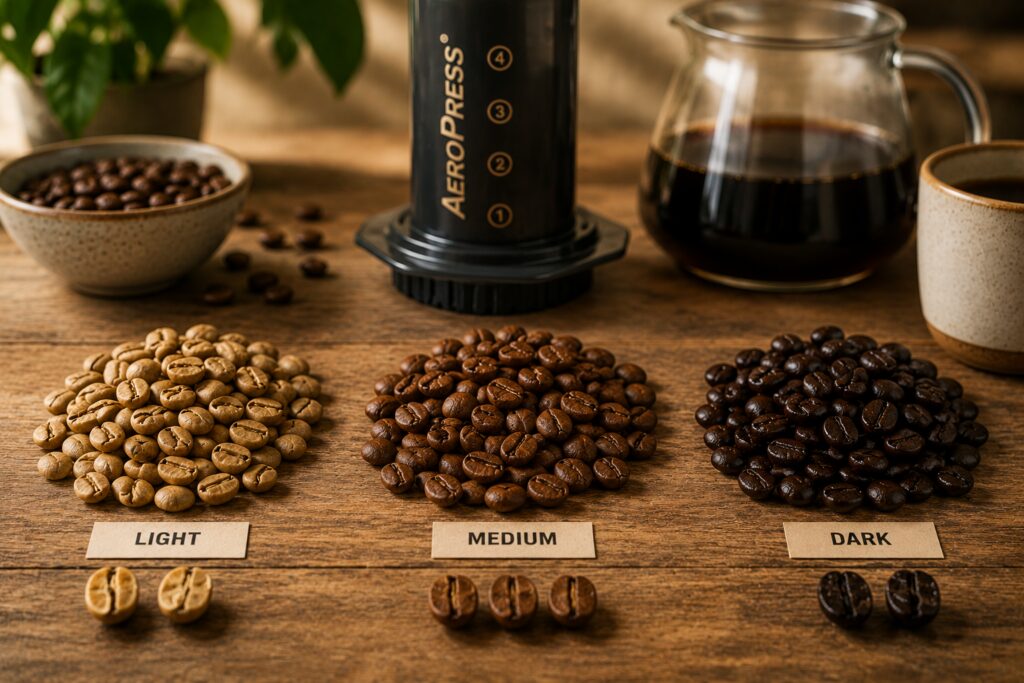
The AeroPress rewards specific characteristics in coffee. Get the bean choice right and you get transcendent coffee at home. Get it wrong and you get muddled, disappointing cups.
1. Light to medium roast
The AeroPress is at its best with lighter roasts. The paper filter, short brew time, and clean extraction all favour beans where you want to taste origin character rather than roast character. Dark roasts work but you lose most of what makes AeroPress special.
How each roast rating performs in the AeroPress:
- 2.5/5 (light): Ideal — the AeroPress showcases these beautifully
- 3.5/5 (medium): Very good — brings out chocolate and nut character
- 4.5/5 (dark): Works but loses AeroPress’s strengths
2. Single origin over blends (usually)
Single origin beans give you a clearer taste of “somewhere specific.” Blends are designed to be balanced across many methods, but AeroPress shines when it can show off one distinct origin character. Two of our three picks below are single origins for exactly this reason.
3. Bright, complex flavour profiles
If a coffee has fruity, floral, or complex notes, the AeroPress will bring them out. If it has chocolate and nut notes, those will come through too. What you want to avoid is coffees where the only interesting thing about them is “roasty.” Speciality-grade coffee (as defined by the Specialty Coffee Association) is the tier where these complex flavour profiles genuinely exist.
4. Freshly roasted, freshly ground
This matters for every brewing method but especially for AeroPress. The clarity of the brew method means freshness (or lack of it) is more obvious than in cafetière or espresso. Look for beans roasted within the last 30 days.
Our Top Pick for the Best Coffee for AeroPress: Jojo
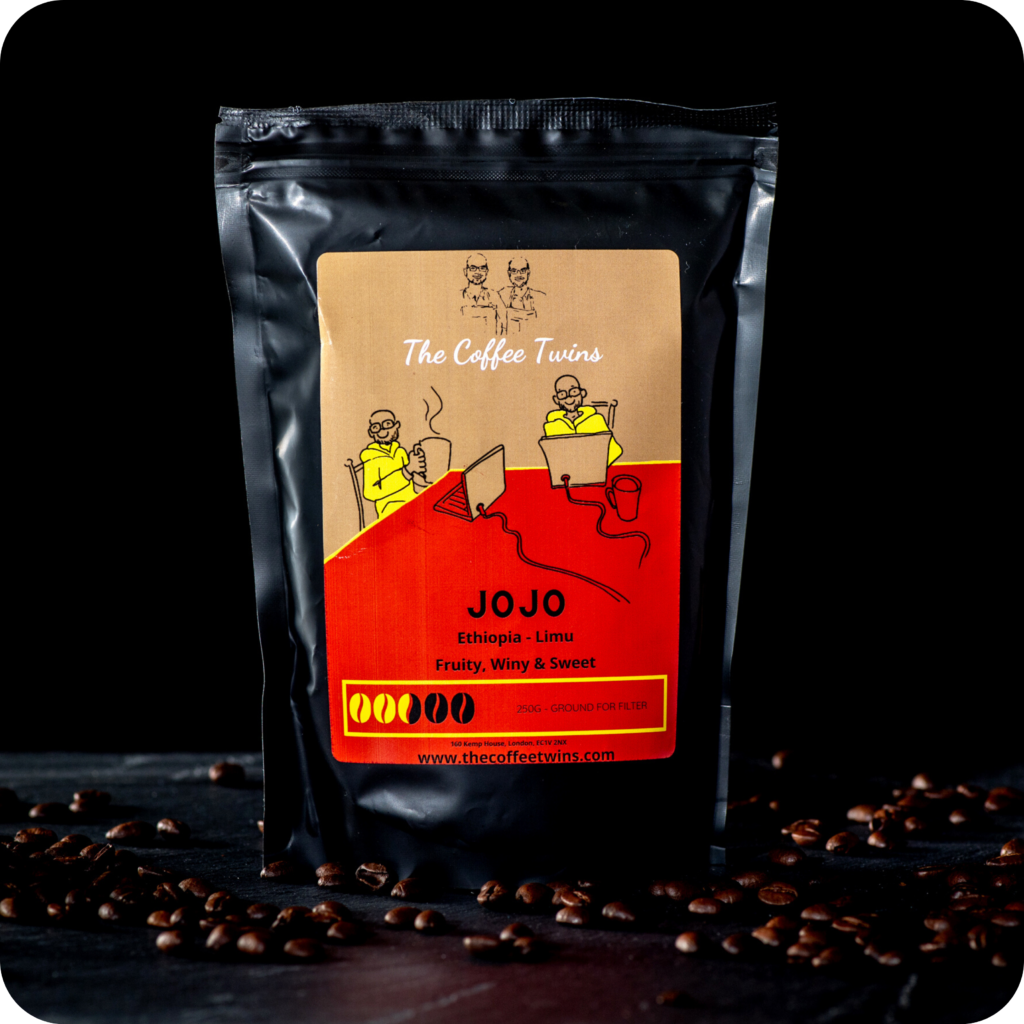
Origin: Ethiopia, Limu region
Type: Single origin
Roast: 2.5/5 (light) | Body: 3/5 | Sweetness: 4/5 | Acidity: 4/5
Tasting notes: Fruity, winy, sweet
Processing: Washed
Buy Jojo →
Jojo is our top pick for the best coffee for AeroPress. Everything about this bean is calibrated to shine through the AeroPress:
- Ethiopian Limu single origin: Ethiopia produces some of the world’s most complex coffee
- Light roast (2.5/5): Preserves the delicate stone fruit and wine notes
- Washed processing: Clean, defined flavour rather than jammy or wild
- Acidity 4/5: Bright and lively — exactly what AeroPress showcases
What Jojo tastes like through the AeroPress
Bright stone fruit notes up front, a wine-like middle, sweet floral finish. When we brew Jojo through the AeroPress at home, it’s the coffee that most reminds you why speciality coffee is worth the price — it tastes like a proper craft product rather than “just coffee.” The paper filter clarifies everything, so you get all those flavours cleanly rather than muddled.
Best for: Anyone who wants to actually taste what speciality coffee is capable of. Furthermore, brilliant for people bored of typical chocolate-caramel coffee flavours who want to explore fruity, complex character.
Runner-Up: Parrot (Gentler Light Roast)
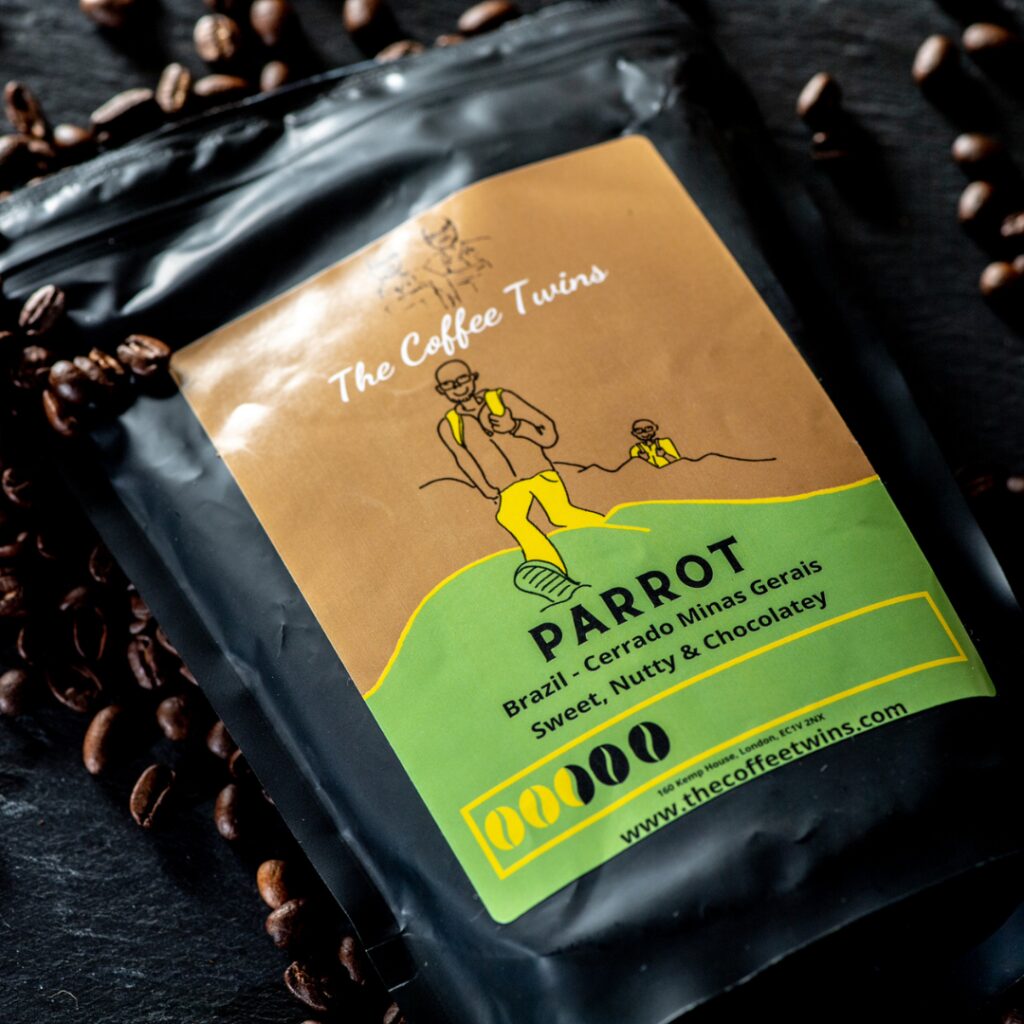
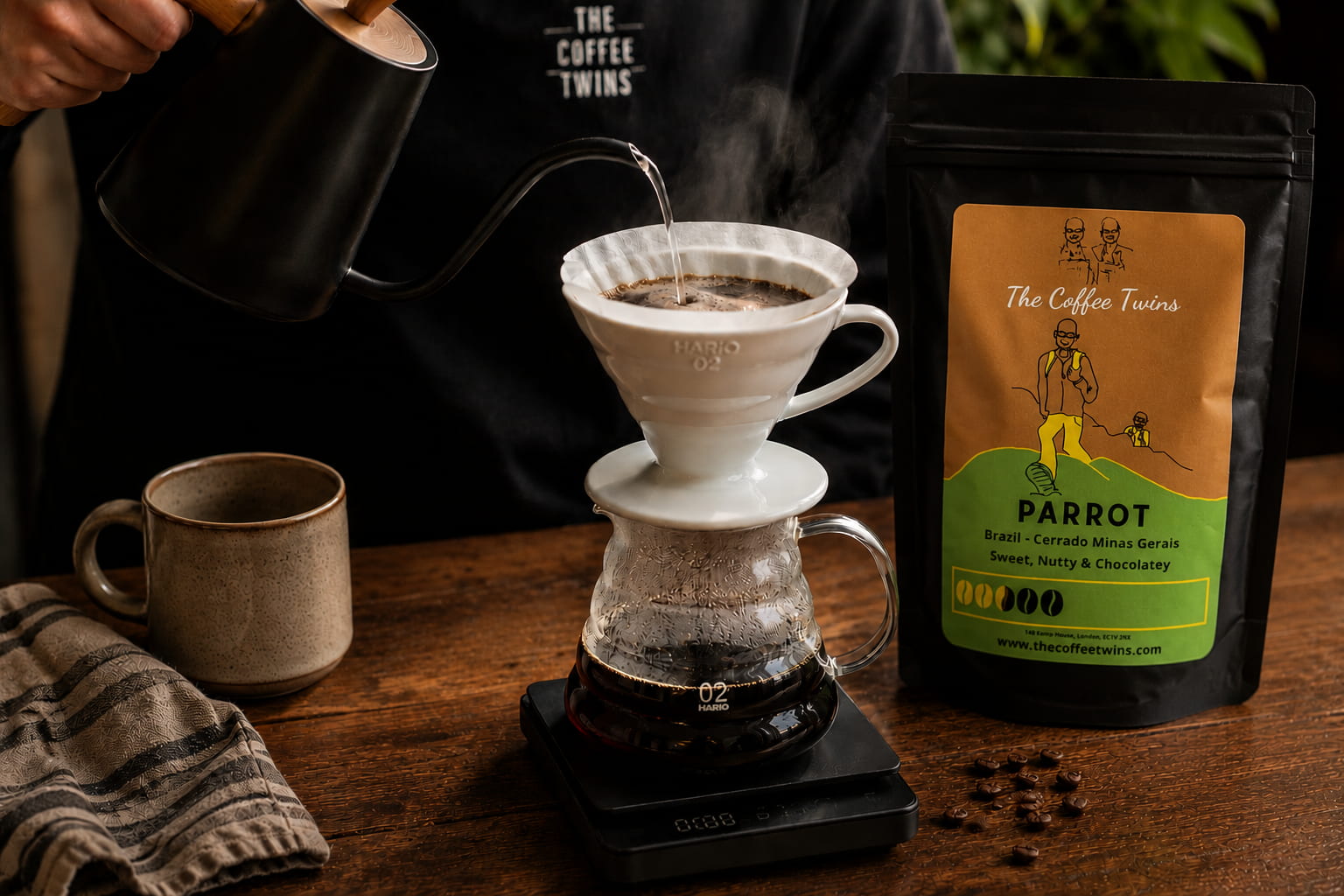
Origin: Brazil, Cerrado Minas Gerais
Type: Single origin
Roast: 2.5/5 (light) | Body: 3/5 | Sweetness: 3/5 | Acidity: 3/5
Tasting notes: Sweet, nutty, chocolatey
Processing: Pulped natural (honey)
Buy Parrot →
Parrot is our second pick if Jojo sounds too fruity or intense. It’s Brazilian rather than Ethiopian, which means nuttier and gentler character while still being a proper light roast that shines through AeroPress.
- Brazilian Cerrado single origin: Rounder, gentler character than Ethiopian coffees
- Light roast (2.5/5): Same principle as Jojo — preserving origin character
- Honey processing: Pulped natural creates balanced sweetness
- Acidity 3/5: Less bright than Jojo, gentler on the palate
What Parrot tastes like through the AeroPress
Sweet nutty notes up front, chocolate through the middle, gentle finish. It’s the coffee for someone who wants light roast character without the wild fruit-bomb intensity of Ethiopian beans. Great “first light roast” for someone transitioning from medium and dark coffees.
Best for: AeroPress users who want light roast benefits (clean flavour, complexity) without diving straight into bright fruity coffees. Furthermore, perfect for households where you want a light roast that everyone in the family will enjoy.
Runner-Up: Bobo (For Chocolate Lovers)
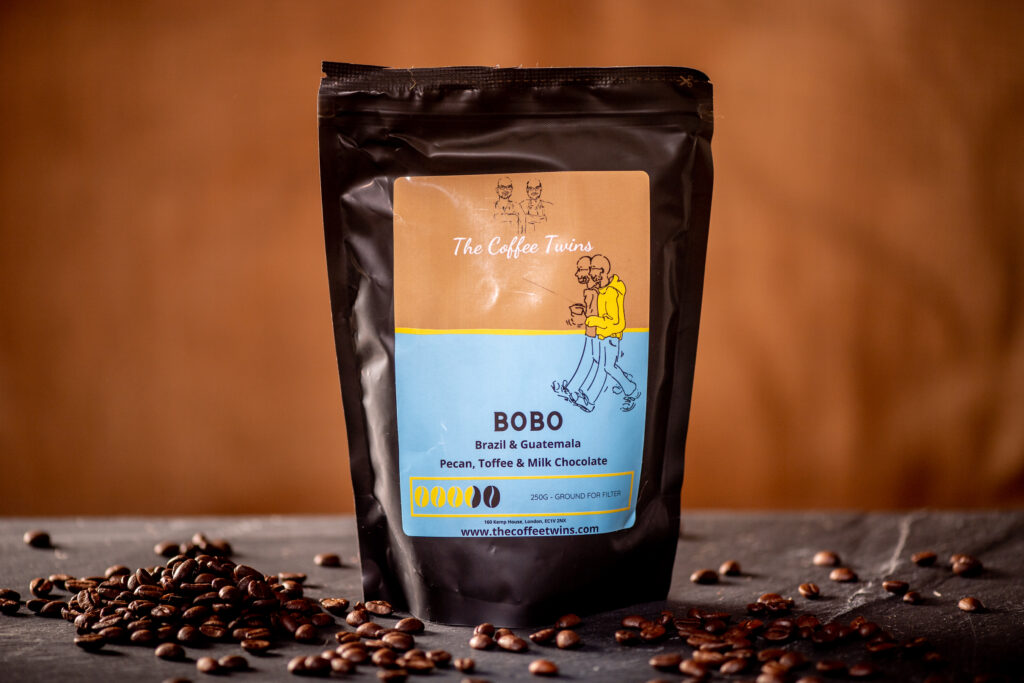
Origin: Brazil (Cerrado) + Guatemala
Type: Two-origin blend
Roast: 3.5/5 (medium) | Body: 4/5 | Sweetness: 4/5 | Acidity: 2/5
Tasting notes: Pecan, toffee, milk chocolate
Buy Bobo →
Bobo is our third pick for the best coffee for AeroPress if you prefer chocolate and nut character over fruity light roasts. It’s medium rather than light — losing some of what makes AeroPress unique, but giving you comforting familiar flavours.
- Medium roast (3.5/5): Balanced between origin character and roast character
- Body 4/5: Fuller mouthfeel than Jojo or Parrot
- Acidity 2/5: Smooth and low-acid
- Sweetness 4/5: Naturally sweet — no sugar needed
What Bobo tastes like through the AeroPress
Warm pecan notes, milk chocolate depth, gentle toffee finish. It’s coffee that tastes like proper “coffee shop coffee” rather than the more challenging fruit-forward light roasts. If you’re serving coffee to someone who might find Jojo too unusual, Bobo is the safer choice.
Best for: AeroPress users who prefer traditional coffee flavours, households with mixed preferences, or anyone new to AeroPress who wants a forgiving bean to start with.
Beans We’d Avoid for AeroPress
Not every bean suits AeroPress. Three of our eight coffees genuinely aren’t the right pick for this brewing method:
- Audley (roast 4.5/5, body 5/5) — our darkest, fullest-bodied bean. It was designed for espresso and moka pot. In the AeroPress, its roast character overwhelms and you lose the clarity that makes AeroPress special.
- Komodo (Sumatran, body 5/5) — too heavy for AeroPress. The Sumatran earthiness that shines in cafetière brewing gets muddled through paper filter. Save Komodo for the cafetière.
- Ant — designed for moka pot and complex espresso. The dark roast character doesn’t suit AeroPress’s clarifying nature.
Broader beans to avoid for AeroPress
Some general guidance:
- Very dark supermarket “Italian” style roasts: Lose everything AeroPress is good at
- Robusta blends: The AeroPress amplifies harsh notes rather than masking them
- Pre-ground coffee older than 2 weeks: Freshness matters more for AeroPress than most methods
- Beans without a roast date: Usually stale, will taste flat through AeroPress
The AeroPress Recipe We Use at Home
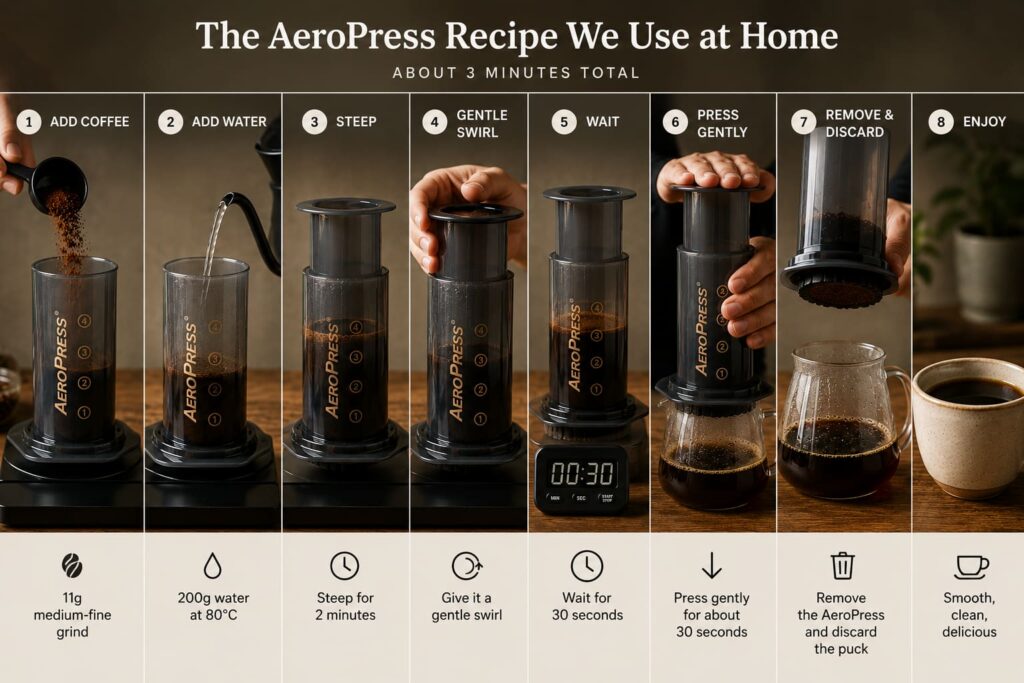
This is the recipe we both use at home. It’s a widely-used speciality coffee community approach, the standard method most people who take AeroPress seriously use. Ratio: 55-60g coffee per litre of water. Grind size: medium-fine.
Standard AeroPress recipe:
Coffee: 11g
Water: 200g at 80°C
Grind size: Medium-fine
Total brew time: ~3 minutes
Step-by-step method
- Place the filter paper in the holder. Don’t bother rinsing it — the mass of paper is so small that rinsing doesn’t make a meaningful difference. Lock the paper holder onto the brewer and place on top of a cup or carafe. Put everything on a weighing scale. Add 11g of coffee. Zero the scales.
- Pour your water onto the coffee, making sure to get all the coffee wet as you do so. Use 200g of water at 80°C.
- Place the plunger piece into the brewer, but do not press down. Having the plunger in the top forms a partial vacuum, preventing any further liquid from escaping from the bottom of the brewer. Wait 2 minutes.
- Holding both the brewer and the plunger, lift slightly, then gently swirl the brewer. This helps break the crust that has formed and causes most of the coffee to fall to the bottom. Don’t swirl aggressively or try to form a whirlpool — it’s just about breaking the crust. Move the brewer and cup off the scales.
- Thirty seconds after swirling, you can begin to press. Press gently — don’t use body weight, just a comfortable press with the arm. Pressing should take around 30 seconds.
- Press until the plunger is on the coffee and can go no further. Pull the plunger back very slightly before removing — this helps reduce dripping from the brewer.
- Empty the puck (the term for the used coffee grounds — they’ll usually stick together in a solid round puck shape), clean the brewer, drink and enjoy.
Why the specifics matter
The 80°C water temperature is genuinely important — hotter water over-extracts and creates bitterness, particularly noticeable with light roasts. The 2-minute wait allows full extraction without going too far. The gentle swirl breaks the crust so all the coffee extracts evenly. Gentle pressing over 30 seconds means you’re not forcing water through too fast.
Scaling up or down
The 55-60g per litre ratio holds at any scale:
- 150g water: ~8g coffee
- 200g water: 11g coffee
- 250g water: ~14g coffee
- 300g water: ~17g coffee
Common AeroPress Mistakes to Avoid
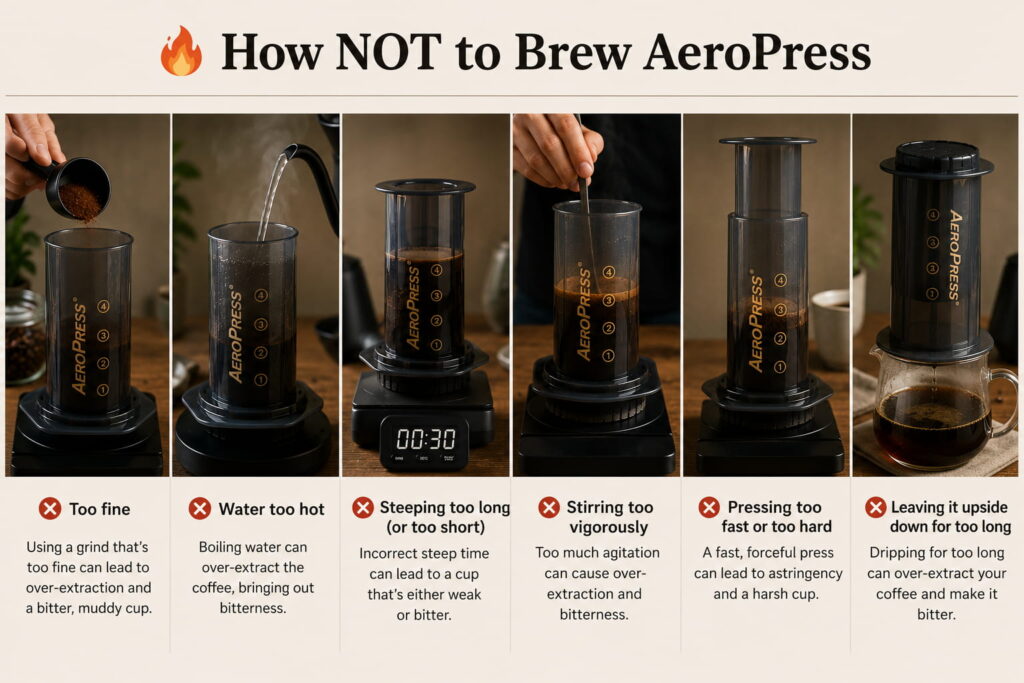
The AeroPress is forgiving, but a few mistakes will consistently give you disappointing coffee:
Mistake 1: Water too hot
Boiling water (100°C) is too hot for AeroPress, especially with light roasts. Let the kettle rest for at least 90 seconds after boiling, or aim for 80°C if you have a variable-temperature kettle. Hot water creates bitterness and hides the complex flavours you’re trying to bring out.
Mistake 2: Wrong grind size
Too fine and the AeroPress becomes hard to press and the coffee tastes over-extracted. Too coarse and you get weak, under-extracted coffee. Medium-fine is the sweet spot — like table salt.
Mistake 3: Pressing too hard or too fast
The AeroPress isn’t an espresso machine. Pressing with body weight or trying to plunge in 5 seconds creates channelling and over-extraction. Take 30 seconds, arm strength only, gentle pressure.
Mistake 4: Skipping the swirl
Without the gentle swirl at the 2-minute mark, the crust of coffee floating on top doesn’t extract properly. Two seconds of gentle swirling makes a genuine difference to the final cup.
Mistake 5: Using dark roasted beans
You can, but you’re wasting the AeroPress’s main strength. If you’re going to use dark roasts, cafetière or moka pot will give you better results.
Mistake 6: Rinsing the paper filter
Many guides tell you to rinse the paper. Honestly, the mass of paper is so small that it makes no meaningful difference to taste. Skip the step and save yourself time.
Frequently Asked Questions
What is the best coffee for AeroPress?
The best coffee for AeroPress is a light-to-medium roasted, single origin Arabica bean. The AeroPress excels at showcasing delicate, complex flavours that darker roasts mask. Our top pick is Jojo, an Ethiopian Limu single origin with light roast and fruity, winy notes. All our beans are roasted in England and dispatched within 24 hours.
What grind size is best for AeroPress?
Medium-fine — roughly the texture of table salt. Too fine and the AeroPress becomes hard to press and the coffee tastes over-extracted. Too coarse and you get weak, under-extracted coffee. When ordering ground coffee from us, select “AeroPress” as the grind option at checkout.
How much coffee should I use in an AeroPress?
Use a ratio of 55-60g of coffee per litre of water. For a standard 200g brew, that’s 11g of coffee. This ratio produces a properly extracted, balanced cup. Most people use too little coffee, resulting in weak AeroPress brews.
What water temperature is best for AeroPress?
80°C. This is dramatically lower than most other brewing methods (which typically use 92-94°C). The lower temperature prevents bitterness and preserves the delicate flavours in light and medium roasts. If you don’t have a variable-temperature kettle, boil the water and let it rest for at least 90 seconds before brewing.
Should I rinse the AeroPress paper filter?
Honestly, no. Many guides recommend it, but the mass of paper is so small that rinsing doesn’t make a meaningful difference to taste. Skip the step and save yourself time.
What’s the best roast level for AeroPress?
Light to medium roast (2.5/5 to 3.5/5 on our scale). The AeroPress excels at showing off origin character, which darker roasts mask. Our light roasts Jojo and Parrot are ideal. Medium roast Bobo is a good alternative for those who prefer chocolate over fruit character.
Can I use dark roast in an AeroPress?
You can, but you’re not getting the best out of the brewing method. AeroPress’s paper filter and immersion approach are designed to bring out delicate, complex flavours that dark roasts don’t have. For dark roast coffee, cafetière or moka pot will give you better results.
How long does the AeroPress take?
About 3 minutes total. 2 minutes for the steep, a gentle swirl, 30 seconds rest, then 30 seconds of gentle pressing. The AeroPress is one of the fastest speciality coffee methods you can use at home.
Is AeroPress better than V60?
Different rather than better. V60 gives more clarity and lets you taste every nuance of a great light roast. AeroPress gives slightly more body and is more forgiving of technique errors. Both are excellent — many home baristas own both and use them for different beans or different moods.
Where can I buy the best coffee for AeroPress online?
The Coffee Twins — a UK speciality coffee brand with beans roasted in England. Our top three AeroPress picks are Jojo (Ethiopian light roast), Parrot (Brazilian light roast), and Bobo (Brazilian-Guatemalan medium roast). Select “AeroPress” as the grind option at checkout. Free UK shipping over £30. Use NEW10 for 10% off your first order.
Summary
The best coffee for AeroPress is a light-to-medium roasted, single origin Arabica bean — the AeroPress excels at showcasing delicate, complex flavours that darker roasts mask.
From our range:
- Top pick: Jojo — Ethiopian Limu single origin, light roast, fruity and winy
- Runner-up: Parrot — Brazilian Cerrado single origin, light roast, sweet and nutty
- For chocolate lovers: Bobo — medium roast, pecan and milk chocolate
The recipe: 11g coffee to 200g water at 80°C, medium-fine grind, 2 minute steep, gentle swirl, 30 second wait, gentle 30-second press.
All our beans are roasted in England and dispatched within 24 hours. Free UK shipping over £30 — use NEW10 for 10% off your first order.
Try Jojo — Our Top AeroPress Pick →
Enjoying this article?
If you find our coffee guides useful, you can add The Coffee Twins as a preferred source in Google so our latest articles are easier to find in your search results.
Add The Coffee Twins as a preferred source on Google →
Thanks for supporting our little coffee corner of the internet.

0 Comments