

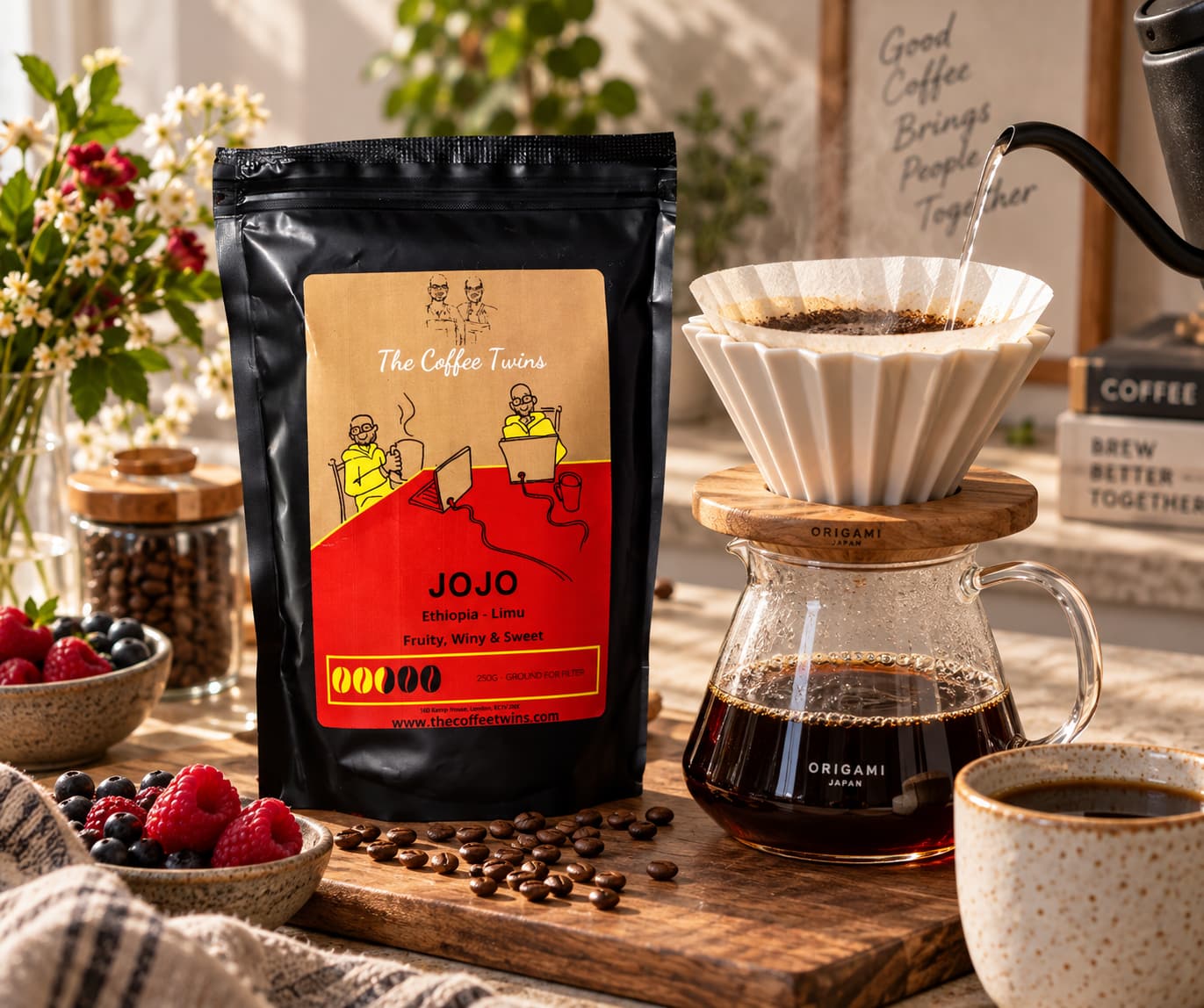
Quick answer: The coffee to water ratio is the weight of coffee to the weight of water used to brew it, expressed as 1:X. The Specialty Coffee Association Golden Cup Standard recommends 55g of coffee per litre of water (1:18) for filter brewing. Different methods have different ideal ratios: espresso 1:2, pour over 1:16, cafetière 1:15, AeroPress 1:15, Moka pot 1:10. Getting this right matters more than any equipment upgrade.Ready to brew great coffee? Shop the Tasting Pack or start a subscription.
Why trust this guide?

Written by: Jeremiah & Raja, Co-founders, The Coffee Twins
Credentials: UK speciality coffee brand with beans roasted in England. Stocked in five-star London hotels including Trafalgar St James, where we also train hotel staff on machine handling, coffee education, and latte art. Previously ran our own coffee shop in Farringdon after training in five-star hotel food and beverage.
Last reviewed: September 2026
Coffee to water ratio is genuinely the single most important variable in home brewing. Because most people either eyeball their coffee or use scoops that vary wildly in size, they never taste what their beans can actually deliver. Getting this ratio right transforms cheap kit into brilliant coffee, and getting it wrong wastes expensive beans. This guide covers the golden ratio for every brewing method, how to measure it properly, and which of our coffees suit which ratio.
Table of contents
- What is the coffee to water ratio?
- Why does the coffee to water ratio matter?
- What’s the golden ratio for coffee?
- What’s the coffee to water ratio for espresso?
- Which coffee to water ratio works for pour over?
- How much coffee to water for cafetière?
- Which coffee to water ratio works for AeroPress?
- Getting the Moka pot coffee to water ratio right
- How do you measure coffee to water ratio?
- Does grind size affect the coffee to water ratio?
- How does roast level affect the ratio?
- FAQ
What is the coffee to water ratio?
The coffee to water ratio is the weight of ground coffee relative to the weight of water used to brew it, expressed as 1:X. According to the Specialty Coffee Association, this single measurement is one of the most critical variables in brewing quality coffee at home.
How ratios are written
Coffee ratios are always expressed as coffee-to-water, where the first number is coffee and the second is water. So a 1:15 ratio means 1 gram of coffee for every 15 grams of water. Meanwhile, an 18g dose brewed at 1:15 needs 270g of water (18 x 15).
Weight not volume
Coffee ratios are always measured by weight in grams, not volume in millilitres or scoops. Because coffee density varies significantly between beans, blends, and roast levels, volume measurements produce inconsistent results. Meanwhile, 1g of water equals 1ml, which makes water measurement straightforward.
Why does the coffee to water ratio matter?
The coffee to water ratio determines extraction, strength, and taste balance in every cup you brew. According to SCA research, the optimal extraction range for brewed coffee is 18-22%, and hitting this window depends heavily on getting your ratio right.
What happens with too much coffee
Too much coffee to too little water produces over-strong, under-extracted coffee that tastes muddy, sour, and heavy. Because water doesn’t have enough volume to properly extract flavour from all the grounds, you get intensity without balance.
What happens with too little coffee
Too little coffee to too much water produces weak, over-extracted coffee that tastes bitter, hollow, and watery. Meanwhile, the water pulls harsh compounds from the small amount of coffee available, delivering the worst of both worlds.
The right ratio unlocks great coffee
Correct ratios let good beans deliver everything they’re capable of. In truth, most home coffee disappointments come down to ratio errors before equipment or bean quality. Fix the ratio first, then blame the beans if the cup still isn’t right.
What’s the golden ratio for coffee?
The Golden Cup Standard from the Specialty Coffee Association recommends 55g of coffee per litre of water, which works out to approximately 1:18 for filter brewing. According to the SCA, this ratio combined with the correct extraction yields the balanced, flavourful cup speciality coffee is designed to deliver.
Why the golden ratio isn’t universal
The golden ratio applies specifically to filter brewing methods like drip machines and pour over. Similarly, other methods (espresso, cafetière, AeroPress, Moka pot) have their own optimal ratios because they use different pressures, contact times, and filtration systems.
How to adjust the golden ratio
Personal taste matters. If the SCA’s 1:18 tastes too weak, drop to 1:16 or 1:15 for a stronger cup. If it tastes too strong, move to 1:19 or 1:20 for a lighter brew. Ultimately, the golden ratio is a starting point, not a rule.
What’s the coffee to water ratio for espresso?
The standard espresso ratio is 1:2, meaning 18g of coffee produces 36g of espresso in the cup. According to SCA guidelines, this ratio, extracted over 25 to 30 seconds, delivers the balanced, syrupy shot espresso is designed to produce.
Ristretto ratio
Ristretto shots use a shorter 1:1 to 1:1.5 ratio, producing a more concentrated, syrupy shot. Notably, ristretto emphasises sweetness and body while sacrificing some brightness. Ideal when you want intensity in a smaller cup.
Lungo ratio
Lungo shots use a longer 1:3 to 1:4 ratio, producing a more diluted, brighter shot with additional volume. However, lungo risks over-extraction that produces bitterness if the grind isn’t adjusted appropriately.
Best coffee for espresso ratios
Our Audley (Brazil, El Salvador, India) delivers the caramel and dark chocolate profile that shines under espresso extraction. Bobo works brilliantly too when you want balanced everyday espresso. See our Best Coffee Beans for Espresso guide for the full breakdown.
Which coffee to water ratio works for pour over?
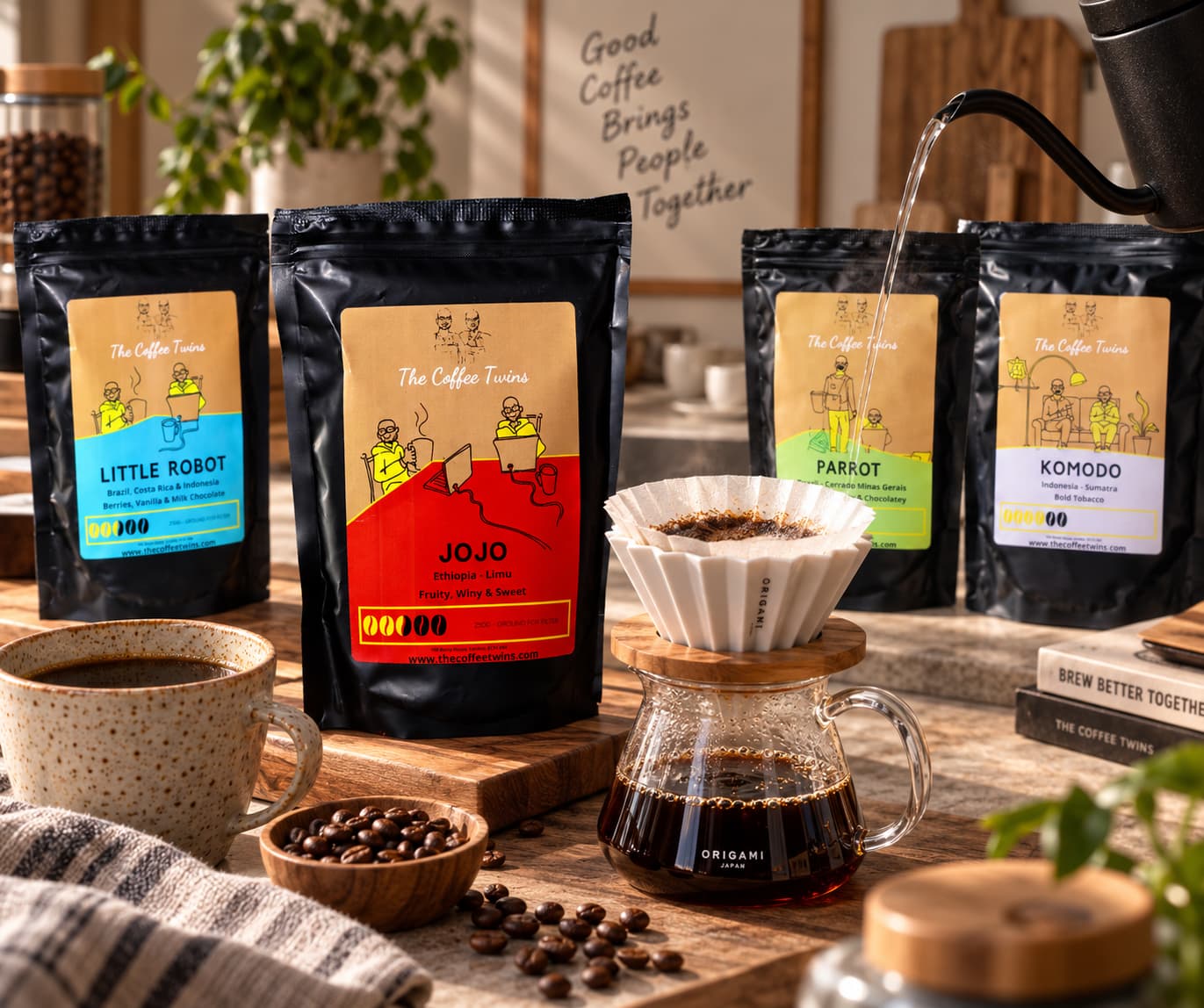
The standard pour over ratio is 1:16, meaning 15g of coffee to 240g of water. According to SCA brewing guidance, this ratio combined with proper grind size and water temperature produces the balanced, clean cup pour over is designed to showcase.
Adjusting pour over ratio to taste
Move to 1:15 for a stronger, more intense pour over. Alternatively, move to 1:17 or 1:18 for a lighter, more delicate cup. In particular, lighter roasts often benefit from tighter ratios (1:15) while darker pour over-suitable roasts can handle 1:17.
V60 vs Chemex ratio differences
V60 typically uses 1:15 to 1:16 because of its faster flow rate. Meanwhile, Chemex often uses 1:17 because the thicker filter slows extraction. Similarly, Kalita Wave sits between the two at around 1:16.
Best coffee for pour over ratios
Our Jojo (Ethiopian Limu single origin) is the definitive pour over coffee, showcasing fruity and floral notes brilliantly at 1:16. See our Best Coffee for Pour Over guide for the full breakdown.
How much coffee to water for cafetière?
The standard cafetière ratio is 1:15, meaning 30g of coffee to 450g of water for a standard 3-cup cafetière. According to SCA immersion brewing guidance, this ratio combined with a 4-minute steep produces the full-bodied, characterful cup cafetière is known for.
Adjusting cafetière ratio to taste
Move to 1:14 for a stronger cup that stands up to milk. Alternatively, move to 1:16 for a lighter, more tea-like brew. Because cafetière produces a heavier body than pour over, ratios feel stronger than the numbers suggest.
Cafetière steep time matters too
Cafetière ratio works alongside steep time. Firstly, 4 minutes is the standard immersion time. Longer steeps require lighter ratios (more water) to avoid over-extraction, and shorter steeps benefit from stronger ratios.
Best coffee for cafetière ratios
Our Bobo delivers pecan and toffee notes that suit cafetière body brilliantly. Similarly, Parrot works well for lighter cafetière brewing. See our Best Coffee for Cafetière guide for the full breakdown.
Which coffee to water ratio works for AeroPress?
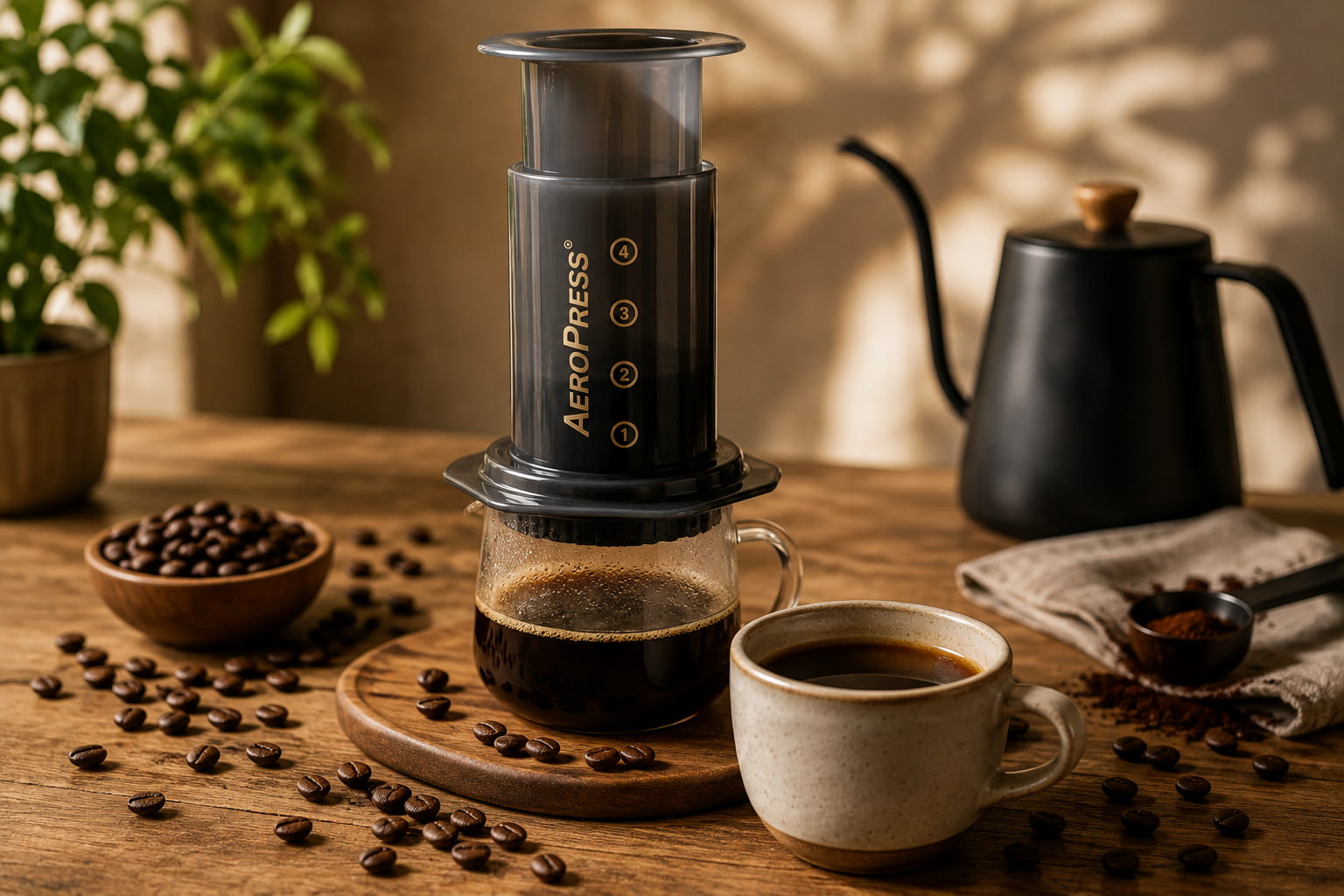
The standard AeroPress ratio is 1:15, meaning 15g of coffee to 225g of water for a full-strength brew. According to AeroPress inventor Alan Adler and champion recipes, this ratio combined with a 2-minute total brew time delivers the clean, punchy cup AeroPress is famous for.
AeroPress inverted vs standard method
Standard method uses 1:15 with faster brewing. Meanwhile, inverted method allows longer immersion, sometimes benefiting from a slightly weaker 1:16 ratio to prevent over-extraction. Both methods work brilliantly with the right ratio.
AeroPress concentrate technique
For AeroPress concentrate (used for iced coffee or Americano-style brewing), use 1:8 ratio and dilute to taste. Notably, this delivers concentrated flavour without over-extraction because water contact time stays short.
Best coffee for AeroPress ratios
Our Parrot single origin delivers the clarity AeroPress excels at. Similarly, Jojo shines through AeroPress brewing. See our Best Coffee for AeroPress guide for the full breakdown.
Getting the Moka pot coffee to water ratio right
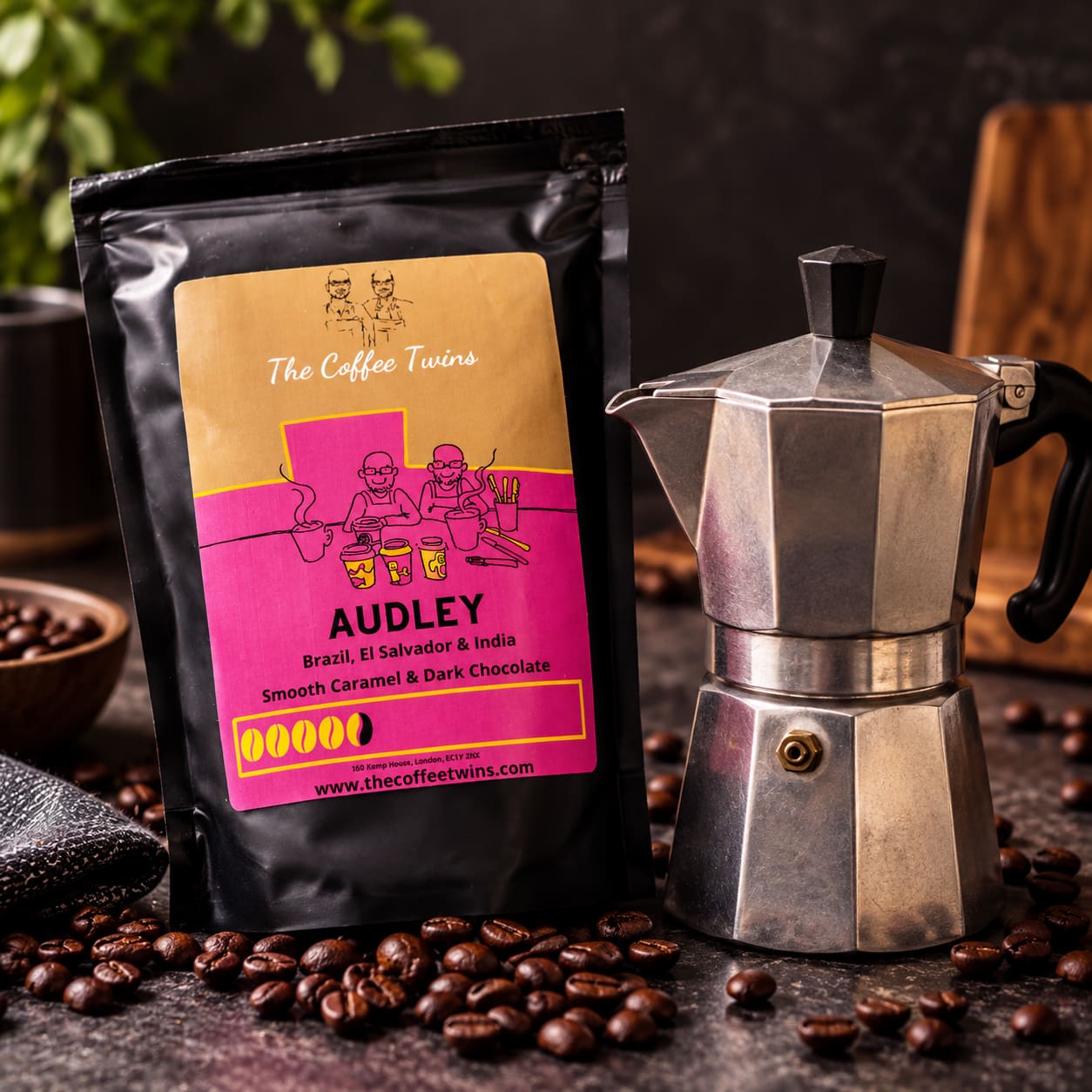
Moka pot ratios are governed by the pot size rather than a specific coffee-to-water ratio, though typically working out to roughly 1:10. According to traditional Italian brewing methods, you fill the basket level (not tamped) with ground coffee and fill the water chamber to the safety valve, delivering the concentrated, espresso-adjacent cup Moka pot is known for.
Why Moka pot ratios work differently
The pot itself dictates the ratio because water pushes up through the coffee basket under pressure. Meanwhile, adjusting the ratio in a Moka pot means either changing your grind size or your water fill level within the safety limit.
Getting Moka pot brewing right
Use fine grind (finer than filter, coarser than espresso). Fill the basket level, don’t tamp. Additionally, use hot water in the base to reduce brewing time and prevent bitter, over-cooked coffee.
Best coffee for Moka pot ratios
Our Audley delivers the dark chocolate character that suits Moka pot’s concentrated brewing style. See our Best Coffee for Moka Pot guide for the full breakdown.
How do you measure coffee to water ratio?
The most accurate way to measure coffee to water ratio is using a digital kitchen scale that measures in grams. According to SCA best practices, weighing both coffee and water produces consistent results that scoop-based measurement genuinely cannot match.
Do you need a scale for coffee?
Yes if you want consistent results. Because coffee density varies between beans, roasts, and grind sizes, scoop measurements produce different weights each time. Meanwhile, a basic digital scale costs around £15 and transforms brewing consistency immediately.
How to weigh coffee and water together
Place your brewing vessel on the scale, tare to zero, add coffee grounds, tare again, then add water until you hit your target weight. Notably, brewing scales with built-in timers make this even easier by tracking pour rate.
The scoop measurement problem
A standard “coffee scoop” (2 tablespoons) contains roughly 10-14g depending on the coffee. Because different beans have different densities, using a scoop for 30g of coffee delivers anywhere from 20g to 42g in practice. Simply put, scoops introduce error into every brew.
Does grind size affect the coffee to water ratio?
Finer grinds increase extraction efficiency, meaning tighter (stronger) ratios can over-extract. According to SCA extraction research, matching grind size to brewing method is essential for the coffee to water ratio to deliver the intended result.
Finer grind, weaker ratio needed
Finer grinds have more surface area exposed to water, extracting more efficiently. Meanwhile, this means finer grinds often benefit from slightly weaker ratios (more water per gram) to avoid over-extraction that produces bitter, harsh cups.
Coarser grind, stronger ratio possible
Coarser grinds extract less efficiently, so stronger ratios (less water per gram) work well. In particular, cafetière and cold brew use coarse grinds and tighter ratios because slower extraction requires more coffee to achieve balance.
Getting grind right for your ratio
Our beans come with grind options at checkout matched to brewing method. See our Medium Fine Coffee Grind guide for grind size specifics across every method.
How does roast level affect the ratio?
Lighter roasts typically benefit from tighter (stronger) ratios, while darker roasts often need weaker ratios to prevent bitterness. According to coffee extraction research, roast level significantly affects how easily flavour compounds release into water, which directly changes optimal ratio.
Light roasts and ratios
Light roasts have denser cell structure and release flavour more slowly. Because of this, tighter ratios (1:15 rather than 1:17 for pour over) often produce better results by giving the water more coffee to extract from.
Dark roasts and ratios
Dark roasts have more porous cell structure and release flavour quickly. Meanwhile, this means weaker ratios (more water per gram) prevent over-extraction that dark roasts are prone to. Above all, avoid tight ratios with dark roasts unless you enjoy bitter, harsh coffee.
Medium roasts and ratios
Medium roasts sit comfortably at standard ratios (1:16 pour over, 1:15 cafetière). Similarly, they’re the most forgiving to brew because their extraction curve suits standard SCA guidance directly.
Not sure which coffee suits your brewing method? The Tasting Pack covers three coffees across the roast spectrum so you can find your ratio with each. Use NEW10 for 10% off your first order.
Frequently Asked Questions
What is the standard coffee to water ratio?
The Specialty Coffee Association Golden Cup Standard recommends 55g of coffee per litre of water (1:18) for filter brewing. Different methods have different ratios: espresso 1:2, pour over 1:16, cafetière 1:15, AeroPress 1:15, Moka pot 1:10.
What’s the coffee to water ratio for one cup?
For a standard 240ml cup at 1:16 ratio, use 15g of coffee to 240g of water. For a stronger cup at 1:15 ratio, use 16g of coffee to 240g of water.
How many grams of coffee per cup?
15 to 18g of coffee per 240ml cup is standard for pour over, cafetière, and AeroPress brewing. Espresso uses 18-20g per double shot.
Do I need to weigh my coffee?
Yes for consistent results. Coffee scoops vary in weight from 10g to 14g depending on the coffee, which means scoop measurements produce inconsistent brewing. A basic digital scale costs around £15 and transforms brewing consistency.
What ratio for filter coffee?
The standard filter coffee ratio is 1:16 to 1:18. Move tighter for stronger cups, weaker for lighter brews. This works for drip machines, pour over, and batch brewers.
What ratio for cold brew?
Cold brew uses 1:8 for concentrate (diluted to taste) or 1:12 for ready-to-drink strength. Cold brew steeps for 12-24 hours, so the tighter ratio produces balanced flavour despite the extended contact time.
What’s a 1:15 coffee ratio?
1:15 ratio means 1 gram of coffee for every 15 grams of water. So 20g of coffee needs 300g of water, and 30g of coffee needs 450g of water. This is a standard ratio for cafetière and AeroPress brewing.
Is a stronger ratio the same as more coffee?
Yes. Stronger ratios mean tighter numbers (1:14 is stronger than 1:16), meaning more coffee per unit of water. Weaker ratios mean wider numbers (1:18 is weaker than 1:16), meaning less coffee per unit of water.
Can I use tablespoons instead of grams?
Only if you accept inconsistent results. One tablespoon of coffee weighs 5-7g depending on the bean, roast, and grind size. Meanwhile, weighing in grams eliminates this variable entirely.
How do you know the right ratio for your coffee?
Start at the standard ratio for your brewing method and adjust to taste. If the cup is too weak, tighten the ratio (1:15 instead of 1:16). If too strong, loosen it (1:17 instead of 1:16). The Coffee Twins spent years training hotel staff on these adjustments in five-star London hotels including Trafalgar St James.
Summary
The coffee to water ratio is the single most important variable in home brewing. Getting it right unlocks the flavour your beans are designed to deliver.
The standard ratios by method:
- Espresso: 1:2 (18g coffee to 36g espresso)
- Pour over: 1:16 (15g coffee to 240g water)
- Cafetière: 1:15 (30g coffee to 450g water)
- AeroPress: 1:15 (15g coffee to 225g water)
- Moka pot: Roughly 1:10 (dictated by the pot)
- Cold brew: 1:8 concentrate or 1:12 ready-to-drink
Every ratio benefits from measuring by weight in grams, using a digital scale, and adjusting to your taste. Our beans are roasted in England to order and stocked in five-star London hotels including Trafalgar St James. Start with the Tasting Pack to find your ideal ratio across three coffees, or gift a rolling coffee subscription with 10% off every delivery. Use NEW10 for 10% off your first order. Free UK shipping over £30.
Enjoying this article?
If you find our coffee guides useful, you can add The Coffee Twins as a preferred source in Google so our latest articles are easier to find in your search results.
Add The Coffee Twins as a preferred source on Google →
Thanks for supporting our little coffee corner of the internet.


0 Comments