
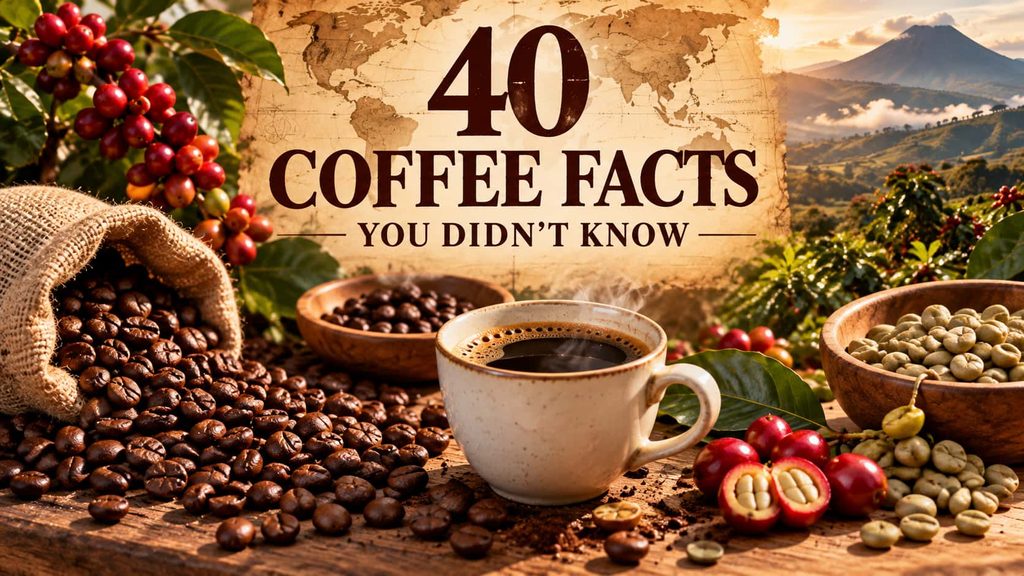
Quick answer: Coffee is the second most-traded commodity in the world after oil, consumed by 2 billion people daily. According to the British Coffee Association, UK adults drink approximately 98 million cups of coffee every day, with speciality coffee the fastest-growing segment. Coffee beans are actually seeds from a bright red fruit called a coffee cherry, grown primarily in the “coffee belt” between the Tropics of Cancer and Capricorn. Our beans come from world-class farms, roasted in England to order, and stocked in five-star London hotels including Trafalgar St James.
Ready to taste the facts? Shop the Tasting Pack or start a subscription.
Why trust this guide?

Written by: Jeremiah & Raja, Co-founders, The Coffee Twins
Credentials: UK speciality coffee brand with beans roasted in England. Stocked in five-star London hotels including Trafalgar St James, where we also train hotel staff on machine handling, coffee education, and latte art. Previously ran our own coffee shop in Farringdon after training in five-star hotel food and beverage.
Last reviewed: October 2026
Coffee facts are genuinely more surprising than most people expect because coffee carries 1,500 years of history, feeds a global economy, and shapes daily rituals for 2 billion people. This guide covers 40 of the most interesting coffee facts worth knowing, from the origin story of the word “coffee” to how much caffeine is actually in your morning cup, grounded in Specialty Coffee Association research and our own experience supplying coffee to five-star London hotels.
Table of contents
- Where did coffee come from originally?
- What is coffee actually made from?
- How is coffee grown and processed?
- How much coffee does the world drink?
- What are the UK coffee consumption facts?
- How much caffeine is actually in coffee?
- What happens during coffee roasting?
- Which speciality coffee facts matter most?
- Which coffee facts surprise people most?
- FAQ
Where did coffee come from originally?
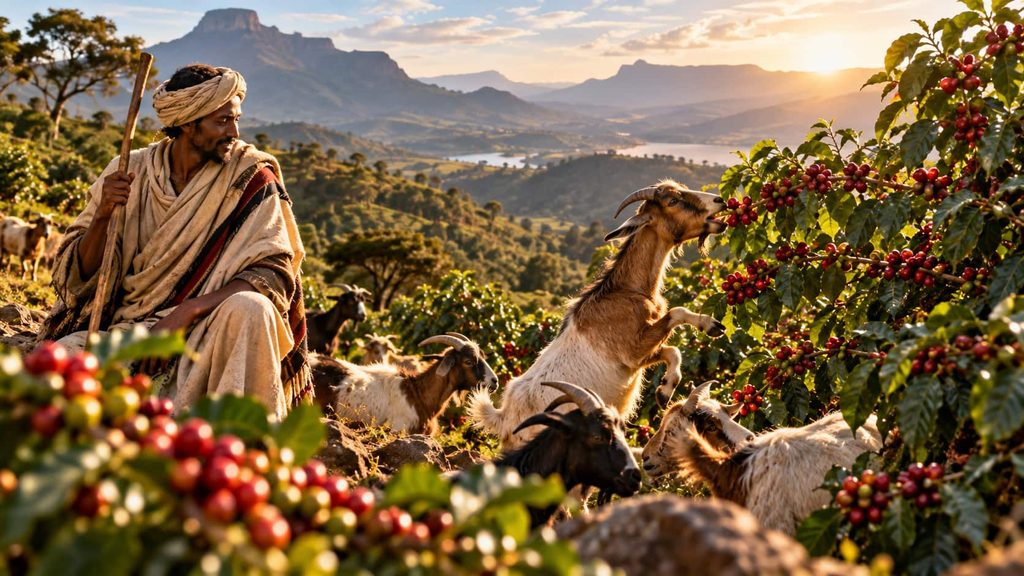
Coffee originated in Ethiopia around the 9th century, discovered according to legend by a goatherd named Kaldi who noticed his goats becoming energetic after eating coffee cherries. According to the Specialty Coffee Association, Ethiopia remains the ancestral home of coffee, with wild coffee plants still growing in its highlands today.
Fact 1: Coffee was first cultivated in Yemen
While coffee was discovered in Ethiopia, systematic coffee cultivation began in Yemen around the 15th century. In particular, the port city of Mocha gave its name to the drink style we still reference today.
Fact 2: The word “coffee” comes from the Arabic “qahwa”
“Coffee” derives from the Arabic word “qahwa,” which originally meant “wine of the bean.” Meanwhile, “qahwa” became “kahve” in Turkish, “koffie” in Dutch, and eventually “coffee” in English during the 16th century.
Fact 3: London’s first coffeehouse opened in 1652
The first coffeehouse in England opened at St Michael’s Alley in Cornhill, London, in 1652. Notably, London coffeehouses became known as “penny universities” because for the price of a penny coffee, patrons could listen to lectures and debates.
Fact 4: Coffee was banned multiple times in history
Coffee has been banned at various points in Mecca (1511), Italy (16th century), Constantinople (1623), Sweden (1746), and Prussia (1777). Because leaders feared the political discussions coffee encouraged, bans typically focused on coffeehouses rather than coffee itself.
What is coffee actually made from?
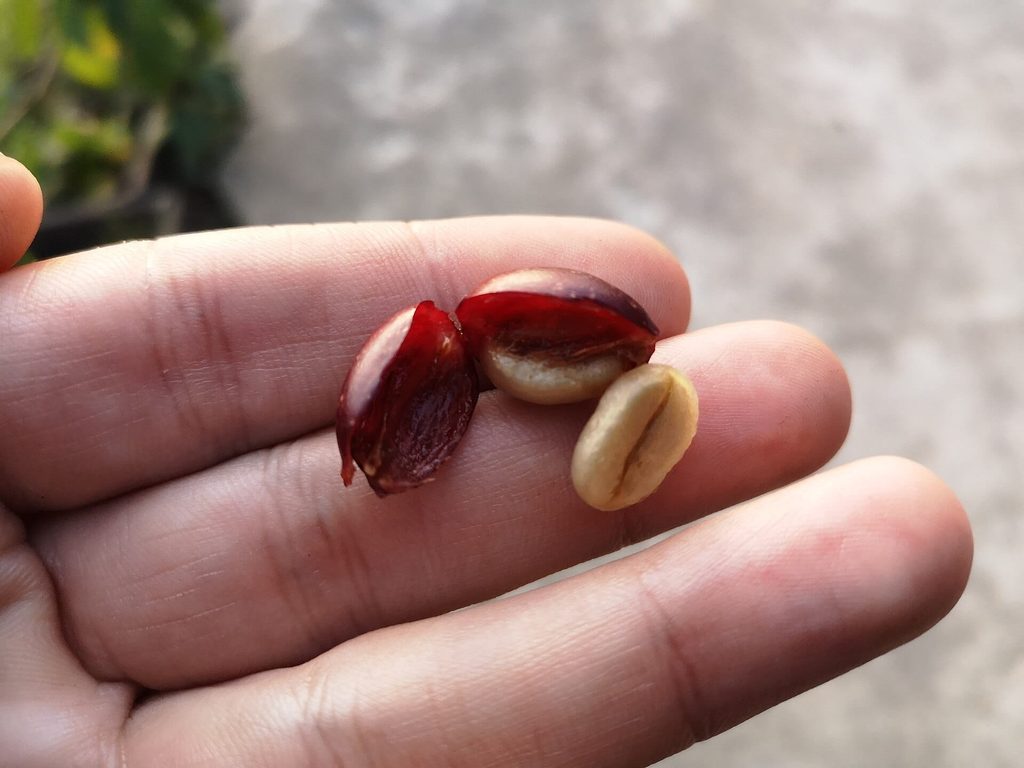
Coffee is made from the roasted seeds of the Coffea plant, found inside a bright red fruit called a coffee cherry. According to the SCA, what we call a “coffee bean” is actually a seed, with each cherry typically containing two beans facing each other.
Fact 5: Coffee beans are not actually beans
Coffee beans are the pit (seed) inside a coffee cherry fruit. Meanwhile, true beans are legumes, and coffee has no botanical relationship to them.
Fact 6: Coffee cherries are edible fruit
The coffee cherry fruit is edible and tastes mildly sweet, somewhere between a cranberry and a watermelon. In truth, “cascara” tea made from dried coffee cherries is a growing speciality beverage in itself.
Fact 7: Two main coffee species dominate production
Arabica (Coffea arabica) and Robusta (Coffea canephora) account for virtually all commercial coffee production. Specifically, Arabica represents around 60% of global coffee production and dominates speciality coffee due to its superior flavour characteristics.
Fact 8: Arabica tastes better than Robusta
Arabica contains more sugars and complex flavour compounds than Robusta, delivering sweeter, more nuanced cups. However, Robusta contains almost twice the caffeine of Arabica and is often used in espresso blends for crema and body.
Fact 9: Water makes up 98-99% of brewed coffee
Standard brewed coffee is 98-99% water with 1-2% dissolved coffee solids. In particular, this is why water quality matters so much for coffee flavour, which is why speciality cafés often use filtered water with specific mineral content.
How is coffee grown and processed?
Coffee grows primarily in the “coffee belt” between the Tropics of Cancer and Capricorn, requiring specific altitude, climate, and rainfall conditions. According to the National Coffee Association, this geographic constraint shapes global coffee production and the diversity of flavour profiles different origins produce.
Fact 10: Brazil is the world’s largest coffee producer
Brazil produces approximately 40% of the world’s coffee, more than the next three countries combined. Meanwhile, Vietnam, Colombia, Indonesia, and Ethiopia round out the top five coffee-producing nations.
Fact 11: Coffee takes 3-4 years to produce beans
A coffee plant takes 3-4 years from planting to produce its first harvest of coffee cherries. Similarly, coffee trees typically produce commercial harvests for 20-30 years, with productivity declining after that.
Fact 12: One coffee tree produces about 500g of beans annually
A single coffee tree yields enough cherries for approximately 500g of roasted coffee per year, equivalent to about 50 cups of coffee. In particular, this is why coffee production requires vast farms to meet global demand.
Fact 13: Three processing methods shape coffee flavour
Washed, natural, and honey processing are the three main methods used globally. So washed processing produces cleaner cups, natural processing delivers fruitier flavours, and honey processing sits between the two. See our Single Origin Coffee guide for more detail.
Fact 14: Altitude dramatically affects coffee flavour
Coffee grown at higher altitudes (1,200m+) develops more complex flavours and higher acidity because beans mature slowly in cooler conditions. Specifically, the highest-rated speciality coffees typically come from altitudes above 1,500m.
Fact 15: Hand-picking produces the best coffee
Premium speciality coffee is harvested by hand, with pickers selecting only ripe red cherries. Meanwhile, lower-grade coffee is often harvested using strip-picking machines that collect ripe, unripe, and overripe cherries together.
How much coffee does the world drink?
Approximately 2 billion cups of coffee are consumed worldwide every day, making coffee the second most-consumed beverage globally after water. According to industry data, global coffee consumption has grown consistently for the past 20 years, driven particularly by rising consumption in traditionally tea-drinking markets.
Fact 16: Coffee is the second most-traded commodity
Coffee is the second most-traded commodity in the world after crude oil by trading volume. In truth, the coffee industry supports over 125 million people worldwide in farming, processing, trading, and retail.
Fact 17: Finland drinks the most coffee per capita
Finnish adults consume approximately 12kg of coffee per person per year, the highest per capita rate in the world. Notably, Nordic countries dominate per capita coffee consumption, with Norway, Iceland, Denmark, and Sweden all in the global top ten.
Fact 18: America drinks the most coffee by volume
The United States consumes the most coffee globally by total volume, importing approximately 1.6 million tons annually. Meanwhile, Americans drink about 400 million cups of coffee per day across the country.
Fact 19: Italy invented espresso in 1884
Angelo Moriondo patented the first espresso machine in Turin, Italy, in 1884, though modern espresso extraction wasn’t perfected until the 1940s. Above all, this is why Italian coffee terminology (espresso, cappuccino, latte, macchiato) dominates speciality coffee globally.
What are the UK coffee consumption facts?
UK adults drink approximately 98 million cups of coffee every day, according to the British Coffee Association, with coffee overtaking tea as the UK’s most popular hot drink in recent years. Because the UK speciality coffee market has grown dramatically since the early 2000s, independent cafés and roasters now compete directly with chain coffee shops.
Fact 20: UK coffee market is worth billions
The UK coffee shop market is worth over £4 billion annually, with speciality coffee the fastest-growing segment. In particular, independent cafés and speciality roasters have outpaced chain growth for several consecutive years.
Fact 21: Londoners drink the most coffee in the UK
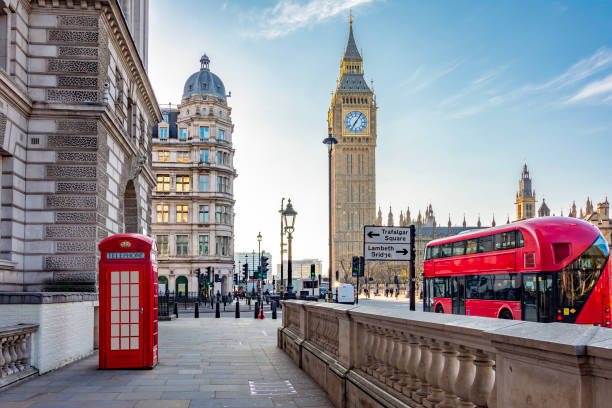
London has the highest coffee consumption and most coffee shops per capita of any UK city. Similarly, London’s coffee scene is considered one of the top three globally alongside Melbourne and New York.
Fact 22: Flat white originated in Australia or New Zealand
The flat white originated in Australia or New Zealand (both countries claim it) in the 1980s, before taking over the UK coffee scene in the 2000s. Meanwhile, the flat white is now the signature UK speciality coffee drink.
Fact 23: UK coffee drinkers prefer milk drinks
Approximately 65% of UK coffee consumption includes milk, with lattes, flat whites, and cappuccinos dominating café orders. See our How to Make a Latte guide and Best Coffee Beans for Espresso UK guide for the detail.
Fact 24: UK speciality coffee has doubled in a decade
The UK speciality coffee market has roughly doubled in size over the past ten years, with hotels increasingly focusing on coffee quality. Notably, our beans are stocked in five-star London hotels including Trafalgar St James, reflecting this quality push.
How much caffeine is actually in coffee?
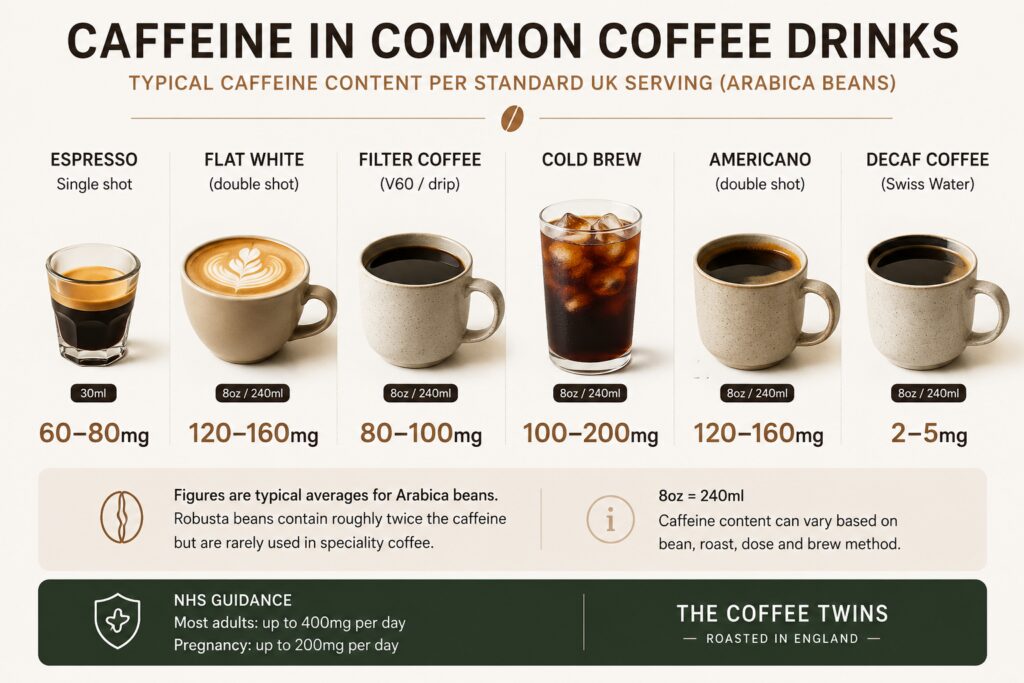
A standard 240ml cup of brewed coffee contains approximately 95mg of caffeine, though exact amounts vary significantly by brewing method, bean type, and serving size. According to the NCA, caffeine content depends more on brewing method and serving size than on roast level, which contradicts a common belief.
Fact 25: Espresso has less caffeine than filter coffee
A single espresso shot (30ml) contains approximately 63mg of caffeine, while a 240ml cup of filter coffee contains 95mg. In truth, espresso has more caffeine per millilitre but less total caffeine per serving because servings are much smaller.
Fact 26: Dark roasts have slightly less caffeine than light roasts
Dark roasting breaks down caffeine molecules slightly, meaning dark roasts contain marginally less caffeine than light roasts by weight. Meanwhile, the difference is small (around 2-5%), so roast level matters less than brewing method for caffeine content.
Fact 27: Decaf still contains some caffeine
Decaffeinated coffee still contains 2-15mg of caffeine per cup, depending on the decaffeination process. Specifically, Swiss Water Process decaf (used in our Hufflelump) removes approximately 99.9% of caffeine, delivering around 2-5mg per cup.
Fact 28: Caffeine takes 20-45 minutes to peak
Caffeine reaches peak blood levels approximately 20-45 minutes after consumption and has a half-life of around 5-6 hours. So coffee consumed in the afternoon can still affect sleep that night, which is why evening coffee drinkers often choose decaf like Hufflelump.
Fact 29: Caffeine is the world’s most-consumed psychoactive substance
Caffeine is the most widely consumed psychoactive substance in the world, legal and unregulated in nearly every country. Additionally, approximately 85% of UK adults consume caffeine daily through coffee, tea, or soft drinks.
What happens during coffee roasting?

Coffee roasting transforms green coffee beans through heat application, triggering chemical reactions that develop flavour, colour, and aroma. According to roasting science, over 800 flavour compounds develop during the roasting process, more than wine, chocolate, or almost any other food.
Fact 30: Green coffee beans don’t taste like coffee
Unroasted green coffee beans taste grassy and vegetal rather than like coffee. Because the characteristic coffee flavour develops entirely during roasting, green coffee is almost unrecognisable as the source of your morning cup.
Fact 31: First crack signals the roast’s progress
Around 196-205°C, roasting beans produce an audible “first crack” sound as moisture escapes and beans expand. Meanwhile, roasters use first crack as a timing cue because it marks the transition into drinkable roast levels.
Fact 32: Second crack happens in darker roasts
At approximately 224-232°C, beans produce a quieter “second crack” sound as cellular structures break down further. In particular, dark roasts (French roast, Italian roast) are developed into and past second crack for their characteristic bold flavours.
Fact 33: Coffee tastes best 7-21 days post-roast
Freshly roasted coffee needs 3-7 days of “degassing” before brewing optimally, with peak flavour typically between 7-21 days post-roast. Similarly, this is why our beans are roasted to order rather than warehoused, ensuring they arrive at peak flavour window.
Which speciality coffee facts matter most?
Speciality coffee is defined by the Specialty Coffee Association as coffee scored 80+ out of 100 on their cupping scale, grown and processed to specific quality standards. Because speciality coffee represents a genuinely different product category to commodity coffee, understanding these facts helps you choose better beans.
Fact 34: SCA scoring determines speciality status
Coffee must score 80 or above on the SCA 100-point cupping scale to qualify as speciality grade. Specifically, scores above 90 are rare and typically command premium prices at auction.
Fact 35: Speciality coffee is less than 10% of global production
Speciality-grade coffee represents under 10% of total global coffee production. In truth, the vast majority of coffee traded worldwide is commodity-grade, which is why speciality coffee tastes distinctly different.
Fact 36: Direct trade pays farmers more than fair trade
Direct trade relationships between roasters and farms typically pay significantly above fair trade minimums. Notably, direct trade also builds long-term relationships that improve quality year-on-year.
Fact 37: Single origin showcases distinctive terroir
Single origin coffees express the specific terroir (soil, altitude, climate, varietal) of one place rather than being blended for consistency. Our Jojo (Ethiopian), Parrot (Brazilian), and Komodo (Sumatran) demonstrate how different origins deliver distinctly different cups.
Which coffee facts surprise people most?
Three coffee facts consistently surprise even dedicated coffee drinkers because they contradict common beliefs about the drink. According to our hotel training experience at Trafalgar St James, these are the facts guests react to most strongly when we explain them.
Fact 38: Instant coffee was invented in 1771
The first instant coffee was invented in Britain in 1771 and patented by John Dring. However, modern instant coffee (as we know it) was developed by Japanese-American chemist Satori Kato in 1901 and commercialised by Nestlé as Nescafé in 1938.
Fact 39: Beethoven counted his coffee beans
Composer Ludwig van Beethoven reportedly counted exactly 60 coffee beans per cup when making his morning coffee. Meanwhile, this works out to approximately 7g of coffee per cup, close to modern single-cup ratios.
Fact 40: Coffee can expire but doesn’t go off
Coffee doesn’t become unsafe to drink, but flavour degrades significantly after a few weeks. In particular, stale coffee tastes flat and cardboard-like rather than dangerous, which is why freshness matters more than expiry dates. See our How Long Do Coffee Beans Last guide for storage specifics.
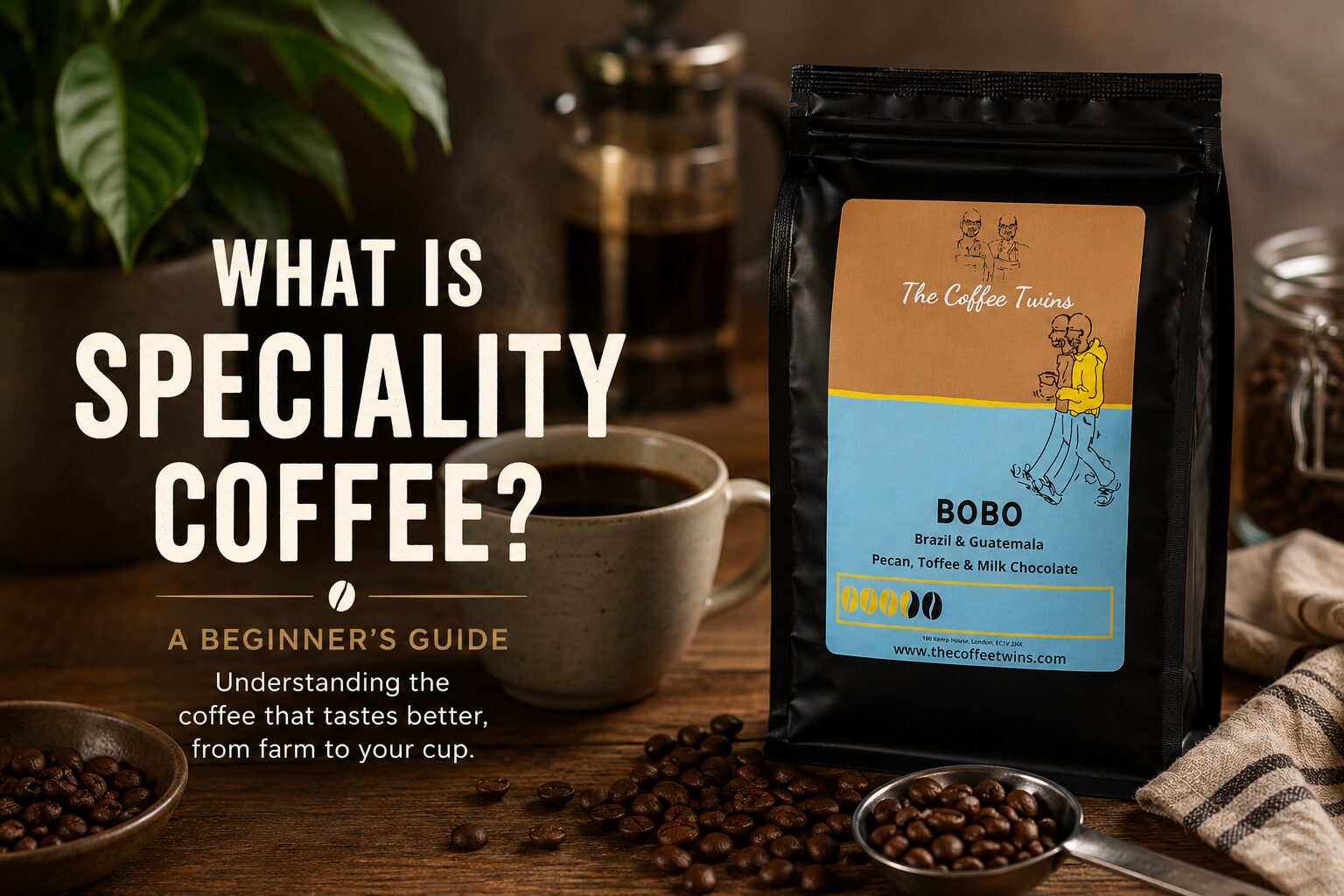
Want to taste these facts in action? Our Tasting Pack covers Audley (dark blend), Bobo (medium blend), and Jojo (Ethiopian single origin) so you can experience how origin, roast, and processing shape the cup. Use NEW10 for 10% off your first order.
Frequently Asked Questions
What is the most interesting fact about coffee?
Coffee is the second most-traded commodity in the world after oil, with 2 billion cups consumed daily. Coffee beans are actually seeds inside bright red fruit called coffee cherries, grown in the “coffee belt” between the Tropics of Cancer and Capricorn.
Where did coffee originate?
Coffee originated in Ethiopia around the 9th century, discovered according to legend by a goatherd named Kaldi. Systematic coffee cultivation began in Yemen in the 15th century, giving us the term “Mocha” from the Yemeni port city.
How much coffee does the UK drink?
UK adults drink approximately 98 million cups of coffee every day, according to the British Coffee Association. The UK coffee shop market is worth over £4 billion annually, with speciality coffee the fastest-growing segment.
What’s the difference between Arabica and Robusta?
Arabica contains more sugars and complex flavour compounds than Robusta, delivering sweeter, more nuanced cups. Robusta contains almost twice the caffeine of Arabica. Arabica represents around 60% of global coffee production and dominates speciality coffee.
How much caffeine is in a cup of coffee?
A standard 240ml cup of brewed coffee contains approximately 95mg of caffeine. A single espresso shot contains 63mg. Decaf coffee contains 2-15mg depending on the decaffeination process.
Does dark roast have more caffeine than light roast?
No, dark roast actually contains marginally less caffeine than light roast because roasting breaks down caffeine molecules slightly. However, the difference is small (around 2-5%), so brewing method matters more than roast level for caffeine content.
Why does fresh coffee taste better?
Fresh coffee tastes better because over 800 flavour compounds develop during roasting degrade through oxidation. Coffee tastes best within four weeks of roasting, which is why speciality roasters like The Coffee Twins roast to order rather than warehouse stock.
What makes speciality coffee different?
Speciality coffee scores 80 or above on the SCA 100-point cupping scale, representing less than 10% of global coffee production. Speciality coffee is grown and processed to specific quality standards, delivering distinctively better flavour than commodity coffee.
Which country drinks the most coffee?
Finland drinks the most coffee per capita (approximately 12kg per person per year), while the United States consumes the most total volume (around 1.6 million tons annually). UK consumption is around 98 million cups daily.
Where does coffee grow?
Coffee grows primarily in the “coffee belt” between the Tropics of Cancer and Capricorn. Brazil produces approximately 40% of the world’s coffee, with Vietnam, Colombia, Indonesia, and Ethiopia rounding out the top five.
Summary
Coffee facts reveal a drink with 1,500 years of history, a global economy supporting 125 million people, and distinctive flavour chemistry involving over 800 compounds that develop during roasting.
The essentials worth remembering:
- Origin: Ethiopia, 9th century, with first cultivation in Yemen
- Botany: Coffee beans are seeds inside red fruit called cherries
- Production: 2 billion cups daily, Brazil produces 40% of global coffee
- UK consumption: 98 million cups daily, £4 billion market
- Caffeine: 95mg per cup of filter, 63mg per espresso shot
- Speciality: SCA 80+ score, under 10% of global production
Our beans come from world-class farms, roasted in England to order, and stocked in five-star London hotels including Trafalgar St James. Start with our Tasting Pack to taste how origin and roast shape the cup, or set up a rolling subscription with 10% off every delivery. Use NEW10 for 10% off your first order. Free UK shipping over £30.
Set up a coffee subscription →
Enjoying this article?
If you find our coffee guides useful, you can add The Coffee Twins as a preferred source in Google so our latest articles are easier to find in your search results.
Add The Coffee Twins as a preferred source on Google →
Thanks for supporting our little coffee corner of the internet.
0 Comments