

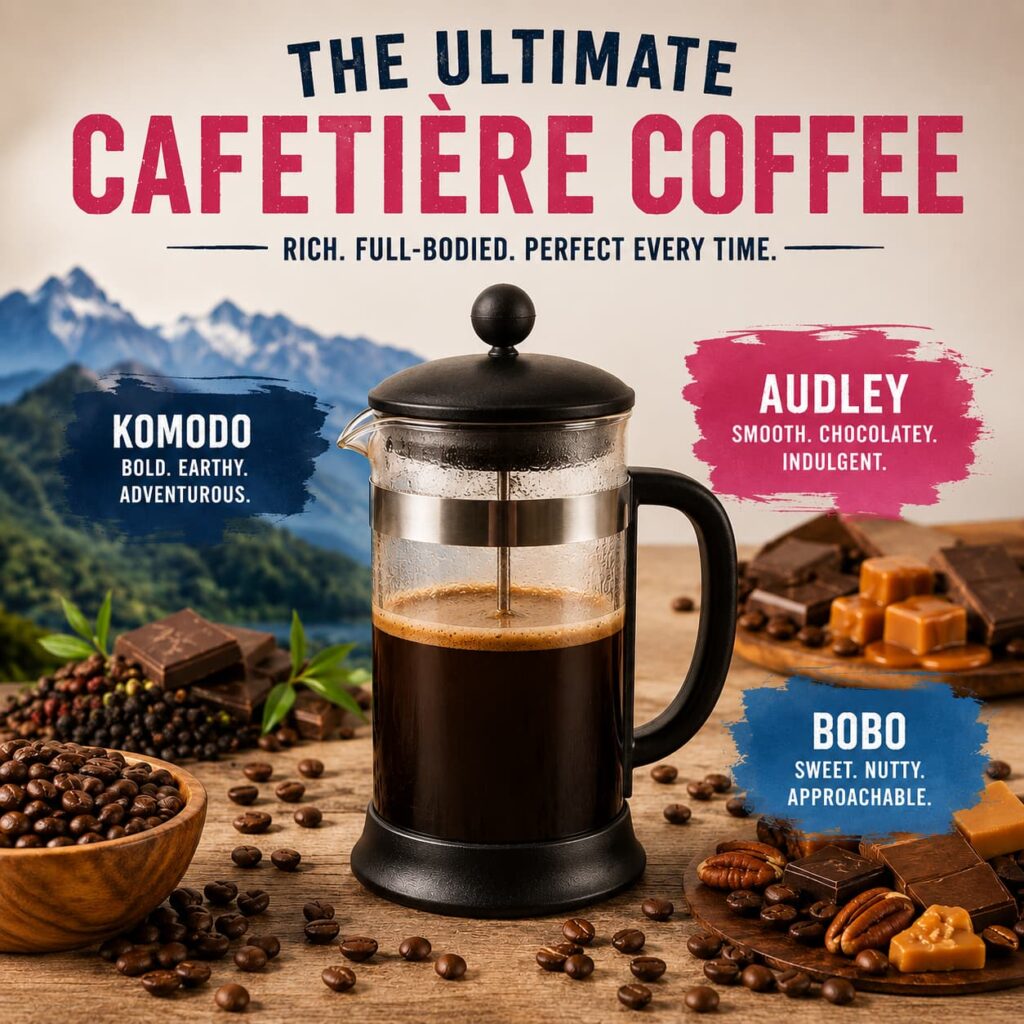
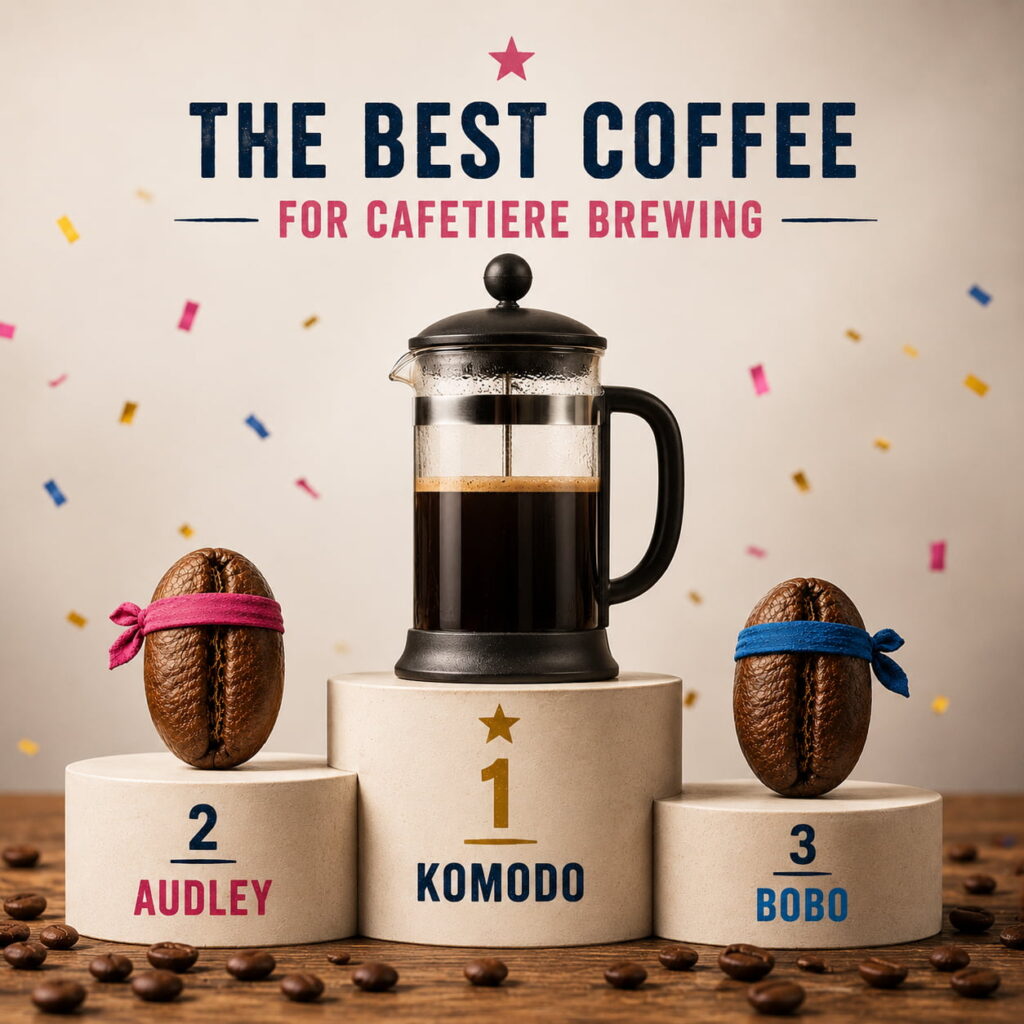
Quick answer: The best coffee for cafetiere brewing is a medium-to-dark roasted (3.5/5 or higher), full-bodied (4/5 or higher), 100% Arabica coffee — because cafetiere brewing rewards body and roast character over brightness. Specifically, our top pick is Komodo — a Sumatran single origin with body 5/5, roast 3.5/5, and distinctive earthy, tobacco, and spicy notes. £9.50 / 250g, free UK shipping over £30.
If you want to skip the guide: Buy Komodo here →
Why trust this guide?

We’re Jeremiah and Raja — The Coffee Twins, a UK speciality coffee brand with beans roasted in England. Specifically, our beans are stocked in five-star London hotels, and we trained in five-star hotel food and beverage before running our own coffee shop in Farringdon. Furthermore, we’ve brewed thousands of cafetieres for customers — the classic UK brewing method that most homes have but few people use to its full potential. Above all, this guide is the honest version of what we’d teach a customer who wanted to genuinely improve their cafetiere coffee.
Table of contents
- Why cafetiere brewing is the UK’s most underrated method
- What makes the best coffee for cafetiere brewing
- Our top pick: Komodo Sumatran single origin
- Runner-up: Audley (for chocolate-lovers)
- Runner-up: Bobo (for beginners)
- Coffee beans we’d avoid for cafetiere brewing
- The critical importance of grind size
- How to brew the perfect cafetiere coffee
- Common cafetiere mistakes to avoid
- FAQ
Why Cafetiere Brewing Is the UK’s Most Underrated Method
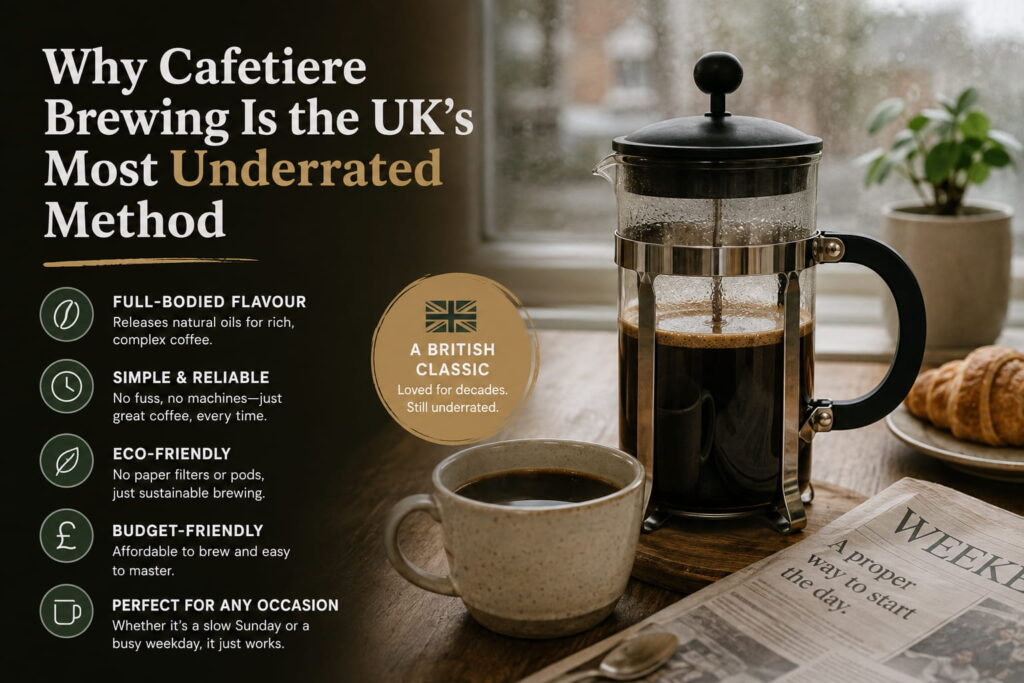
Specifically, the cafetiere (French press) sits in nearly every UK kitchen — but most people use it wrong. Furthermore, this results in muddy, bitter, disappointing coffee that gives cafetieres a bad reputation. Above all, when used properly with the right beans, cafetiere brewing produces some of the richest, most satisfying coffee possible at home.
By the way, the cafetiere has a genuinely interesting history — patented in France in 1852 and known in the UK by its French name (rather than “French press” as used in North America).
What cafetiere brewing actually does
Above all, cafetiere brewing is a full-immersion, metal-filter method. Specifically, this means:
- Full immersion: Furthermore, coffee grounds sit in water for 4 minutes, allowing complete extraction
- Metal filter: Above all, oils and fine particles pass through into your cup
- As a result: Full-bodied, textured, oily coffee that showcases roast character
Why the UK loves cafetieres
Specifically, cafetieres are the second most popular home coffee brewing method in the UK (after instant coffee). Furthermore, this is because:
- Affordable: £10-30 for a decent cafetiere vs £200+ for espresso machines
- Furthermore, simple: No electricity, no complicated technique
- Above all, forgiving: Hard to completely ruin a cafetiere brew
- Serves multiple cups: Perfect for weekend mornings or entertaining
By the way, the Specialty Coffee Association recognises full-immersion brewing methods like the cafetiere as ideal for showcasing body and roast character in coffee. Furthermore, see our comprehensive UK coffee brewing methods guide for how cafetiere compares to other brewing methods.
What Makes the Best Coffee for Cafetiere Brewing
Cafetiere brewing has specific requirements. Specifically, four characteristics genuinely matter when choosing the best coffee for cafetiere brewing:
1. Body: 4/5 or higher
Above all, cafetiere brewing amplifies body dramatically. Furthermore, thin-bodied coffees produce watery, hollow cafetiere cups. As a result, look for beans with body ratings of 4/5 or 5/5 for the best cafetiere experience.
2. Roast: 3.5/5 to 4.5/5 (medium to dark)
Specifically, cafetiere brewing shines with medium and darker roasts. Furthermore, the extended contact time and metal filter bring out the chocolatey, nutty, roasty notes that darker roasts develop. Above all, light roasts often taste harsh and over-extracted in cafetieres.
3. Low to medium acidity
Furthermore, cafetiere brewing preserves acidity. Above all, high-acidity coffees can taste sour or sharp through metal filters. As a result, coffees with acidity 2/5 or 3/5 produce the smoothest cafetiere cups.
4. 100% Arabica speciality-grade
Specifically, cafetiere brewing exposes bean quality. Furthermore, cheap Robusta blends taste harsh and bitter through cafetiere brewing. Above all, quality shows in this brewing method more than most.
Our Top Pick for the Best Coffee for Cafetiere: Komodo
Origin: Indonesia, Sumatra (Lake Toba)
Type: Single origin
Roast: 3.5/5 (medium) | Body: 5/5 | Acidity: 2/5
Tasting notes: Spicy, bold, tobacco
Price: £9.50 / 250g
Order as: Beans or Cafetiere grind
Buy Komodo →
Komodo is our Sumatran single origin — and genuinely the best coffee for cafetiere brewing if you’re looking for a distinctive, memorable morning coffee. Specifically, everything about this bean is calibrated for cafetiere brewing:
- Body 5/5: Furthermore, produces the thick, textured, satisfying mouthfeel cafetiere brewing was made for
- Acidity 2/5: Above all, smooth and low-acid — no sharpness even from metal filter extraction
- Roast 3.5/5: Specifically, medium roast preserves distinctive Sumatran character while developing chocolate depth
- Giling Basah processing: Furthermore, traditional Indonesian wet-hulling creates the earthy, herbal character that Sumatran coffee is famous for
What Komodo tastes like in the cafetiere
Specifically, expect bold earthy notes up front, tobacco and spice through the middle, finishing with dark chocolate depth. Furthermore, the Sumatran character comes through beautifully — this is coffee that tastes distinctly different from Brazilian or Colombian beans. As a result, if you want coffee that stands out rather than blending in, Komodo delivers.
Best for: Anyone who wants a distinctive, full-bodied cafetiere coffee. Above all, particularly brilliant for cold mornings, weekend brunches, and coffee lovers looking to expand beyond typical chocolate/caramel flavour profiles.
Runner-Up: Audley (For Chocolate-Lovers)
Origin: Brazil + El Salvador + India
Type: Three-origin blend
Roast: 4.5/5 (our darkest) | Body: 5/5 | Acidity: 2/5
Tasting notes: Smooth, caramel, dark chocolate
Price: £9.50 / 250g
Buy Audley →
Audley is our second pick for the best coffee for cafetiere brewing if you prefer chocolate and caramel character over earthy notes. Specifically, while Audley was designed primarily for espresso, its darker roast and full body translate brilliantly into cafetiere brewing.
- Roast 4.5/5: Furthermore, our darkest roast — deep chocolatey character comes through cafetiere brewing beautifully
- Body 5/5: Above all, matches Komodo for thick, satisfying mouthfeel
- Acidity 2/5: Specifically, smooth and forgiving
- Three-origin blend: As a result, complex flavour with caramel, dark chocolate, and hints of nut
What Audley tastes like in the cafetiere
Specifically, smooth caramel sweetness up front, dark chocolate depth in the middle, long roasty finish. Furthermore, this is the coffee to reach for if you love traditional “coffee shop” flavours — the rich, chocolatey character that most UK coffee drinkers associate with proper coffee.
Best for: Traditional coffee drinkers who want familiar chocolate/caramel flavours. Above all, works brilliantly in cafetieres for weekend mornings and social occasions.
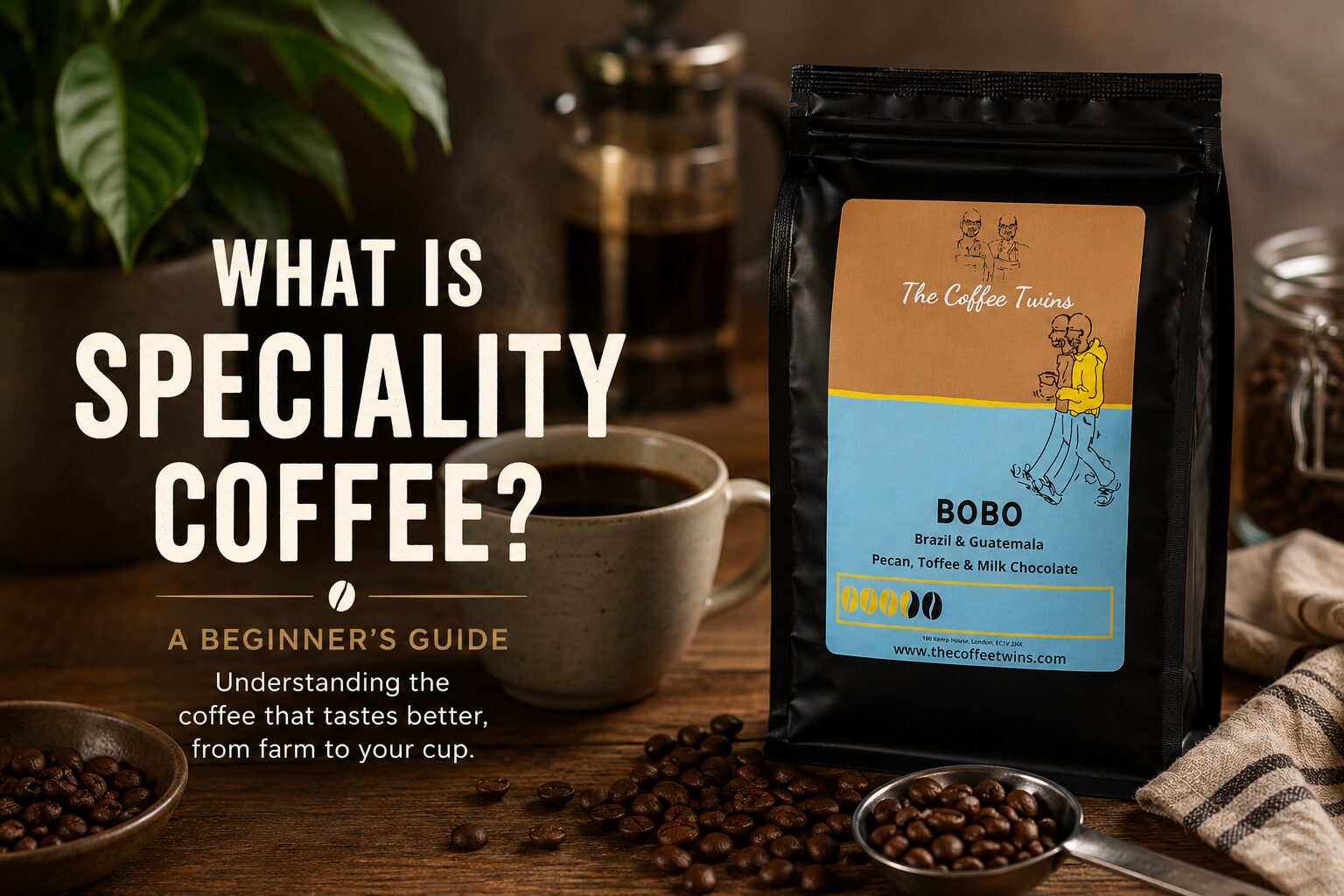
Runner-Up: Bobo (For Beginners)
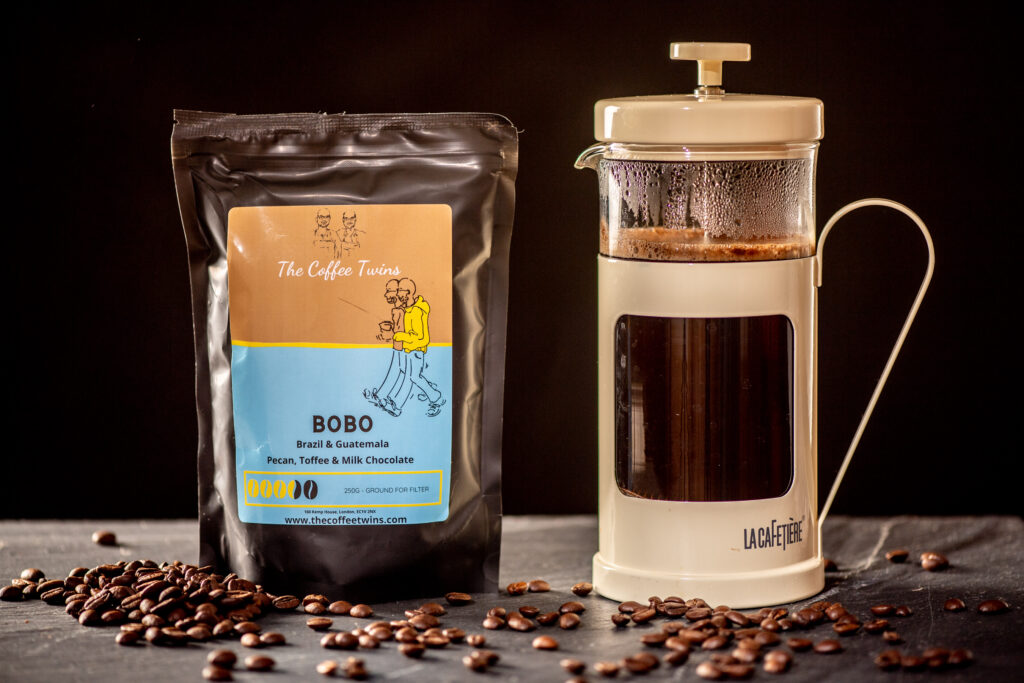
Origin: Brazil (Cerrado Minas Gerais) + Guatemala
Type: Two-origin blend
Roast: 3.5/5 (medium) | Body: 4/5 | Sweetness: 4/5 | Acidity: 2/5
Tasting notes: Pecan, toffee, milk chocolate
Price: £9.50 / 250g
Buy Bobo →
Bobo is the friendliest of the three picks for cafetiere beginners. Specifically, if you’re new to speciality coffee or want something approachable, Bobo delivers a genuinely delicious cafetiere cup without any challenging flavours.
- Sweetness 4/5: Furthermore, one of the sweetest beans in our range naturally
- Body 4/5: Above all, substantial without being heavy
- Acidity 2/5: Specifically, no sour notes even from extended cafetiere extraction
- Roast 3.5/5: As a result, medium roast preserves the natural sweetness of Brazilian Cerrado beans
What Bobo tastes like in the cafetiere
Specifically, warm pecan notes first, milk chocolate through the middle, gentle toffee finish. Furthermore, this is coffee that tastes comforting and familiar. As a result, brilliant for households where multiple people drink from the same cafetiere with different preferences.
Best for: Speciality coffee beginners, households with mixed preferences, milk-drink lovers who also enjoy black coffee. Above all, the most forgiving choice for cafetiere brewing.
Coffee Beans We’d Avoid for Cafetiere Brewing
Not every bean suits cafetiere brewing. Specifically, three of our eight coffees are not the right choice for cafetiere:
- Jojo (Ethiopian Limu, roast 2.5/5, body 3/5, acidity 4/5) — light-roasted single origin. Specifically, save this for V60 or Chemex where its brightness shines. Furthermore, the metal filter of a cafetiere muddies the delicate fruit notes.
- Parrot (Brazilian Cerrado single origin, roast 2.5/5, body 3/5) — too light for reliable cafetiere brewing. Above all, better suited to V60, AeroPress, or cold brew.
- Little Robot (body 3/5) — body too low for proper cafetiere character. As a result, the berry and vanilla notes get lost in metal-filter brewing.
From the wider market — beans to avoid
By the way, things to avoid more broadly when buying the best coffee for cafetiere brewing:
- Pre-ground supermarket “cafetiere” coffee: Almost always stale (3-9 months old) and often incorrectly ground
- Furthermore, very light single origins: Ethiopian yirgacheffe, Kenyan, or Colombian light roasts often taste sour in cafetieres
- Above all, cheap Robusta blends: The metal filter passes through harsh bitter notes that would be caught by paper filters
- Bags without a roast date: Likely 3+ months old, dramatically less flavour
The Critical Importance of Grind Size for Cafetiere
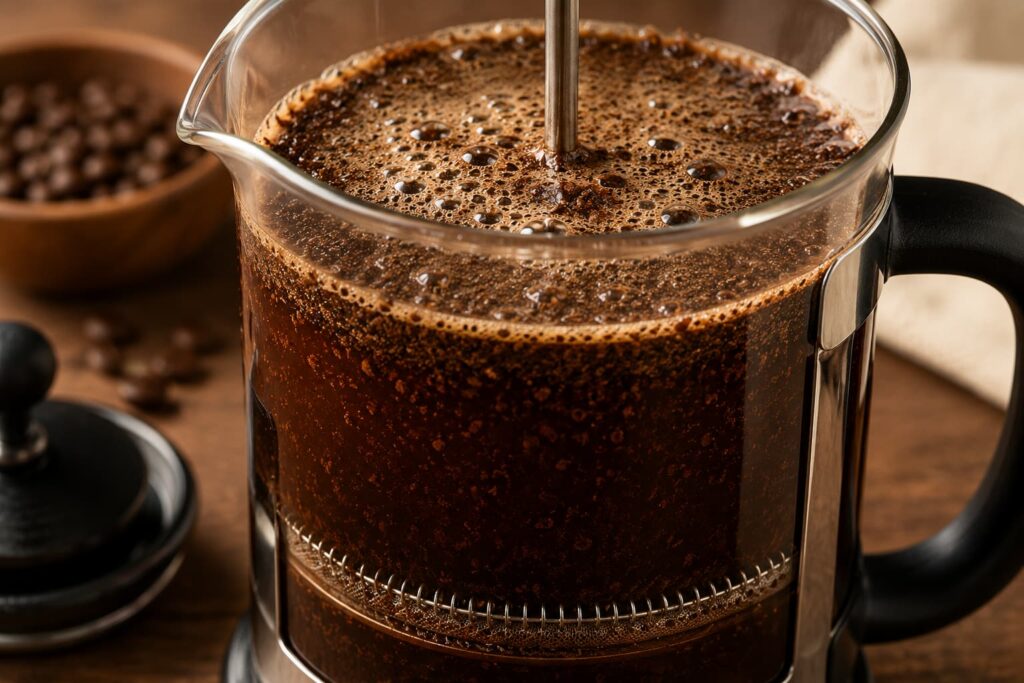
Above all, grind size is genuinely the single biggest factor that separates good cafetiere coffee from bad. Specifically, cafetiere brewing needs a coarse grind — much coarser than filter or espresso grind.
What cafetiere grind actually looks like
Furthermore, cafetiere grind should look like rough sea salt. Above all, if the grind is too fine:
- Fine particles pass through the metal filter into your cup
- Furthermore, the coffee becomes bitter and over-extracted
- Above all, you get muddy, gritty cups
- The plunger becomes difficult to press
Specifically, if the grind is too coarse:
- Water passes through too quickly
- Furthermore, coffee tastes weak and watery
- Above all, extraction is incomplete
How to get the right grind for cafetiere
Above all, three genuine options:
- Buy pre-ground for cafetiere: Furthermore, when ordering from us, select “Cafetiere” as the grind option. As a result, we grind precisely for cafetiere brewing.
- Use a burr grinder at coarse setting: Specifically, blade grinders (spinning propeller type) can’t produce consistent coarse grind. Furthermore, invest in a basic burr grinder (£30-100) for genuinely better cafetiere coffee.
- Above all, avoid pre-ground supermarket coffee: As a result, “cafetiere ground” from supermarkets is often incorrectly ground AND stale.
By the way, see our detailed UK coffee storage guide for keeping ground coffee fresh once opened.
How to Brew the Perfect Cafetiere Coffee
Specifically, once you have the right beans and grind, cafetiere brewing is genuinely simple. Furthermore, here’s the exact recipe we used at our Farringdon café:
The perfect cafetiere recipe (for a 500ml cafetiere):
Coffee: 30g of Komodo (or your chosen bean)
Water: 500g at 94°C
Ratio: 1:16 (coffee to water)
Grind: Coarse (like rough sea salt)
Total brew time: 4 minutes
Method:
1. Pre-heat the empty cafetiere with hot water, then discard
2. Furthermore, add 30g of coarsely-ground coffee to the empty cafetiere
3. Above all, pour 500g of water at 94°C over the grounds
4. Give one gentle stir to ensure all grounds are wet
5. Furthermore, place the plunger on top (do NOT press down yet)
6. Wait 4 minutes
7. Above all, slowly press the plunger down over 15-20 seconds
8. Serve immediately
Why the pre-heat step matters
Specifically, cold cafetiere = cold coffee. Furthermore, pre-heating with hot water ensures your finished coffee stays hot. Above all, this small step makes a genuinely noticeable difference to the final cup.
Why 94°C water specifically
Above all, boiling water (100°C) over-extracts and creates bitterness. Furthermore, water below 90°C under-extracts and creates weak coffee. Specifically, 94°C is the sweet spot for cafetiere brewing.
By the way, don’t have a thermometer? Furthermore, boil the kettle, let it stand for 30 seconds, then pour. Above all, this typically drops water to around 94°C.
Why serve immediately
Specifically, coffee left sitting in the cafetiere continues to extract from the remaining grounds. Furthermore, this creates bitter, over-extracted coffee within minutes. Above all, decant into cups or a thermal carafe immediately after plunging.
Common Cafetiere Mistakes to Avoid
Above all, here are the five mistakes we see most often when customers ask why their cafetiere coffee tastes bad:
Mistake 1: Using pre-ground coffee that’s too fine
Specifically, most “pre-ground” supermarket coffee is filter or espresso grind, not cafetiere grind. Furthermore, this creates muddy, over-extracted cups. Above all, always buy beans marked “cafetiere grind” specifically.
Mistake 2: Water too hot (boiling)
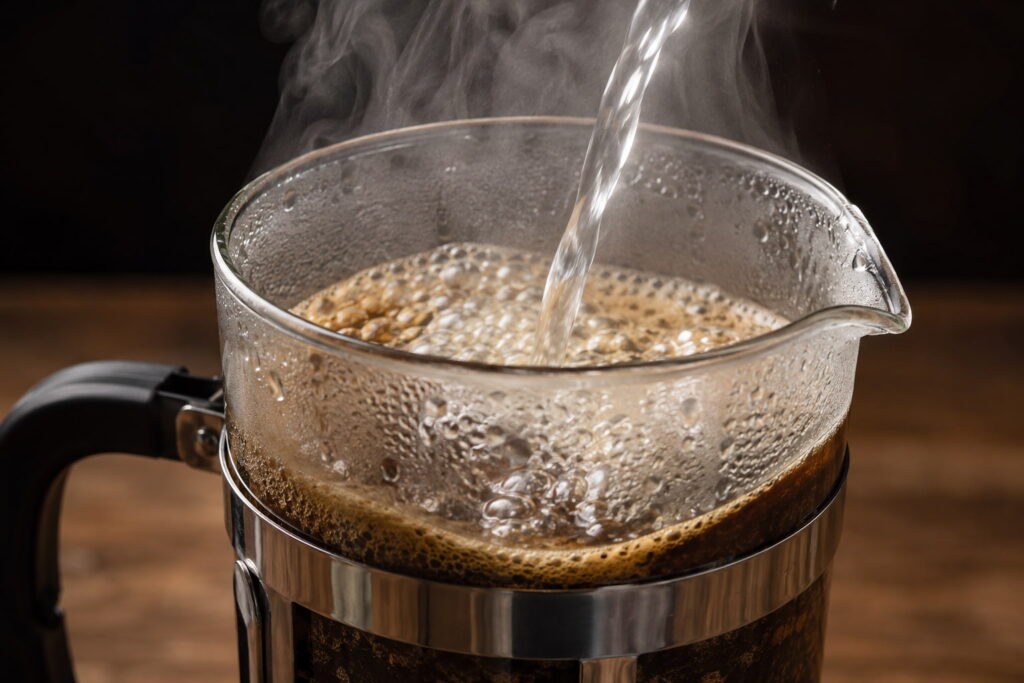
Furthermore, pouring water straight from the kettle over coffee causes bitterness. Above all, always let boiled water rest 30 seconds before pouring.
Mistake 3: Not enough coffee
Specifically, most UK households use too little coffee (10-15g for a 500ml cafetiere). Furthermore, this creates weak, hollow coffee. Above all, use 30g for a 500ml cafetiere — a 1:16 ratio.
Mistake 4: Leaving coffee in the cafetiere after plunging
Above all, coffee continues extracting from the grounds even after plunging. Furthermore, this creates bitter, harsh coffee within 5-10 minutes. As a result, always decant immediately.
Mistake 5: Skipping the pre-heat step
Specifically, adding hot water to a cold cafetiere dramatically reduces final coffee temperature. Furthermore, this makes coffee taste flat. Above all, always pre-heat with hot water first.
Frequently Asked Questions
What is the best coffee for cafetiere brewing?
The best coffee for cafetiere brewing is a medium-to-dark roasted (3.5/5 or higher), full-bodied (4/5 or higher), low-acidity (2/5 or below), 100% Arabica coffee. Specifically, our Komodo (£9.50 / 250g) is our top pick — a Sumatran single origin with body 5/5 and distinctive earthy, tobacco notes. Furthermore, all our cafetiere-suited beans are roasted in England and dispatched within 24 hours.
Can I use any coffee in a cafetiere?
Technically yes, but the results vary wildly. Specifically, light roasts (2.5/5 and below) can taste sour and hollow in cafetieres. Furthermore, low-body coffees produce watery cups. Above all, choose beans specifically suited to cafetiere brewing — medium-to-dark roast, full body, low acidity.
What grind size is best for cafetiere brewing?
Coarse — roughly the texture of rough sea salt. Specifically, if the grind is too fine, coffee becomes bitter and muddy. Furthermore, if too coarse, coffee tastes weak. Above all, when ordering from us, select “Cafetiere” as the grind option for the perfect grind.
How much coffee should I use in a cafetiere?
30g of coffee for every 500ml of water — a 1:16 ratio. Specifically, most UK households use too little coffee, resulting in weak cafetiere cups. Furthermore, this ratio produces properly strong, full-bodied coffee.
What’s the ideal water temperature for cafetiere brewing?
94°C. Specifically, boiling water (100°C) over-extracts and creates bitterness. Furthermore, water below 90°C under-extracts. Above all, boil the kettle then let it stand 30 seconds before pouring for approximately 94°C.
How long should I brew coffee in a cafetiere?
4 minutes total. Specifically, add coffee and water, stir once, place plunger on top (don’t press), wait 4 minutes, then slowly plunge. Furthermore, decant immediately to prevent over-extraction.
Why does my cafetiere coffee taste bitter?
Three likely reasons. Specifically, grind is too fine, water is too hot (boiling), or coffee is left in the cafetiere after plunging. Above all, use coarser grind, cool the water 30 seconds, and decant immediately after plunging.
Is cafetiere coffee stronger than filter coffee?
Cafetiere coffee has more body and texture than filter coffee, but similar caffeine content. Specifically, the metal filter passes through more oils and fines, creating richer mouthfeel. Furthermore, this doesn’t mean more caffeine — just different flavour experience.
Can I use decaf coffee in a cafetiere?
Yes, absolutely. Specifically, our Hufflelump Swiss Water decaf (body 4/5, acidity 2/5) works brilliantly in cafetieres. Furthermore, decaf brewing follows identical rules to caffeinated cafetiere brewing.
Where can I buy the best coffee for cafetiere online?
The Coffee Twins — a UK speciality coffee brand with beans roasted in England. Specifically, our top three cafetiere picks are Komodo (Sumatran, £9.50), Audley (blend, £9.50), and Bobo (blend, £9.50). Furthermore, free UK shipping over £30. Use NEW10 for 10% off your first order.
Summary
The best coffee for cafetiere brewing is a medium-to-dark roasted (3.5/5 to 4.5/5), full-bodied (4/5 or higher), low-acidity (2/5 or below), 100% Arabica coffee. Specifically, the right bag depends on your flavour preferences and drinking style.
From our range:
- Top pick: Komodo — Sumatran single origin, earthy and distinctive. £9.50 / 250g.
- Furthermore, for chocolate lovers: Audley — smooth, caramel, dark chocolate. £9.50 / 250g.
- Above all, for beginners: Bobo — sweet, pecan, milk chocolate. £9.50 / 250g.
Above all, all three ship within 24 hours, roasted in England. Furthermore, buy any two for free UK shipping over £30. Above all, use NEW10 for 10% off your first order.
Try Komodo — Our Cafetiere Top Pick →
Enjoying this article?
If you find our coffee guides useful, you can add The Coffee Twins as a preferred source in Google so our latest articles are easier to find in your search results.
Add The Coffee Twins as a preferred source on Google →
Thanks for supporting our little coffee corner of the internet.

0 Comments