

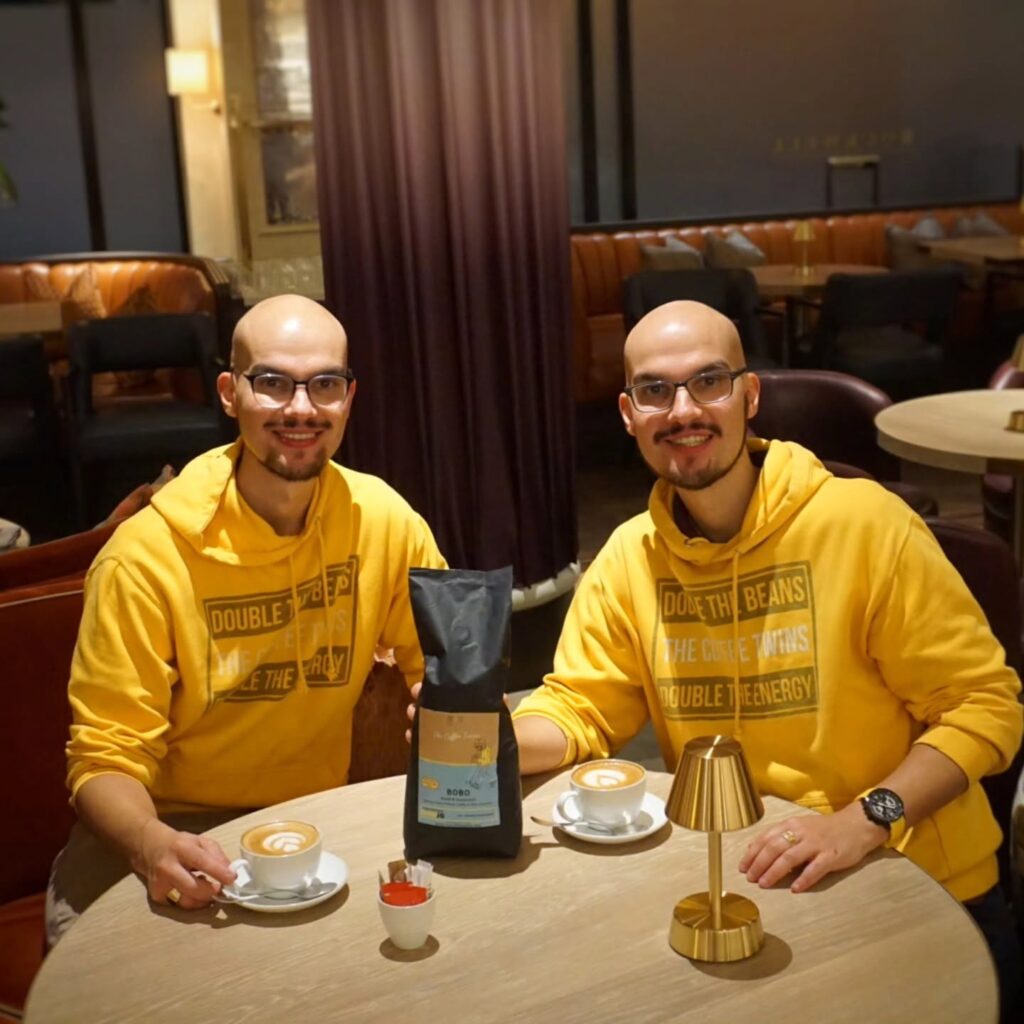
Quick answer: Coffee for hotels needs to meet a higher standard than café or office coffee because guests judge the entire property by the small moments (in-room service, breakfast bar, afternoon service). Great hotel coffee is speciality-grade (80+ SCA score), roasted fresh, matched to the property’s equipment, and supported with barista training. We supply five-star London hotels including Trafalgar St James, where we also train the staff on machine handling, coffee education, and latte art.
Setting up hotel coffee supply? Enquire about wholesale supply.
Why trust this guide?

Written by: Jeremiah & Raja, Co-founders, The Coffee Twins
Credentials: UK speciality coffee brand with beans roasted in England. Stocked in five-star London hotels including Trafalgar St James, where we also train hotel staff on machine handling, coffee education, and latte art. Previously ran our own coffee shop in Farringdon after training in five-star hotel food and beverage.
Last reviewed: September 2026
Coffee for hotels genuinely matters more than most operators realise. Because guests experience coffee at multiple touchpoints across their stay (in-room, breakfast, bar, meeting rooms, afternoon service), it becomes a persistent quality signal that shapes their overall perception of the property. We came up through five-star hotel food and beverage before starting The Coffee Twins, so this guide covers what genuinely great hotel coffee looks like, what to avoid when sourcing, and how to build a coffee programme that reflects your service standard.
Table of contents
- Why does hotel coffee matter more than café coffee?
- What defines five-star hotel coffee?
- Where do guests encounter coffee across their stay?
- How does hotel equipment shape the coffee choice?
- Why does staff training matter for hotel coffee?
- How do you choose a coffee supplier for a hotel?
- What should hotels avoid when sourcing coffee?
- How does The Coffee Twins supply hotels?
- FAQ
Why does hotel coffee matter more than café coffee?
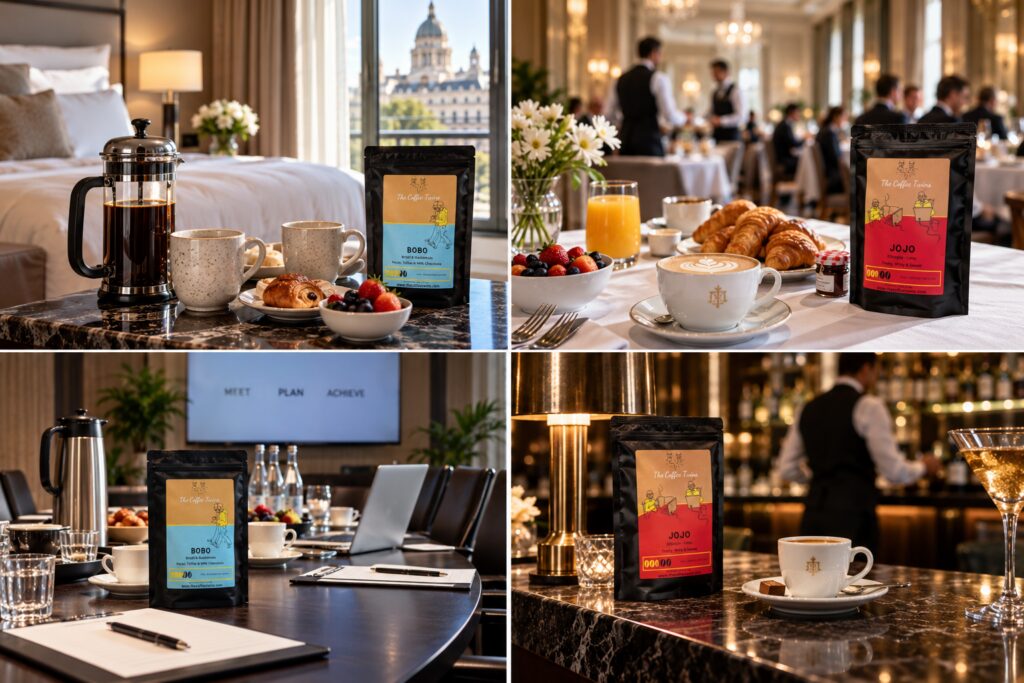
Hotel coffee matters more because guests judge the entire property by dozens of small moments, and coffee sits inside several of them. According to hospitality research, guest satisfaction correlates strongly with food and beverage quality, and coffee is one of the most consumed items across every hotel category from budget to five-star.
Coffee is a persistent quality signal
Guests encounter coffee at check-in welcome, in-room service, breakfast, meeting rooms, bar service, and afternoon tea. Because every touchpoint reinforces the guest’s perception of the property, poor coffee genuinely undermines the entire guest experience regardless of how brilliant the room or the service is.
The five-star hotel test cuts both ways
Great coffee elevates a property, but poor coffee actively damages perception. Meanwhile, guests paying premium rates notice quality inconsistencies immediately, and coffee is one of the most obvious markers of whether a property genuinely cares about detail.
Coffee shapes review sentiment
Guest reviews mention coffee frequently across TripAdvisor, Booking.com, and Google reviews. In truth, positive coffee mentions are common in top-tier property reviews, and negative coffee mentions appear consistently in dissatisfied reviews across every property category.
What defines five-star hotel coffee?
Five-star hotel coffee meets four specific standards: speciality-grade sourcing, fresh roasting to order, equipment-matched bean selection, and trained staff execution. According to the Specialty Coffee Association, speciality-grade coffee (scored 80+ on the cupping scale) genuinely delivers distinctive flavour characteristics that commodity coffee cannot match.
Speciality-grade sourcing
Five-star hotels serve speciality-grade coffee (80+ SCA cupping score) rather than commodity beans. Because premium guests notice quality immediately, cheaper commodity coffee undermines the property’s positioning regardless of packaging or presentation.
Fresh roasting to order
Great hotel coffee arrives fresh, roasted for the specific delivery rather than warehoused for weeks. According to the National Coffee Association, coffee tastes best in the first four weeks after roasting, so warehoused inventory delivers dramatically inferior cups regardless of bean quality.
Equipment-matched bean selection
Different hotel equipment (bean-to-cup, traditional espresso, batch brewers, in-room pod systems) demands different bean profiles. Meanwhile, a bean brilliant for espresso machines can taste flat in a bean-to-cup, so matching beans to equipment is fundamental to hotel coffee quality.
Trained staff execution
Even great beans and equipment fail without trained staff. In particular, hotel F&B teams often lack dedicated barista training because coffee sits alongside dozens of other service responsibilities, which is why supplier-provided training becomes essential.
Where do guests encounter coffee across their stay?
Guests encounter coffee at seven distinct touchpoints across a typical hotel stay, and each one shapes their perception. According to hospitality industry data, breakfast coffee is the most-consumed item at UK hotels, followed by in-room service and afternoon tea.
Welcome and check-in coffee
Many premium properties offer complimentary welcome coffee at check-in. Firstly, this is often the guest’s first sensory experience of the property, so the quality directly shapes their initial impression before they even see the room.
In-room coffee service
In-room coffee (pod machines, bean-to-cup, cafetière service) is used by most guests during their stay. Meanwhile, this is often the most-drunk coffee of the entire stay, so quality matters more here than any other touchpoint.
Breakfast service coffee
Hotel breakfast is where coffee volume peaks, with most guests ordering multiple cups. Because breakfast coffee coincides with the guest’s most alert moment of the day, quality here shapes their perception of the whole day ahead.
Meeting and event coffee
Business guests judge properties heavily on meeting room coffee. So corporate rebookings often depend on whether the coffee served during meetings meets guest and delegate expectations.
Bar service coffee
Post-dinner espresso and cappuccino service in the bar. Notably, this is where coffee quality is most exposed because guests are relaxed, attentive, and often ordering coffee as the final impression of the meal.
Afternoon tea coffee
Premium properties offering afternoon tea service also serve coffee. Similarly, guests choosing coffee over tea during afternoon service expect the same quality standard as the tea offering.
24-hour and room service coffee
Late-night and early-morning coffee orders. Ultimately, this is often the touchpoint where properties cut corners, and it’s also where guests remember disappointments most vividly.
How does hotel equipment shape the coffee choice?
Hotel equipment fundamentally determines which beans work well because different systems extract coffee differently. According to SCA equipment guidance, bean profile choice must match extraction method for the coffee to deliver its intended flavour characteristics.
Bean-to-cup machines
Most hotels use commercial bean-to-cup machines (Jura, Sage, Franke, WMF, Melitta) across in-room, meeting rooms, and lounges. Because bean-to-cup grinds and extracts automatically, beans need to be forgiving across variable dose accuracy while still delivering clear flavour. See our Best Coffee Beans for Bean-to-Cup Machines guide for equipment-specific recommendations.
Traditional espresso machines
Premium hotel bars and restaurants often use traditional two or three-group espresso machines (La Marzocco, Victoria Arduino, Slayer). Meanwhile, these demand beans capable of expressing distinctive character under manual barista control, which changes what beans work best.
Cafetière and pour over service
Boutique and design-led hotels sometimes offer cafetière service in rooms and pour over in the restaurant. In particular, these methods showcase distinctive single origin beans brilliantly and reinforce a premium, considered service standard.
Batch brewers for volume
Breakfast service, conference coffee, and large-volume periods often use batch brewers (Marco Beverage Systems, Bunn, Fetco). Additionally, batch brew coffee needs to hold quality for hours in warmers without deteriorating, which shapes bean choice.
Why does staff training matter for hotel coffee?
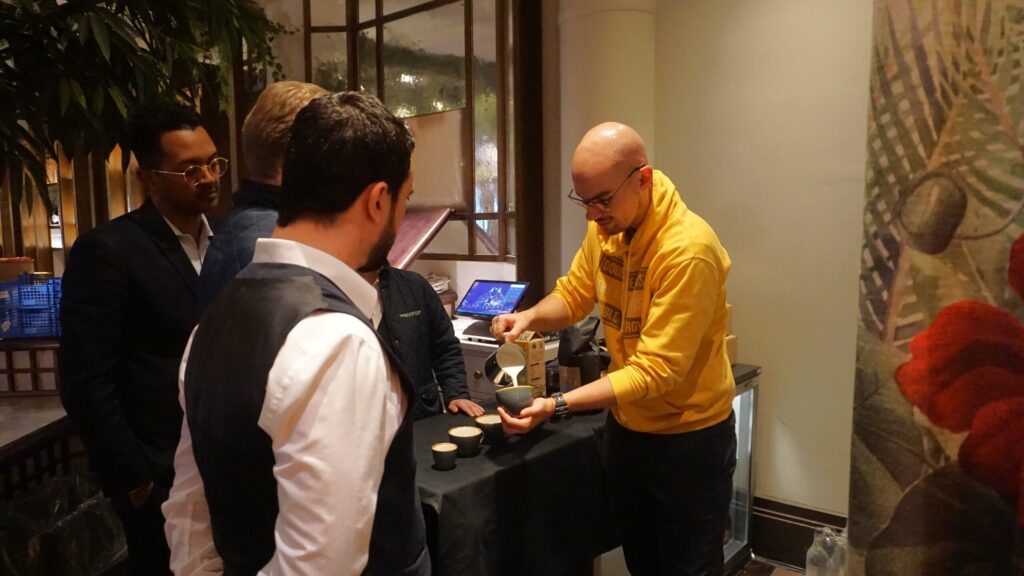
Staff training is genuinely as important as bean quality because untrained staff can ruin brilliant beans on brilliant equipment. According to hospitality training research, coffee-specific staff training measurably improves guest satisfaction scores and reduces complaint frequency.
Hotel F&B teams often lack barista training
Most hotel staff serving coffee haven’t been trained specifically on coffee. Because hotel F&B teams handle service across multiple beverages, food, and guest interaction, coffee often gets learned informally rather than taught systematically.
What staff training should cover
Genuine coffee training covers machine handling, grind adjustment, milk texturing, latte art basics, cleaning and maintenance, and guest interaction. Meanwhile, most supplier “training” amounts to a machine demo, which isn’t training at all.
Our approach to hotel staff training
We train the hotel staff at Trafalgar St James on machine handling, coffee education, and latte art. Above all, this training is included as part of our supplier relationship rather than charged separately, because trained staff produce better coffee and generate better guest reviews.
How do you choose a coffee supplier for a hotel?
Choosing a hotel coffee supplier means evaluating six specific criteria beyond just price and bean type. According to procurement best practices in hospitality, hotel coffee supplier selection should prioritise service and support alongside product quality rather than optimising for lowest price.
Speciality-grade sourcing verification
Ask potential suppliers directly whether their beans are speciality-grade (80+ SCA score). Notably, quality suppliers will confirm this immediately with origin information and sourcing detail. Vague answers usually mean commodity coffee dressed up in premium packaging.
Roast date transparency
Every delivery should show clear roast dates. Because coffee tastes best in the first four weeks after roasting, suppliers who roast to stock (rather than to order) deliver stale coffee regardless of how good the beans are.
Equipment expertise
Great hotel suppliers know your equipment and match beans to it. In contrast, suppliers who push a single blend regardless of your setup don’t understand the operational reality of hotel service.
Training and support included
Genuine hotel coffee suppliers include staff training, ongoing support, and troubleshooting as part of the supply relationship. Similarly, suppliers who charge separately for training or provide only machine demos aren’t offering full-service partnership.
Delivery reliability
Hotels can’t run out of coffee. So delivery frequency, reliability, and emergency response matter as much as bean quality. Ask about backup procedures and what happens when things go wrong.
Real people to contact
When something needs fixing, hotels need a real person who answers the phone. Ultimately, form-based communication and account manager rotation break down at exactly the moment a hotel needs support most.
What should hotels avoid when sourcing coffee?
Five specific hotel coffee sourcing mistakes are common enough to be worth naming, and each one directly damages guest experience. According to hospitality industry data, poor coffee is one of the top-three F&B complaints across hotel categories.
Commodity coffee dressed as premium
Most “hotel coffee” available from generic wholesale suppliers is commodity-grade coffee (scored under 80 on the SCA scale) packaged in premium-looking bags. Meanwhile, guests notice the difference immediately even when they can’t articulate why.
Warehoused inventory
Suppliers who deliver from stock rather than roasting to order deliver stale coffee regardless of bean quality. In truth, this is the most common hotel coffee failure because it’s invisible until guests taste the result.
One-size-fits-all blends
Suppliers who push a single blend across every hotel client aren’t matching beans to your equipment or your guest profile. Similarly, this produces mediocre results for everyone because no single bean suits every extraction method.
Zero staff training
Buying beans without training is like buying a car without teaching anyone to drive. Because hotel staff often haven’t been trained on coffee specifically, unsupported supplier relationships produce inconsistent service regardless of bean quality.
Lock-in contracts
Rigid multi-year contracts with no flexibility signal a supplier who prioritises their operations over your business. Meanwhile, flexible partnerships are the mark of suppliers confident in their ongoing value.
How does The Coffee Twins supply hotels?
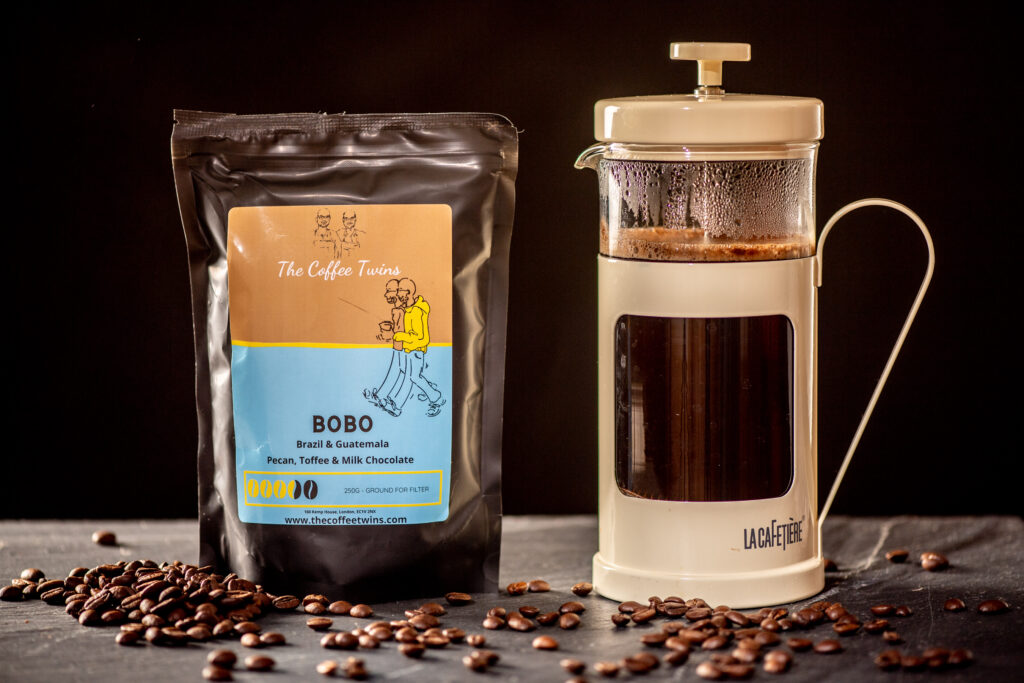
We built our hotel supply approach around what we wished our suppliers had done for us when we ran our Farringdon café. According to our hotel clients, the difference shows up in guest reviews, staff confidence, and F&B consistency across the property.
Speciality-grade beans roasted in England
Every bean we supply is speciality-grade, roasted in England to order, and dispatched within 24 hours. In particular, hotels never receive warehoused stock because we don’t hold it.
Equipment-matched selection
We discuss your equipment (bean-to-cup, traditional espresso, batch brewers, in-room service) before proposing beans. So the beans you receive suit your operational reality rather than a generic “hotel blend” designed for no one specifically.
Staff training included
We train hotel staff on machine handling, coffee education, and latte art as part of our supplier relationship. Notably, we do this ourselves rather than sending a third-party trainer, so your team learns from the people who genuinely know the coffee.
Real people to contact
You get direct contact with us (Jeremiah and Raja) rather than an account manager rotation. Additionally, we answer the phone when something needs fixing, because we’ve been on the operator side and know what that matters.
Trafalgar St James proof
Our coffee is stocked in five-star London hotels including Trafalgar St James. Ultimately, if our coffee holds up at that standard of service, it holds up in your property regardless of category.
Setting up coffee for your hotel? Our wholesale page is the starting point. We’ll ask about your property, your equipment, and your service standards, then send samples suited to what you actually need.
Frequently Asked Questions
What coffee do five-star hotels use?
Five-star hotels use speciality-grade coffee (scored 80+ on the SCA cupping scale), roasted fresh, matched to their specific equipment, and supported with staff training. The Coffee Twins supply five-star London hotels including Trafalgar St James.
How much coffee does a hotel need?
Hotel coffee consumption varies significantly by property size, guest count, and F&B outlets. Small boutique hotels typically use 5-15kg per week, mid-size hotels 20-50kg per week, and large hotels 100kg+ per week across all F&B outlets.
What’s the best coffee machine for a hotel?
The best coffee machine depends on the touchpoint. Bean-to-cup machines (Jura, Sage, Franke, WMF) suit in-room and meeting rooms. Traditional espresso machines (La Marzocco, Victoria Arduino) suit premium bars and restaurants. Batch brewers (Marco, Bunn, Fetco) suit high-volume breakfast service.
Do hotel coffee suppliers include staff training?
Quality hotel coffee suppliers include staff training as part of the supply relationship. The Coffee Twins train hotel staff on machine handling, coffee education, and latte art as part of ongoing supplier support.
How do hotels typically buy coffee?
Hotels typically buy coffee through wholesale supplier relationships with weekly, fortnightly, or monthly deliveries scheduled to match consumption. Some larger hotels use multiple suppliers across different F&B outlets for variety and redundancy.
What’s the difference between hotel coffee and café coffee?
Hotel coffee needs to work across multiple equipment types and service touchpoints simultaneously, while café coffee is optimised for one primary extraction method. Meanwhile, hotel coffee also demands consistency across a larger, less specialised staff team than typical speciality cafés.
How much does hotel coffee cost per cup?
Hotel coffee cost per cup varies significantly depending on bean quality, delivery volume, and equipment. Speciality-grade coffee typically costs 20-40p per cup at wholesale volumes, compared to commodity coffee at 10-20p per cup, with the quality difference genuinely justifying the increased cost.
Can we get sample coffee before committing?
Yes, and any reputable hotel coffee supplier should offer this. The Coffee Twins send samples suited to your equipment and service style after an initial conversation about your property, so you can taste before committing.
What’s the minimum order for hotel coffee supply?
Minimum orders vary by supplier. The Coffee Twins approach is to have a conversation about your property first and propose terms shaped by your operation rather than applying a rigid minimum. Boutique hotels are welcome alongside larger properties.
How do you know your coffee suits five-star hotels?
The Coffee Twins beans are stocked in five-star London hotels including Trafalgar St James, where we also train hotel staff on machine handling, coffee education, and latte art. We spent years training in five-star hotel food and beverage before starting The Coffee Twins, so we understand hospitality operations from the inside.
Summary
Coffee for hotels demands a higher standard than café or office coffee because guests judge the entire property by dozens of small moments, and coffee sits inside several of them.
Great hotel coffee shares four qualities:
- Speciality-grade sourcing (80+ SCA cupping score)
- Fresh roasting to order rather than warehoused inventory
- Equipment-matched bean selection across bean-to-cup, traditional espresso, cafetière, and batch systems
- Staff training and ongoing support included as part of the supplier relationship
Our beans are roasted in England to order and stocked in five-star London hotels including Trafalgar St James, where we also train the staff on machine handling, coffee education, and latte art. We built our hotel supply approach around what we wished our suppliers had done when we ran our Farringdon café.
Setting up coffee for your property? Get in touch through our wholesale page. We’ll ask about your equipment, your service standards, and your guest profile before proposing anything, and we start small before scaling up so you can test the relationship before committing.

Enquire about hotel coffee supply →
Read our Wholesale Coffee Suppliers guide →
Enjoying this article?
If you find our coffee guides useful, you can add The Coffee Twins as a preferred source in Google so our latest articles are easier to find in your search results.
Add The Coffee Twins as a preferred source on Google →
Thanks for supporting our little coffee corner of the internet.


0 Comments