

Quick answer: To choose coffee beans, start with how you drink your coffee. If you take milk, pick a medium or dark roast with chocolate or caramel notes. For black coffee, try a lighter roast with fruity or floral notes. Then check the origin, the process and the grind, and buy whole beans if you can grind at home. Most coffee you buy will be Arabica: it made up about 53% of world production in 2025/26, according to the USDA.
By The Coffee Twins (Jeremiah and Raja) | Last reviewed 18 November 2026
Try three coffees in the tasting pack
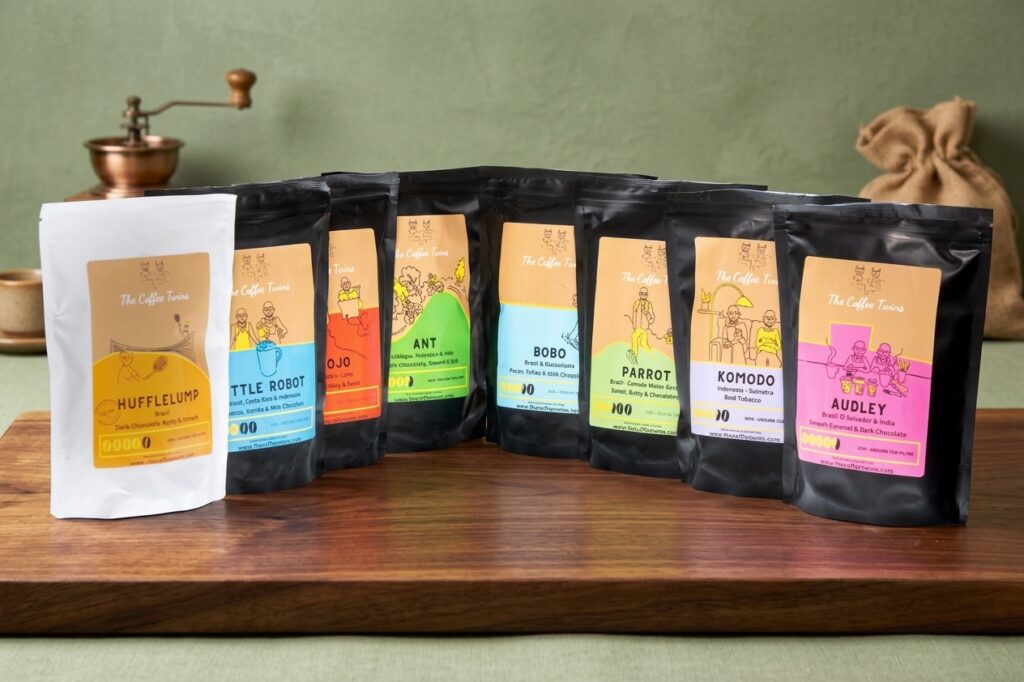
Learning how to choose coffee beans is easier than a shelf full of bags suggests. In fact, seven simple checks will tell you almost everything before you brew a single cup. We came up through five-star hotel food and beverage, where we learned to match a coffee to the drink and the guest, and we still test coffee at the hotels we work with to match it to their milk. So this guide walks you through roast, origin, process, blends, freshness and grind, and then shows you which of our 8 coffees fits each way of brewing.
How to choose coffee beans: start with how you drink it
The best first question is simple: do you add milk? Milk softens acidity and mutes delicate flavours, so a milky coffee needs beans with body and sweetness. For example, BBC Food notes that milky coffee such as a café latte tastes best with darker roasted beans, because the stronger flavour carries the milk.
Black coffee works the other way. Without milk, you can taste every note, so lighter roasts with fruit, florals and brighter acidity really come through. If you drink both, a medium roast is the safe middle ground.
- Mostly lattes, flat whites or cappuccinos: medium to dark roast, chocolate, caramel or nut notes.
- Black filter or pour-over most days: light to medium roast, fruity, floral or sweet notes.
- A bit of both: a medium roast blend.
- Evenings or caffeine-free: a Swiss Water decaf.
How does roast level change the taste?
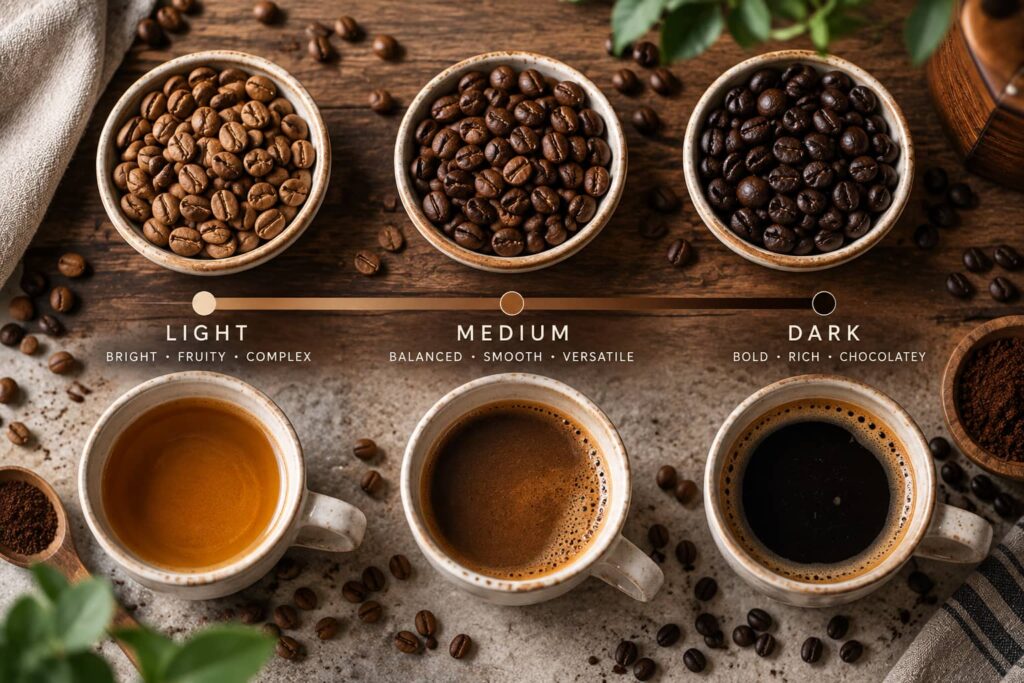
Roast level is the quickest clue to flavour. Lighter roasts keep more of the bean’s own character, so they often taste brighter and fruitier. Darker roasts, on the other hand, bring more body, bitterness and roasty notes such as dark chocolate. Here is how our range lines up, using the roast scores on our own product pages (out of 5).
| Roast | Typical taste | Our coffees |
|---|---|---|
| Light (2.5/5) | Bright, fruity or nutty, lighter body | Jojo (Ethiopia), Parrot (Brazil) |
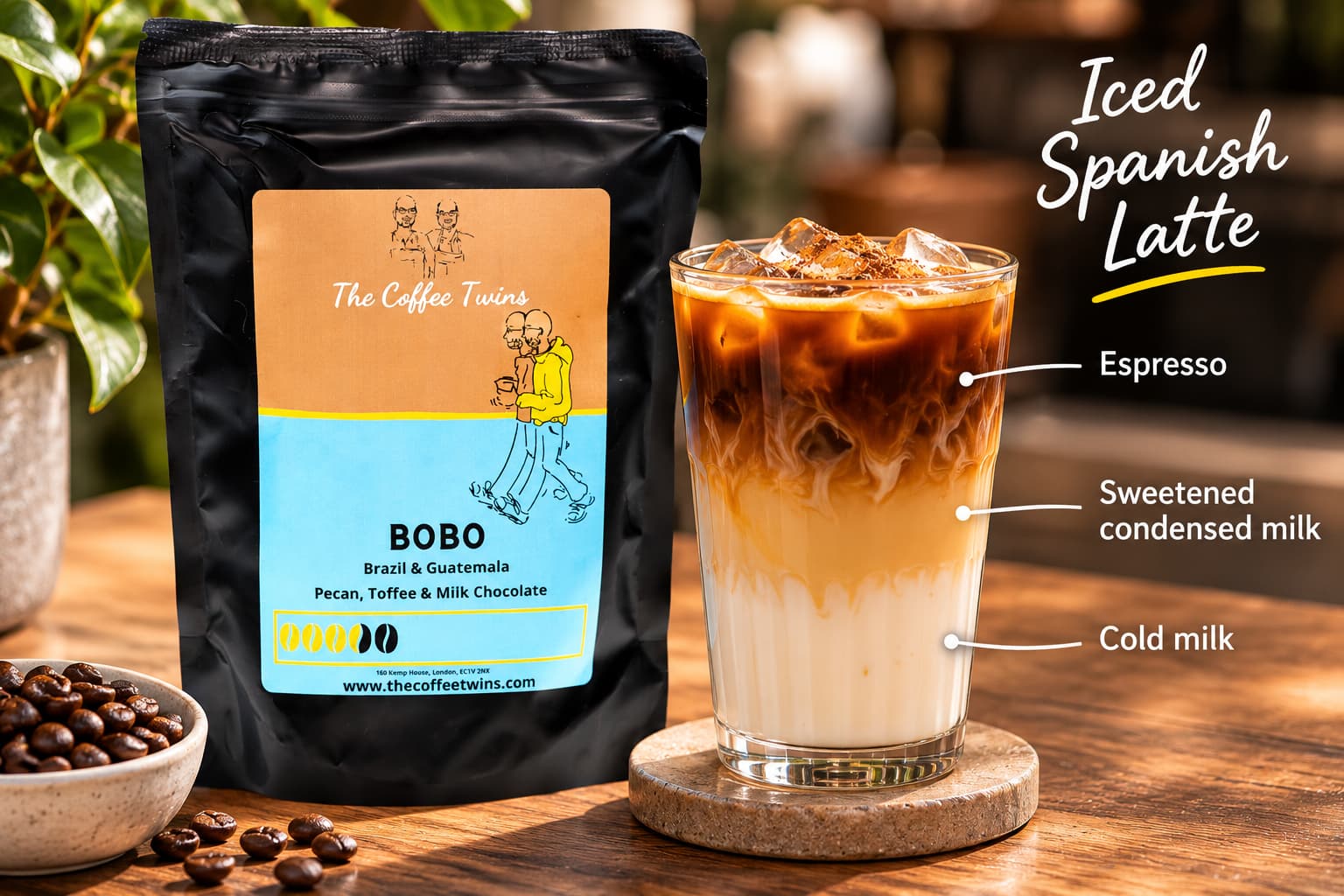
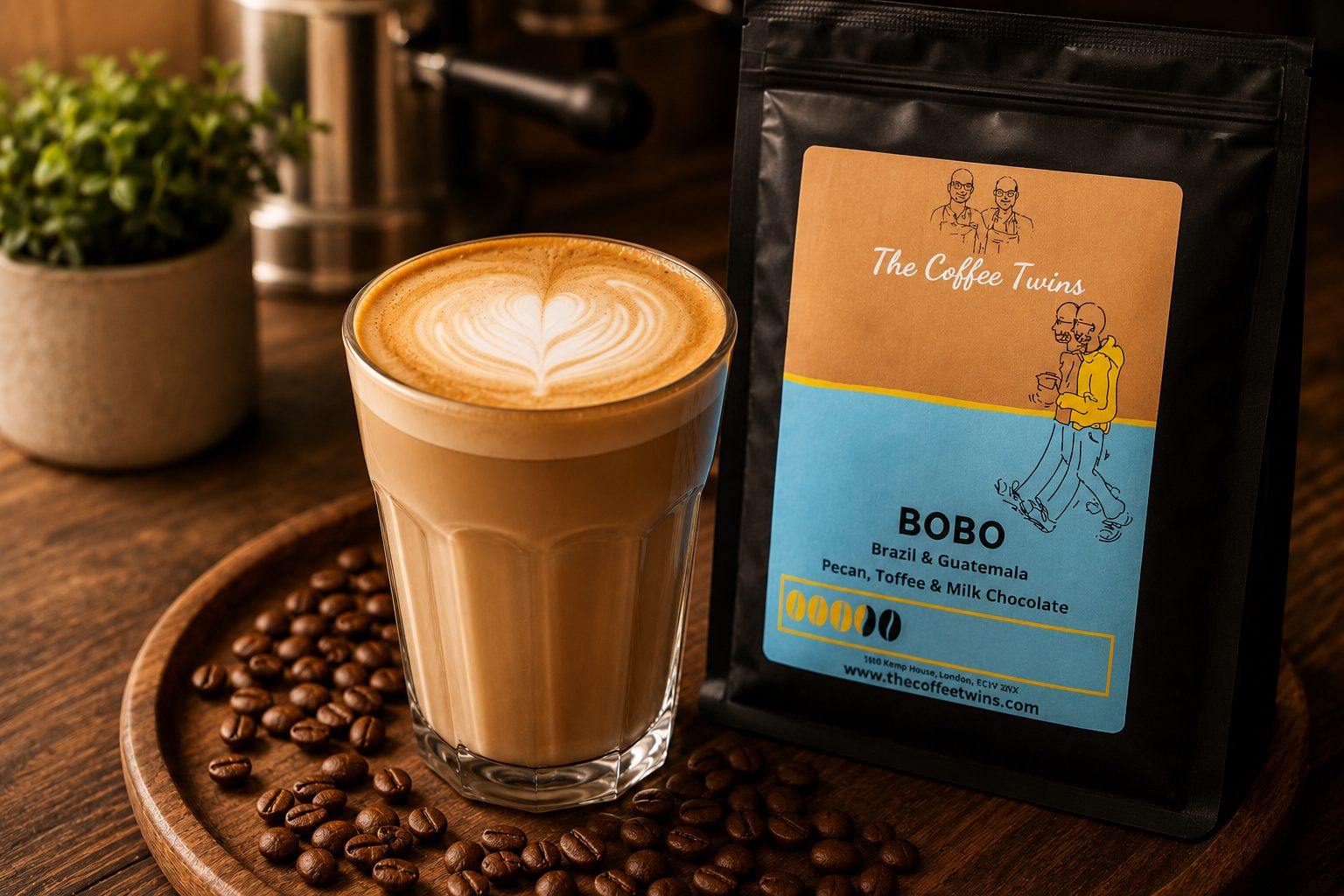
| Medium (3 to 3.5/5) | Balanced, sweet, works with or without milk | Bobo, Little Robot, Komodo |
| Dark (4 to 4.5/5) | Full-bodied, chocolatey, made for milk | Audley, Ant, Hufflelump (decaf) |
Keep in mind that “dark” does not mean more caffeine. Strength in the cup depends mostly on how much coffee you use, which is why our best coffee beans UK guide pairs every pick with a brew method rather than a strength number.
Does origin matter when you choose coffee beans?
Yes, because where coffee grows shapes its flavour. Although every farm is different, a few broad patterns help when you are reading a label:
- Brazil: nutty, chocolatey and low in acidity, which is why it sits at the heart of so many blends, including Bobo, Audley and Parrot.
- Ethiopia: fruity, floral and bright. Jojo, from Limu, is fruity, winy and sweet.
- Guatemala: rich, sweet and rounded, often washed.
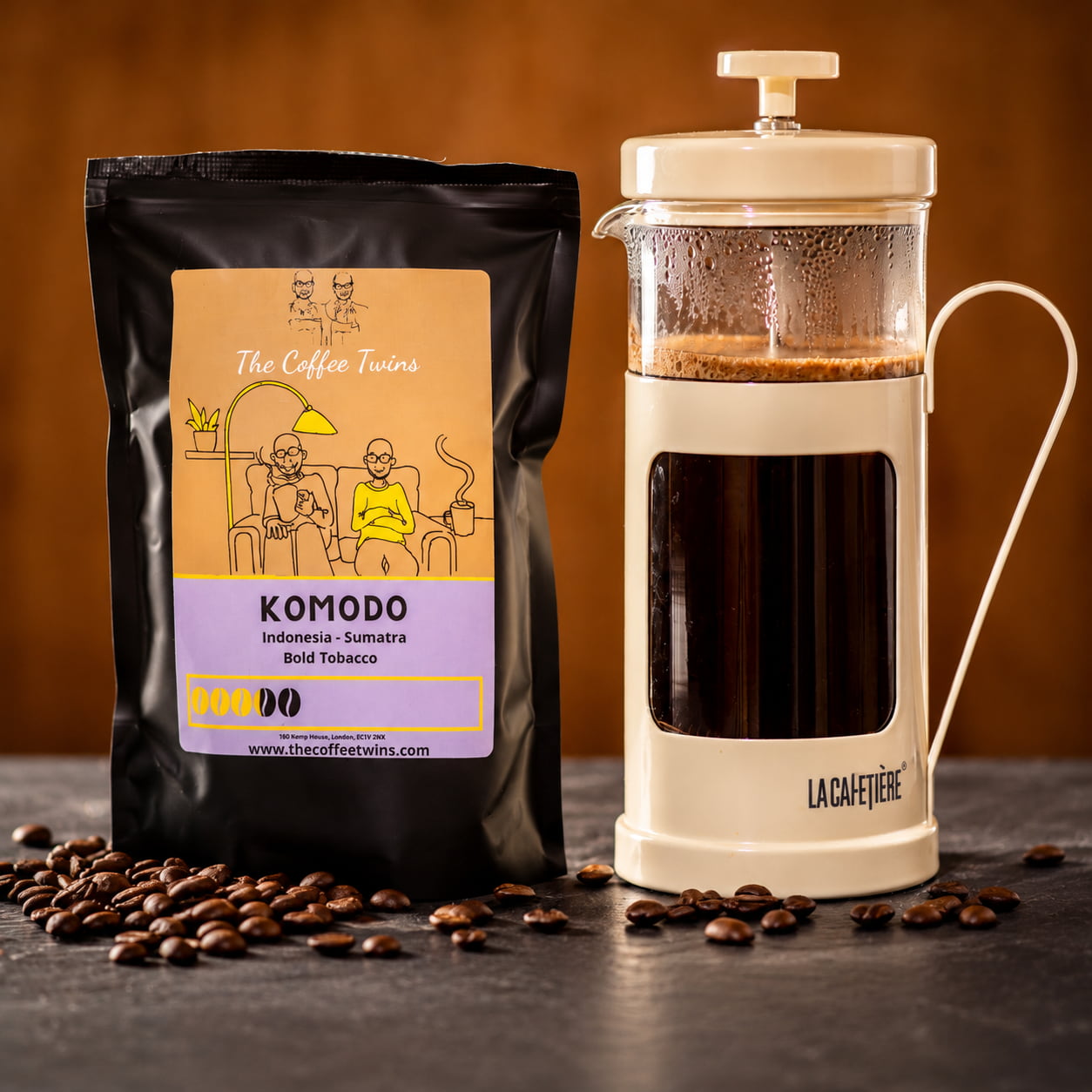
- Indonesia (Sumatra): heavy, earthy and spicy. Komodo, grown near Lake Toba, is a good example, and our Indonesian coffee guide explains why.
Brazil is also the biggest producer by a distance. According to the USDA, it produced about 63 million of the world’s 178.8 million 60kg bags in 2025/26. As a result, you will find Brazilian beans in a large share of the coffee you drink, whether you know it or not.
Washed, natural or wet-hulled: what does the process mean?
The process is how the coffee fruit is removed from the bean after picking, and it changes the taste more than most people expect. Washed coffees are usually clean and bright. Natural coffees, dried inside the fruit, tend to be fruitier and heavier. Meanwhile, wet-hulled coffee (Giling Basah in Indonesia, as used for Komodo) is earthy, spicy and full-bodied. Our guide to washed vs natural coffee goes deeper if you want the detail.
Should you choose a single origin or a blend?
Choose a single origin when you want to taste one place, and a blend when you want balance. Single origins such as Jojo or Komodo show off a distinct character, so they are great for black coffee and for exploring. Blends, by contrast, are built to taste the same bag after bag, and they usually behave well with milk. That consistency is exactly why Bobo, a Brazil and Guatemala blend, was supplied to the Trafalgar St James staff canteen. For a fuller comparison, see single origin coffee vs blend.
Arabica or robusta: which should you pick?
For most home brewing, choose 100% Arabica. It is generally sweeter and more complex, while robusta is harsher and higher in caffeine. Even so, robusta is far from rare: the USDA estimates it made up about 47% of world production in 2025/26, much of it for instant and commercial coffee. All of our coffees are Arabica speciality coffee. Our article on the difference between Arabica and robusta covers the rest.
Why does freshness matter so much?
Because roasted coffee fades. Once beans are roasted, they slowly lose aroma, and ground coffee loses it much faster than whole beans. So look for a roast date rather than only a long best-before date, and buy amounts you will finish within a few weeks. Our guide to how long coffee beans last gives the detail on storage and timing.
This is also why we work the way we do. Our partner roastery in England roasts to order, and orders are usually dispatched within 24 hours, so the beans have not been sitting in a warehouse for months.
Whole beans or ground coffee?
Choose whole beans if you can grind at home, since grinding just before brewing keeps the most flavour. Otherwise, buy coffee ground for your exact brewer, because the wrong grind is the most common reason a good coffee tastes flat or bitter. On our product pages, you can choose beans or a grind for cafetière, filter, espresso, V60 or AeroPress (options vary slightly by coffee). If you are thinking about a grinder, read how to grind coffee beans at home first.

How to read a coffee bag label in two minutes
Once you know what each line means, a bag label becomes a flavour map. Check these in order:
- Tasting notes: the fastest guide to flavour. Chocolate and toffee suit milk; fruit and florals suit black. Our coffee tasting notes guide decodes the common terms.
- Roast level: light, medium or dark, sometimes as a score.
- Origin: the country, and ideally the region or farm.
- Process: washed, natural, honey or wet-hulled.
- Species: look for 100% Arabica.
- Dates: a roast date tells you far more than a best-before date.
- Grind: whole bean, or the brewer it is ground for.
You may also see the word “speciality”. The Specialty Coffee Association describes speciality coffee as coffee recognised for its distinctive characteristics and higher value in the market. In other words, it is coffee chosen for how it tastes and where it comes from, not just for price.
How to choose coffee beans for your brewer
Finally, match the beans to your kit. These are the picks we would make from our own range, based on the tasting notes and scores on each product page.
| How you brew | What to look for | Our picks |
|---|---|---|
| Espresso and milk drinks | Medium to dark, chocolate, caramel | Bobo, Audley, Ant |
| Bean-to-cup machine | Medium to dark, low acidity | Bobo, Audley |
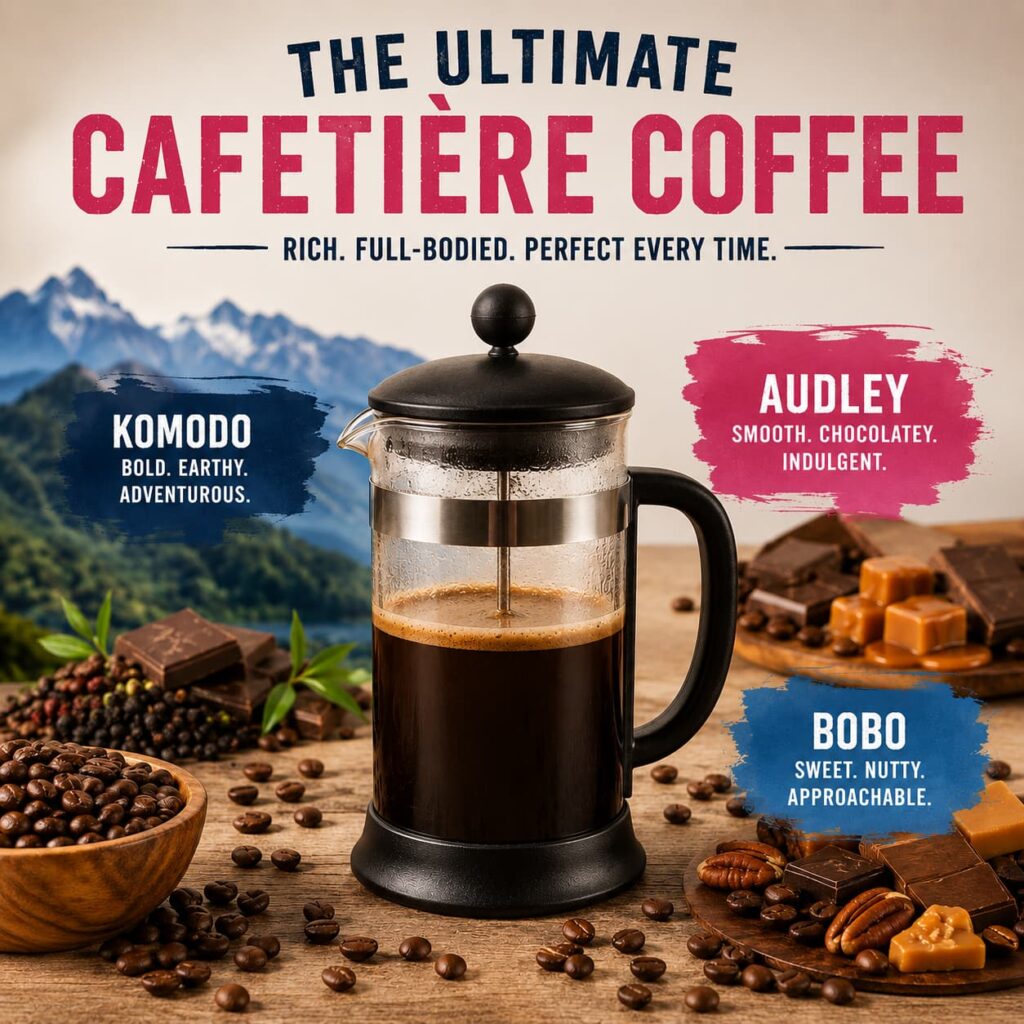
| Cafetière | Medium, full body | Komodo, Bobo |
| V60, filter or AeroPress | Light to medium, fruity or sweet | Jojo, Parrot, Little Robot |
| Decaf | Swiss Water process, smooth | Hufflelump |
For brewer-by-brewer advice, see our guides to the best coffee beans for espresso, bean-to-cup machines, the best coffee for cafetière and the best coffee for V60. If you mainly drink lattes, our best coffee beans for latte guide is the one to read next.
How we choose coffee at The Coffee Twins
We learned to taste in five-star hotel food and beverage, and we still choose coffee the same way: by tasting it in the drink people actually order. When we work with a hotel, we test coffees with their milk before deciding, because the same beans can taste very different in a different latte. Then we visit, train the team on site and stay in touch ourselves. At home, you can do a smaller version of the same thing by tasting a few coffees side by side.
Frequently asked questions
How do I choose coffee beans for a beginner?
Start with a medium roast blend that has chocolate, toffee or nut tasting notes, because it works with or without milk. Then try one lighter, fruitier coffee and one darker, bolder coffee, and notice which direction you prefer.
Which coffee beans are best with milk?
Medium to dark roasts with chocolate and caramel notes usually taste best with milk, since their body and sweetness carry through it. Lighter, fruity coffees often get lost in a large latte.
Should I buy whole beans or ground coffee?
Whole beans stay fresh for longer, so buy them if you can grind at home just before brewing. If you cannot, buy coffee ground for your exact brewer and use it within a couple of weeks of opening.
Does a darker roast mean stronger coffee?
Not in caffeine terms. A darker roast tastes bolder and more bitter, but strength in the cup mostly comes from how much coffee you use for the amount of water.
Is single origin better than a blend?
Neither is better; they do different jobs. Single origins show off one place’s character, while blends are built for balance and consistency, which is why many espresso and milk coffees are blends.
What does speciality coffee mean?
The Specialty Coffee Association describes speciality coffee as coffee recognised for its distinctive attributes and higher value. In practice, it usually means traceable, carefully graded Arabica with clear tasting notes.
Do The Coffee Twins roast the beans themselves?
No. Our partner roastery in England roasts to order for us, while we choose, taste and test every coffee in the range. Orders are usually dispatched within 24 hours.
Ready to choose your coffee beans?
If you are still unsure how to choose coffee beans, let your taste decide. The tasting pack includes Audley (dark), Bobo (medium) and Jojo (light), so you can compare three roasts and three origins in a week. After that, browse all 8 coffees in the shop, or set up a subscription that you can pause or cancel any time. And if you run a hotel, café or office, we visit clients and train staff on site, too.
Try the tasting pack Shop all 8 coffees Start a subscription
0 Comments