
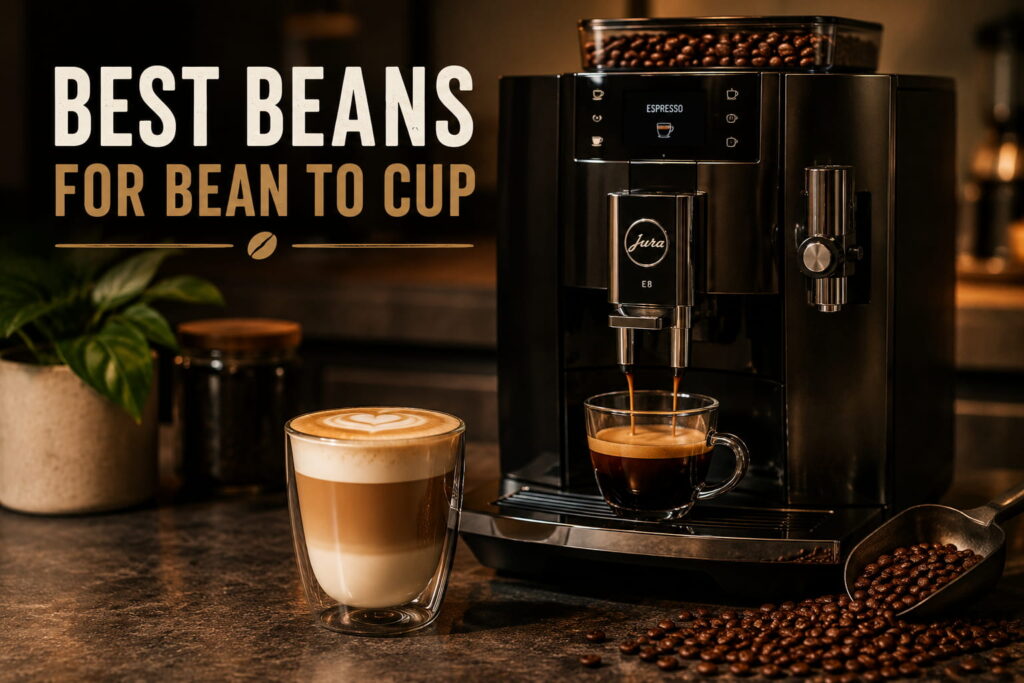
Quick answer: The best coffee beans for bean to cup machines are medium-roasted, low-acid, 100% Arabica blends with enough body for both espresso and milk drinks. Our top pick is Bobo — a Brazilian-Guatemalan medium roast blend that we genuinely supply to Trafalgar St James Hotel for their bean to cup machines. Free UK shipping over £30 — use NEW10 for 10% off your first order.Want the coffee we supply to a five-star London hotel? Buy Bobo — perfect for bean to cup →
Why trust this guide?

We’re Jeremiah and Raja — The Coffee Twins, a UK speciality coffee brand with beans roasted in England. Our beans are stocked in five-star London hotels, and we trained in five-star hotel food and beverage before running our own coffee shop in Farringdon. Genuinely important for this guide: we supply Trafalgar St James Hotel with Bobo coffee for their bean to cup machines in the staff canteen — where it produces perfect espresso and lattes daily. This guide comes from real bean to cup expertise, not theory.
Table of contents
- Why bean to cup machines need specific beans
- What makes the best coffee beans for bean to cup machines
- Our top pick: Bobo (used at Trafalgar St James Hotel)
- Runner-up: Audley (for stronger espresso)
- Alternative: Little Robot (for interesting flavour)
- Bean to cup brand compatibility
- Common bean to cup mistakes to avoid
- Bean to cup grind settings guide
- FAQ
Why Bean to Cup Machines Need Specific Beans
Bean to cup machines are genuinely different from other coffee equipment. They grind, dose, tamp, and brew automatically — which is convenient, but it also means the machine can’t adjust for problematic beans. The right beans make bean to cup coffee taste café-quality. The wrong beans can produce disappointing results even in expensive machines like Jura or Sage Barista Touch.
The unique challenges of bean to cup brewing
- Built-in grinders have limits: Most bean to cup grinders work best with medium roasts. Very light or very dark roasts can cause grinding inconsistencies.
- Automated dosing: The machine doses the same amount every time — beans need to be consistent bag to bag
- Automated tamping pressure: Fixed pressure means beans need forgiving character
- Regular use expected: Bean to cup owners typically drink multiple cups daily — beans need to satisfy consistently
- Milk drink versatility: Most bean to cup machines have milk frothers — beans need to work with milk too
Why hospitality bean to cup use is the real test
At Trafalgar St James Hotel, the bean to cup machines run all day in the staff canteen. Hundreds of espressos and lattes get pulled from the same beans. If a bean doesn’t work consistently in bean to cup, hospitality operators find out fast. Bobo has been our go-to recommendation for hotel bean to cup machines because it delivers day after day.
What Makes the Best Coffee Beans for Bean to Cup Machines
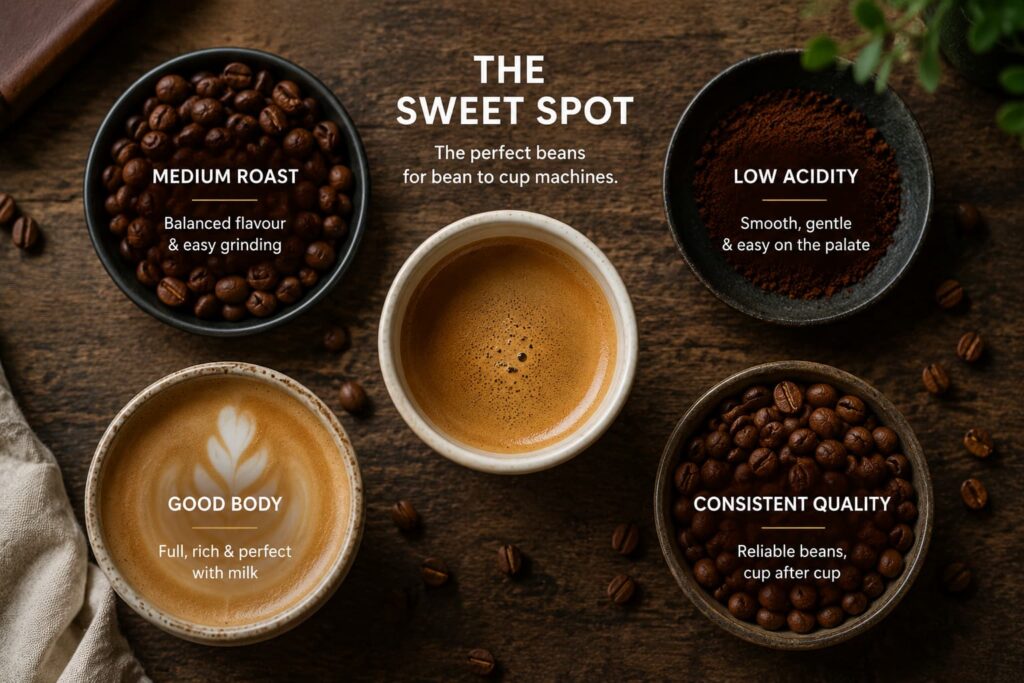
Four things genuinely matter when choosing coffee beans for bean to cup machines.
1. Medium roast (not too light, not too dark)
Bean to cup grinders work best with medium roasts (3/5 to 3.5/5 on our scale). Very light roasts (2.5/5) are hard and dense — bean to cup grinders can struggle with consistency. Very dark roasts (4.5/5) are oily and can gum up built-in grinders over time.
2. Low to medium acidity
Bean to cup machines extract quickly with automated timing. Beans with lower acidity (2/5 or 3/5) are more forgiving — they still taste good even if extraction isn’t perfect. High-acidity beans (4/5+) can taste sour if extraction times aren’t spot on.
3. Good body for milk drinks
Most bean to cup machines have milk frothers, so most owners make lattes, flat whites, and cappuccinos. Beans need enough body (3/5 or higher) to cut through milk without disappearing.
4. Consistent quality across batches
Bean to cup machines dose the same weight every shot. Beans need to be consistent from bag to bag so the machine’s settings don’t need constant adjustment. We partner with a trusted speciality roaster to produce genuinely consistent coffee, with every batch carefully monitored for quality . Speciality-grade coffee (as defined by the Specialty Coffee Association) is the quality tier that delivers this consistency.
Our Top Pick for the Best Coffee Beans for Bean to Cup Machines: Bobo
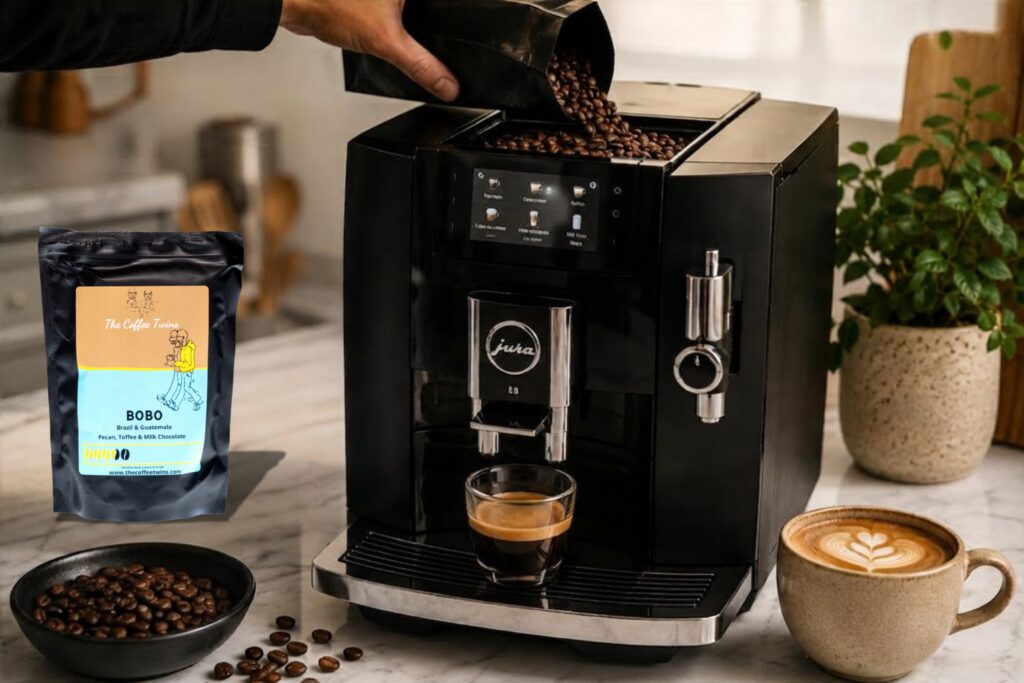
Origin: Brazil (Cerrado Minas Gerais) + Guatemala
Type: Two-origin blend
Roast: 3.5/5 (medium) | Body: 4/5 | Sweetness: 4/5 | Acidity: 2/5
Tasting notes: Pecan, toffee, milk chocolate
Real-world use: Trafalgar St James Hotel bean to cup machines
Buy Bobo →
Bobo is genuinely our top pick for bean to cup machines — and we don’t say that lightly. We supply Bobo to Trafalgar St James Hotel for their bean to cup machines in the staff canteen. Hundreds of espressos and lattes are pulled from these machines daily, and Bobo delivers consistently.
- Roast 3.5/5 (medium): Exactly the roast level bean to cup grinders handle best
- Body 4/5: Substantial enough for espresso, cuts through milk beautifully
- Acidity 2/5: Forgiving of automated extraction timing
- Sweetness 4/5: Naturally sweet — no sugar needed
- Genuinely tested in hospitality: Used daily at Trafalgar St James Hotel
What Bobo produces in bean to cup machines
Warm pecan notes up front, milk chocolate depth through the middle, gentle toffee finish. In espresso, Bobo produces syrupy shots with beautiful crema. In lattes and flat whites, the chocolate character comes through the milk perfectly. The 2/5 acidity means no sour notes even when the machine’s timing isn’t perfectly dialled in.
Best for: Bean to cup machine owners who want café-quality espresso and milk drinks with minimum fuss. Genuinely brilliant for Jura, De’Longhi Magnifica, Sage Barista Touch, Melitta, and Krups bean to cup machines. Above all, the same coffee that works at a five-star London hotel will work in your kitchen.
Runner-Up: Audley (For Stronger Espresso)
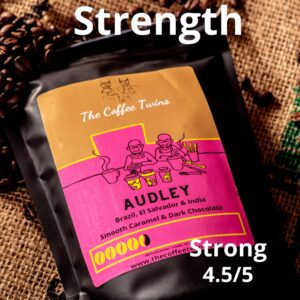
Origin: Brazil + El Salvador + India
Type: Three-origin blend
Roast: 4.5/5 (our darkest) | Body: 5/5 | Acidity: 2/5
Tasting notes: Smooth, caramel, dark chocolate
Buy Audley →
Audley is our alternative pick for bean to cup machines if you prefer stronger, more traditional espresso character. Audley is our darkest and fullest-bodied blend — designed specifically for espresso-style brewing.
- Roast 4.5/5: Traditional Italian-style espresso character
- Body 5/5: The fullest body of any bean we sell
- Acidity 2/5: Very forgiving of automated extraction
- Three-origin blend: Complex layered flavour
What Audley produces in bean to cup machines
Smooth caramel sweetness up front, dark chocolate depth in the middle, long roasty finish. Audley makes espresso taste like a traditional Italian espresso bar. In milk drinks, the dark chocolate cuts through beautifully even in large lattes.
Note on bean to cup use: Audley is our darkest bean at 4.5/5 roast. Most bean to cup machines handle it well, but if your machine has an older or budget grinder, you may notice slightly more oiliness over time. Regular cleaning of the grinder chamber (which you should do anyway) prevents any issues.
Best for: Bean to cup owners who prefer strong, traditional espresso character. Great for high-end bean to cup machines like Jura Z10, Sage Oracle, or De’Longhi Eletta Explore.
Alternative: Little Robot (For Interesting Everyday Flavour)
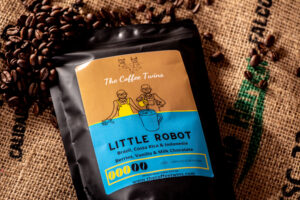
Origin: Brazil + Costa Rica + Indonesia
Type: Three-origin blend
Roast: 3/5 (medium) | Body: 3/5 | Sweetness: 4/5 | Acidity: 3/5
Tasting notes: Berries, vanilla, milk chocolate
Buy Little Robot →
Little Robot is our third pick for bean to cup machines if you want something more distinctive than Bobo but less intense than Audley. It’s a three-origin blend with berry and vanilla character that adds interest to everyday coffee.
- Roast 3/5 (medium): Slightly lighter than Bobo — brings out more origin character
- Body 3/5: Balanced body, works in both espresso and milk drinks
- Sweetness 4/5: Naturally sweet with berry and vanilla notes
- Interesting flavour: More distinctive than typical bean to cup coffee
What Little Robot produces in bean to cup machines
Berry notes up front (subtle, not fruit-bomb), vanilla through the middle, milk chocolate finish. It’s coffee that tastes interesting enough to drink black but plays well with milk too. Great for households where you want variety beyond the typical chocolate-caramel bean to cup profile.
Best for: Bean to cup owners who want something interesting for daily drinking. Works particularly well in machines with adjustable extraction like Jura and higher-end De’Longhi models.
Bean to Cup Brand Compatibility
Our bean recommendations work across all major bean to cup brands. Here’s what you should know about the specific brands you’re likely to own.
Jura bean to cup machines
Jura machines (Z10, E8, ENA 8, S8) have excellent built-in grinders that handle medium and dark roasts brilliantly. All three of our recommended beans (Bobo, Audley, Little Robot) work perfectly. Start with Bobo for versatility, move to Audley if you want stronger espresso character.
De’Longhi Magnifica and Eletta
De’Longhi bean to cup machines (Magnifica S, Magnifica Evo, Eletta Explore, Eletta Cappuccino) are the UK’s bestsellers. Bobo works exceptionally well in these machines — the built-in grinder handles the medium roast consistently, and the acidity level suits De’Longhi’s extraction timing.
Sage Barista Touch, Barista Pro (bean to cup mode)
Sage’s higher-end machines like the Barista Touch have bean to cup modes that automate everything. Bobo and Audley both perform brilliantly. If you’re using the automated milk texturing, Bobo’s chocolate character comes through beautifully.
Melitta and Krups
Melitta Caffeo, Solo, and Barista TS work well with all three recommended beans. Krups Evidence and Intuition are similar. Start with Bobo — the medium roast and low acidity give you the widest margin for machine timing variations.
Smeg and Miele bean to cup
Higher-end appliance bean to cup machines from Smeg and Miele have excellent grinders. Audley genuinely shines in these — the dark roast character produces café-quality espresso when paired with premium equipment.
Common Bean to Cup Mistakes to Avoid
Bean to cup machines are largely automated, but a few mistakes will consistently give you disappointing coffee.
Mistake 1: Buying supermarket “bean to cup” beans
Most supermarket “bean to cup” beans are stale by the time you buy them — often 3-9 months post-roast. Bean to cup machines can’t hide staleness. Buy from speciality roasters who roast fresh and dispatch quickly.
Mistake 2: Storing beans in the machine’s hopper for weeks
Bean to cup hoppers aren’t airtight. Beans left in the hopper for weeks go stale. Only fill the hopper with what you’ll use in 5-7 days.
Mistake 3: Never cleaning the grinder
Coffee oils build up in bean to cup grinders over time, affecting taste and grinder performance. Follow your machine’s cleaning schedule — typically every 2-4 weeks depending on use.
Mistake 4: Not adjusting grind size for different beans
Every bean brews slightly differently. When you switch beans, adjust the grind size setting on your machine. If shots are too fast (weak), grind finer. If shots are too slow (bitter), grind coarser.
Mistake 5: Using flavoured or oily dark roasted beans
Very oily dark roasted beans and flavoured beans can gum up bean to cup grinders. Stick with speciality-grade beans that are properly roasted, not over-roasted for flavour compensation.
Mistake 6: Ignoring water quality
Bean to cup machines are sensitive to water hardness. Hard tap water can affect both taste and machine longevity. Use filtered water or your machine’s built-in water filter (if it has one).
Bean to Cup Grind Settings Guide
Getting the grind setting right transforms bean to cup coffee. Here’s the honest guide to dialling in each of our recommended beans.
General grind setting principles
- Espresso runs too fast (weak, watery): Grind finer (lower number on most machines)
- Espresso runs too slow (bitter, sour): Grind coarser (higher number)
- Perfect espresso extraction: 25-30 second shot for a double
- Adjust one setting at a time — never make multiple changes at once
Bobo grind settings
Bobo works with most bean to cup machines on their default medium setting. On a 1-10 grinder scale (like Jura), start at setting 4-5. On a 1-13 scale (like Sage), start at setting 6-7. Adjust based on shot timing.
Audley grind settings
Audley is darker, so it typically needs slightly coarser grind than Bobo. On a 1-10 scale, start at setting 5-6. On a 1-13 scale, start at setting 7-8. Watch for the machine slowing down over time as oils build up.
Little Robot grind settings
Little Robot is slightly lighter than Bobo (3/5 vs 3.5/5). May need slightly finer grind. On a 1-10 scale, start at setting 3-4. On a 1-13 scale, start at setting 5-6.
Milk drink adjustments
If you primarily drink lattes and cappuccinos, you can grind slightly coarser than for espresso-only drinking. The milk masks minor extraction imperfections. Bobo and Audley both work brilliantly for milk drinks at their default settings.
Frequently Asked Questions
What are the best coffee beans for bean to cup machines?
The best coffee beans for bean to cup machines are medium-roasted (3-3.5/5), low-acid (2/5), 100% Arabica blends with good body for milk drinks. Our top pick is Bobo — a Brazilian-Guatemalan medium roast blend that we supply to Trafalgar St James Hotel for their bean to cup machines. It produces perfect espresso and lattes consistently.
What coffee is best for a Jura bean to cup machine?
Jura machines (Z10, E8, ENA 8) work brilliantly with medium roast blends. Our Bobo is genuinely the ideal choice — the medium roast, low acidity, and consistent quality suit Jura’s automated extraction perfectly. For stronger espresso, our Audley also works exceptionally well in Jura machines.
What coffee beans work best in a De’Longhi Magnifica?
De’Longhi Magnifica machines are the UK’s bestselling bean to cup machines. Bobo works exceptionally well — the built-in grinder handles the medium roast consistently, and the low acidity suits De’Longhi’s extraction timing. Start with grind setting 4-5 out of 10.
What roast level is best for bean to cup machines?
Medium roast (3-3.5/5 on our scale) is genuinely the sweet spot. Very light roasts can be too hard for bean to cup grinders, and very dark roasts can be too oily. Medium roasts like Bobo (3.5/5) give you the widest margin for machine timing variations while still producing rich espresso and milk drinks.
Should I use whole beans or pre-ground for bean to cup machines?
Always whole beans. Bean to cup machines are designed to grind fresh for every cup — that’s their main advantage over other methods. Using pre-ground defeats the purpose and can damage the machine (never put pre-ground coffee in the bean hopper).
How much coffee do bean to cup machines use per cup?
Most bean to cup machines use 7-12g per single espresso and 14-20g per double. Higher-end machines use more coffee (better extraction). A 250g bag typically produces 20-30 espressos, or 12-18 lattes.
Why does my bean to cup coffee taste bitter?
Usually too fine a grind, or beans that have been in the hopper too long. Try grinding coarser first (increase the number setting by 1-2). If that doesn’t help, empty the hopper and use fresh beans. If it still tastes bitter, your grinder may need cleaning.
Why does my bean to cup coffee taste weak?
Usually too coarse a grind or stale beans. Try grinding finer (decrease the number by 1-2). Check that your beans are within 30 days of roast date. If both are fine, your machine may need descaling or the coffee dose may need increasing (if adjustable).
How often should I clean my bean to cup machine?
Follow your machine’s cleaning schedule. Typically: daily rinse of milk system, weekly deep clean of milk parts, every 2-4 weeks descaling and grinder cleaning (depending on use). Clean grinders make dramatically better coffee.
Where can I buy the best coffee beans for bean to cup machines UK?
The Coffee Twins — a UK speciality coffee brand with beans roasted in England. Our top pick for bean to cup is Bobo, which we supply to Trafalgar St James Hotel for their bean to cup machines. Also excellent: Audley (stronger espresso) and Little Robot (interesting everyday flavour). Free UK shipping over £30. Use NEW10 for 10% off your first order.
Summary
The best coffee beans for bean to cup machines are medium-roasted, low-acid, 100% Arabica blends with enough body for both espresso and milk drinks.
From our range:
- Top pick: Bobo — genuinely used at Trafalgar St James Hotel bean to cup machines
- For stronger espresso: Audley — our darkest, fullest-bodied blend
- For interesting everyday flavour: Little Robot — berry and vanilla notes
All three are 100% Arabica speciality-grade, roasted in England, and dispatched within 24 hours. They work brilliantly in Jura, De’Longhi, Sage, Melitta, Krups, Smeg, and Miele bean to cup machines. Free UK shipping over £30 — use NEW10 for 10% off your first order.
Try Bobo — The Coffee We Supply to Trafalgar St James Hotel →
Enjoying this article?
If you find our coffee guides useful, you can add The Coffee Twins as a preferred source in Google so our latest articles are easier to find in your search results.
Add The Coffee Twins as a preferred source on Google →
Thanks for supporting our little coffee corner of the internet.
0 Comments