
Quick answer: A Spanish latte is a latte sweetened with condensed milk instead of sugar or syrup. You stir 20 to 30ml (about 1.5 to 2 tablespoons) of sweetened condensed milk into a double espresso. Then you top it with steamed milk, or pour it over ice and cold milk for the iced version. As a result, it tastes rounder and sweeter than a plain latte. For scale, Carnation condensed milk is 55g of sugar per 100g, so a little goes a long way.
By The Coffee Twins (Jeremiah and Raja Wolstenholme) | Last reviewed 12 November 2026
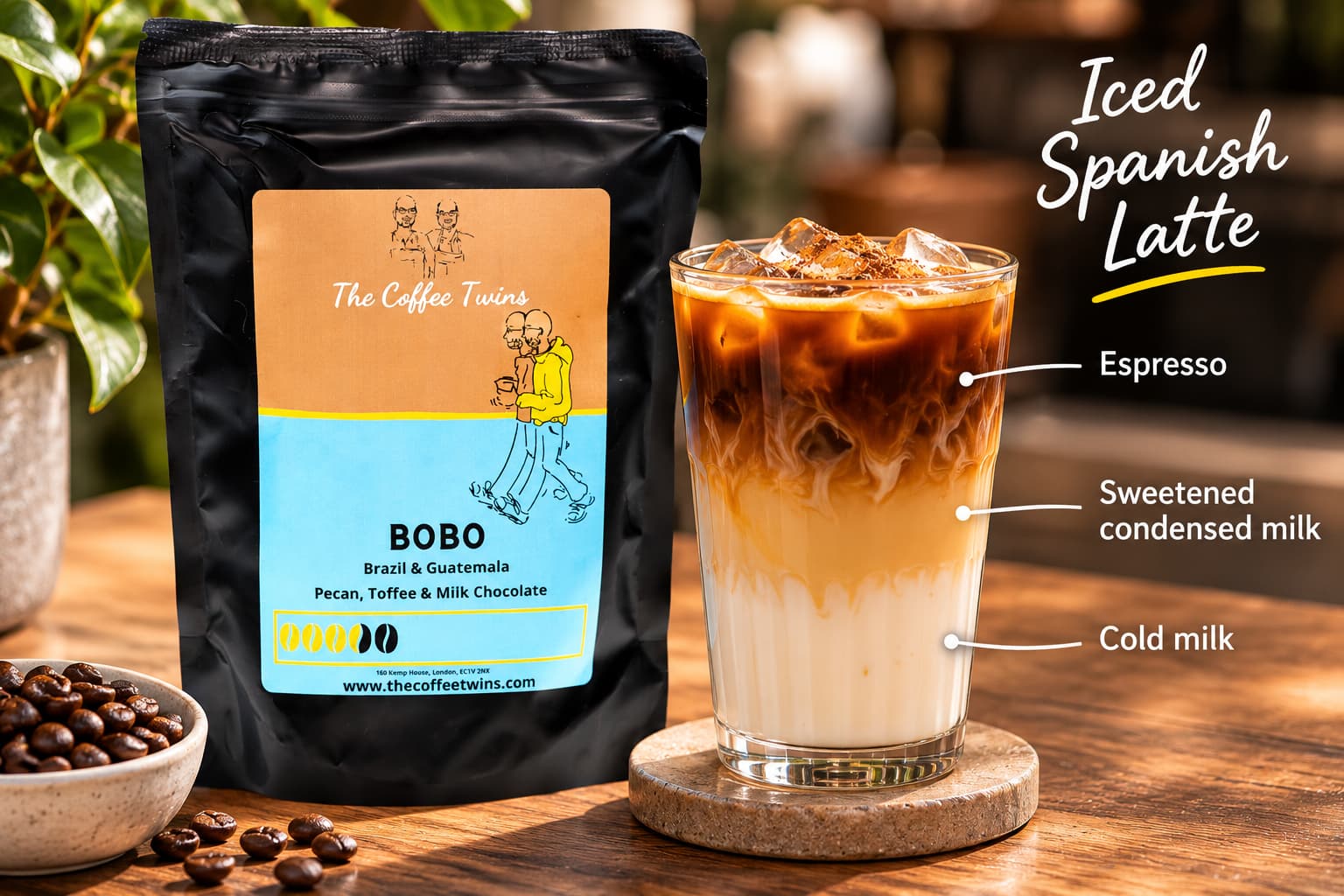
Shop Bobo, our pick for a Spanish latte
The Spanish latte has gone from a niche café order to a regular on UK menus. Costa Coffee, for example, brought back its Spanish Latte and Iced Spanish Latte on 3 July 2025, and both are still on its menu in November 2026. The good news is that the real thing is easy to make at home with three ingredients. At The Coffee Twins we came up through five-star hotel food and beverage. So this guide gives you a barista’s ratios and the beans that suit condensed milk. It also explains how the drink differs from café con leche, a cortado and a bombón.
What is a Spanish latte?
A Spanish latte is espresso, sweetened condensed milk and milk, usually in that order. Unlike a regular latte, it is sweet by design, because the condensed milk replaces sugar or syrup. Condensed milk is simply whole milk and sugar cooked down. In fact, Nestlé Professional’s figures for Carnation show 55g of sugar and 8g of fat per 100g. So it adds body as well as sweetness, and the drink feels thicker and more caramel-like than a latte with a sugar sachet.
The name is a little misleading. In Spain you would more likely order a café con leche or a café bombón. The “Spanish latte” label is mostly a café-menu name used elsewhere. Even so, it borrows from both Spanish drinks: the milky cup of café con leche and the condensed milk of a bombón.
It also helps to know what the chains serve. Costa’s July 2025 announcement describes its version as a latte with a “condensed milk-flavoured sauce”, while the home recipe below uses real condensed milk from a tin. To see where it sits on the wider café menu, our guide to the best coffee drinks in the UK covers the lot.
How do you make a Spanish latte at home?
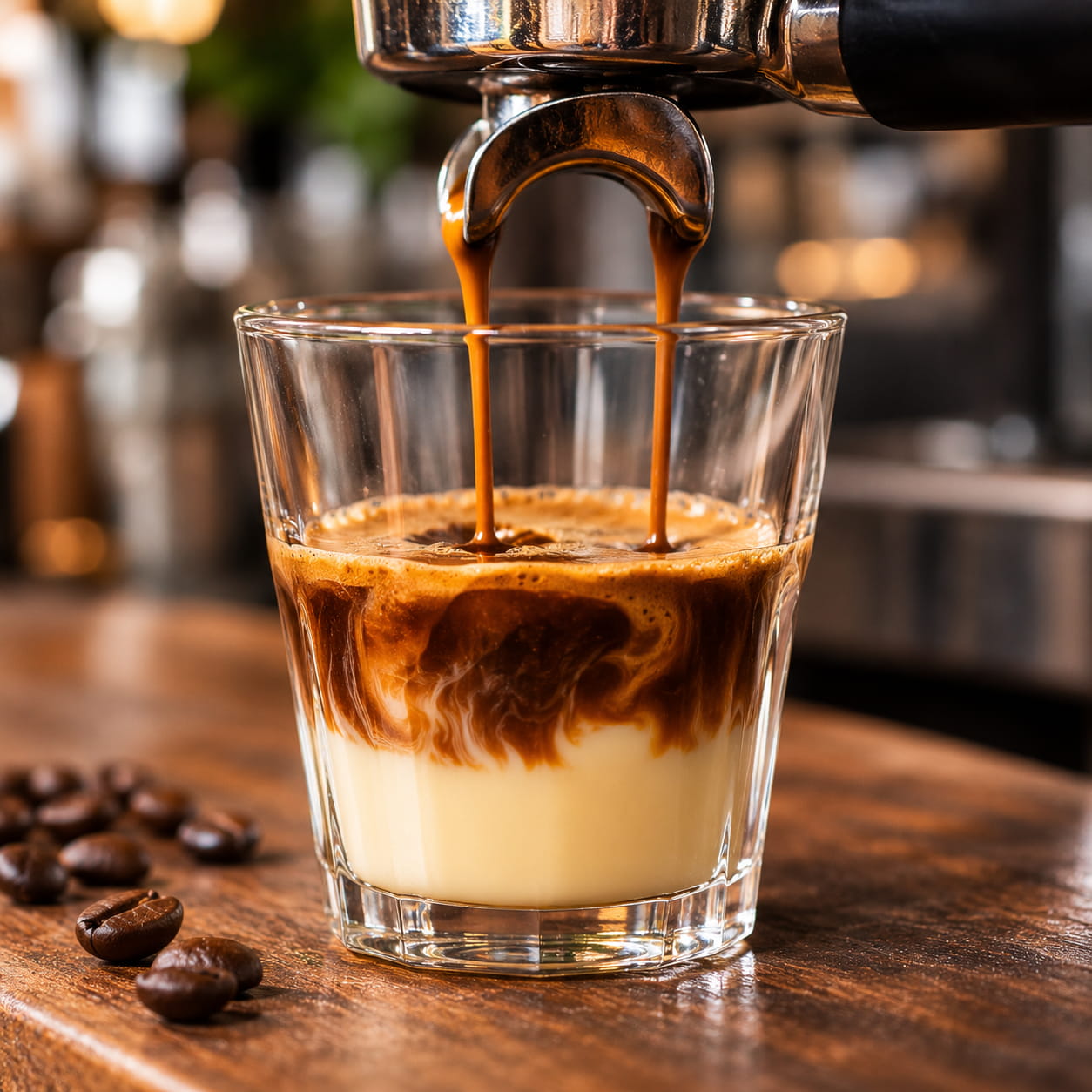
This Spanish latte recipe makes one hot drink in a 250 to 300ml cup. It assumes an espresso machine, although a moka pot or AeroPress works too if you brew it strong.
Ingredients
- Coffee: a double espresso, roughly 18g of ground coffee for about 36 to 40g of liquid.
- Condensed milk: 20 to 30ml (about 1.5 to 2 tablespoons) of sweetened condensed milk. Start at 20ml and add more once you have tasted it.
- Milk: 150 to 180ml of whole milk, or your usual milk.
Method
- Warm your cup with hot water, then tip it out.
- Spoon the condensed milk into the bottom of the cup.
- Pull the double espresso straight onto it and stir until it dissolves, because hot coffee melts condensed milk far more easily than milk does.
- Steam the milk to around 60°C, with a thin layer of silky foam.
- Pour the milk in, finish with a little foam on top, and taste. If you want it sweeter, add another half spoon next time.
Milk temperature makes a real difference here. Most baristas aim for 55 to 65°C, the range where steamed milk tastes sweetest. That figure comes from Latte Art Factory’s Nefeli Bouti in a February 2026 Perfect Daily Grind article. Above that, milk starts to taste cooked, and the condensed milk can tip the drink into cloying. For the full milk technique, our step-by-step guide on how to make a latte at home walks through steaming and pouring.
No machine? Brew strong coffee in a moka pot, then heat the milk in a pan and whisk it until frothy. Our best coffee for moka pot guide explains which beans hold up best on the hob.
How do you make an iced Spanish latte?
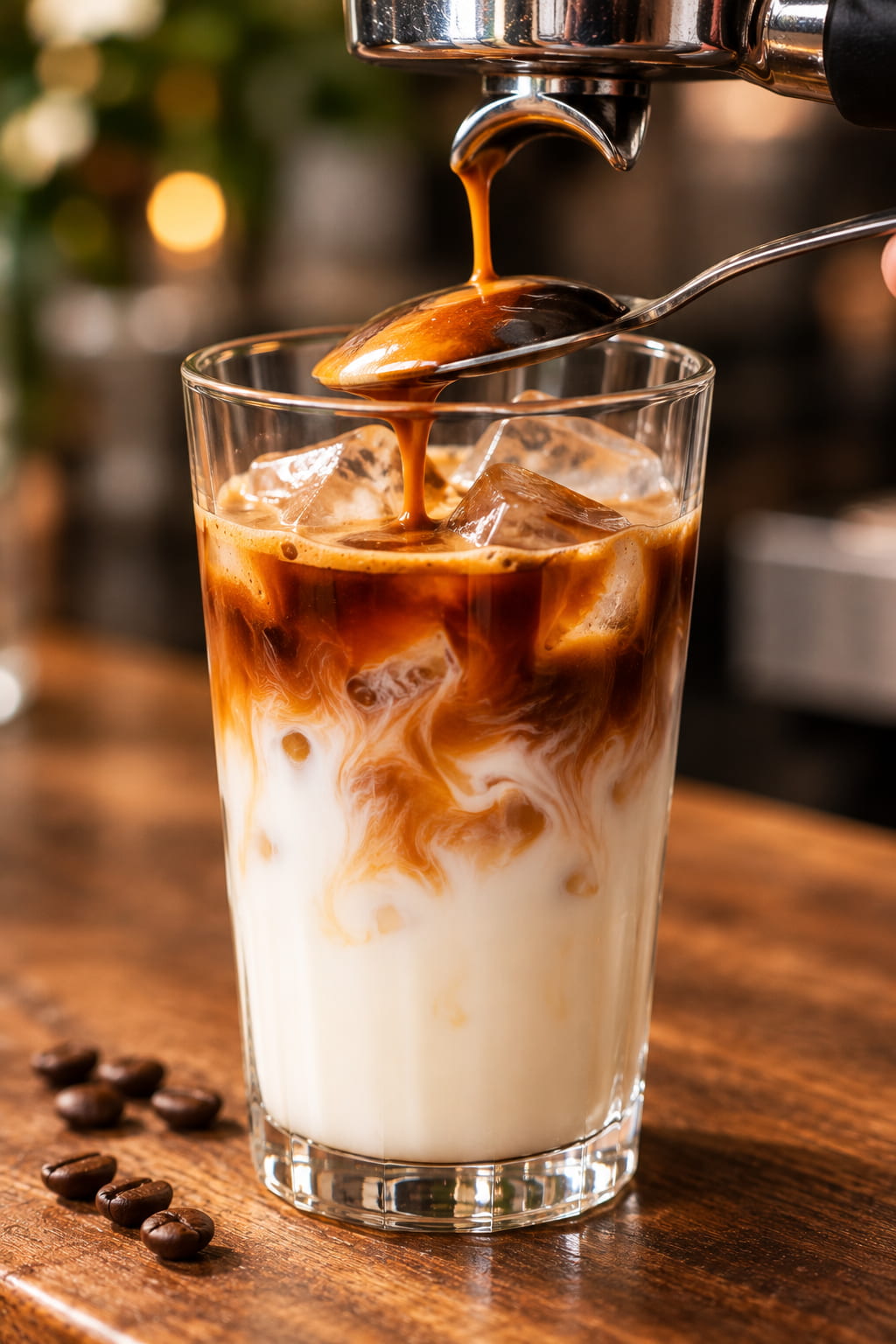
An iced Spanish latte uses the same three ingredients, but the order changes so you get those striking layers in the glass. It is the version most people picture, and it is the one to try first if you like iced coffee.
- Fill a tall glass (about 350ml) with ice.
- Spoon 20 to 30ml (about 1.5 to 2 tablespoons) of condensed milk into a small jug, pull a double espresso straight onto it and stir until it dissolves. Condensed milk will not mix into cold milk, so it has to go into the hot coffee first.
- Pour 120 to 150ml of cold milk over the ice.
- Pour the sweetened espresso slowly over the back of a spoon, so it floats on top of the milk.
- Stir well before drinking, otherwise the last sip is pure syrup.
If your shots melt the ice too quickly, pull them into a small jug first and let them cool for a few minutes. Alternatively, you can make the coffee part ahead. While cold brew is milder than espresso, a concentrated batch from our cold brew at home guide also works well over ice.
Spanish latte vs café con leche, cortado and bombón: what’s the difference?
These four drinks get mixed up on menus. Still, the difference comes down to two things: how much milk goes in, and whether condensed milk is involved. Here is how they compare.
| Drink | What’s in it | Coffee to milk | Sweet? | Typical serve |
|---|---|---|---|---|
| Spanish latte | Espresso, condensed milk, steamed or cold milk | About 1:4, plus condensed milk | Yes, from the condensed milk | Latte cup, or a tall glass over ice |
| Café con leche | Strong coffee and hot milk, lightly foamed | About 1:1 | Only if you add sugar | Cup or glass, often at breakfast in Spain |
| Cortado | Espresso and a splash of warm milk | About 1:1, small volume | No | Small glass |
| Café bombón | Espresso and condensed milk, no other milk | About 1:1 coffee to condensed milk | Very | Small glass, layered |
The café con leche ratio comes from BBC Good Food. It says the key is a 1:1 ratio of coffee to milk, with the milk hot and only lightly foamed. Interestingly, BBC Good Food titles that recipe “Spanish latte (café con leche)”, and that is where much of the confusion comes from. However, its version has no condensed milk, so it is a different drink from the sweet Spanish latte most UK cafés now serve.
A cortado, by contrast, is all about the coffee. It cuts an espresso with a similar amount of warm milk, so it is small, strong and unsweetened. Meanwhile, a bombón is the most intense of the lot. It is half espresso and half condensed milk in a small glass, closer to a dessert than a morning coffee. In short, if you like a bombón but want something longer, a Spanish latte is the natural next step.
What are the best coffee beans for a Spanish latte?
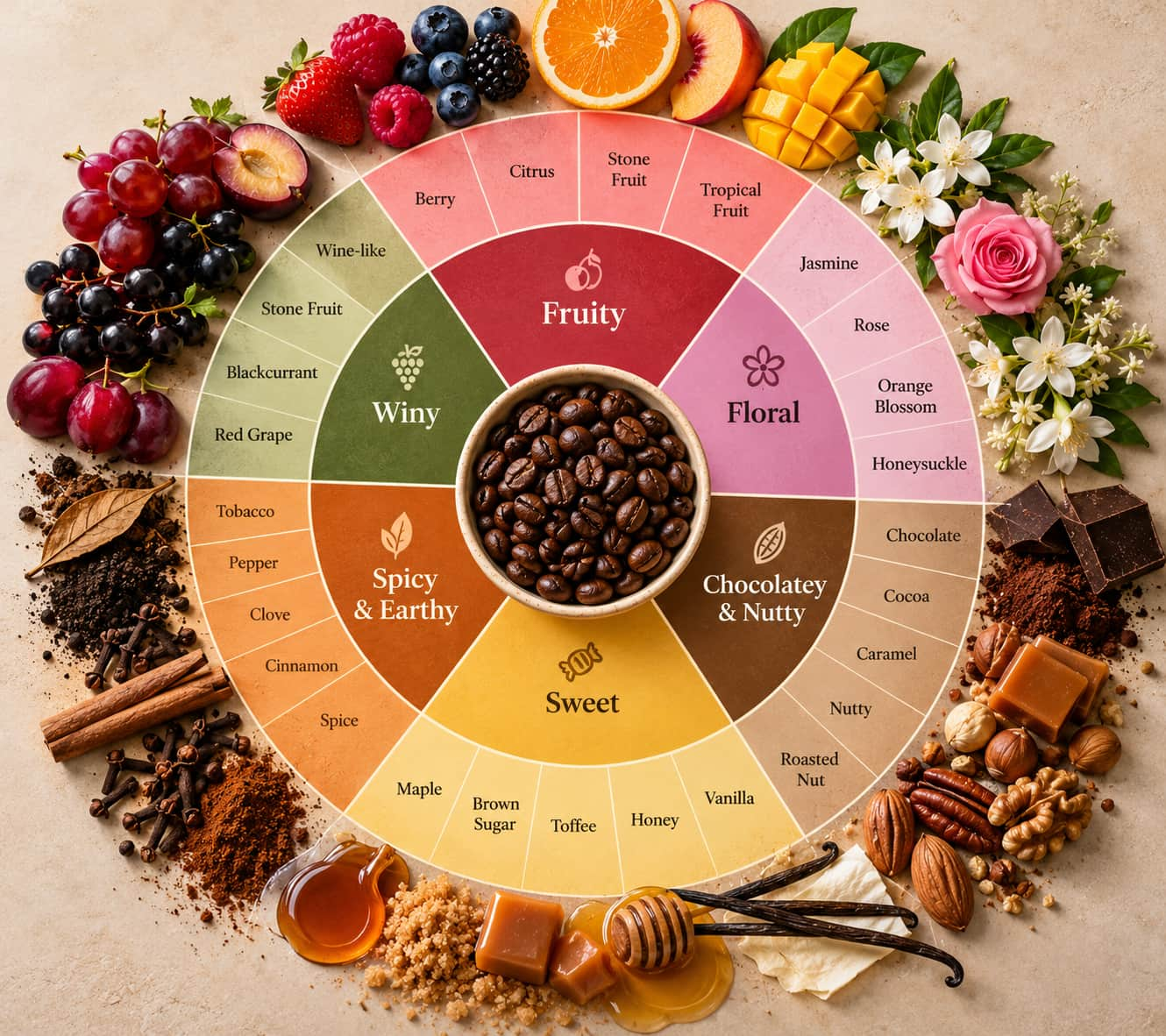
The best beans for a Spanish latte are chocolatey, full-bodied coffees with low acidity. That’s because they have to stand up to both milk and a heavy hit of sugar. Condensed milk tastes of caramel and cooked milk. So coffees with cocoa, toffee or nutty notes sit naturally alongside it, whereas bright, fruity coffees can turn sour-sweet. Scores below come from our own product pages (out of 5).
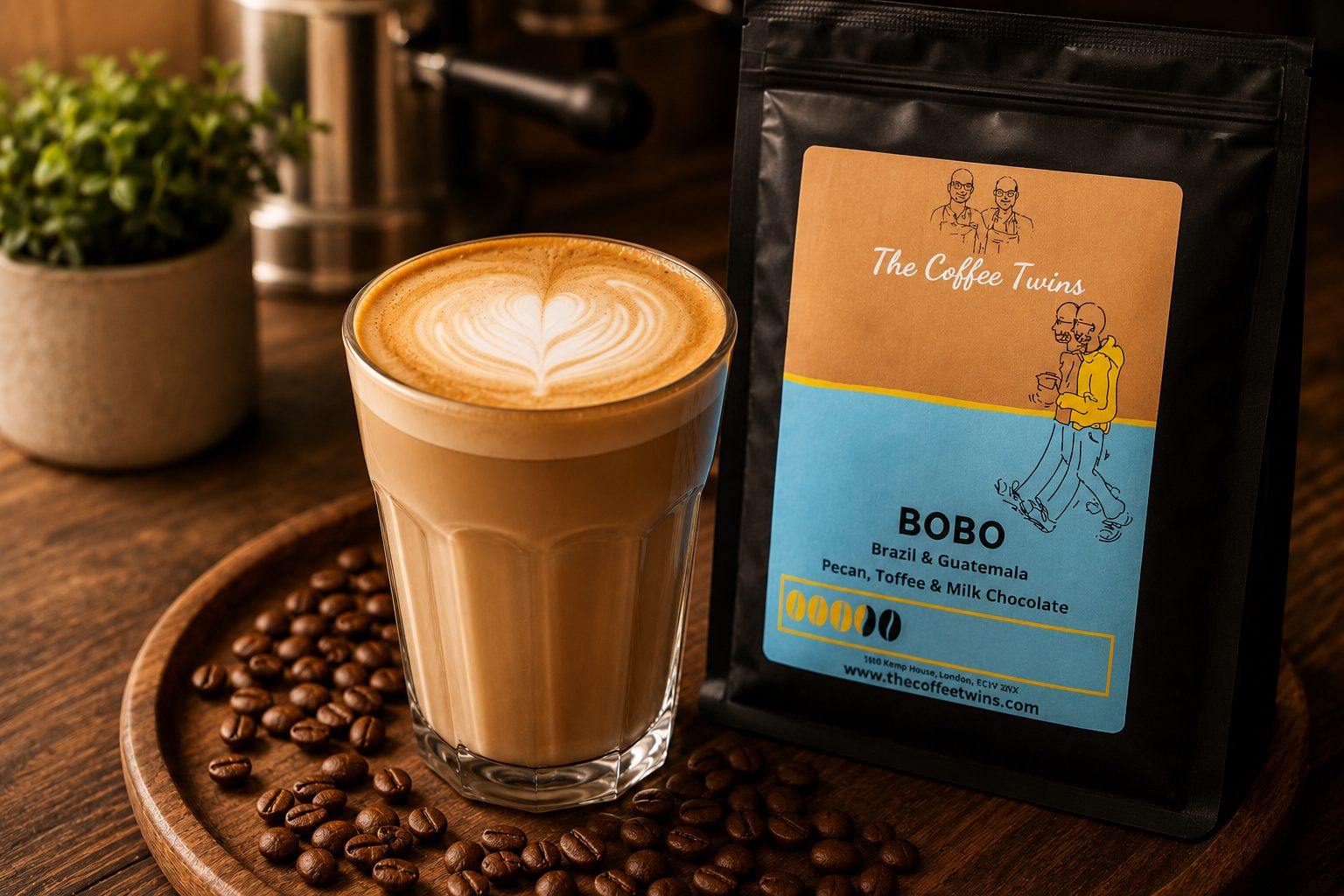
- Bobo: Brazil and Guatemala, 4/5 body and 2/5 acidity, with pecan, toffee and milk chocolate notes. Those toffee notes meet the condensed milk halfway, which makes it our everyday pick.
- Audley: Brazil, El Salvador and India, with 5/5 body and a 4.5/5 roast. Choose it if you like yours strong, because the dark chocolate cuts through the sweetness.
- Hufflelump Decaf: a Swiss Water decaf from Brazil with 2/5 acidity, for an evening cup that still tastes like coffee.
Our fuller guide to the best coffee beans for latte compares more options in milk.
We would skip our Ethiopian Jojo here. It is fruity and winy with 4/5 acidity, which is lovely black but clashes with condensed milk.
How do hotel baristas get milk drinks right every time?
In hospitality, consistency matters more than any single great cup. That’s why we test coffees at the hotels we work with, to match the beans with their milk, rather than judging them as espresso alone. A sweet drink like this only works if the coffee underneath is balanced, since sugar exaggerates any harshness in the shot.
We learned that in five-star hotel food and beverage, and later in a coffee shop in Farringdon, where people started calling us The Coffee Twins. Today we supply hotels including Trafalgar St James, where Bobo was the coffee we supplied to the staff canteen. We also visit clients and train their staff on site, from milk steaming to dialling in. If you run a hotel, office or café and want that kind of hands-on support, our wholesale page explains how we work.
Frequently asked questions
What is in a Spanish latte?
Espresso, sweetened condensed milk and milk. The condensed milk replaces sugar or syrup, which makes the drink sweeter and creamier than a regular latte.
Is a Spanish latte the same as café con leche?
Not quite. Café con leche is coffee and hot milk in roughly equal parts, with no condensed milk. By contrast, a Spanish latte is milkier and sweetened with condensed milk.
How much condensed milk should you use?
Start with 20ml, about 1.5 tablespoons, for a double espresso, and go up to 30ml (2 tablespoons) if you like it sweeter. Condensed milk is around 55% sugar, so add more only once you have tasted it.
Is a Spanish latte stronger than a regular latte?
It usually has the same double shot, so the caffeine is similar. However, the condensed milk makes it taste richer and less milky.
Can you make a Spanish latte dairy-free?
Yes, with an oat or other plant milk and a dairy-free condensed milk. Nestlé discontinued its Carnation vegan condensed milk, but GB News reported that Biona’s sweetened condensed coconut milk is still sold in the UK. Expect a light coconut flavour.
Can you make one without an espresso machine?
Yes. A moka pot or an AeroPress brewed strong gives you a concentrated base, and you can heat and whisk the milk in a pan.
Do The Coffee Twins roast the beans themselves?
No. Our partner roastery in England roasts to order for us, and we choose and taste the range. Orders are usually dispatched within 24 hours.
Ready to make your first Spanish latte?
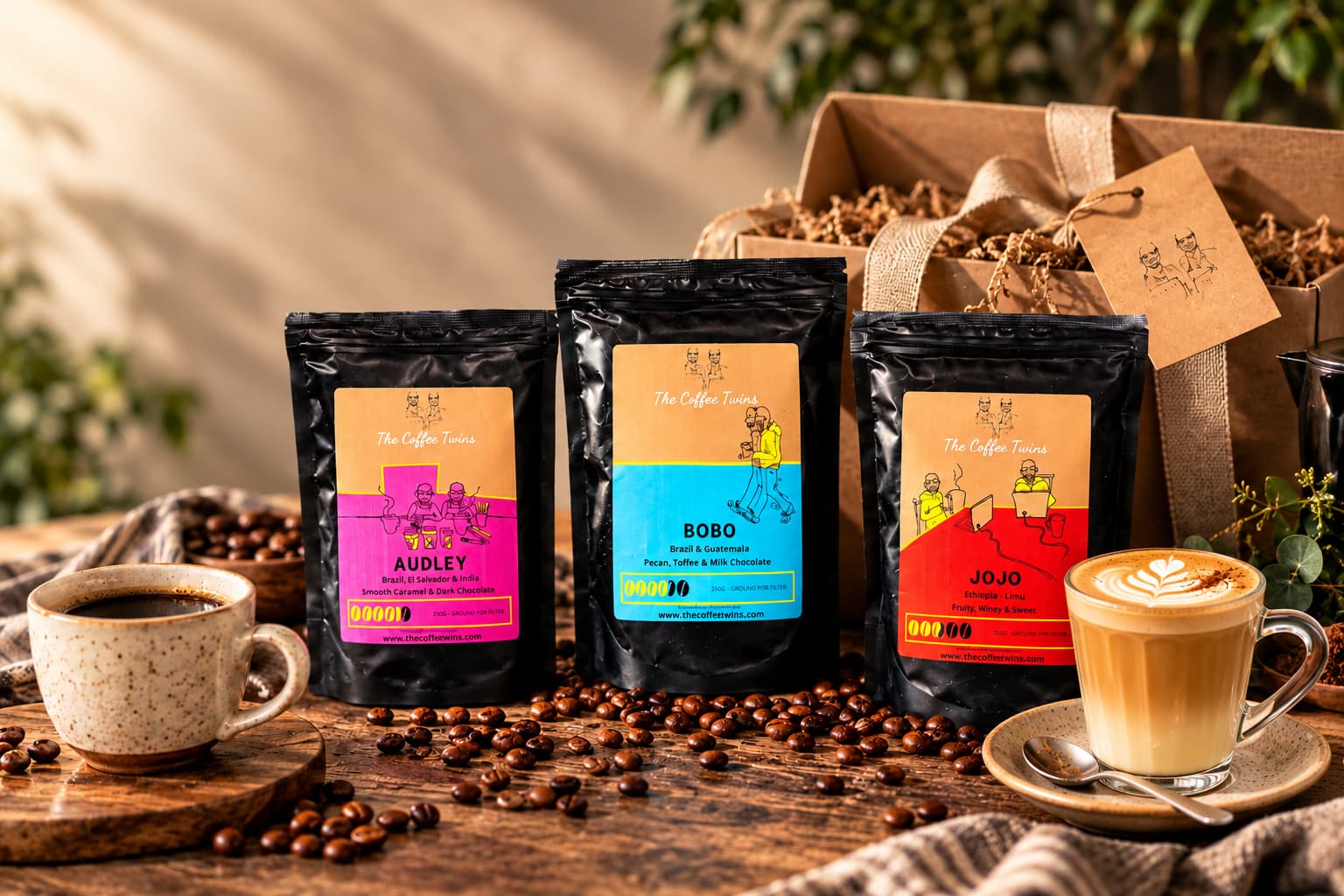
Grab a tin of condensed milk, pull a double shot of something chocolatey and try it hot first, then iced. After that, adjust the sweetness to suit you. If you’d like to compare coffees, our tasting pack includes Audley, Bobo and Jojo. It’s an easy way to taste a fruity single origin next to two chocolatey blends. We have 8 coffees in the shop, and a subscription keeps fresh beans arriving, which you can pause or cancel any time.
0 Comments