

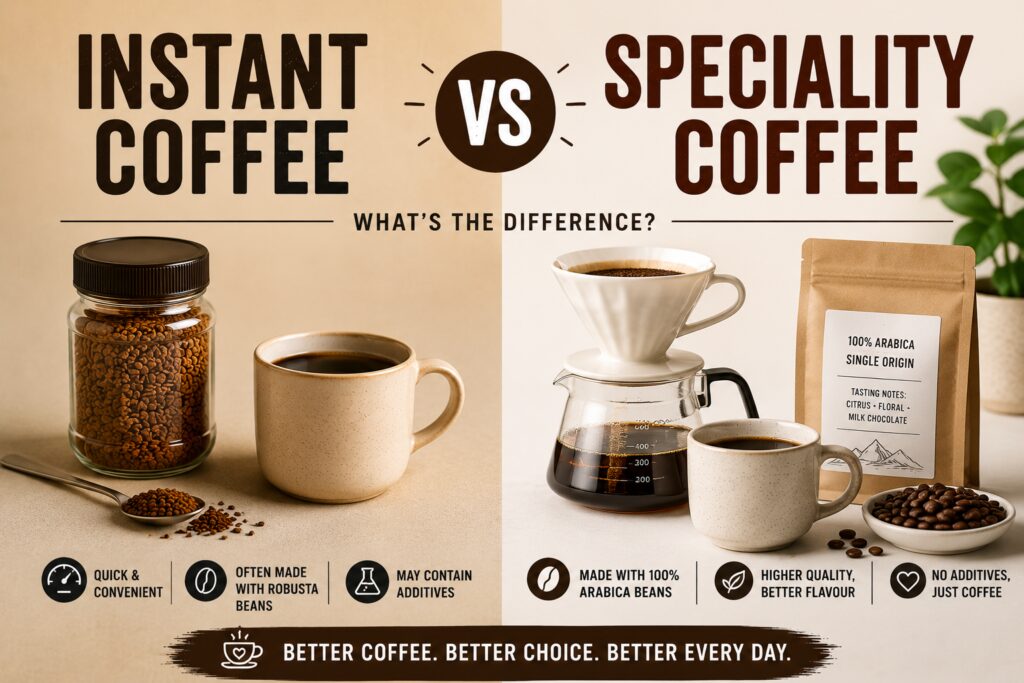
Quick answer: Speciality coffee tastes dramatically better than instant coffee because it uses higher-quality Arabica beans roasted within weeks (not months) of brewing. The cost difference is smaller than most people think — roughly 30–40p per cup for speciality vs 8–12p for instant. If you drink 2 cups a day, that’s an extra £15–20 per month for a genuinely better experience.
New to speciality? Start with our Bobo blend — friendly, smooth, easy to brew. £9.50 / 250g.
Why trust this guide?
We’re Jeremiah and Raja — The Coffee Twins. All of our own coffee is roasted in England, and grew up around family who drank instant. We know what the gap actually feels like to cross, what’s worth it, and what isn’t. This guide is what we’d tell a friend who asked: “Is speciality coffee actually worth the upgrade?”
Table of contents
- What instant and speciality coffee actually are
- The taste difference (honest comparison)
- The real cost per cup (it’s smaller than you think)
- The time and effort difference
- Caffeine: which has more?
- Is one healthier than the other?
- How to switch without buying a load of kit
- FAQ
What Instant and Speciality Coffee Actually Are
Instant coffee
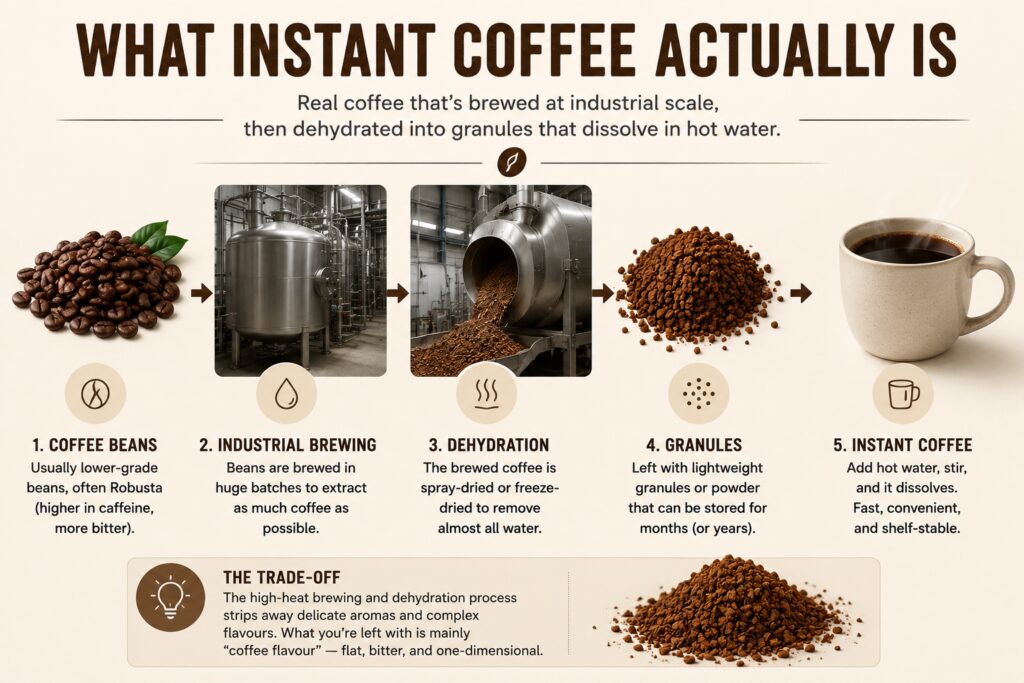
Instant coffee is real coffee that’s been brewed at industrial scale, then dehydrated into granules or powder that dissolves in hot water. It’s typically made from Robusta beans (the cheaper, more bitter coffee species), and the brewing-and-drying process loses much of the aromatic complexity that makes fresh coffee interesting.
The UK is still one of the world’s biggest instant coffee markets — around 70% of coffee consumed in British homes is instant. The reasons are practical: it’s cheap, fast, and shelf-stable for years.
Speciality coffee
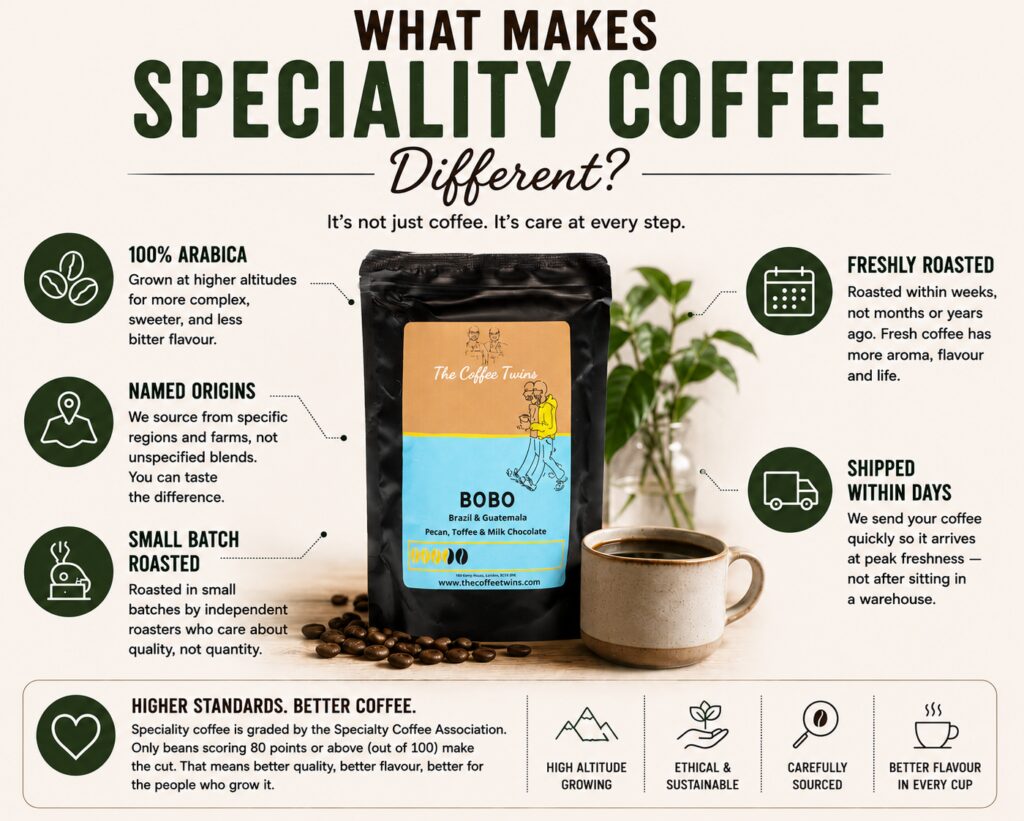
Speciality coffee is graded by the Specialty Coffee Association — green beans must score 80 points or higher out of 100 to qualify. Below 80 is “commodity” coffee, which is what supermarkets and instant brands typically use.
Speciality coffee is:
- Usually 100% Arabica (the more complex, less bitter species)
- From named origins — specific regions, often specific farms
- Roasted in small batches by independent roasters (like us)
- Shipped within days of roasting for maximum freshness
The Taste Difference (Honest Comparison)
This is the biggest reason to switch. Not “is it better?” but “is the difference dramatic enough to care?”
Yes. The difference is dramatic.
Instant coffee taste profile:
- One-dimensional — mostly “coffee flavour” with bitter edges
- Slightly stale or cardboard-like aftertaste (months in storage)
- Aggressive bitterness, often needing sugar to balance
- No distinctive notes — you can’t taste origin, sweetness, or complexity
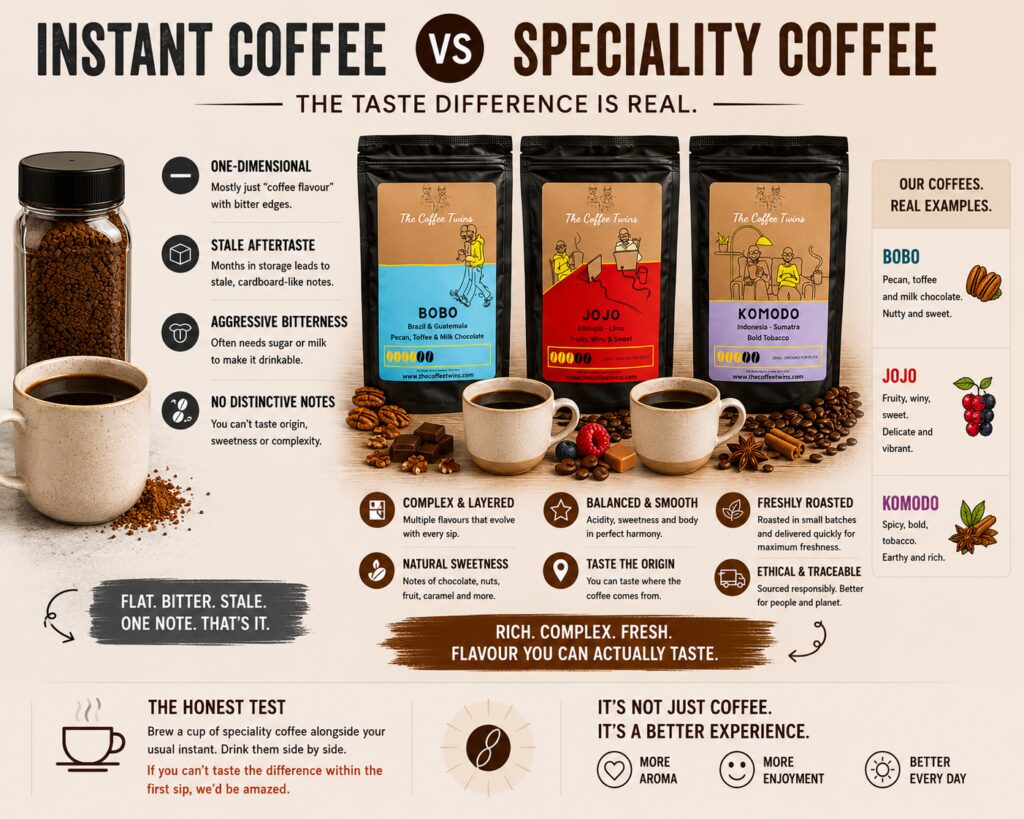
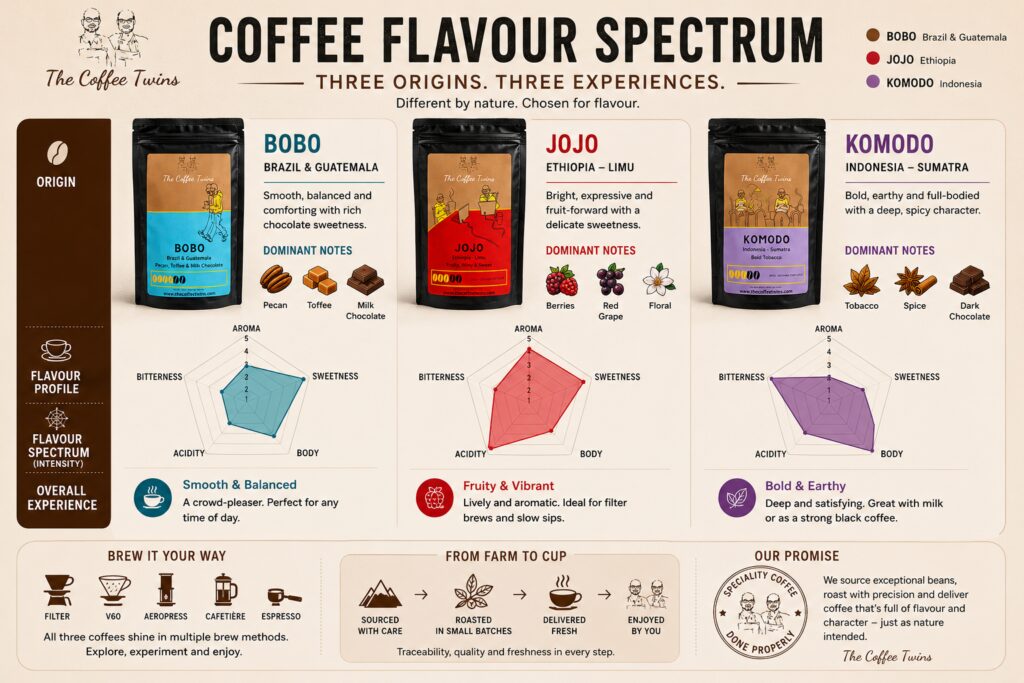
Speciality coffee taste profile (using our range as examples):
- Bobo: Pecan, toffee and milk chocolate. Distinctly nutty and sweet.
- Jojo: Fruity, winy, sweet. Tastes almost like a different drink — closer to a delicate red wine than what most people think of as coffee.
- Komodo: Spicy, bold, tobacco. Earthy and rich.
The honest test: brew a cup of speciality coffee alongside your usual instant. Drink them side by side. If you can’t taste the difference within the first sip, we’d be amazed.
The Real Cost Per Cup (It’s Smaller Than You Think)
This is where most people overestimate the gap.
Instant coffee cost
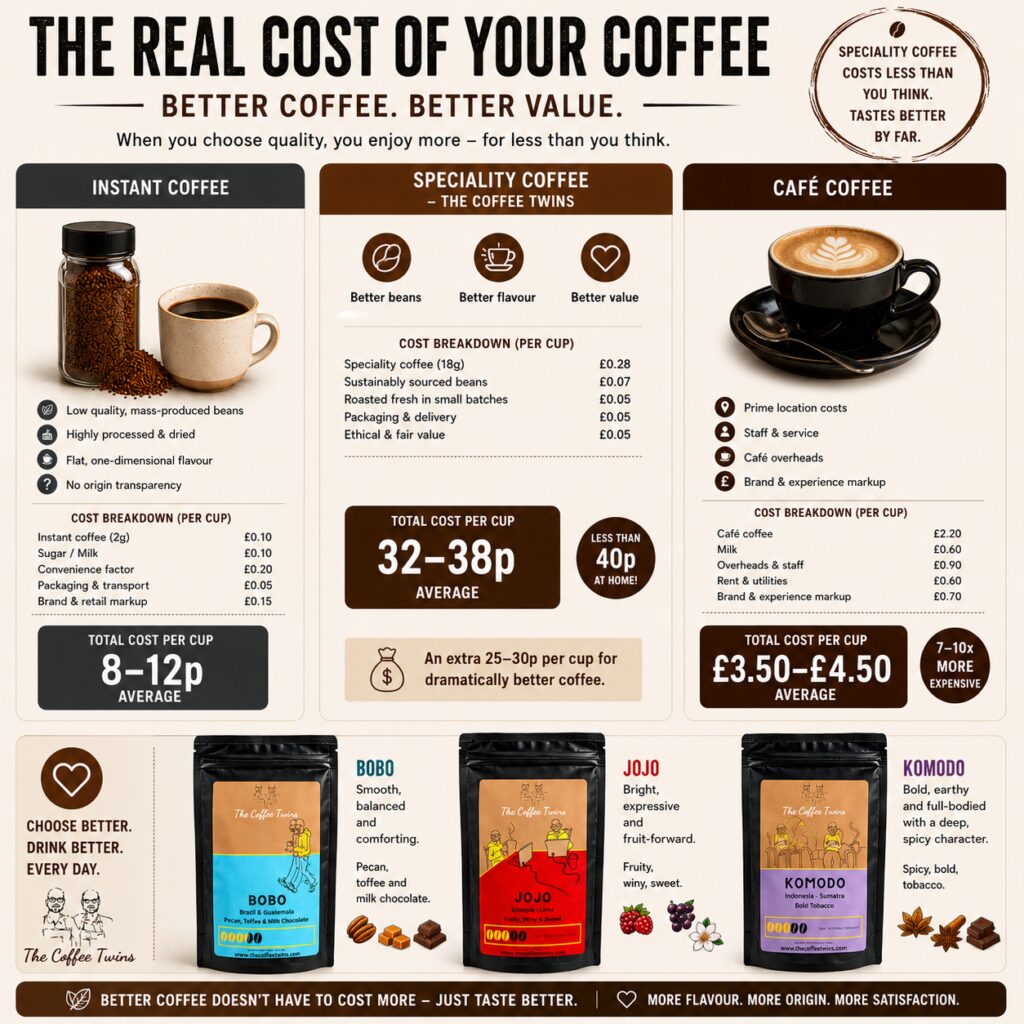
A £5 jar of mid-range instant coffee makes around 60 cups. That’s around 8p per cup. A premium instant like Douwe Egberts is around 12p per cup.
Speciality coffee cost
Our Bobo blend at £9.50 for 250g makes around 25 cafetière cups (10g per cup) or 30 espresso shots. That’s:
- 38p per cup for cafetière
- 32p per espresso shot
The real difference
For two coffees a day:
- Instant: ~£0.20/day = £6/month
- Speciality: ~£0.75/day = £22/month
- Difference: £16/month — roughly one less takeaway coffee at a café per week
Compared to buying a flat white at a UK café for £3.50–£4.50, even speciality coffee at home is dramatically cheaper. The real comparison isn’t instant vs speciality — it’s “make excellent coffee at home for under a pound, or pay a café four times that.”
The Time and Effort Difference
Honestly? Less than people think.
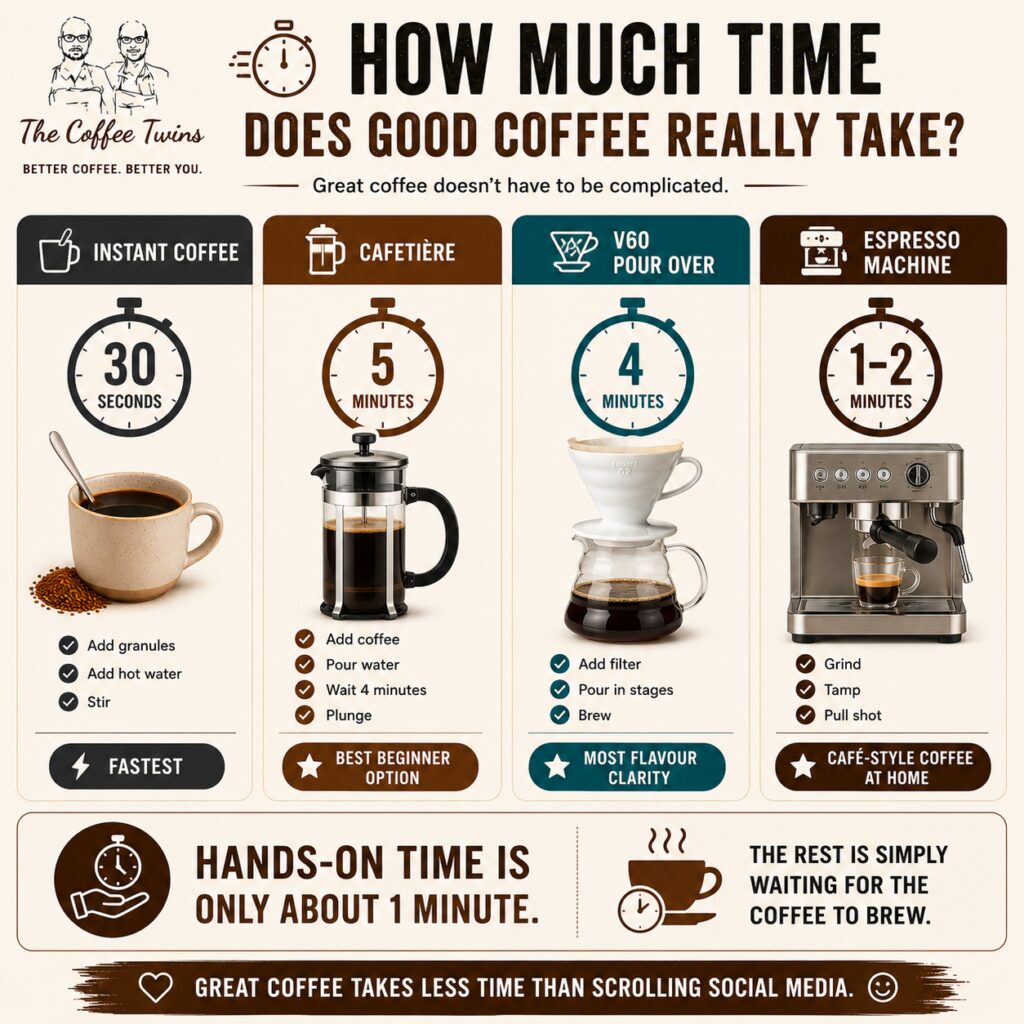
Instant coffee: 30 seconds. Spoon, kettle, mug, stir.
Cafetière speciality coffee: 5 minutes total. Spoon coffee, pour water, wait 4 minutes, plunge, pour.
V60 / pour-over: 4 minutes total once you’ve done it a few times.
Espresso machine: 1–2 minutes per shot.
The four minutes of speciality coffee brewing isn’t lost time — you can boil the kettle, butter your toast, check your phone, all while it brews. The actual hands-on time is closer to 60 seconds.
Caffeine: Which Has More?
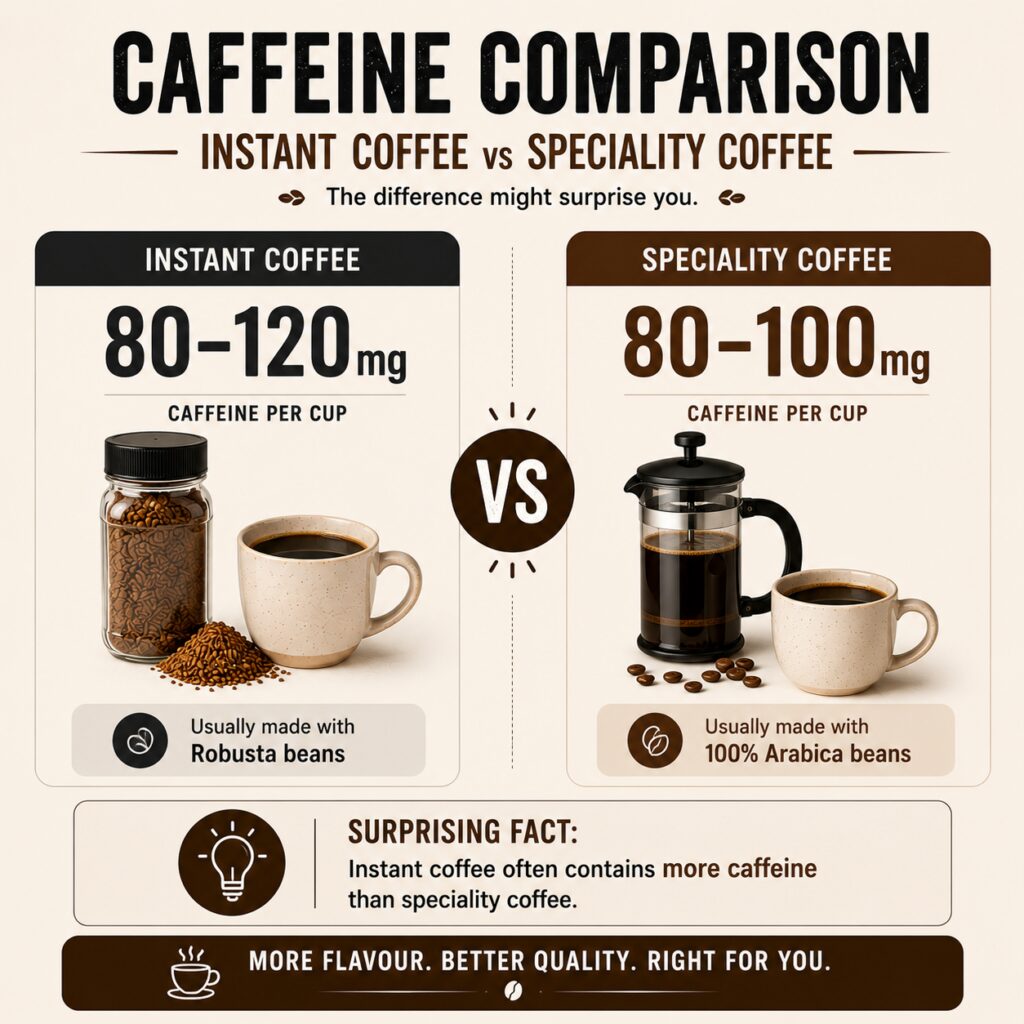
Surprisingly, instant coffee often contains MORE caffeine than speciality coffee per cup. Two reasons:
- Robusta beans. Instant coffee usually uses Robusta beans, which contain roughly twice the caffeine of Arabica (which speciality uses).
- Concentration. Many instant brands deliberately use a slightly heavier dose for “strength.”
A typical instant cup contains 80–120mg of caffeine; a typical speciality filter cup is 80–100mg. They’re broadly comparable, but the high-caffeine assumption people make about “stronger-tasting” coffee is wrong.
For more on this, see our UK guide to caffeine in coffee.
Is One Healthier Than the Other?
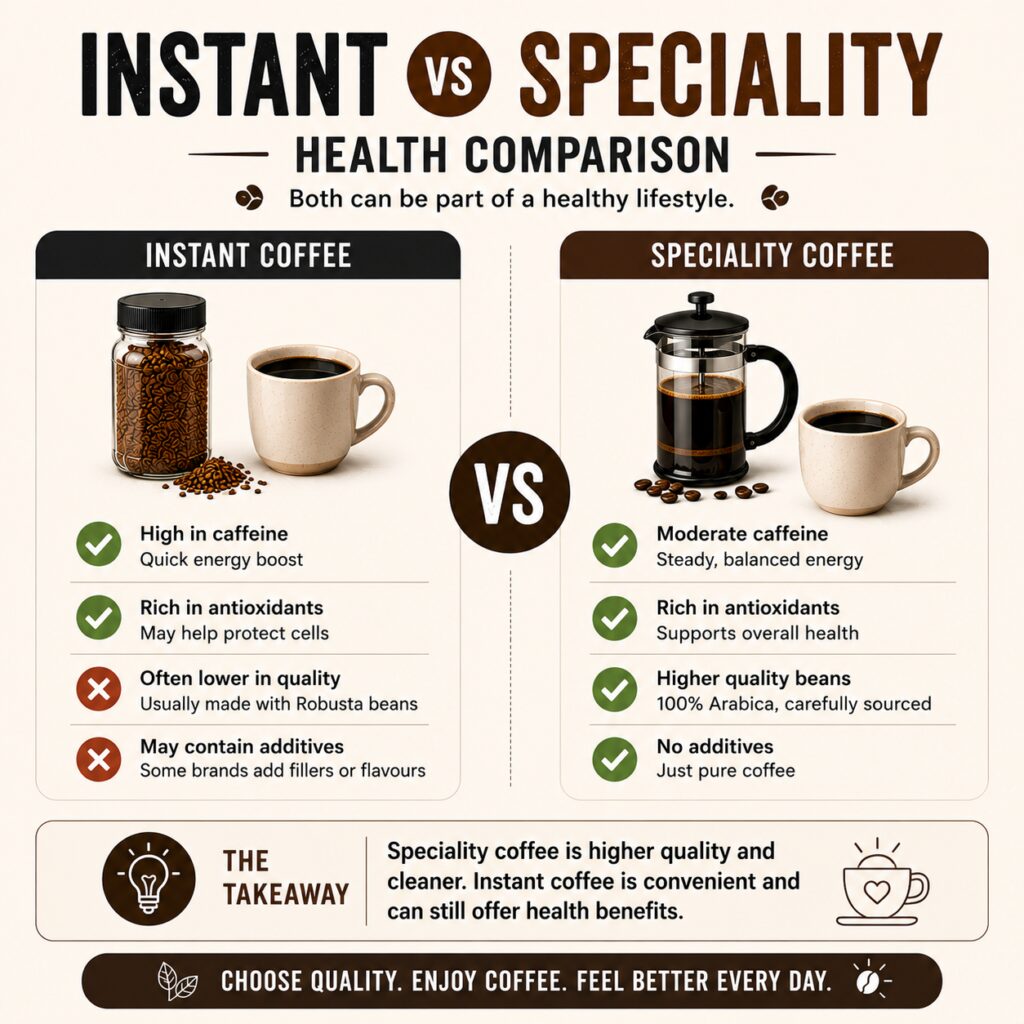
Both contain antioxidants and the well-documented health benefits of moderate coffee consumption. There are two specific health considerations worth flagging:
Acrylamide
Instant coffee contains roughly twice the acrylamide of regular brewed coffee (acrylamide is a compound formed during roasting that’s been studied for potential health effects). Neither contains worrying levels, but if you’re avoiding acrylamide for any reason, speciality wins.
Chemical processing
Instant coffee goes through industrial drying processes (spray drying or freeze drying) that aren’t harmful but do change the chemistry of the cup. Speciality coffee is just roasted beans, ground and brewed. The cleanest possible process.
Decaf options
Speciality decaf is dramatically better than instant decaf. Our Hufflelump Swiss Water decaf uses no chemical solvents — only water. Most instant decaf uses methylene chloride. For pregnancy or caffeine-sensitive drinkers, the upgrade is genuinely worth it.
How to Switch Without Buying a Load of Kit
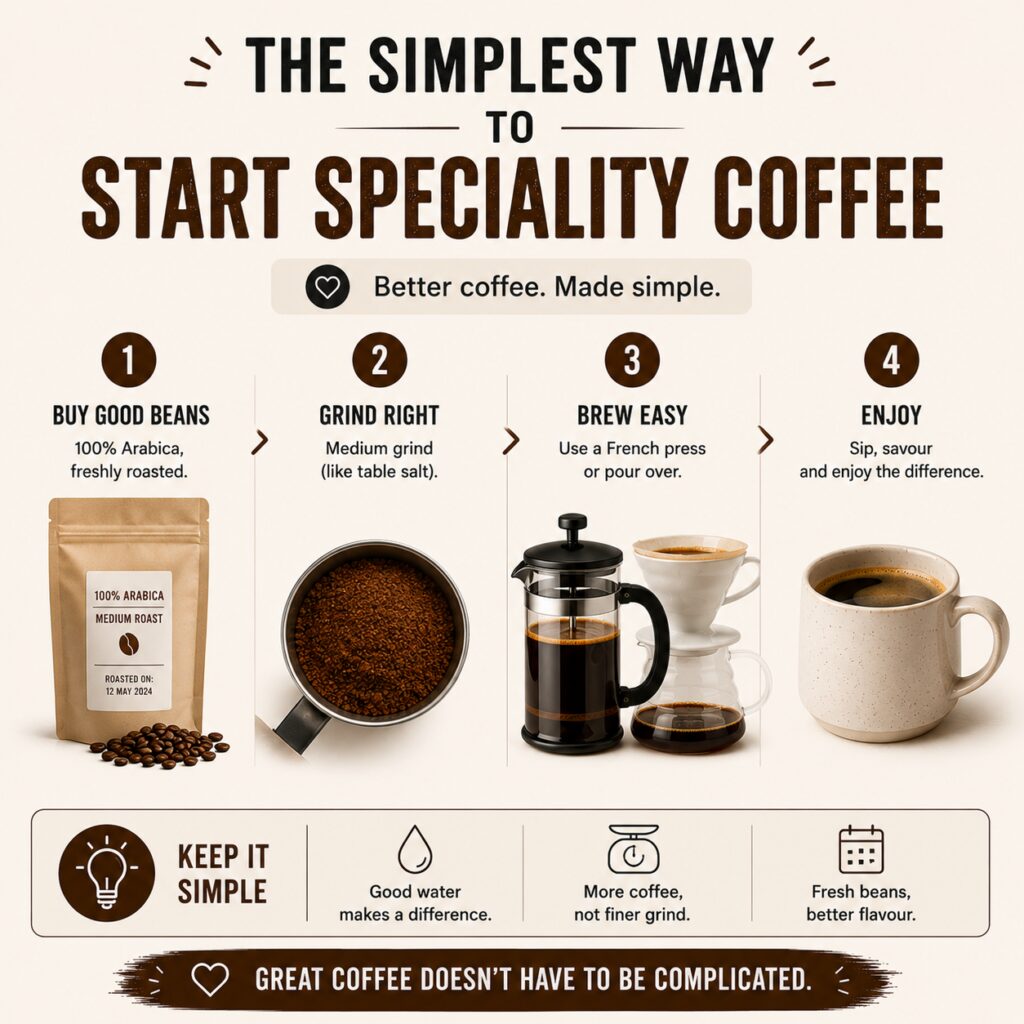
You don’t need a fancy setup to make great speciality coffee. The cheapest path:
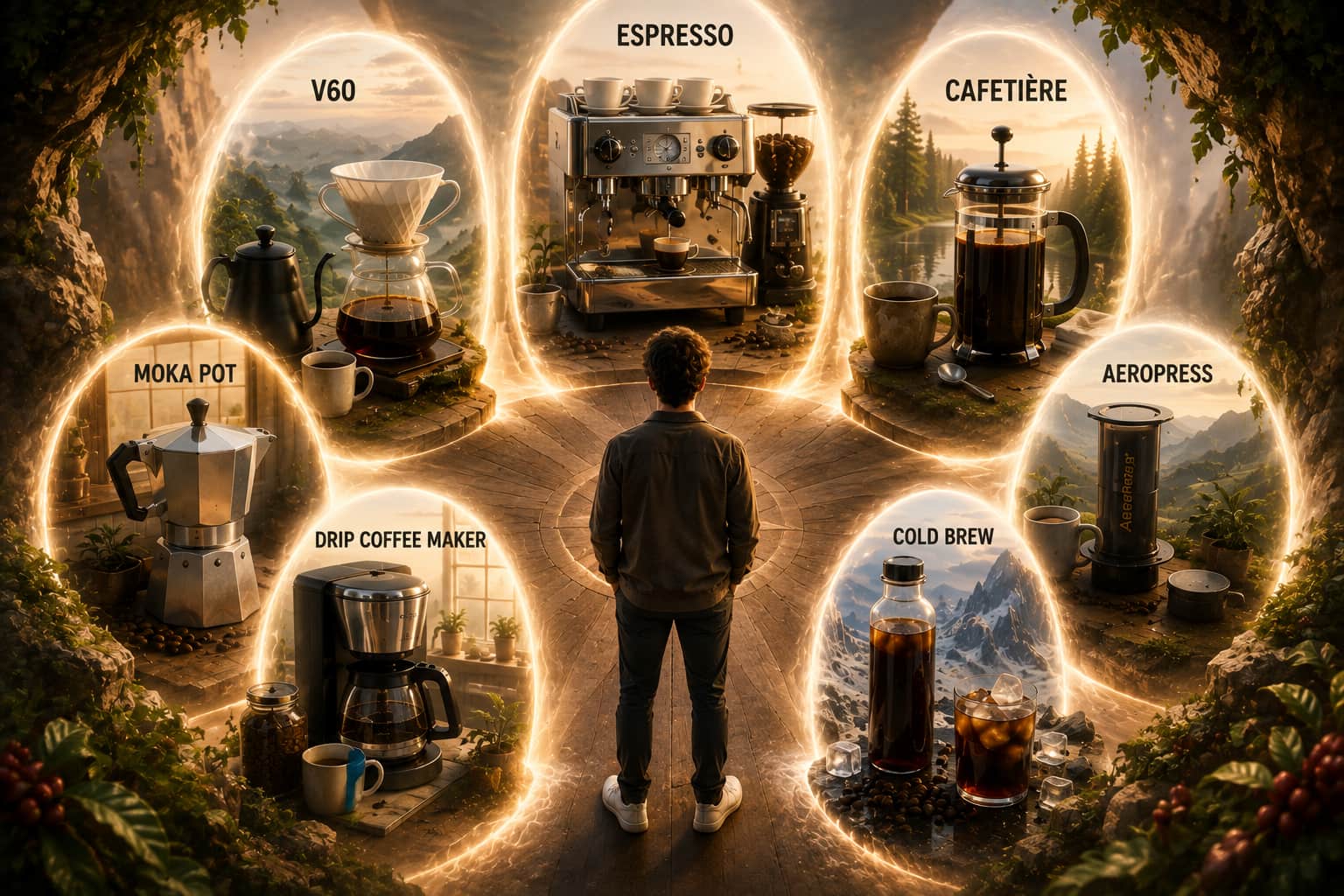
Option 1: Cafetière (~£15 + bag of coffee)
Get a 1-litre cafetière (Bodum, IKEA, Argos — any of them). Buy a bag of Bobo at “Cafetière” grind. Use 30g coffee to 500g water, 4 minutes, press. You’re set up for under £25 total.
Option 2: V60 (~£15 + coffee)
A Hario V60 dripper plus paper filters. Brew one cup at a time. Works brilliantly with Jojo or Parrot.
Option 3: Moka pot (~£25 + coffee)
Stovetop, makes strong coffee, very Italian. Brilliant with our Ant blend. See our moka pot guide for details.

What to order from us first
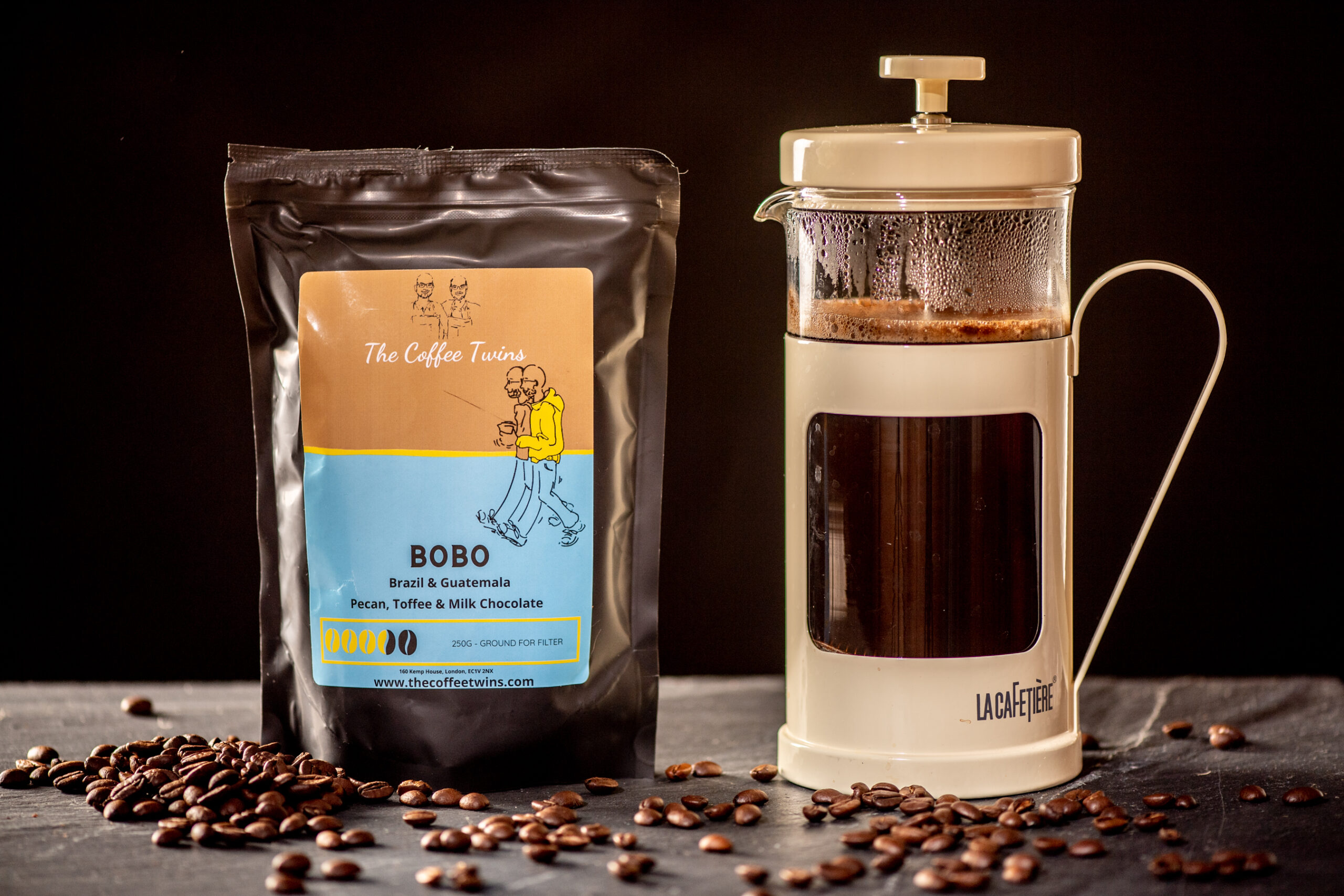
If you’re new to speciality, start with Bobo — our most popular blend and the most “familiar-tasting” coffee on our shelf. Sweet, nutty, chocolatey, low acidity. Almost no one finds it weird or off-putting. £9.50 for 250g.
Frequently Asked Questions
Is speciality coffee really better than instant?
Yes — significantly. Speciality coffee uses higher-quality Arabica beans, is roasted within days of being sold (instant is often months or years old), and has dramatically more complex flavour. The taste difference is immediately obvious in a side-by-side comparison.
How much more expensive is speciality coffee than instant?
About 25–30p more per cup. A jar of instant works out to 8–12p per cup; a speciality cafetière coffee is around 38p per cup. For two coffees a day, that’s around £16 extra per month — less than one café flat white per week.
Does instant coffee have more caffeine than speciality?
Often yes, because instant is usually made with high-caffeine Robusta beans. A typical instant cup has 80–120mg of caffeine; a speciality cup has 80–100mg. Caffeine isn’t a reason to choose instant over speciality.
Is instant coffee bad for you?
No — moderate consumption of either is fine and even beneficial. Instant does contain roughly twice the acrylamide of regular brewed coffee (a compound formed during processing), but levels remain well below any concerning threshold.
What’s the easiest way to switch from instant to speciality coffee?
Buy a £15 cafetière and a bag of medium-roast speciality coffee (we’d recommend Bobo at “Cafetière” grind). Use 30g coffee to 500g water, brew 4 minutes, plunge. Total time: 5 minutes start to finish. You’ll never go back.
Why is speciality coffee fresher than instant?
Speciality coffee is roasted in small batches by independent roasters and shipped within days. Instant coffee is processed at industrial scale and can sit on shelves for years. Fresh coffee has dramatically more aromatic complexity — most of the flavour difference comes down to age, not just bean quality.
Where can I buy speciality coffee for beginners in the UK?
The Coffee Twins — we roast all our coffee in England with eight named coffees ranging from approachable blends to more challenging single origins. For beginners, we’d recommend our Bobo blend (£9.50 / 250g) — friendly, sweet, easy to brew. Free UK shipping over £30. Use NEW10 for 10% off your first order.
Summary
Speciality coffee vs instant coffee is one of those upgrades where the gap is bigger than the price — dramatically better taste, slightly more caffeine-sensible (less Robusta), only modestly more expensive (about 25–30p extra per cup), and barely more time-consuming once you’re set up.
The cheapest and easiest path to switch: a £15 cafetière plus a bag of Bobo at “Cafetière” grind. Total setup under £25. Five minutes per brew. A genuinely better daily cup.
Start with Bobo — Speciality Made Friendly →
0 Comments