Why trust this guide?
We're Jeremiah and Raja — The Coffee Twins. We roast all our own coffee in England, and before launching the brand we ran a coffee shop in Farringdon where we made thousands of drinks for caffeine-conscious customers. This guide is based on the established caffeine content figures used across the UK coffee industry, our experience as baristas, and the published NHS guidance for daily intake.
Table of contents
- Caffeine by drink type (the chart)
- What actually changes how much caffeine is in your cup
- UK daily caffeine limits (NHS guidance)
- High-caffeine vs low-caffeine coffees on our shelf
- How to cut caffeine without giving up coffee
- FAQ
Caffeine by Drink Type
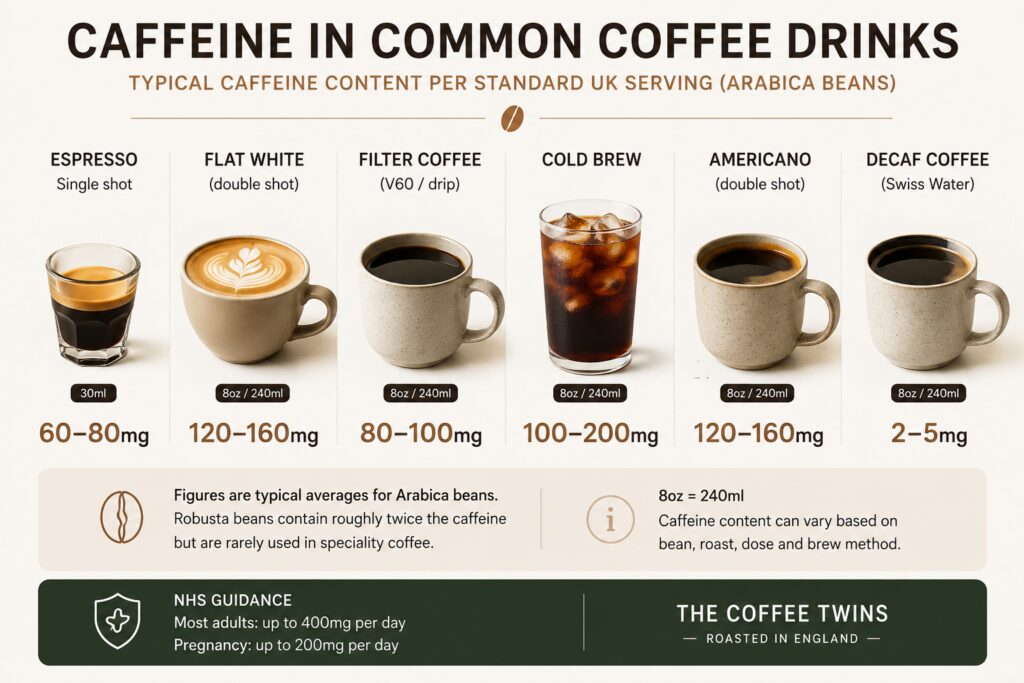
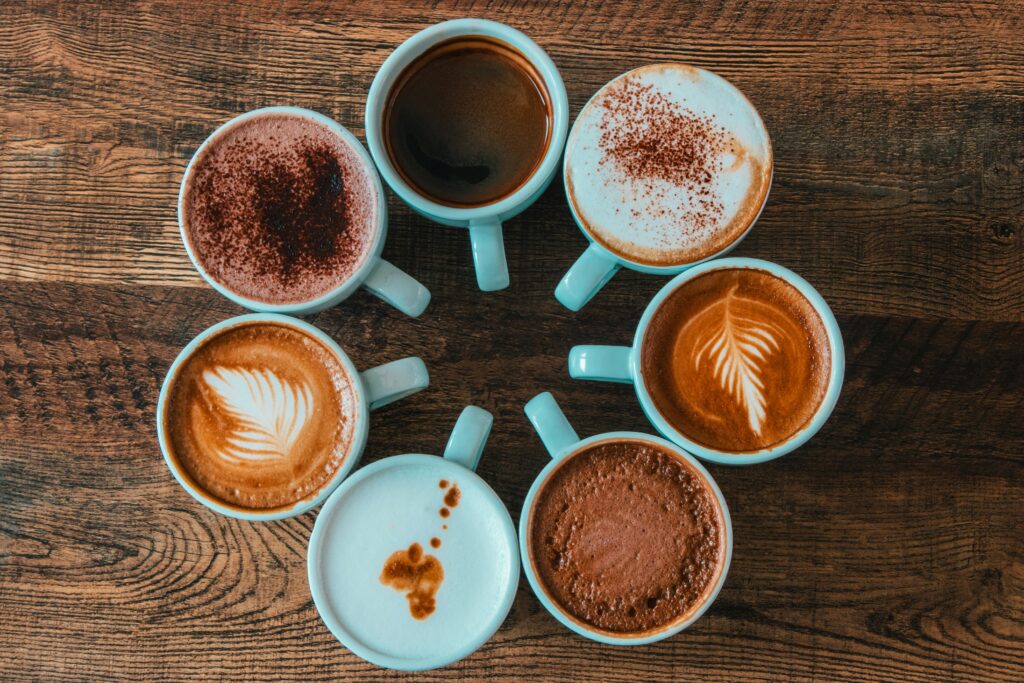
The figures below are typical UK averages for an 8oz (240ml) serving made with Arabica beans — the speciality coffee standard. Robusta beans contain roughly twice as much caffeine but are rarely used in speciality coffee.
Double espresso (60ml): 120–160mg
Flat white (single shot): 60–80mg
Flat white (double shot — most UK cafés): 120–160mg
Cappuccino (double shot): 120–160mg
Latte (double shot): 120–160mg
Americano (double shot): 120–160mg
Filter coffee (V60, Chemex, drip machine): 80–100mg per 8oz
Cafetière (French press): 80–110mg per 8oz
Cold brew (8oz): 100–200mg (concentrate dilutes differently)
Aeropress: 70–130mg depending on recipe
Instant coffee: 30–90mg per teaspoon
Decaf coffee (Swiss Water): 2–5mg per cup
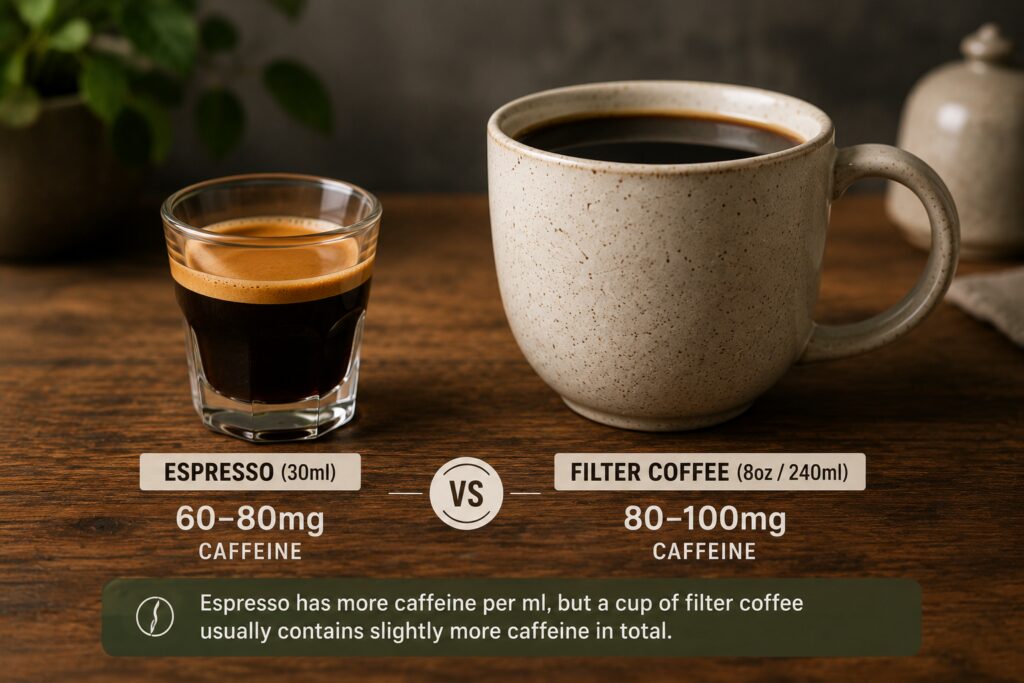
The single biggest misconception: espresso doesn't have more caffeine than filter coffee on a per-serving basis. It has more per millilitre, but you only drink 30ml of it. A mug of filter coffee usually gives you slightly more caffeine than a single shot of espresso.
What Actually Changes How Much Caffeine Is in Your Cup
1. The bean type (the biggest factor)
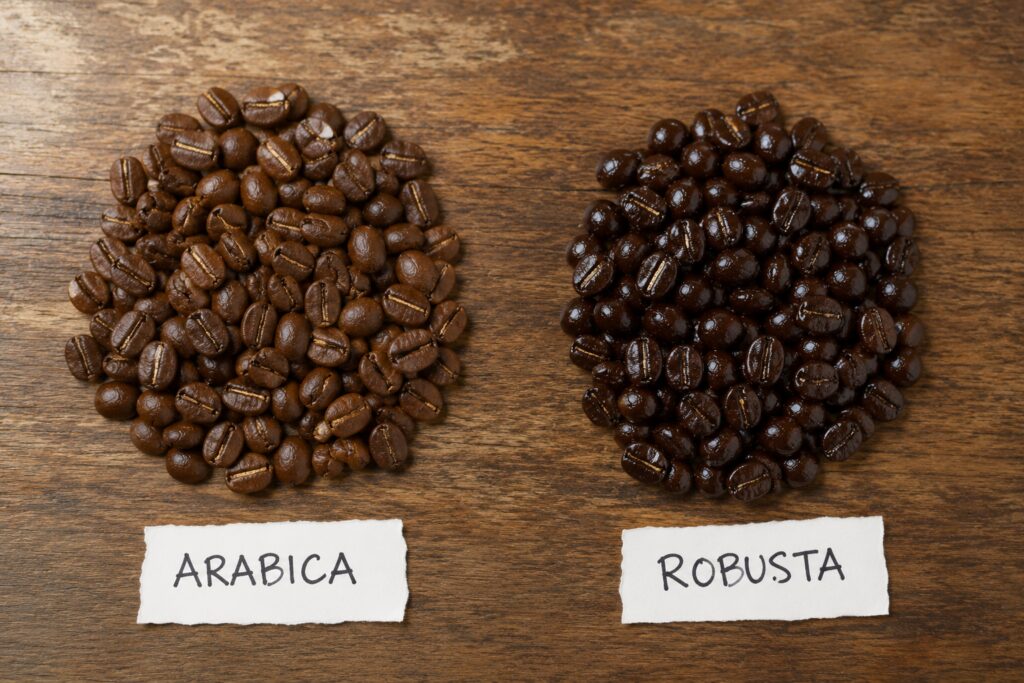
Robusta beans contain almost twice the caffeine of Arabica beans — Robusta is roughly 2.2% caffeine by weight, Arabica is roughly 1.2%. Speciality coffee is almost always 100% Arabica, which means our entire range (including our Strong Coffee Bundle) has less caffeine than supermarket "extra strong" coffees that include Robusta. The trade-off: Robusta tastes bitter and harsh, which is why speciality roasters avoid it.
2. The roast level (a smaller factor than you'd think)
Contrary to popular belief, dark roasts contain slightly less caffeine than light roasts — roasting breaks down some caffeine molecules. The difference is small (5–10%), but the perception that "strong-tasting coffee = more caffeine" is incorrect. Our light-roasted Jojo technically has slightly more caffeine than our dark-roasted Audley.
3. The brew method
Longer contact between water and grounds extracts more caffeine. Cold brew steeps for 12–18 hours, which is why it can be higher in caffeine than equivalent hot brews. Espresso has the shortest extraction (25–30 seconds), giving less total caffeine per shot.
4. The dose
More coffee grounds = more caffeine. Our recommended brew ratios:
- Filter / V60: 15g coffee : 250g water (1:17)
- Cafetière: 30g coffee : 500g water (1:17)
- Espresso: 18g coffee : 36g espresso (1:2)
5. The grind size
Finer grinds extract more caffeine faster. This is why espresso (very fine grind) is the most caffeine-dense brew method.
UK Daily Caffeine Limits (NHS Guidance)
The NHS publishes the following daily caffeine guidance for UK adults:
- General adult population: Up to 400mg per day is considered safe — roughly four 8oz cups of filter coffee, or four double-shot flat whites.
- During pregnancy: Stay under 200mg per day. Caffeine crosses the placenta and is associated with low birth weight at higher intakes.
- While breastfeeding: Caffeine passes into breast milk. Most guidance suggests moderate intake (under 300mg) is safe.
- Children and teenagers: No official UK threshold, but most paediatric guidance suggests under 100mg per day for adolescents.
Note: This is general information, not medical advice. If you're pregnant, breastfeeding, or have a heart or anxiety condition, talk to your GP or midwife about your personal caffeine limits.
High-Caffeine vs Low-Caffeine Coffees on Our Shelf
Among our caffeinated range, the variation in caffeine is smaller than most people assume. All eight of our coffees are 100% Arabica speciality-grade. That said, slight differences exist:
Naturally higher in caffeine (light to medium roasts):
- Jojo — Ethiopian Limu, light roast 2.5/5
- Parrot — Brazilian Cerrado, light roast 2.5/5
- Little Robot — three-origin blend, medium roast 3/5
Naturally slightly lower in caffeine (darker roasts):
Naturally much lower in caffeine (decaffeinated):
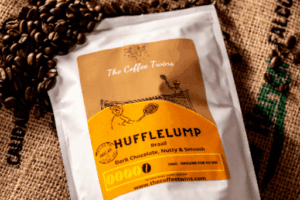
- Hufflelump — Swiss Water decaf, 99.9% of caffeine removed. Typical cup contains 2–5mg.
So if "strong coffee" feels like it hits you harder, that's almost entirely about the flavour intensity, not the caffeine. The caffeine difference between our lightest and darkest caffeinated coffees is roughly 5–10mg per cup — negligible.
How to Cut Caffeine Without Giving Up Coffee
If you're trying to reduce your caffeine intake — for sleep, anxiety, pregnancy, or just because you're drinking 6 cups a day — here's the approach we recommend to our customers:
1. Replace your evening cup with decaf
Most people consume the bulk of their caffeine after 2pm, when it's most likely to disrupt sleep. Swapping just your afternoon and evening coffees for Hufflelump can cut your daily caffeine by 40–60% without changing the ritual.
2. Switch one filter cup to a single espresso
A single espresso is 60–80mg. A filter cup is 80–100mg. Small change, real savings if you do it daily.
3. Don't go cold turkey
Sudden caffeine withdrawal causes headaches, fatigue and irritability. Cut your intake by one cup per week, replacing with decaf, rather than stopping all at once.
4. Drink water between coffees
Caffeine is mildly diuretic. Drinking a glass of water between cups slows your overall consumption and reduces the jitter effect.
Frequently Asked Questions
How much caffeine is in a cup of coffee in the UK?
A standard 8oz (240ml) cup of filter coffee made with 100% Arabica beans contains 80–100mg of caffeine. A double-shot flat white or latte contains 120–160mg. Decaf coffee contains 2–5mg.
Which coffee has the most caffeine?
Coffees made with Robusta beans (mainly supermarket "extra strong" brands) contain roughly twice the caffeine of Arabica-only coffee. Among brew methods, cold brew and large filter coffees typically deliver the most total caffeine per serving.
Is espresso stronger than filter coffee?
Per millilitre, yes — espresso is more concentrated. But per serving, a typical mug of filter coffee (8oz) contains slightly more total caffeine than a single shot of espresso (30ml). What feels "stronger" is the flavour intensity, not the caffeine.
Do dark roasts have more caffeine than light roasts?
No — slightly less, actually. The longer roasting process breaks down some caffeine molecules. The difference between a light and dark roast of the same bean is small (5–10%), but the common belief that "darker = stronger caffeine" is incorrect.
How much caffeine is safe per day?
The NHS guidance for healthy adults is up to 400mg per day. For pregnant women, the limit is 200mg per day. Children, teenagers, and people with heart or anxiety conditions should aim lower.
How much caffeine is in decaf coffee?
Swiss Water process decaf — which is what our Hufflelump uses — has 99.9% of caffeine removed, leaving 2–5mg per cup. UK law requires decaffeinated coffee to have at least 97% of caffeine removed.
Does adding milk reduce the caffeine in coffee?
No. Milk dilutes the volume but doesn't remove caffeine. A flat white made from a double espresso has the same caffeine as the double espresso on its own — around 120–160mg.
Where can I buy low-caffeine speciality coffee in the UK?
The Coffee Twins Hufflelump is a Swiss Water Brazilian decaf — chemical-free decaffeination, proper coffee flavour, 2–5mg of caffeine per cup. £10.50 for 250g. Free UK shipping over £30. Use NEW10 for 10% off your first order.
Summary
A standard UK cup of coffee contains 80–160mg of caffeine depending on drink type. A double-shot espresso-based drink (flat white, latte, cappuccino) sits around 120–160mg. The NHS recommends staying under 400mg per day, or 200mg during pregnancy.
The biggest factor in caffeine content is the bean type (Arabica vs Robusta), not the roast level. All speciality coffee — including everything we roast — is 100% Arabica, which is naturally lower in caffeine than supermarket "extra strong" coffees.
To reduce caffeine without giving up coffee, swap your afternoon cup for a Swiss Water decaf like our Hufflelump.