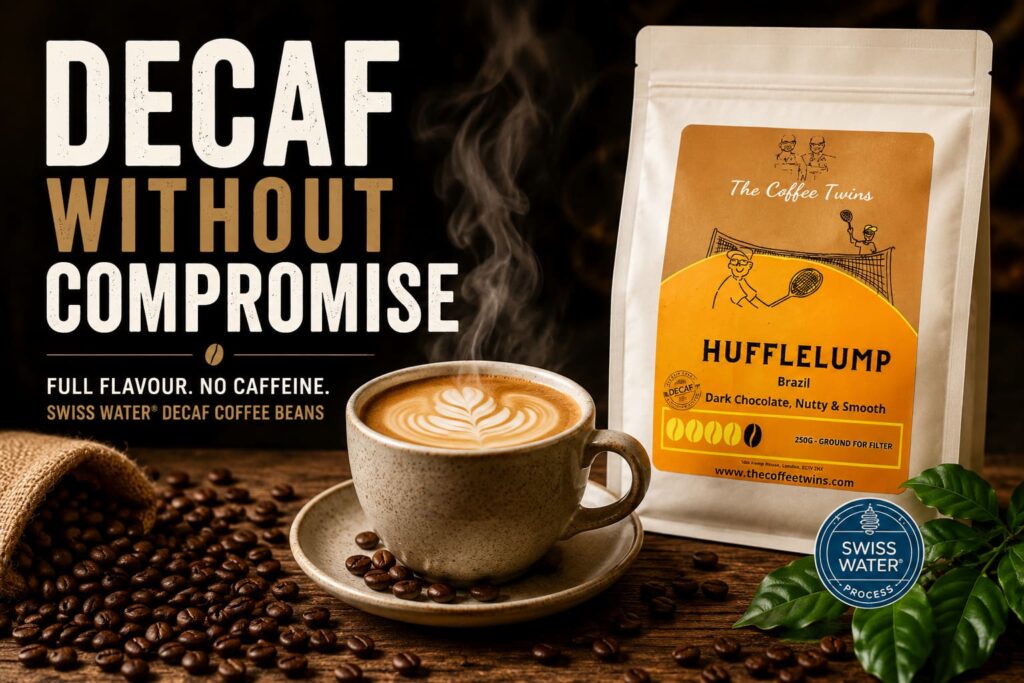
Quick answer: The best decaf coffee beans UK customers can buy are 100% Arabica beans decaffeinated using the Swiss Water Process — a chemical-free method that removes 99.9% of caffeine while preserving the bean’s natural flavour. Specifically, our pick is Hufflelump — a Brazilian Swiss Water decaf with body 4/5, dark chocolate and nutty notes. £10.50 / 250g, free UK shipping over £30.
If you want to skip the guide: Buy Hufflelump here →
Why trust this guide?

We’re Jeremiah and Raja — The Coffee Twins. Before launching our UK speciality coffee brand, we trained in five-star hotel food and beverage and ran our own coffee shop in Farringdon. Specifically, we’ve served thousands of decaf flat whites, recommended decaf to pregnant customers, blood-pressure-conscious customers, and afternoon coffee lovers. As a result, this guide is the genuine version of what we’d teach you behind the bar — and the honest answer about which decaf coffee beans UK drinkers should actually buy.
Table of contents
- Why decaf coffee beans actually matter
- What is Swiss Water decaf and why it matters
- Swiss Water vs chemical decaffeination (the honest comparison)
- Our top pick: Hufflelump Swiss Water decaf
- What to look for in the best decaf coffee beans UK
- What to avoid when buying decaf coffee beans
- How to brew decaf coffee beans properly
- Who decaf coffee beans are for
- FAQ
Why Decaf Coffee Beans Actually Matter
For years, decaf coffee had a bad reputation in the UK — and frankly, most of that reputation was earned. Specifically, supermarket decaf was made from cheap commodity beans decaffeinated with chemical solvents, then over-roasted to mask the off-flavours. As a result, the cup tasted flat, slightly metallic, and nothing like proper coffee.
However, speciality decaf is genuinely different. Specifically, modern Swiss Water decaffeination preserves 99% of the bean’s natural flavour. Furthermore, when you start with speciality-grade Arabica beans, the result is a cup that tastes nearly identical to caffeinated coffee — just without the caffeine.
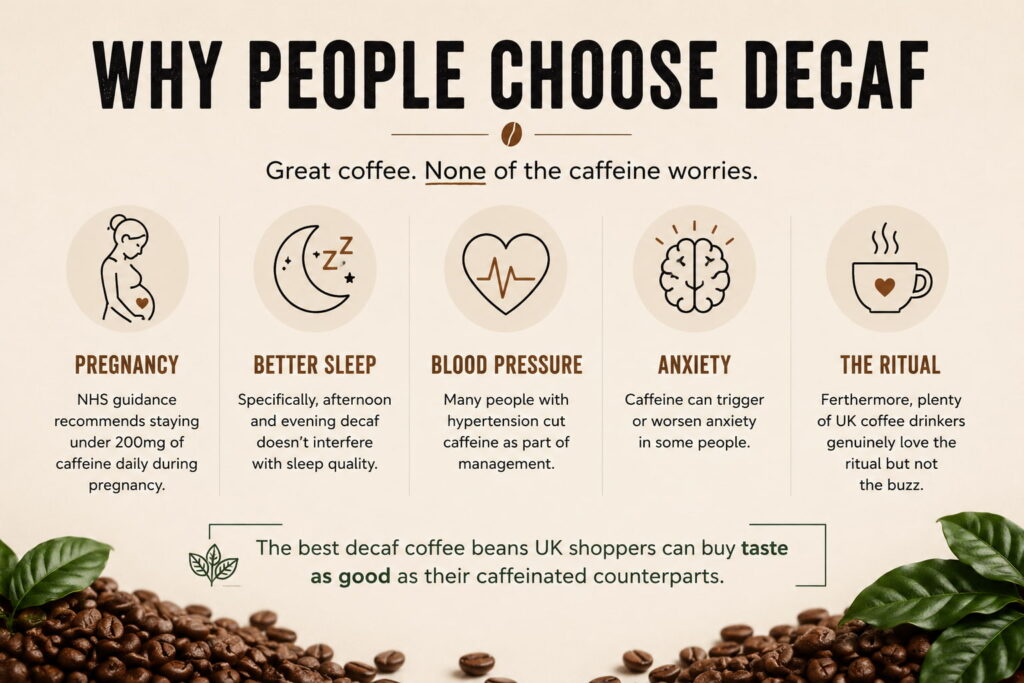
Five reasons UK customers buy decaf coffee beans:
- Pregnancy: NHS guidance recommends staying under 200mg of caffeine daily during pregnancy
- Blood pressure: Many people with hypertension cut caffeine as part of management
- Sleep: Specifically, afternoon and evening decaf doesn’t interfere with sleep quality
- Anxiety: Caffeine can trigger or worsen anxiety in some people
- The ritual: Furthermore, plenty of UK coffee drinkers genuinely love the ritual but not the buzz
Above all, the best decaf coffee beans UK shoppers can buy taste as good as their caffeinated counterparts. As a result, choosing decaf doesn’t mean sacrificing flavour anymore.
What Is Swiss Water Decaf and Why It Matters
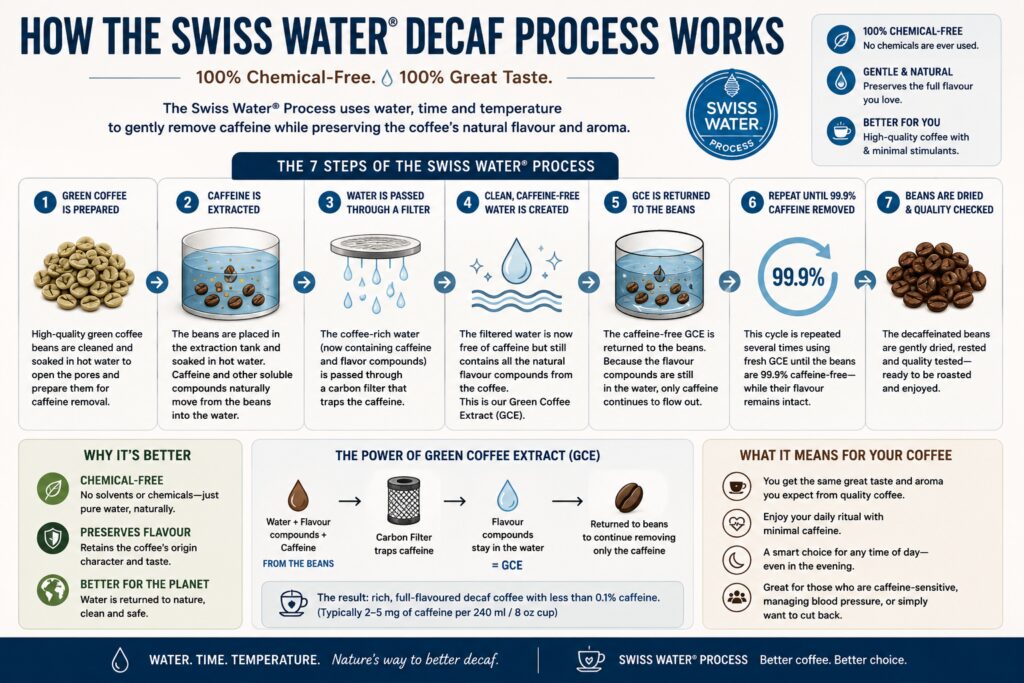
The Swiss Water Process is a chemical-free method of removing caffeine from coffee beans. Specifically, it uses only water, temperature, and time. Furthermore, this preserves the bean’s natural flavour while removing 99.9% of caffeine.
How Swiss Water decaf works
Specifically, here’s the process in simple terms:
- Green coffee beans are soaked in water at controlled temperatures.
- Caffeine and flavour compounds dissolve into the water.
- The water is filtered through activated carbon that captures caffeine molecules but lets flavour compounds pass through.
- The flavour-rich, caffeine-free water is then used to soak fresh batches of beans.
- Caffeine leaves the beans while the flavour stays in.
As a result, the beans are 99.9% caffeine-free but retain virtually all their original flavour character. Above all, no chemical solvents are used at any stage.
Why Swiss Water decaf is the gold standard
- Chemical-free: Specifically, no methylene chloride, ethyl acetate, or any chemical solvents
- Flavour preserved: Furthermore, the cup tastes nearly identical to caffeinated coffee
- 99.9% caffeine removed: As a result, typical Swiss Water decaf contains 2–5mg of caffeine per cup (vs 95–120mg in regular coffee)
- Certified process: By the way, the Swiss Water Decaffeinated Coffee Company in Canada developed and certifies the process
Swiss Water vs Chemical Decaffeination (The Honest Comparison)
Specifically, there are three main decaffeination methods used worldwide. As a result, here’s the honest comparison.
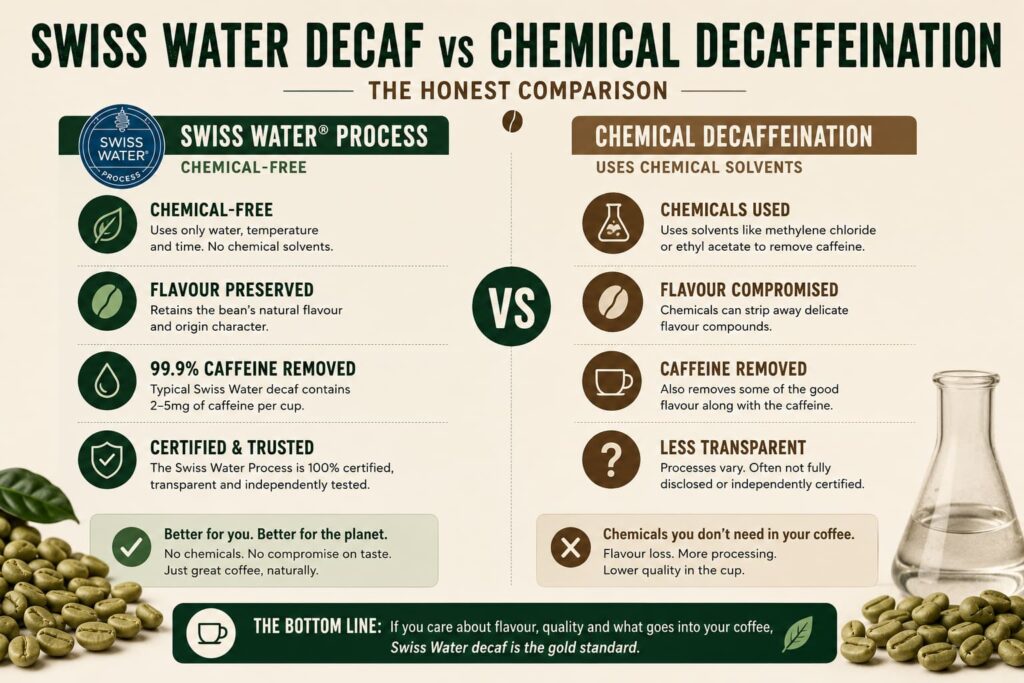
1. Swiss Water Process (chemical-free)
- Method: Water + activated carbon filtration
- Chemicals: None
- Caffeine removed: 99.9%
- Flavour: Excellent — preserves bean character
- Cost: Higher (premium processing)
- Used by: Specialty UK roasters including The Coffee Twins
2. Methylene Chloride (chemical)
- Method: Chemical solvent extraction
- Chemicals: Methylene chloride
- Caffeine removed: 97%+
- Flavour: Reduced — chemical residue and flavour stripping
- Cost: Lower
- Used by: Most supermarket decaf, instant decaf
Honestly, methylene chloride is considered safe in trace amounts by EU and UK regulators. However, many UK customers prefer chemical-free decaf where possible. Specifically, the Swiss Water Process eliminates this concern entirely.
3. Ethyl Acetate (semi-natural)
- Method: Solvent extraction using ethyl acetate (often called “sugarcane decaf”)
- Chemicals: Ethyl acetate (naturally occurring but commercially synthesised)
- Caffeine removed: 97%+
- Flavour: Decent — better than methylene chloride
- Cost: Medium
- Used by: Some specialty decaf, particularly Colombian
Which method is best?
Honestly? **Swiss Water is the gold standard** for taste and chemical-free decaffeination. Specifically, ethyl acetate is a reasonable alternative. Furthermore, methylene chloride is fine if you’re not concerned about chemical processing. As a result, our entire decaf offering uses Swiss Water — we believe it produces the best decaf coffee beans UK customers can drink.
Our Top Pick: Hufflelump Swiss Water Decaf
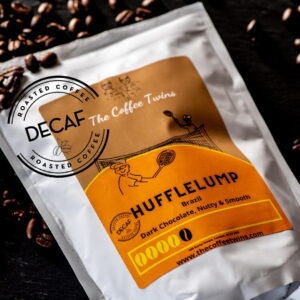
Origin: Brazil
Decaffeination: Swiss Water Process (chemical-free)
Roast: 4/5 | Body: 4/5 | Sweetness: 3/5 | Acidity: 2/5
Tasting notes: Dark chocolate, smooth, nutty
Caffeine: 2–5mg per cup (vs 95–120mg in regular coffee)
Price: £10.50 / 250g
Buy Hufflelump →
Hufflelump is our Brazilian Swiss Water decaf — and one of the best decaf coffee beans UK customers can buy. Specifically, here’s why we genuinely think it stands out:
Speciality-grade Brazilian Arabica beans. Furthermore, we start with high-quality Cerrado Brazilian beans — the same origin region as our caffeinated Bobo and Parrot. As a result, the natural flavour is excellent before decaffeination even begins.
Swiss Water Process decaffeination. Specifically, 99.9% of caffeine is removed using only water — no chemical solvents at any stage. Furthermore, this preserves the natural chocolate, nut, and sweet character of Brazilian coffee.
Roast 4/5, body 4/5. By the way, this isn’t sad decaf. Specifically, the roast level and body give you a satisfying cup that holds up in espresso machines, cafetières, V60s, and any brewer.
Acidity 2/5. As a result, gentle on sensitive stomachs (an added benefit for many decaf drinkers).
2–5mg of caffeine per cup. Furthermore, that’s roughly 1/25th of a regular cup of coffee. As a result, safe for pregnancy, blood pressure management, and evening drinking.
What you actually taste: smooth dark chocolate up front, nutty depth in the middle, clean finish. Honestly, most customers can’t tell it’s decaf in blind tastings. Above all, this is the best decaf coffee beans UK speciality buyers consistently come back for.
What to Look For in the Best Decaf Coffee Beans UK
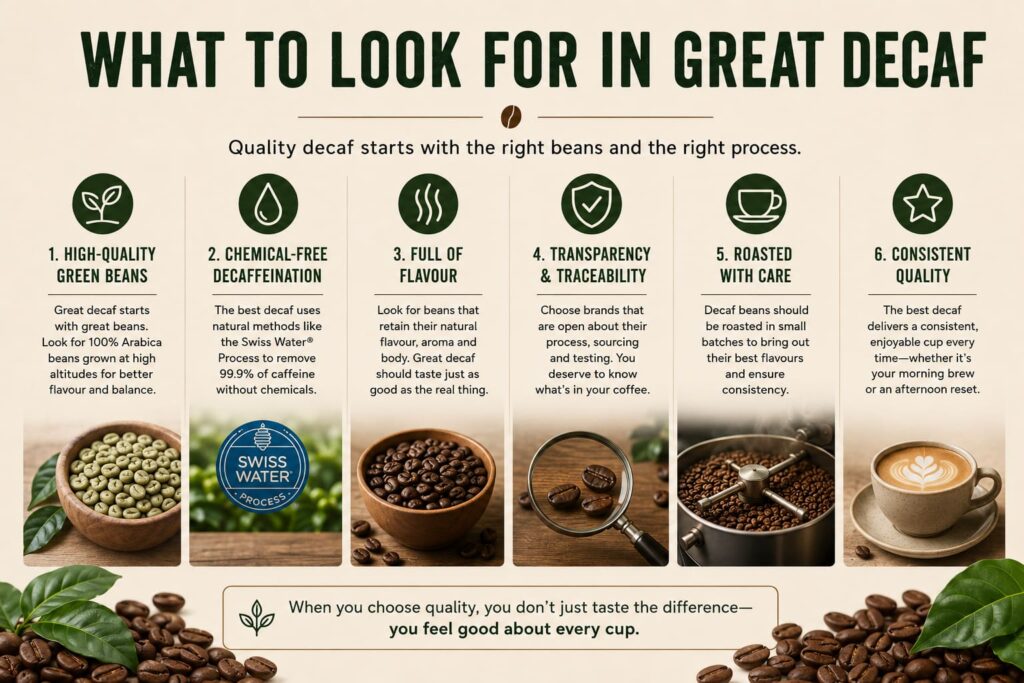
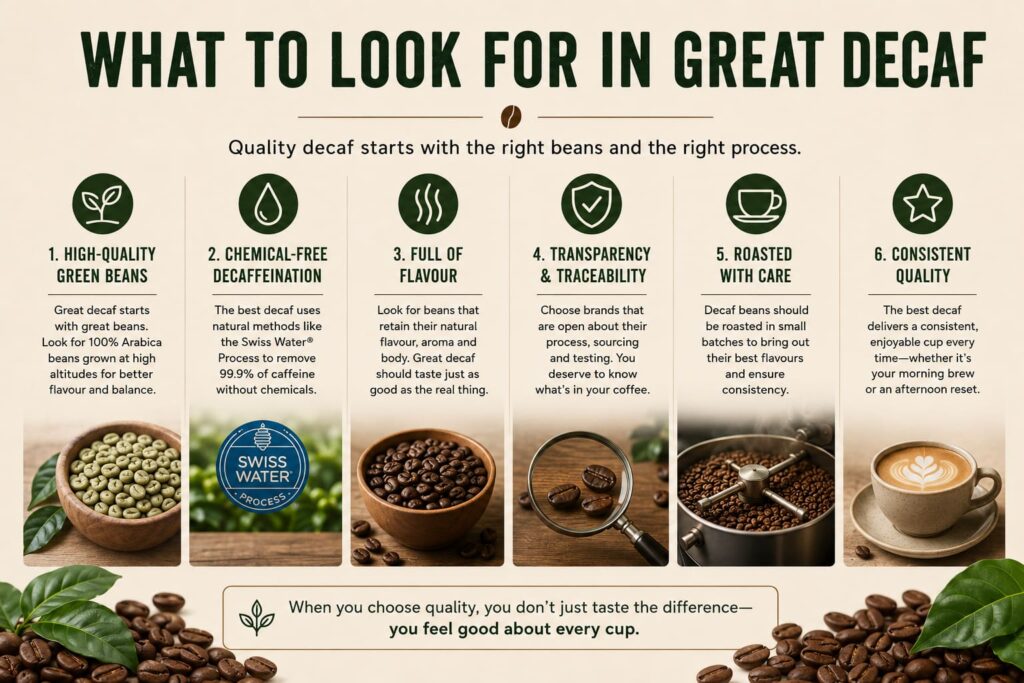
Specifically, the seven things that matter when buying decaf coffee beans online:
1. Swiss Water Process certification
Look for “Swiss Water Process” or the Swiss Water logo on the bag. Furthermore, this guarantees chemical-free decaffeination. As a result, you know exactly what process was used.
2. 100% Arabica
Specifically, the best decaf coffee beans UK use 100% Arabica. Furthermore, Robusta-based decaf tastes harsh and one-dimensional.
3. Named origin
“Decaf coffee beans” tells you nothing. By contrast, “Brazilian Swiss Water decaf” tells you everything. Specifically, look for named regions and origins.
4. Recent roast date
Furthermore, decaf beans go stale just like regular beans. Specifically, look for a roast date within the last 28 days for peak flavour.
5. Specific tasting notes
“Smooth and rich decaf” is meaningless. By contrast, “dark chocolate, smooth, nutty” is meaningful. As a result, look for specific tasting notes that show the roaster actually tasted the cup.
6. UK roasting
By the way, UK-roasted decaf arrives at your door dramatically fresher than imported decaf. Specifically, this matters more than people think.
7. Available in your preferred grind
Furthermore, the best decaf coffee beans UK retailers offer multiple grind options — beans, espresso, filter, cafetière. Specifically, this matches the beans to your brewing method.
What to Avoid When Buying Decaf Coffee Beans
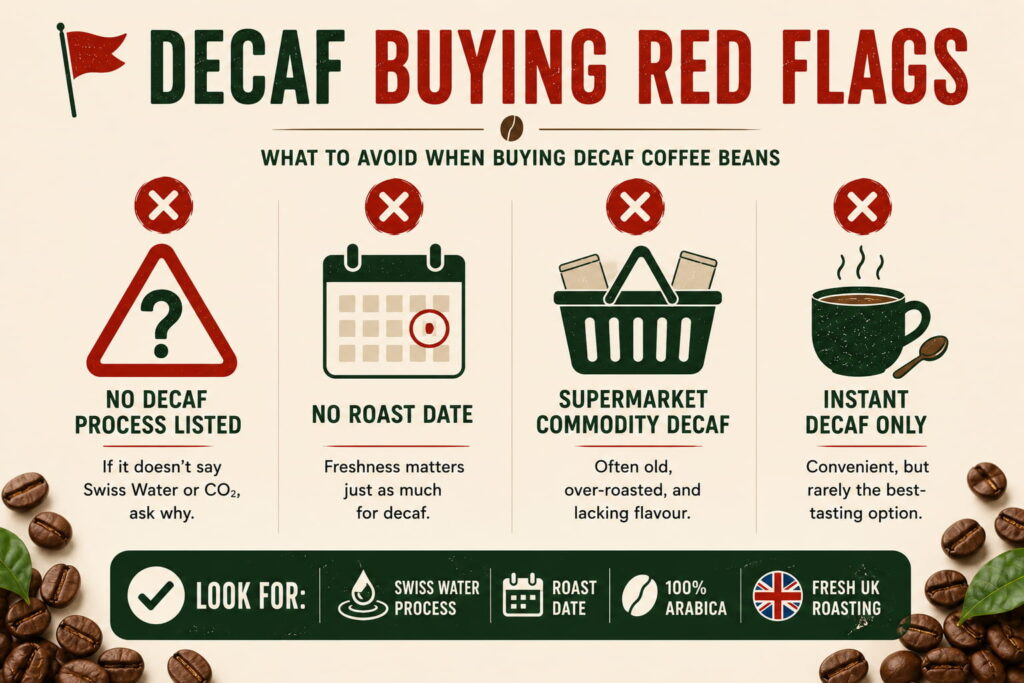
Three big mistakes to avoid:
1. Supermarket decaf
Specifically, almost all supermarket decaf uses methylene chloride decaffeination, low-grade commodity beans, and aggressive roasting to mask off-flavours. Furthermore, this is why “decaf” has such a bad reputation in the UK. As a result, supermarket decaf is genuinely disappointing — proper speciality decaf is a different drink entirely.
2. Decaf without specifying the process
If a bag says “decaffeinated coffee” without specifying Swiss Water, ethyl acetate, or methylene chloride — assume it’s methylene chloride. Specifically, transparent speciality roasters always state the process.
3. Instant decaf
Specifically, instant decaf combines all the problems of instant coffee with all the problems of chemical decaffeination. Furthermore, the flavour is dramatically inferior to even moderate-quality decaf beans. As a result, if you want a quick decaf, an AeroPress with proper decaf beans takes 3 minutes and tastes dramatically better.
How to Brew Decaf Coffee Beans Properly
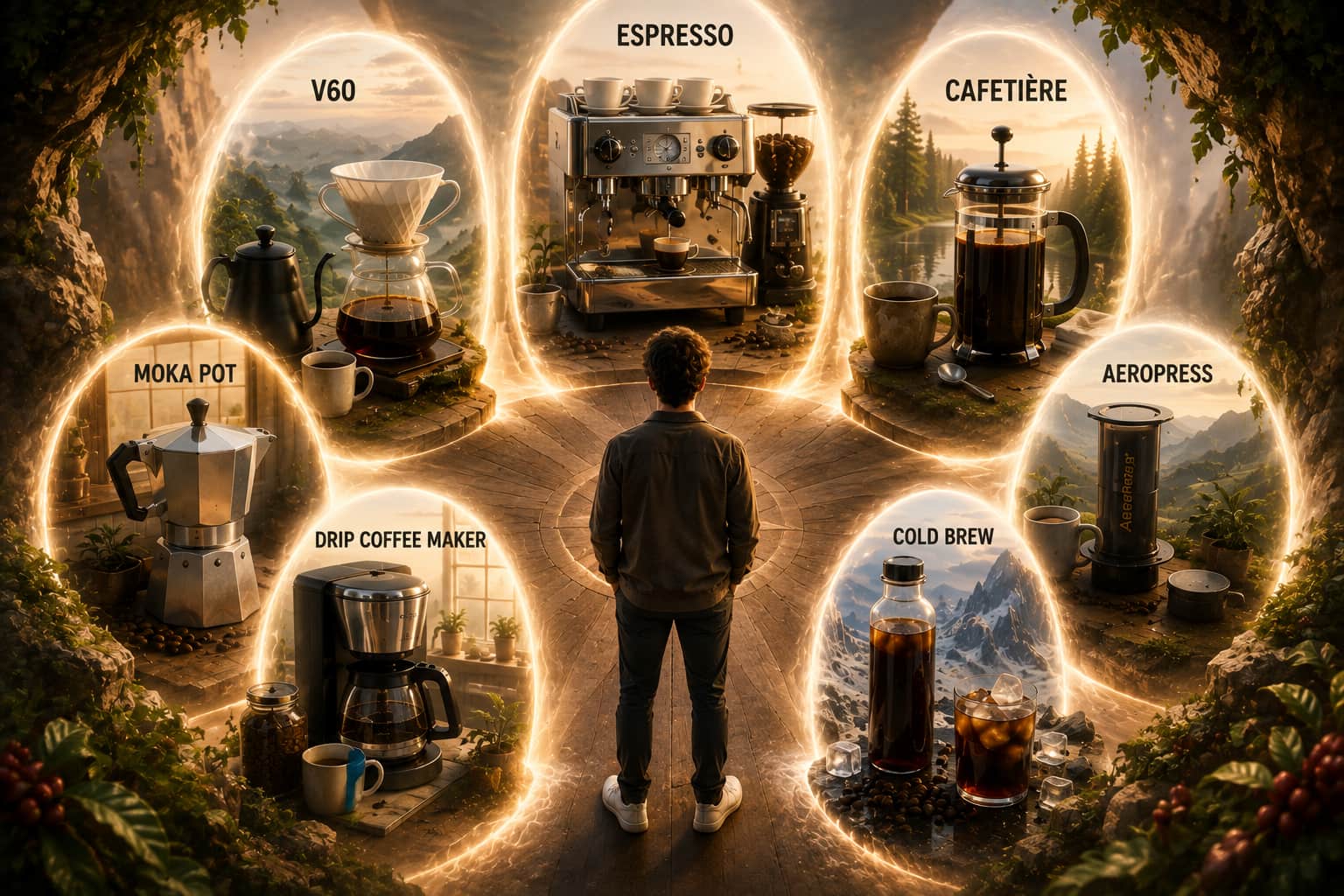
The honest truth: brewing decaf is identical to brewing caffeinated coffee. Specifically, the same recipes, temperatures, and techniques apply. Furthermore, our Hufflelump is built to handle every brewing method.
For espresso
Specifically, 18g of Hufflelump ground for espresso, 36g yield, 27–30 seconds. Furthermore, the body 4/5 produces proper espresso shots. As a result, brilliant for decaf flat whites and lattes.
For cafetière
By the way, 30g of Hufflelump (cafetière grind) to 500g of water at 94°C. Specifically, steep for 4 minutes, plunge slowly, pour immediately.
For V60 / pour-over
Specifically, 15g coffee to 250g water at 92°C. Furthermore, bloom for 30 seconds, finish by 3:00.
For bean-to-cup machines
Specifically, use Hufflelump as beans. Furthermore, the medium-dark roast works brilliantly with Sage, De’Longhi, Jura, and other UK-popular machines.
For evening coffee specifically
Above all, this is where decaf coffee beans genuinely shine. Specifically, you get the full coffee ritual without sleep disruption. As a result, many of our customers buy Hufflelump specifically for after-dinner or evening drinking.
Who Decaf Coffee Beans Are For

Specifically, decaf coffee beans aren’t just for caffeine-sensitive drinkers. As a result, here are the UK customers who genuinely benefit from buying them:
Pregnant or breastfeeding
NHS guidance recommends staying under 200mg of caffeine daily during pregnancy. Specifically, switching to Swiss Water decaf for some or all cups makes this easy. Furthermore, see our coffee health guide for more nuanced advice (and always consult your GP or midwife).
Managing blood pressure
Specifically, caffeine acutely raises blood pressure. Furthermore, switching to decaf for some cups can help. As a result, see our coffee and blood pressure guide for the detailed evidence and approach.
Trouble sleeping
Specifically, caffeine has a half-life of 5–6 hours. Furthermore, that 4pm coffee can still affect sleep at 10pm. As a result, switching afternoon and evening cups to decaf often improves sleep dramatically.
Anxiety or panic
Specifically, caffeine can trigger or worsen anxiety. Furthermore, decaf lets you keep the ritual without the chemical effect. By the way, if anxiety is significant, do also speak with your GP.
Sensitive stomachs
Specifically, our Hufflelump is acidity 2/5 — much gentler on the stomach than most coffees. As a result, ideal for people with acid reflux, IBS, or general digestive sensitivity. Furthermore, see our sensitive stomach coffee guide.
People who just love coffee
Honestly? Plenty of UK coffee drinkers buy decaf because they genuinely love coffee but want to drink more of it. Specifically, three cups of caffeinated coffee at 8am, 11am, and 1pm gives you 350mg+ of caffeine. By contrast, swapping one for decaf cuts intake significantly without changing the ritual.
Frequently Asked Questions
What are the best decaf coffee beans UK in 2026?
The best decaf coffee beans UK customers can buy are 100% Arabica beans decaffeinated using the Swiss Water Process. Specifically, our Hufflelump (£10.50 / 250g) is a Brazilian Swiss Water decaf with body 4/5 and dark chocolate notes. Furthermore, it’s roasted in England and dispatched within 24 hours.
Is Swiss Water decaf better than chemical decaf?
Yes, for two reasons. Specifically, Swiss Water uses no chemical solvents — only water. Furthermore, it preserves more of the original bean flavour than methylene chloride decaffeination. As a result, Swiss Water decaf tastes closer to regular coffee.
How much caffeine is in decaf coffee?
Swiss Water decaf contains 2–5mg of caffeine per cup. By contrast, regular coffee contains 95–120mg. Specifically, decaf is 99.9% caffeine-free — UK law requires decaf to have at least 97% of caffeine removed.
Is decaf coffee safe during pregnancy?
Generally yes. Specifically, NHS guidance recommends staying under 200mg of caffeine daily during pregnancy. Furthermore, Swiss Water decaf at 2–5mg per cup is well below any concerning threshold. As a result, many pregnant UK customers switch to Hufflelump as their main coffee during pregnancy. By the way, always check with your midwife if you have specific concerns.
Does decaf coffee taste different to regular coffee?
Speciality Swiss Water decaf tastes nearly identical to regular coffee. Specifically, many customers can’t tell the difference in blind taste tests. Furthermore, our Hufflelump has body 4/5 and dark chocolate notes that hold up in any brewing method. By contrast, supermarket decaf often tastes noticeably different — which is why decaf has a bad reputation many UK customers carry forward.
Can I use decaf coffee beans in my espresso machine?
Yes, absolutely. Specifically, our Hufflelump at roast 4/5 and body 4/5 pulls proper espresso shots in any home espresso machine. Furthermore, decaf espresso, decaf flat whites, and decaf lattes all work brilliantly with quality decaf beans.
How long do decaf coffee beans stay fresh?
The same as regular coffee — peak flavour within 28 days of roasting. Specifically, store in the original bag, push out air, keep at room temperature. Furthermore, see our UK coffee storage guide for the full method.
Where can I buy the best decaf coffee beans UK online?
The Coffee Twins Hufflelump is our Swiss Water Brazilian decaf — £10.50 / 250g, free UK shipping over £30. Specifically, roasted in England, dispatched within 24 hours. Furthermore, use NEW10 for 10% off your first order.
Summary
The best decaf coffee beans UK customers can buy are 100% Arabica beans decaffeinated using the Swiss Water Process. Specifically, this chemical-free method removes 99.9% of caffeine while preserving virtually all the bean’s natural flavour.
Our pick is Hufflelump — Brazilian Swiss Water decaf, roast 4/5, body 4/5, acidity 2/5, with dark chocolate and nutty notes. £10.50 / 250g, roasted in England, free UK shipping over £30.
Above all, modern speciality decaf is genuinely good coffee. Specifically, the reputation problem comes from supermarket decaf — not from decaf itself. As a result, if you’ve previously dismissed decaf based on supermarket experiences, a Swiss Water speciality decaf is genuinely worth trying.
Buy Hufflelump — Best Decaf Coffee Beans UK →
0 Comments