

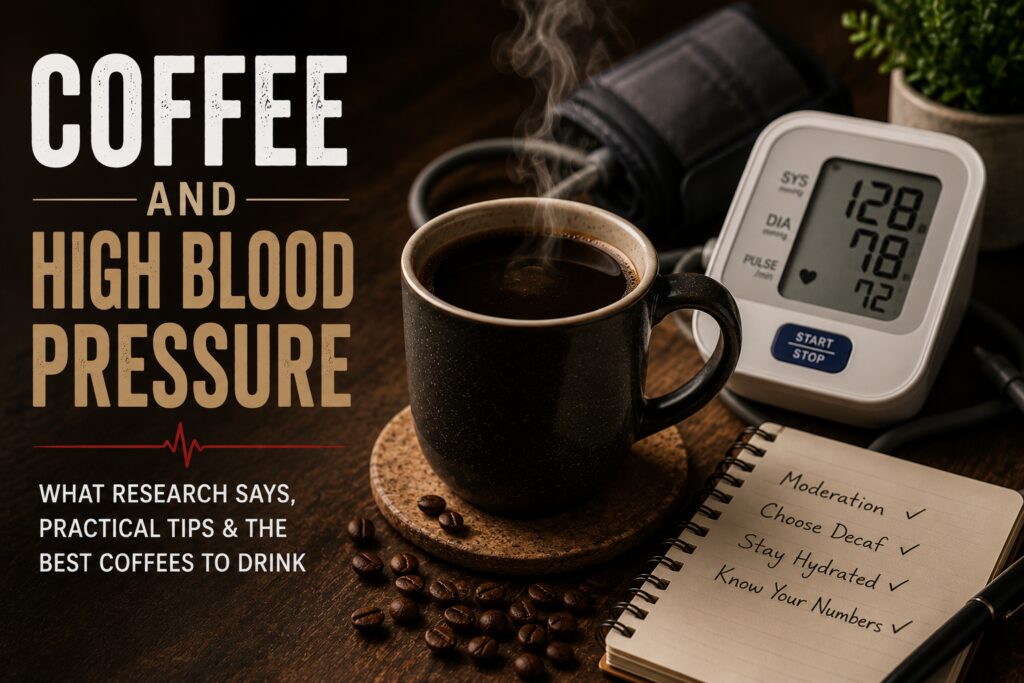
Quick answer: Current research is mixed on coffee and hypertension. Specifically, moderate coffee consumption (up to 200mg of caffeine per day for most adults with hypertension) appears safe for most people, but individual responses vary. For coffee lovers with high blood pressure, the practical approach involves: reducing total caffeine, switching to Swiss Water decaf for some cups, choosing low-acidity coffees, and discussing your intake with your GP.
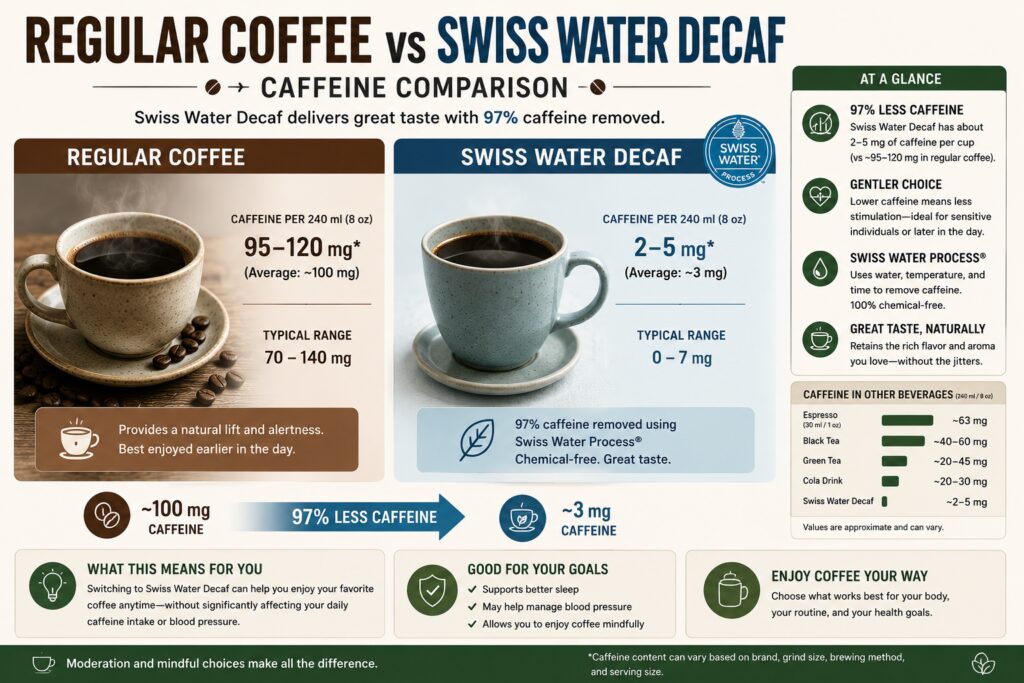
Our Hufflelump Swiss Water decaf is a chemical-free decaf with full flavour — 2–5mg of caffeine per cup instead of 95–120mg.
Why trust this guide?

We’re Jeremiah and Raja – The Coffee Twins. We’re a UK speciality coffee brand, not doctors. However, this question comes up often enough from our customers that we wanted to put together what we know honestly. Specifically, this guide explains what the published research and NHS-aligned guidance say about coffee and blood pressure, and how to approach your daily cup if you’ve been told yours is high. Above all, always check with your GP before making changes.
Table of contents
- How caffeine affects blood pressure (the short version)
- What the research actually says
- NHS and BHF guidance on caffeine
- A practical approach if you love coffee
- Why Hufflelump is our pick for hypertension-conscious drinkers
- Low-acid caffeinated options
- What to avoid
- FAQ
How Caffeine Affects Blood Pressure (The Short Version)
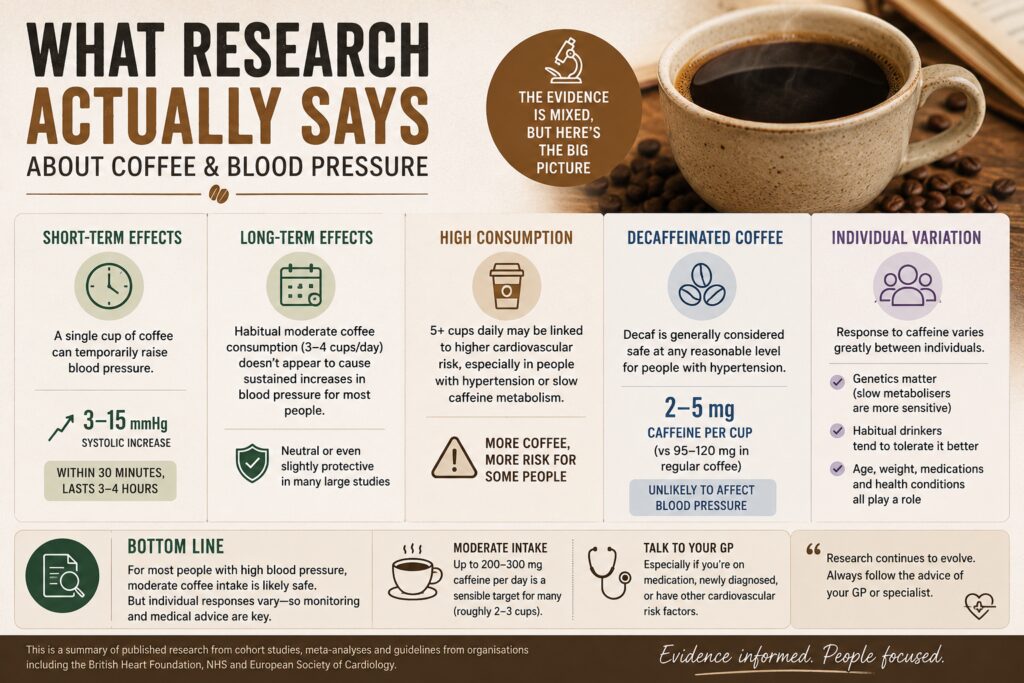
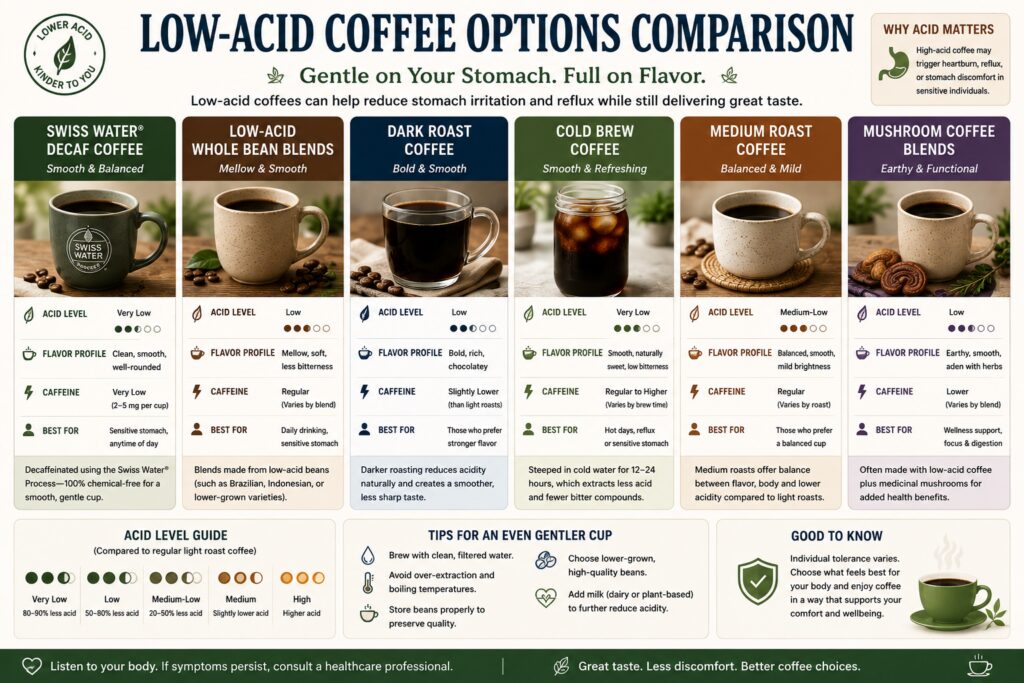
Caffeine is a stimulant. Specifically, it raises your heart rate and blood pressure temporarily — typically within 30 minutes of drinking coffee, with effects lasting 3–4 hours. As a result, the blood pressure rise is usually modest (3–15 mmHg systolic) and habitual coffee drinkers often develop tolerance to it.
However, the picture is more complicated than “caffeine = bad for BP.” Specifically:
- Habitual drinkers often show less acute response than occasional drinkers
- Coffee contains other compounds (polyphenols, magnesium, potassium) that may have small protective effects
- Individual variation is huge — some people are highly sensitive, others barely respond
- Genetics play a role — slow caffeine metabolisers (a common genetic variant) experience stronger and longer blood pressure effects
In short, the same cup of coffee that’s fine for one person with hypertension might cause noticeable BP spikes in another. As a result, individualised advice from your GP matters more than general rules.

What the Research Actually Says
The published research on coffee and blood pressure is genuinely mixed, which is why you’ll see contradictory headlines. Specifically, the main findings:
Short-term: A single cup of coffee acutely raises blood pressure for a few hours, especially in people who don’t drink coffee regularly. Furthermore, this effect is well documented.
Long-term: Habitual moderate coffee consumption (3–4 cups daily) doesn’t appear to cause sustained increases in blood pressure for most people. In fact, some large observational studies have found neutral or even slightly protective effects on cardiovascular outcomes.
High consumption (5+ cups daily): Some studies suggest higher cardiovascular risk at very high intakes, especially in people who already have hypertension or are slow caffeine metabolisers.
Decaf: Generally considered safe at any reasonable level for people with hypertension. Specifically, the small amount of caffeine remaining (2–5mg per cup) is unlikely to affect blood pressure meaningfully.
To be clear, we’re summarising — not citing — the literature here. Specifically, the British Heart Foundation, NHS, and European Society of Cardiology have published guidance that’s worth reading directly. Furthermore, your GP will have access to your individual risk profile.
NHS and BHF Guidance on Caffeine
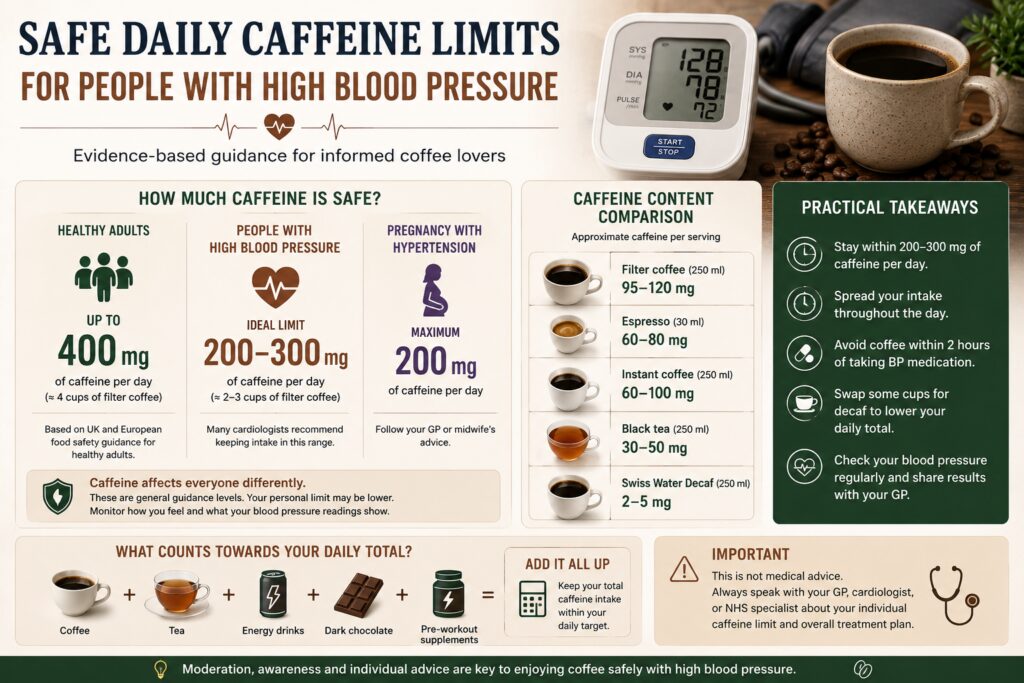
Current UK guidance for healthy adults is up to 400mg of caffeine per day — roughly four cups of filter coffee. However, for people with hypertension, the guidance is more conservative:
- The British Heart Foundation states that moderate caffeine intake is generally considered safe for most people with high blood pressure, but suggests being mindful and avoiding excessive amounts
- NHS general guidance on hypertension does not prohibit coffee, but recommends reducing intake if you’re sensitive to caffeine
- For pregnancy with hypertension, the limit drops to 200mg per day
Furthermore, the practical implication: most people with mild-to-moderate hypertension can probably keep drinking coffee, but should consider:
- Limiting total daily intake to 200–300mg of caffeine
- Spacing cups throughout the day, not back-to-back
- Avoiding coffee within 2 hours of taking BP medication
- Replacing some cups with decaf
Always check with your GP or cardiologist first. Specifically, if you’ve recently been diagnosed with hypertension, are taking BP medication, or have related cardiovascular conditions, individual advice matters more than general guidance.
A Practical Approach If You Love Coffee
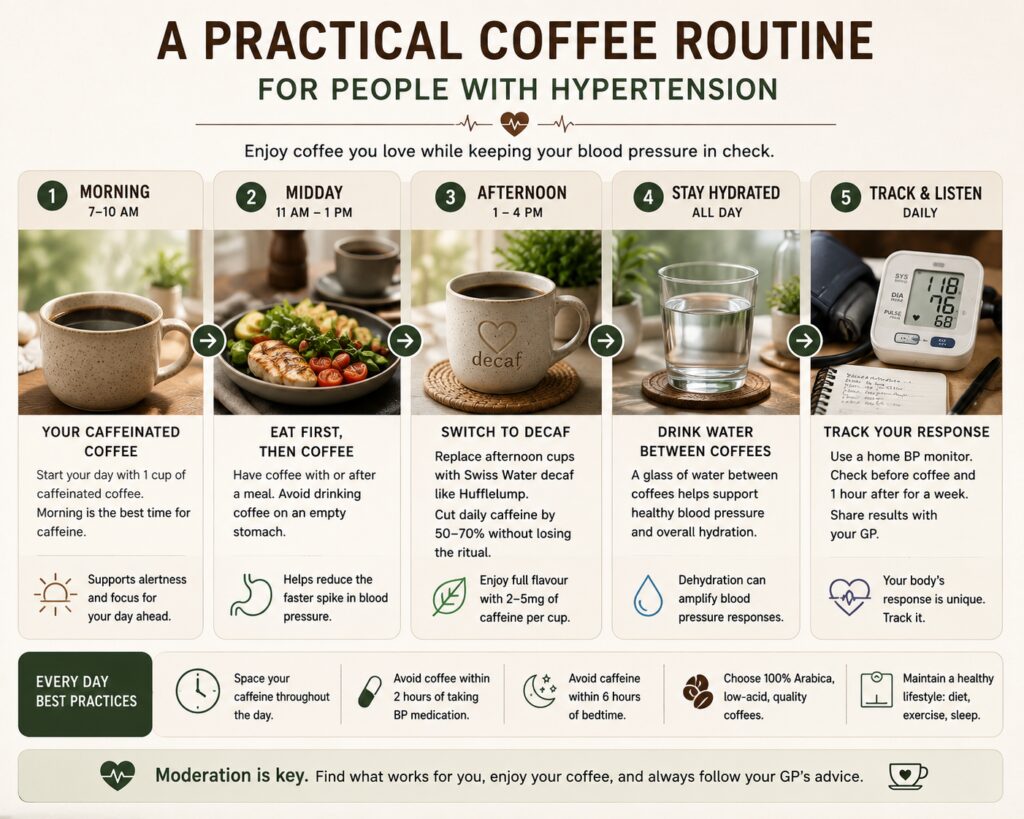
Assuming your GP has given you the green light for moderate coffee consumption, here’s the approach we suggest to our customers managing blood pressure:
1. Replace afternoon cups with decaf
Most people consume the bulk of their caffeine after lunch, which is also when its blood pressure effects compound. Specifically, switching just your afternoon and evening cups to a quality decaf like our Hufflelump can cut your daily caffeine intake by 50–70% without losing the ritual.
2. Choose lower-caffeine brew methods
A single espresso has 60–80mg of caffeine. By contrast, a large filter coffee can hit 200mg. Therefore, choosing espresso-based drinks (flat whites, cortados, single espressos) reduces total intake compared to drip filter or cafetière coffee.
3. Don’t drink coffee on an empty stomach
Empty-stomach caffeine hits faster and harder. As a result, eat first, drink coffee second.
4. Stay hydrated
Drink a glass of water between coffees. Specifically, dehydration can amplify blood pressure responses.
5. Track your own responses
If you have a home BP monitor, take readings before and 1 hour after coffee for a week. As a result, you’ll see whether your individual response is significant. Furthermore, share the data with your GP.
Why Hufflelump Is Our Pick for Hypertension-Conscious Drinkers
Origin: Brazil, Swiss Water decaffeinated
Roast: 4/5 | Body: 4/5 | Acidity: 2/5
Tasting notes: Dark chocolate, smooth, nutty
Caffeine: 2–5mg per cup (vs 95–120mg in regular coffee)
Price: £10.50 / 250g
Buy Hufflelump →
Hufflelump is our Swiss Water decaf — and it’s the coffee a lot of our hypertension-conscious customers move toward. Specifically, here’s why:
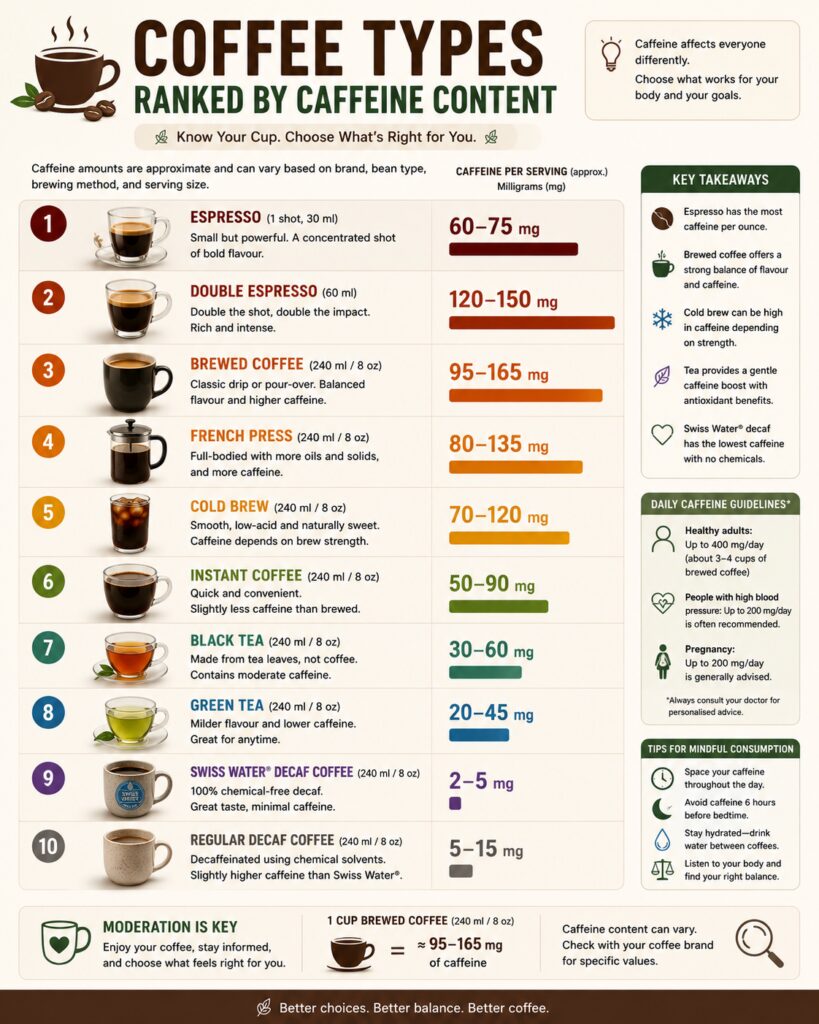
1. 99.9% of caffeine removed using the Swiss Water Process — a 100% chemical-free decaffeination method. As a result, you get 2–5mg of caffeine per cup instead of 95–120mg.
2. Real coffee flavour. Specifically, made from speciality-grade Brazilian beans, body 4/5, dark chocolate and nutty notes. In other words, this isn’t sad decaf — it’s a coffee you’d drink for the taste alone.
3. Acidity 2/5. Furthermore, low acidity tends to be easier on the body, particularly for those with related digestive sensitivity.
4. Works in any brewer. As a result, you can keep your existing coffee setup — espresso machine, cafetière, V60, bean-to-cup — and just swap the beans for some or all of your daily cups.
To clarify, Hufflelump isn’t a “medical” coffee. Specifically, it’s just a properly-made decaf that tastes good. Above all, for people managing blood pressure who don’t want to give up the coffee ritual, it’s the most practical solution we sell.
Low-Acid Caffeinated Options
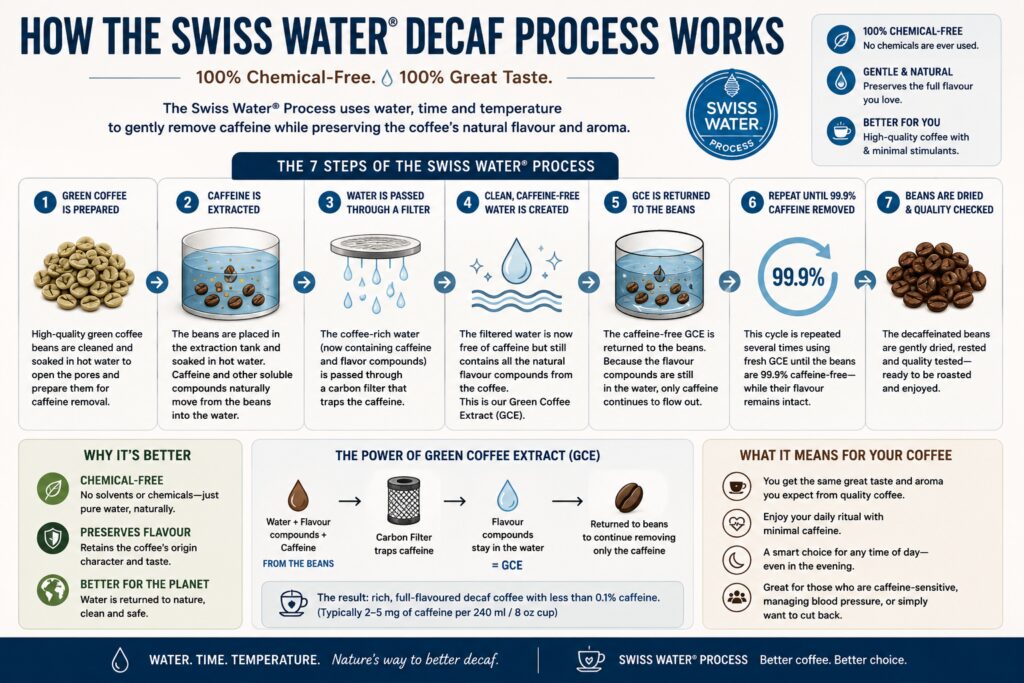
If your GP has cleared moderate caffeine and you still want some caffeinated cups, low-acid coffees may be gentler on the body overall. From our range:
- Audley — Body 5/5, roast 4.5/5, acidity 2/5. Dark-roasted blends are also lower in chlorogenic acid, which is broken down during roasting. £9.50 / 250g.
- Komodo — Body 5/5, acidity 2/5. Sumatran coffees are naturally low-acid. £9.50 / 250g.
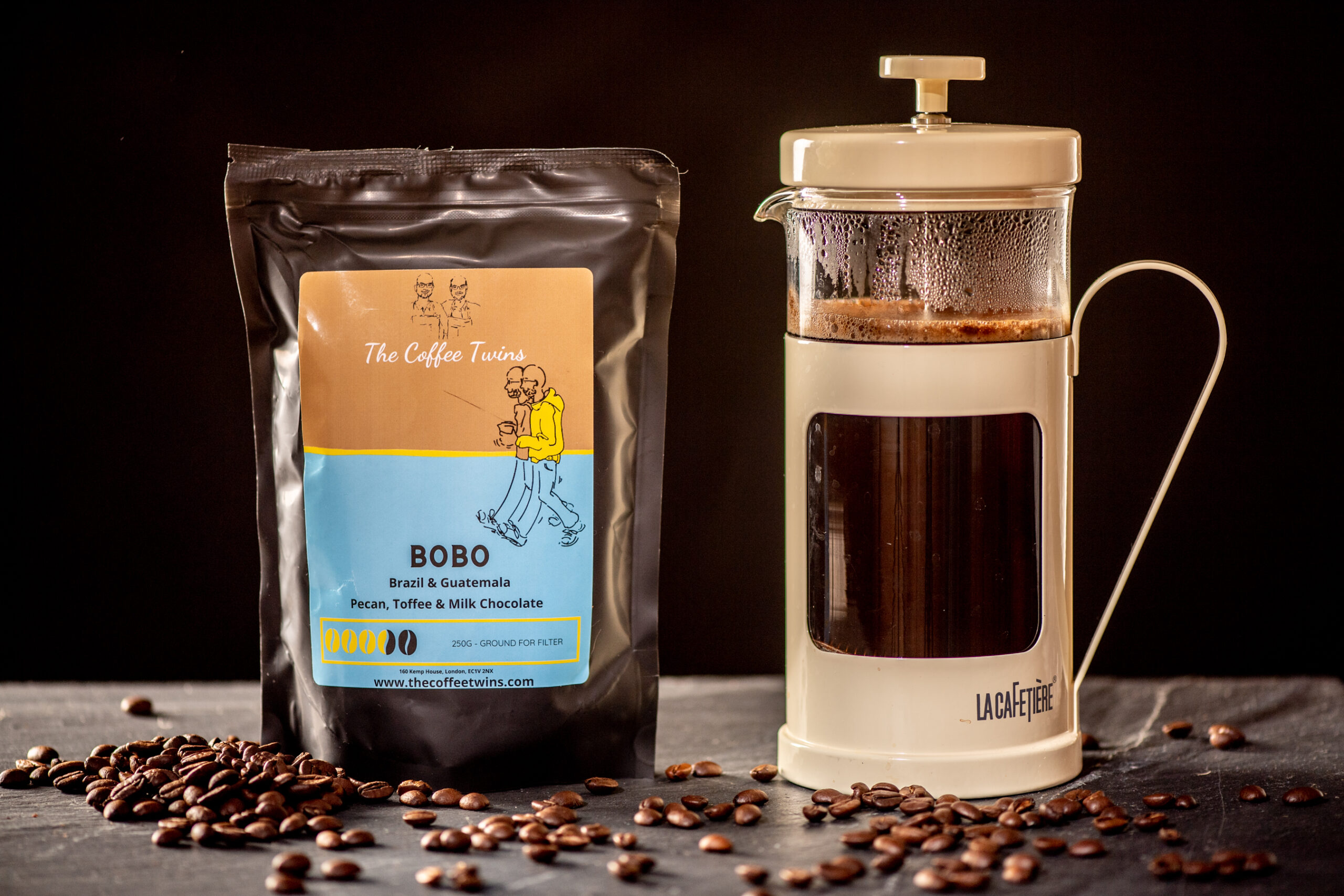
- Bobo — Body 4/5, sweetness 4/5, acidity 2/5. Smooth and milk-friendly. £9.50 / 250g.
Furthermore, all three are 100% Arabica — naturally lower in caffeine than supermarket “extra strong” coffees that contain Robusta.
What to Avoid
If you’re managing high blood pressure, the things most worth avoiding:
- Energy drinks. Specifically, much higher caffeine concentration than coffee, plus added sugar and stimulants. By the way, far worse for BP than any coffee.
- Pre-workout supplements containing caffeine. Furthermore, often 200–400mg per scoop, plus other stimulants.
- Cold brew at high concentrations. Specifically, cold brew can contain 200mg+ of caffeine per serving — far more than hot-brewed coffee.
- Coffees containing Robusta beans (most supermarket “extra strong” coffees). As a result, twice the caffeine of Arabica.
- Coffee + nicotine combinations. Specifically, they compound BP effects significantly.
Frequently Asked Questions
Can I drink coffee if I have high blood pressure?
Most likely yes, in moderation, but this depends on your individual situation. Specifically, the British Heart Foundation considers moderate coffee intake generally safe for people with hypertension. Therefore, always discuss with your GP first, especially if you’re on BP medication.
How much coffee is safe with high blood pressure?
UK guidance suggests up to 400mg of caffeine per day for healthy adults, with more conservative limits if you have hypertension. Specifically, many cardiologists suggest keeping intake under 200–300mg per day if you have high blood pressure. By the way, that’s roughly 2–3 cups of filter coffee.
Does decaf coffee raise blood pressure?
Generally no — Swiss Water decaf has 99.9% of caffeine removed and is widely considered safe for hypertension. Specifically, our Hufflelump contains 2–5mg of caffeine per cup compared to 95–120mg in regular coffee.
Does dark roast coffee have less caffeine?
Slightly less, yes. Specifically, the longer roasting process breaks down some caffeine. By the way, the difference is small (5–10%), but darker roasts also tend to be lower in chlorogenic acid, which may be relevant for some people.
Does drinking coffee in the morning vs evening affect blood pressure?
Caffeine effects last 3–4 hours, regardless of time of day. However, evening coffee can disrupt sleep, which itself affects blood pressure long-term. Therefore, avoiding coffee within 6 hours of bedtime is sensible for general health.
Can I drink coffee while taking blood pressure medication?
Always check with your GP or pharmacist. Specifically, some BP medications (especially beta-blockers) can interact with caffeine. Furthermore, even when interactions are mild, timing matters — most guidance suggests waiting 1–2 hours between taking your medication and drinking coffee.
Is instant coffee better or worse for high blood pressure than speciality coffee?
Generally worse. Specifically, instant coffee often contains Robusta beans, which have roughly twice the caffeine of Arabica. Therefore, speciality coffee (100% Arabica) gives you less caffeine per cup, plus much better flavour.
Where can I buy decaf coffee in the UK for high blood pressure management?
The Coffee Twins Hufflelump is our Swiss Water decaf — chemical-free decaffeination, 99.9% caffeine removed, real coffee flavour. £10.50 / 250g. Furthermore, free UK shipping over £30. Use NEW10 for 10% off your first order. Above all, please consult your GP before making changes to your coffee intake.
Summary
Coffee and high blood pressure is a more nuanced topic than headlines suggest. Specifically, moderate coffee consumption appears safe for most people with hypertension, but individual responses vary considerably. Therefore, always speak with your GP first.
Practical approach for coffee lovers with high blood pressure:
- Keep daily caffeine under 200–300mg (roughly 2–3 cups)
- Switch afternoon cups to Swiss Water decaf like our Hufflelump
- Choose low-acid, 100% Arabica coffees
- Avoid energy drinks and pre-workout caffeine
- Track your individual response with a home BP monitor
Above all, this isn’t medical advice. Specifically, please discuss any concerns with your GP, cardiologist, or NHS specialist.
Try Hufflelump Swiss Water Decaf →


0 Comments