

Quick answer: The best coffee beans for latte are medium to medium-dark blends with low acidity and plenty of body, because milk softens everything you pour it over. Chocolate, caramel and nutty notes stay clear, while bright, fruity coffees fade. For example, our everyday pick is Bobo, which scores 2/5 for acidity and 4/5 for body on our own tasting scale. In addition, Audley suits stronger lattes, and Hufflelump covers decaf.
By Jeremiah and Raja Wolstenholme, The Coffee Twins | Last reviewed 11 November 2026
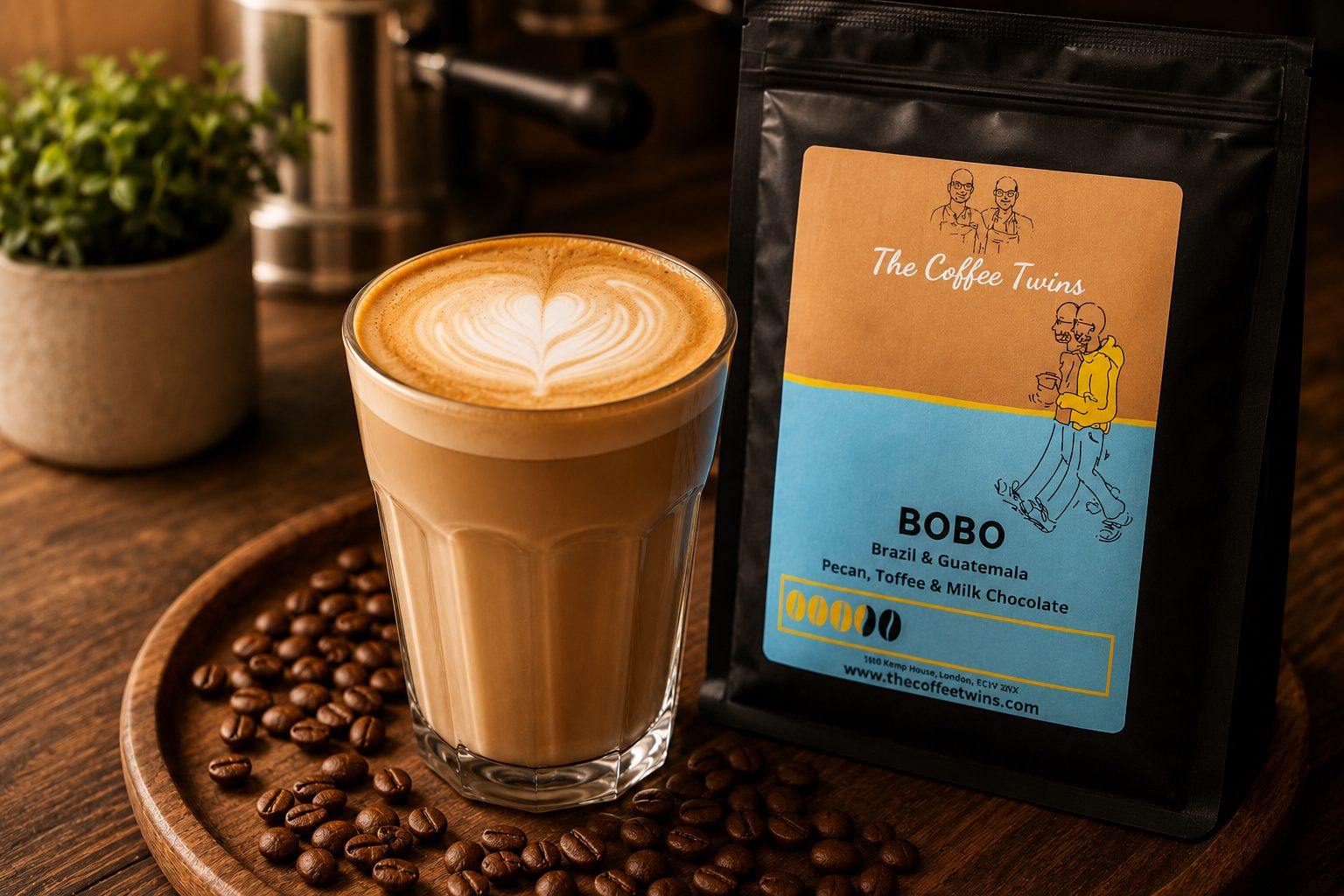
Shop Bobo, our everyday latte beans
Choosing the best coffee beans for latte drinks is mostly about one thing: what survives the milk. A latte is a shot of espresso topped with a lot of steamed milk, so the coffee has to be bold enough to come through. At The Coffee Twins we came up through five-star hotel food and beverage, and we now offer a range of eight coffees. This guide is the honest version of what we tell friends, customers and the hotel teams we train.
What makes the best coffee beans for a latte?
Good latte beans have three things in common: low acidity, a full body and sweet, roast-led flavours such as chocolate, caramel, toffee or nuts. Whole milk in the UK must contain at least 3.5% fat by law, and that fat and protein coat the palate, so delicate flavours get muted. As a result, a coffee that tastes lively black can taste thin or sour once it’s under 200ml of milk.
When picking the best coffee beans for latte drinks, roast level also matters. Medium to medium-dark roasts develop the caramel and cocoa sweetness that pairs naturally with milk, whereas very light roasts keep their fruit and acidity, which is lovely in a V60 but clashes in a latte. That said, darker isn’t automatically better. If the beans are roasted too dark, the shot turns ashy, and milk can’t hide that.
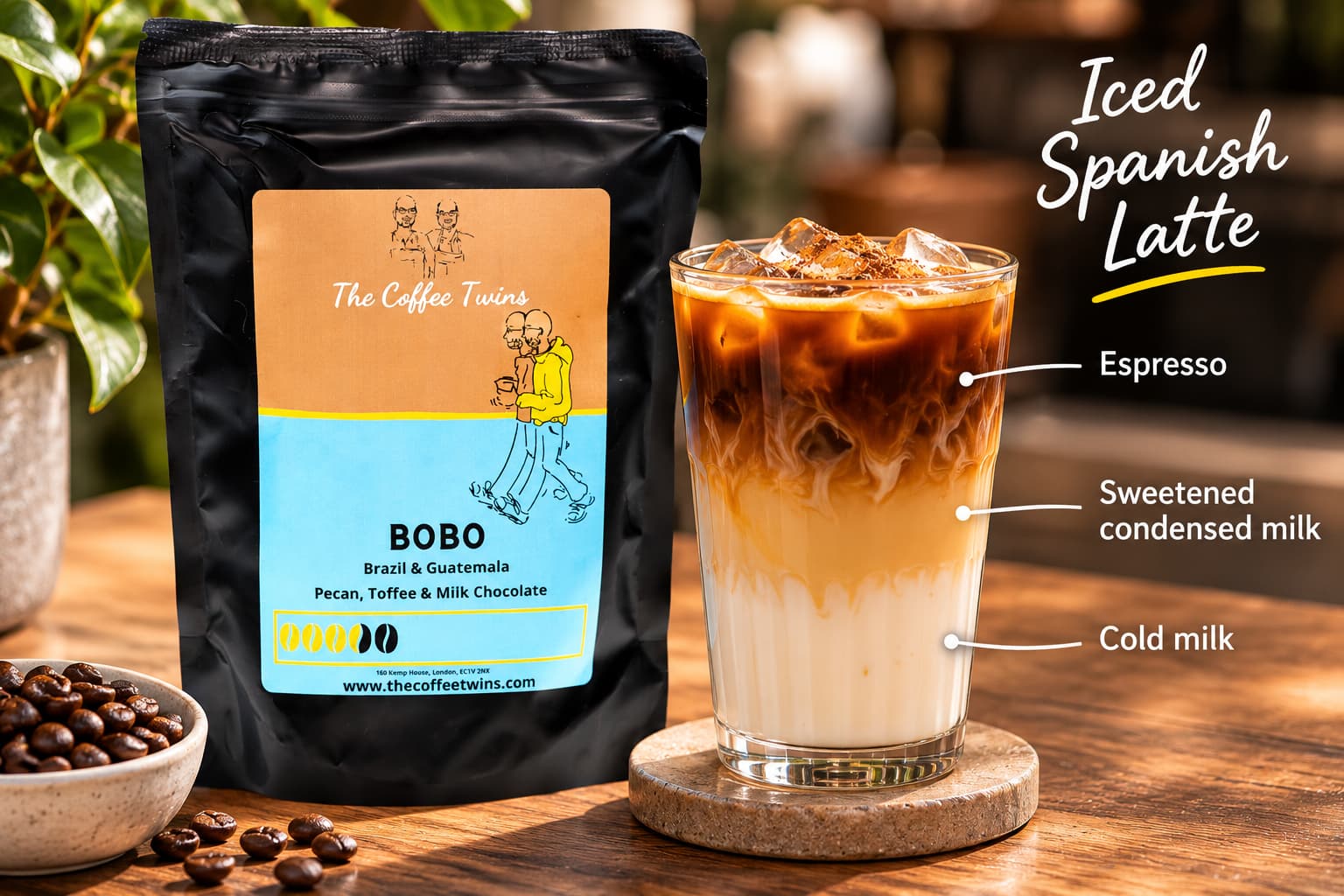
Blends often beat single origins here, because a roaster can build one for balance. For example, our Bobo blends beans from Guatemala’s volcanic soils with Brazil’s Cerrado Minas Gerais for body and sweetness. If you want the full method once you have the beans, our step-by-step guide on how to make a latte at home walks through the shot, the milk and the pour. For a sense of how the wider industry judges quality, the Specialty Coffee Association explains how it now defines speciality coffee.
Which coffee beans are best for a latte in the UK?
Here’s how the coffees we’d reach for compare, including two well-known UK alternatives we think are honestly worth trying. For clarity, scores for our coffees come from our own product pages (out of 5). Other roasters don’t publish the same scale, so we’ve used their own descriptions instead.
| Coffee | Origin | Roast | Body | Acidity | Tasting notes | Best for |
|---|---|---|---|---|---|---|
| Bobo (The Coffee Twins) | Brazil and Guatemala | 3.5/5 | 4/5 | 2/5 | Pecan, toffee, milk chocolate | Everyday lattes, beginners |
| Audley (The Coffee Twins) | Brazil, El Salvador and India | 4.5/5 | 5/5 | 2/5 | Smooth, caramel, dark chocolate | Strong lattes, big mugs |
| Ant (The Coffee Twins) | Ethiopia, Indonesia and India | Not listed | 5/5 | 3/5 | Dark chocolate, smooth, rich | Richer, more complex lattes |
| Hufflelump Decaf (The Coffee Twins) | Brazil, Swiss Water decaf | 4/5 | 4/5 | 2/5 | Dark chocolate, smooth | Evening and decaf lattes |
| Revelation (Union, London) | Costa Rica, Guatemala, Nicaragua, Rwanda and Burundi | Dark | Round, full | Not scored | Chocolate, treacle, caramel finish | Bold, classic lattes |
| Red Brick (Square Mile, London) | Ethiopia and Costa Rica (changes by season) | Medium | Not scored | Not scored | Yellow plum, butterscotch, orange | Fruitier, lighter lattes |
Our picks for the best coffee beans for latte, in plain terms
- Bobo: the friendliest latte coffee we sell. Its toffee and milk chocolate notes sit right on top of the milk, and it’s forgiving while you’re still dialling in.
- Audley: the one to choose when a latte tastes “too milky” to you. With 5/5 body and a 4.5/5 roast, it keeps its caramel and dark chocolate even in a large cup.
- Ant: our product page describes it as rich, with “a nougaty sweetness and baker’s chocolate” in milk. It’s a good step up once Bobo feels familiar.
- Hufflelump Decaf: a Swiss Water decaf with the same low 2/5 acidity, so an evening latte still tastes like coffee.
Honest alternatives from other UK roasters
Union’s Revelation is their signature dark-roast espresso, described as chocolate and treacle with a caramel finish, so it behaves much like Audley in milk. On the other hand, Square Mile’s Red Brick is a medium roast with yellow plum and butterscotch notes. Because it’s fruitier than anything above, it suits latte drinkers who want brightness rather than cocoa.
Beans we’d skip for lattes
Jojo, our Ethiopian single origin, is fruity and winy with 4/5 acidity, so it shines black and goes muddy in milk. Similarly, Parrot, a mild 2.5/5 Brazilian, is better in a cafetière. Komodo from Sumatra has 5/5 body and low acidity, though its spicy, tobacco-like profile is a matter of taste in milk, so try it black first.
How do baristas choose latte beans for a five-star hotel?
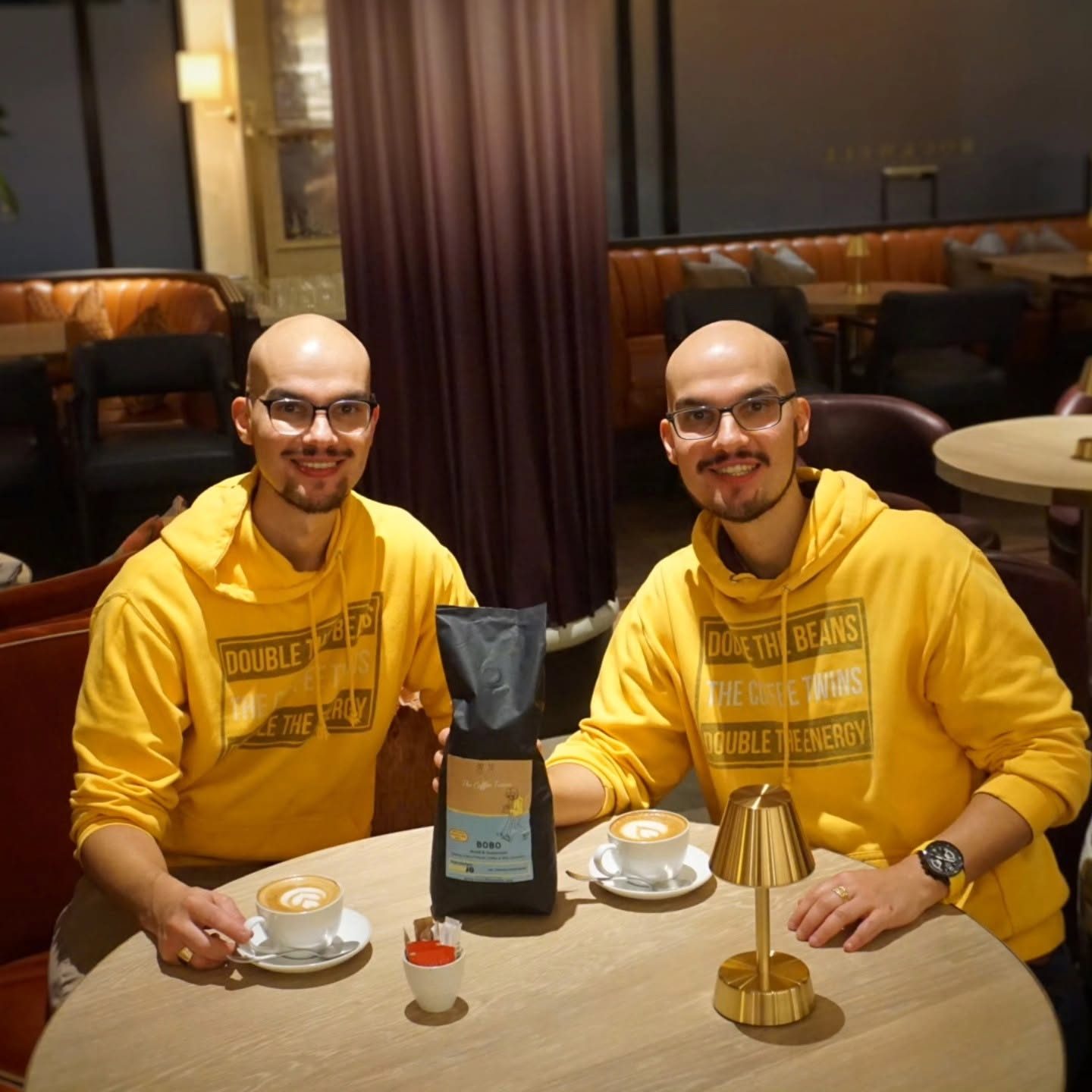
In hotels, the coffee has to taste right in milk every single time, because that’s what most guests order. Charles Temkey of Flair Espresso told Perfect Daily Grind in February 2026 that “any café will tell you that 90-95% of their sales are milk-based beverages.” That’s why we test coffees at the hotels we work with, to match the beans with their milk, rather than judging them as espresso alone.
That lesson came the hard way. We came up through five-star hotel food and beverage, and it was in a coffee shop in Farringdon, after that training, that people started calling us The Coffee Twins. Behind a busy bar, a coffee that needs perfect dialling to taste good in milk lets you down at 8am. Instead, you want beans with enough body and sweetness to forgive small changes in grind or milk temperature.
That’s why Bobo was the coffee we supplied to the staff canteen at Trafalgar St James, the five-star hotel in London. We also visit clients in person and train their staff on site, covering machine handling, coffee education and latte art. In particular, milk temperature comes up in every session. Most baristas aim for 55 to 65°C, the range where steamed milk tastes sweetest, according to Latte Art Factory’s Nefeli Bouti in the same Perfect Daily Grind piece. Once milk goes past about 70°C, it starts to taste cooked, and no bean can rescue it.
If you run a hotel, office or venue and want that kind of support, our wholesale page explains how we work.
Do the same beans work for a flat white, cappuccino or oat milk latte?
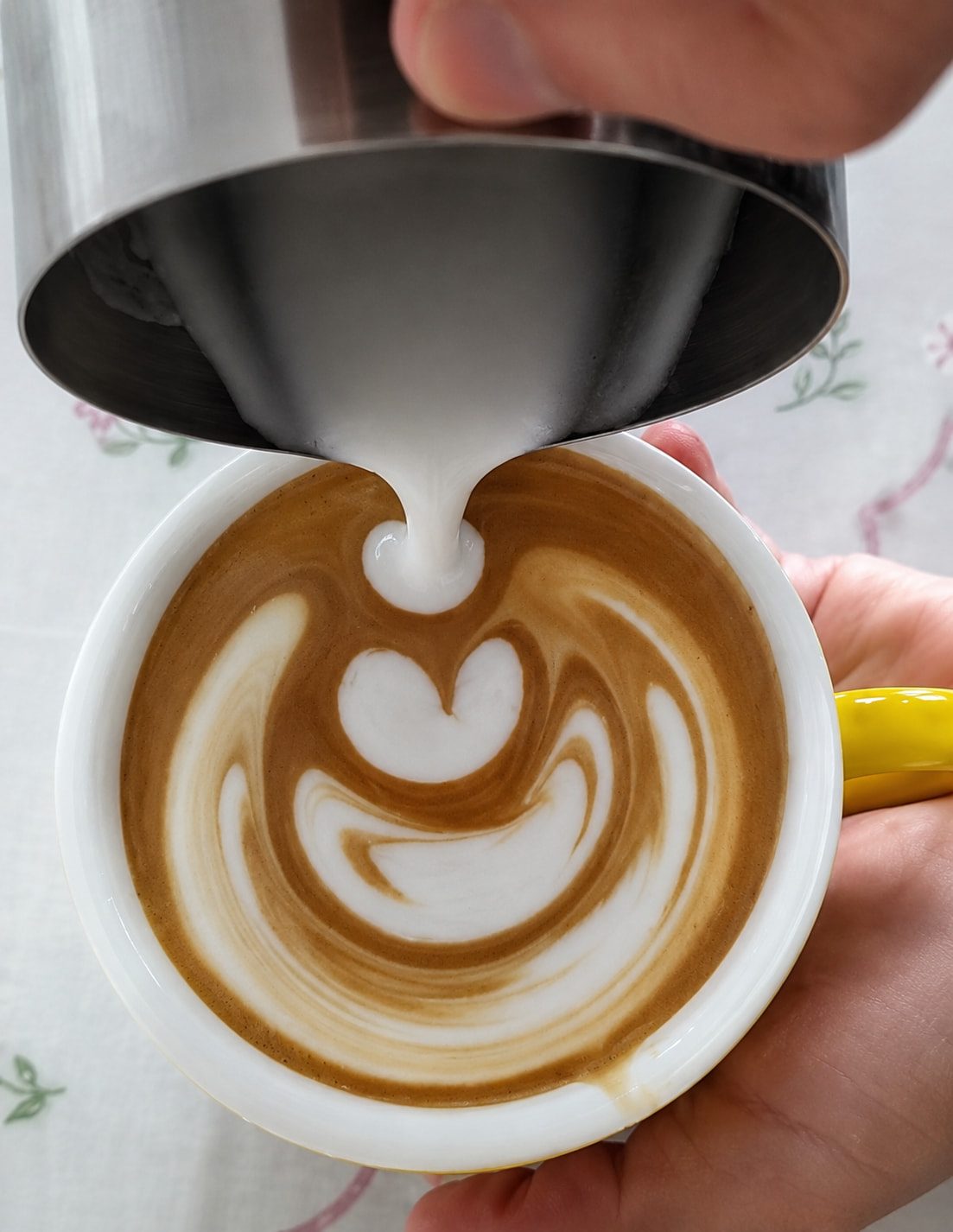
Yes, mostly, because all three drinks are espresso plus steamed milk. The bean that makes a good latte usually makes a good cappuccino and flat white too. What changes is the balance: a flat white is a smaller, stronger drink, so you taste more of the coffee, while a cappuccino has more foam. Our side-by-side guide to latte vs cappuccino vs flat white explains the differences, and our flat white at home method covers the recipe.
- Flat white: you can go a touch brighter here, because there’s less milk. For instance, Bobo and Ant both work well.
- Cappuccino: the extra foam dilutes flavour a little, so Audley’s bigger body helps.
- Oat milk latte: oat adds its own sweetness. Bobo’s toffee notes suit it, and oat steams best at around 60°C, according to Latte Art Factory. Our whole milk vs oat milk guide compares both in coffee.
- Decaf latte: For context, Swiss Water says its process leaves green coffee 99.9% caffeine-free. Hufflelump is our pick, and our best decaf coffee guide covers more options.
In fact, plant milks have only recently reached the world stage. The 2023 World Barista Championship rules allowed commercial plant milks for the first time, and that year’s champion, Boram Um of Brazil, used freeze-distilled, lactose-free milk in his milk course at the World Coffee Championships in Athens.
Should you buy whole beans or ground coffee for lattes?
Whole beans give you the best latte, since you can grind fresh for each shot and adjust the grind as the bag ages. However, if you don’t own a grinder, choose the espresso grind on our product pages, and buy a smaller bag more often. Our partner roastery in England roasts to order, and orders are usually dispatched within 24 hours, so the coffee reaches you fresh. A subscription keeps it coming, and you can pause or cancel any time.
Frequently asked questions
What are the best coffee beans for latte drinks at home?
Medium to medium-dark blends with low acidity and full body make the best lattes, because milk mutes delicate flavours. Our everyday pick is Bobo, which scores 2/5 for acidity and 4/5 for body. Audley is stronger, and Hufflelump is the decaf option.
Is a dark roast better for a latte?
Not always. A medium-dark roast gives the chocolate and caramel sweetness that suits milk, but a very dark roast can taste ashy. For example, Audley, at 4.5/5 roast, is about as dark as we’d go.
Can you use espresso beans for a latte?
Yes. A latte is a shot of espresso topped with steamed milk, so any coffee that makes a good espresso can make a latte. In fact, beans described as espresso blends are usually built with milk drinks in mind.
Which beans are best for an oat milk latte?
Sweet, nutty or chocolatey beans pair best with oat milk. Bobo’s toffee and pecan notes suit oat’s natural sweetness, and Latte Art Factory recommends steaming oat milk to around 60°C.
Why does my latte taste weak or milky?
Usually the coffee is too light, the shot is too small, or there’s too much milk. Try a fuller-bodied bean such as Audley, pull a double shot, or switch to a flat white, which uses less milk.
How hot should the milk be for a latte?
Aim for 55 to 65°C, the range where steamed milk tastes sweetest. However, above about 70°C, milk starts to taste cooked and flat.
Do The Coffee Twins roast the beans themselves?
No. Our partner roastery in England roasts every coffee to order for us, and we choose, taste and blend-test the range. On top of that, orders are usually dispatched within 24 hours.
Ready to make a better latte?
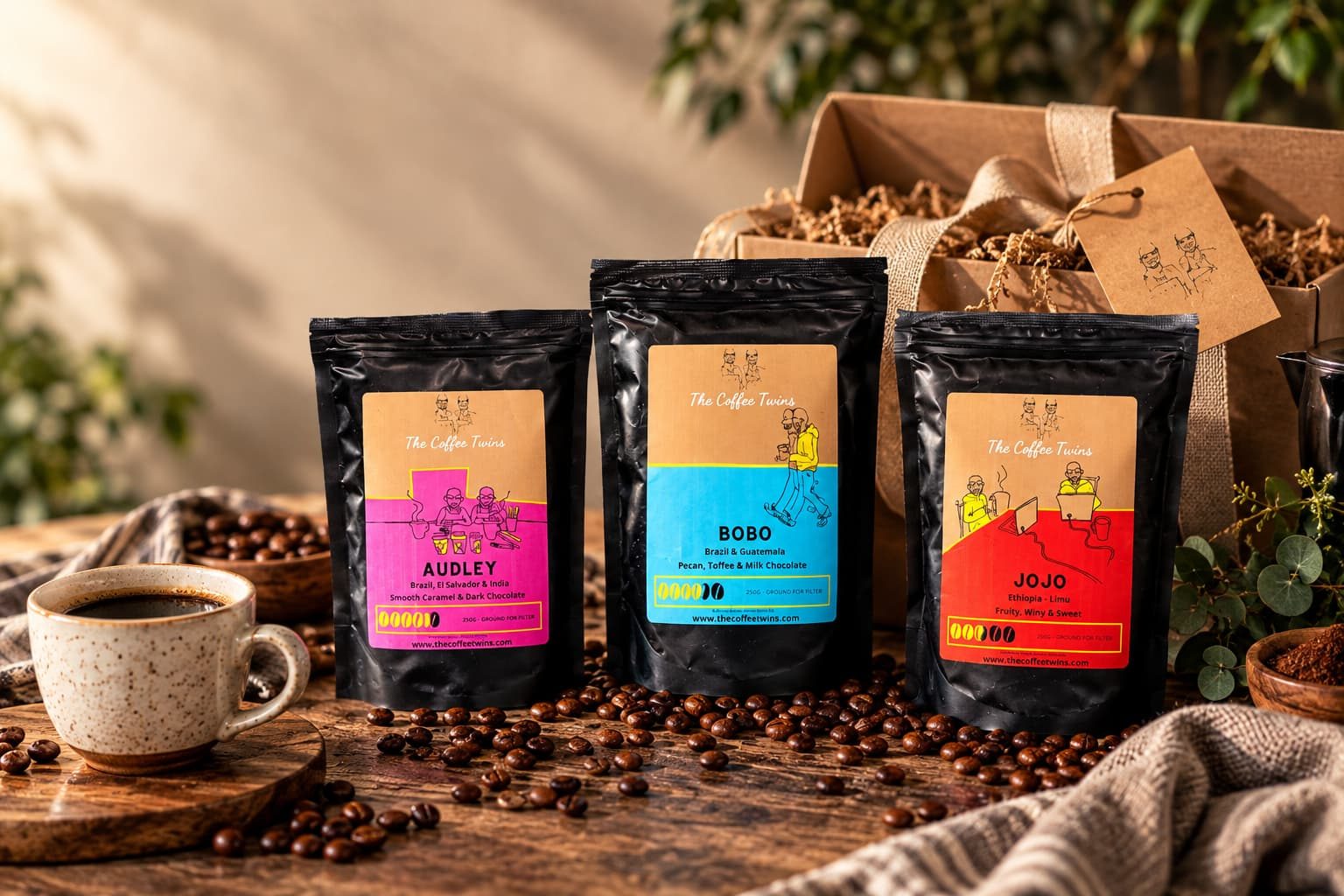
Start with a bag of Bobo, pull a double shot and steam your milk to around 60°C. Then tell us how it went. If you’d rather taste a few coffees side by side, our tasting pack includes Audley, Bobo and Jojo, so you can hear for yourself how a fruity single origin changes in milk compared with our two chocolatey blends.
Shop Bobo latte beans Try the tasting pack Start a subscription
0 Comments