


Quick answer: To make a proper café-style latte at home in the UK, you need a double espresso shot (36g), 200-250ml of steamed milk with a thin foam layer (5-8mm), and a 240-300ml cup. Specifically, the ratio is 1 part espresso to 3+ parts milk. Furthermore, the right beans matter: medium roast, chocolatey notes, low acidity.For lattes, we recommend our Bobo (sweet, milk chocolate — perfect for lattes) or Audley (stronger, caramel notes). £9.50 / 250g, free UK shipping over £30.
Why trust this guide?

We’re Jeremiah and Raja — The Coffee Twins. Before launching our UK speciality coffee brand, we trained in five-star hotel food and beverage and ran our own coffee shop in Farringdon. Specifically, we’ve pulled thousands of lattes for London customers, trained baristas on latte technique, and figured out how to translate café methods for home brewers. As a result, this guide is what we’d teach you if you came into our shop asking how to make a proper latte at home.
Table of contents
- What a latte actually is (UK definition)
- What you need (and what you can skip)
- The right beans for how to make a latte at home
- Step 1: Pull a proper double espresso
- Step 2: Steam (or texture) the milk
- Step 3: Pour the latte
- How to make a latte at home without an espresso machine
- Making flavoured lattes at home (vanilla, caramel, hazelnut)
- Plant milks, decaf, and iced variations
- Troubleshooting: why your latte tastes wrong
- FAQ
What a Latte Actually Is
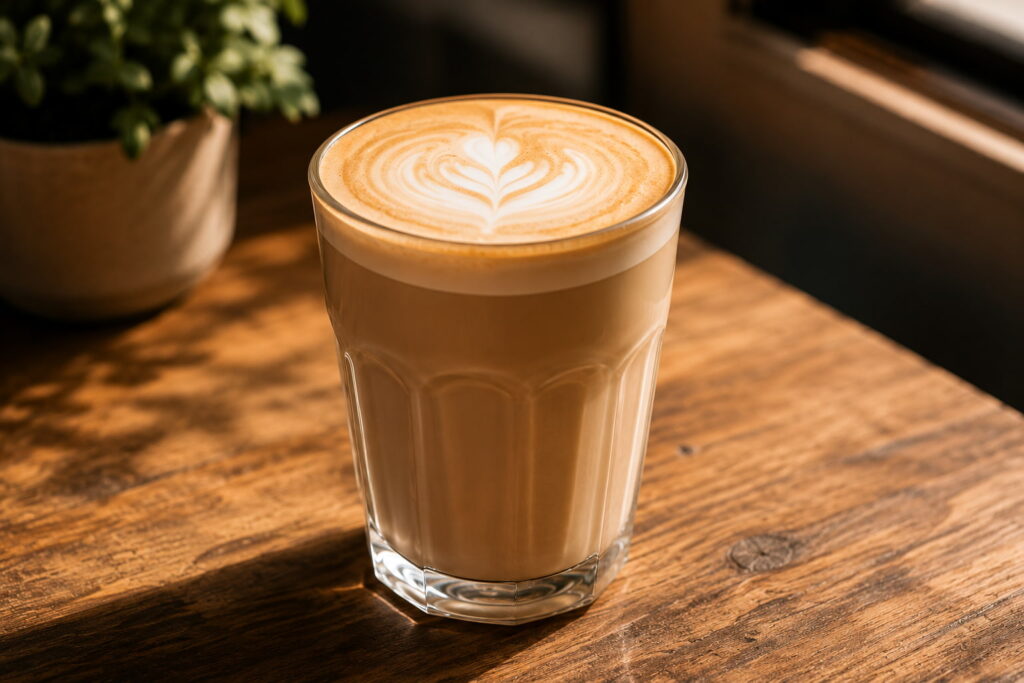
The latte is the milkiest and largest of the standard café milk drinks. Specifically, the name comes from the Italian “caffè latte” — literally “coffee with milk.” Furthermore, in Italy, asking for “a latte” gets you a glass of plain milk. As a result, when ordering in Italy, ask for “caffè latte.”
The official UK specification:
- Cup size: 240-300ml (larger than a flat white)
- Coffee: A double espresso (36g of liquid coffee from 18g of grounds)
- Milk: 200-250ml of steamed whole milk with a thin foam layer
- Foam thickness: 5-8mm — a thin layer on top
- Temperature: Around 60°C
- Coffee-to-milk ratio: 1:3 or higher
How a latte differs from a flat white and cappuccino
Specifically, all three drinks contain the same double espresso shot. Furthermore, what changes is the milk:
- Flat white: Small cup (150-170ml), less milk (~120ml), thin microfoam. Coffee-forward.
- Cappuccino: Medium cup (180ml), equal espresso/milk/foam, thick foam. Balanced with airy texture.
- Latte: Large cup (240-300ml), most milk (200-250ml), thin foam. Mild and milky.
As a result, the latte is the mildest and most milk-forward of the three. Above all, this makes it the classic starter drink for people new to speciality coffee. Specifically, see our latte vs cappuccino vs flat white guide for the full breakdown.

What You Need (and What You Can Skip)
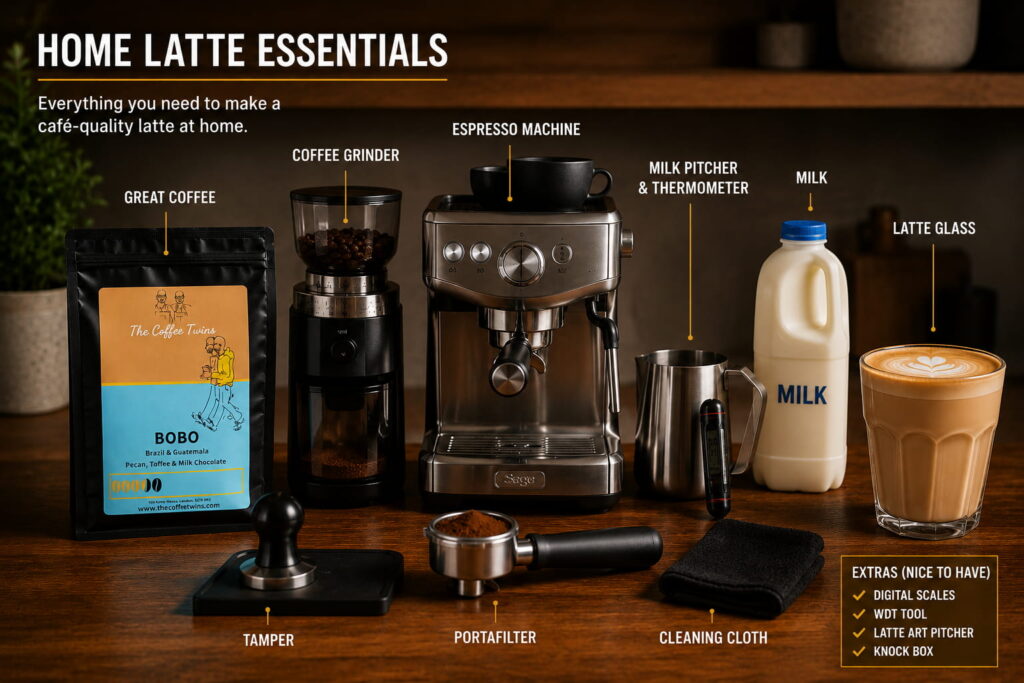
What you need
- An espresso source: espresso machine, moka pot, or strong AeroPress
- Fresh speciality coffee beans (roasted within the last 28 days)
- A grinder if you bought beans (or buy pre-ground espresso grind from us)
- Whole milk or barista-edition oat milk (around 250ml per latte)
- A way to texture milk (steam wand, milk frother, or French press)
- A 240-300ml cup or glass (lattes are traditionally served in a tall glass)
What you can skip
- A £600 espresso machine — a £25 moka pot makes a great home latte
- A milk thermometer — you can feel 60°C through a metal jug after a few tries
- Latte art skills — they don’t change the taste, just the look
- Fancy syrups — a proper latte doesn’t need flavouring
The Right Beans for How to Make a Latte at Home
Beans matter more than most home brewers realise. Specifically, for lattes, you want:
- Medium roast (3/5 to 3.5/5): Furthermore, dark enough to cut through milk, not so dark it tastes burnt
- Low acidity (2/5 or below): As a result, no sour clash with the milk
- Body 4/5: Specifically, so the coffee doesn’t disappear in the cup
- Chocolatey, nutty, or caramel tasting notes: Furthermore, these complement milk beautifully
From our range:
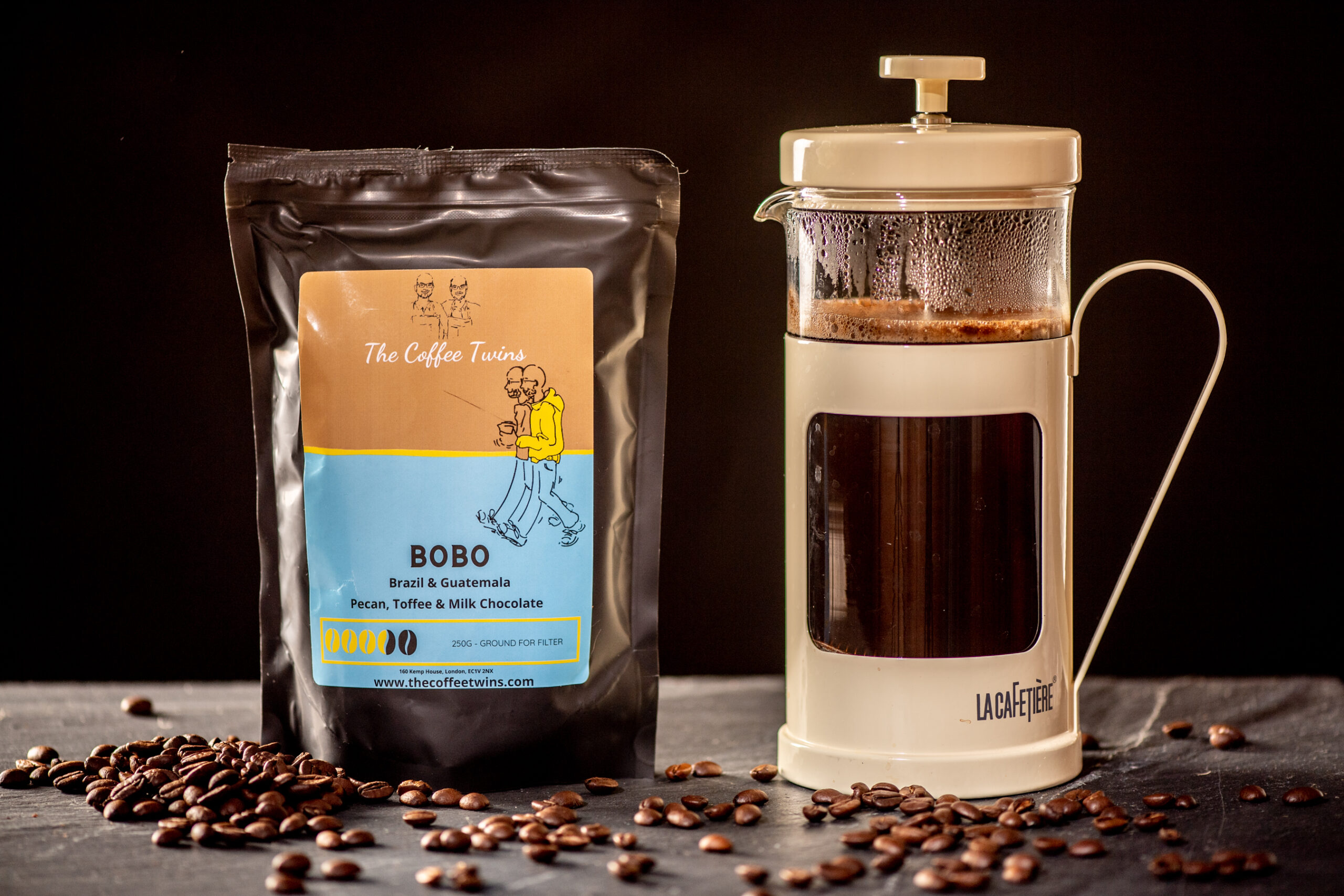
Best for everyday lattes: Bobo — pecan, toffee, milk chocolate. Sweet and smooth. £9.50 / 250g.
Best for stronger lattes: Audley — caramel, dark chocolate, body 5/5. Italian-style depth. £9.50 / 250g.
Best for complex lattes: Ant — dark chocolate, smooth, rich. Develops nougaty sweetness in milk. £9.50 / 250g.
Best for evening / decaf lattes: Hufflelump Swiss Water decaf. Body 4/5, dark chocolate, nutty. £10.50 / 250g.
Beans we wouldn’t use for lattes:
- Jojo — Ethiopian light roast, acidity 4/5. The bright fruity notes disappear in milk. Save Jojo for V60.
- Parrot — light Brazilian single origin. Better in cafetière or V60 than under 200ml of milk.
Step 1: Pull a Proper Double Espresso
The shot is the foundation. Specifically, a bad shot makes a bad latte — no matter how good the milk technique. Furthermore, the espresso needs to be strong enough to come through the large volume of milk.
The target:
- Dose: 18g of ground coffee in the portafilter
- Yield: 36g of liquid espresso out (a 1:2 ratio)
- Time: 27-30 seconds from when you start the pump
The method (espresso machine):
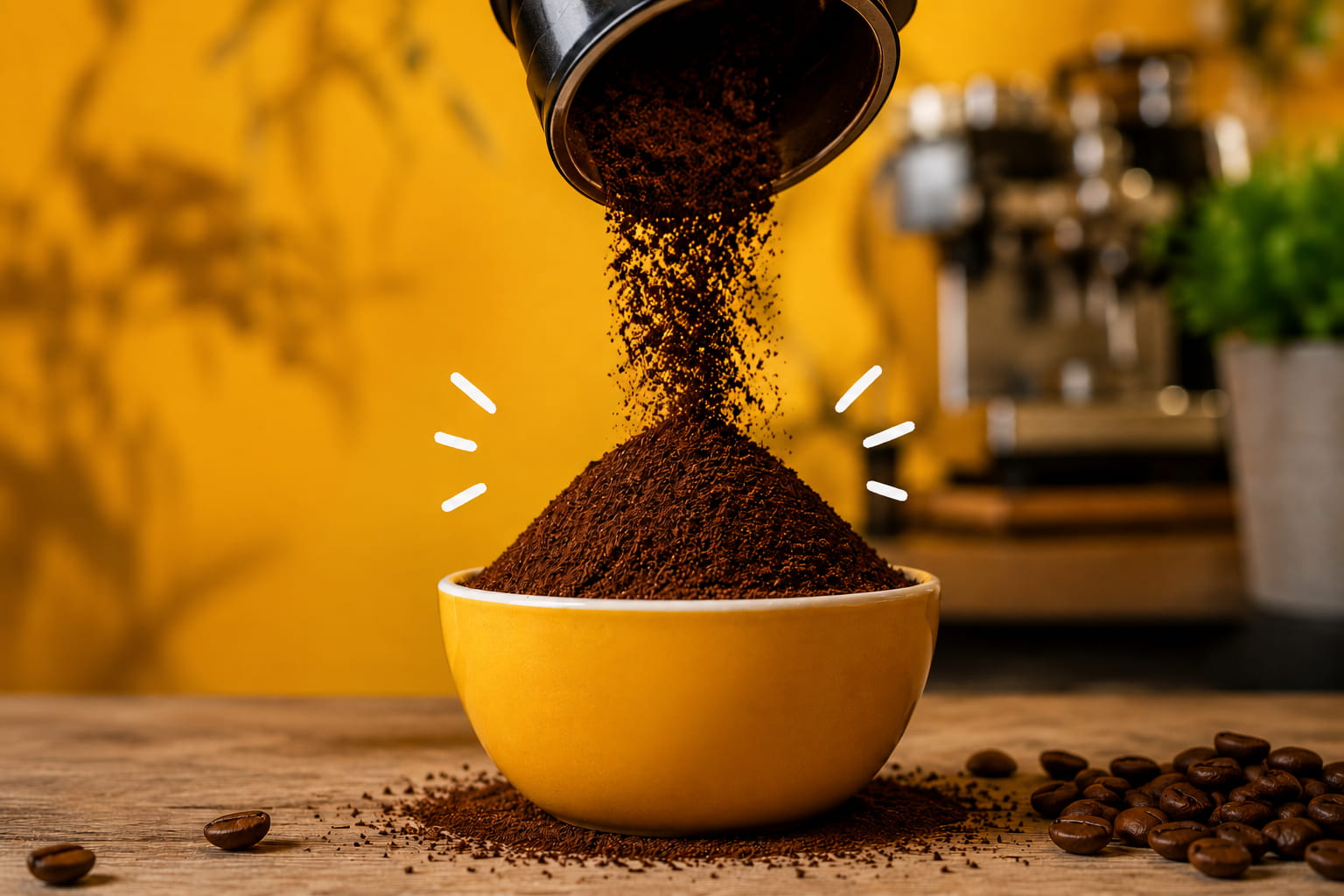
- Grind 18g of beans into the portafilter (medium-fine, espresso grind).
- Distribute the grounds evenly, then tamp with consistent pressure (around 13-15kg).
- Lock the portafilter into the machine.
- Place your scales under the cup with a 36g target.
- Start the shot. Specifically, aim for 27-30 seconds to hit 36g.
- If the shot finishes too fast (under 25 seconds), grind finer. By contrast, if too slow (over 35 seconds), grind coarser.
The method (moka pot):
A 3-cup moka pot gives you roughly the right volume for a latte. Specifically, fill with hot water to the safety valve, add fine-ground coffee to the basket (level, don’t tamp), and brew on medium heat. Furthermore, take it off the moment it gurgles up.
Step 2: How to Make a Latte at Home by Steaming the Milk
This is where most home lattes fall down. Specifically, getting the milk right is the difference between a real latte and “espresso with hot milk.” Furthermore, the technique differs slightly from a flat white — you want less foam and more steamed milk.
The target for a latte:
- Milk: 200-250ml whole milk (or barista-edition oat milk)
- Temperature: 60°C (just too hot to hold the jug comfortably for 3 seconds)
- Foam thickness: 5-8mm — a thin layer, not a big head
- Texture: Smooth and silky with minimal visible bubbles
The method (espresso machine with steam wand):
- Pour 200-250ml of cold milk into a metal milk jug.
- Purge the steam wand briefly to clear any water.
- Position the steam wand tip just under the milk’s surface — you should hear a soft hissing sound. Furthermore, this incorporates air for only 3 seconds (less than for a flat white).
- Once the milk has stretched by roughly 15% in volume, sink the wand deeper into the milk to create a vortex. As a result, this smooths and heats without adding more foam.
- Stop steaming when the jug is too hot to hold comfortably for 3 seconds (around 60°C).
- Tap the jug on the counter to pop any large bubbles. Furthermore, swirl gently to maintain silky texture.
The method (without a steam wand):
You can absolutely make great lattes without a steam wand. Specifically, three options work well:
Option A — French press milk frother:
- Heat 250ml of milk in a saucepan to 60°C (or 50 seconds in the microwave).
- Pour into a small French press.
- Pump the plunger up and down rapidly for 30 seconds (less than for a flat white — you want less foam).
- Tap and swirl to settle.
Option B — Handheld milk frother (£10-15):
- Heat the milk to 60°C in a jug.
- Submerge the frother and turn it on.
- Move it up and down briefly to incorporate texture, but don’t over-froth.
- Tap and swirl.
Option C — Jam jar shake:
- Pour cold milk into a jam jar, no more than half full.
- Screw the lid on tight. Then, shake vigorously for 20 seconds.
- Remove the lid, microwave for 30 seconds (without the lid).
- The milk will have a thin foam layer on top. Furthermore, use the same way as steamed milk.
Step 3: Pour the Latte
Pouring for a latte is slightly different from a flat white. Specifically, you want more milk volume in the cup, so the pour is longer and more controlled.
The method:
- Place your 240-300ml cup or glass on the counter with the espresso shot inside.
- Hold the milk jug close to the cup — around 5cm above the surface.
- Start pouring slowly into the centre of the cup. As a result, the milk goes underneath the espresso crema.
- Once the cup is roughly two-thirds full, lower the jug closer to the surface (1-2cm). Furthermore, pour faster to bring the thin foam up to the surface.
- Finish by lifting the jug as you pour the last drops. By the way, this creates the line of contrast you see in latte art.
- Drink immediately. Specifically, latte foam loses texture within 60 seconds.
How to Make a Latte at Home Without an Espresso Machine
You absolutely don’t need a £600 espresso machine. Specifically, here’s the budget setup that works brilliantly for how to make a latte at home:
Budget latte kit (under £50):
• 3-cup Bialetti Moka Express (£25)
• Handheld milk frother (£10)
• 1kg bag of Bobo at espresso grind (£32)
• Total: under £70
The budget method:
- Brew a strong moka pot (see the espresso instructions above).
- Heat 250ml of milk to 60°C in a small jug (microwave 50 seconds).
- Submerge the milk frother, switch on, move up and down for 30 seconds.
- Pour the moka pot brew into your 300ml cup or glass.
- Pour the textured milk over the top, holding back the foam with a spoon if needed.
- Spoon a thin layer of foam on top.
Above all, this isn’t identical to a £4 café latte — but it’s remarkably close. As a result, your cost-per-cup is around 30-40p instead of £4. Specifically, see our no-coffee-maker guide for more brewing methods.
Making Flavoured Lattes at Home (Vanilla, Caramel, Hazelnut)
Flavoured lattes are where home coffee gets fun. Specifically, unlike flat whites or cappuccinos, lattes have enough milk volume to balance added syrups without becoming sickly.
The universal method:
- Add 1-2 tablespoons of flavoured syrup to your empty cup.
- Pull your espresso shot and pour over the syrup.
- Stir briefly to combine.
- Steam and pour milk as normal.
Popular flavour options:
- Vanilla latte: 1-2 tbsp vanilla syrup (or use vanilla extract + sugar for a homemade version)
- Caramel latte: 1-2 tbsp caramel syrup. Furthermore, drizzle extra caramel on top for visual effect
- Hazelnut latte: 1-2 tbsp hazelnut syrup. Specifically, pairs brilliantly with our Bobo‘s pecan notes
- Cinnamon latte: Add ¼ tsp of ground cinnamon to your espresso before pulling
- Pumpkin spice latte: 1-2 tbsp pumpkin spice syrup + ¼ tsp mixed spice
- Mocha latte: 1-2 tbsp chocolate syrup or 15g melted dark chocolate
UK syrup brands worth knowing:
- Monin: Specifically, the café industry standard, sold at Waitrose and Amazon
- Sweetbird: Furthermore, popular with UK independent cafés
- Torani: As a result, a US brand available at UK supermarkets and Costco
By the way, you can make simple syrups at home — 1 part sugar dissolved in 1 part hot water plus flavouring extract (vanilla, almond, etc.). Furthermore, this saves you £8-12 per bottle of commercial syrup.
Plant Milks, Decaf, and Iced Variations

Oat milk latte
Use barista-edition oat milk only. Specifically, standard oat milk curdles in hot espresso. Furthermore, Oatly Barista is the UK standard. As a result, the technique is identical to whole milk — steam to 60°C, aim for a thin foam layer. By the way, see our whole milk vs oat milk in coffee guide for detailed comparison.
Other plant milks
- Almond milk: Barista editions only. Specifically, adds subtle nutty flavour
- Soy milk: Barista editions. Furthermore, sometimes splits in espresso depending on freshness
- Coconut milk: Works fine. By the way, adds a noticeable coconut flavour
Decaf latte
Use a quality Swiss Water decaf like our Hufflelump. Specifically, the technique is identical — you’d never know it was decaf. Furthermore, this is our top choice for evening lattes without sleep disruption.
Iced latte
Pull a double espresso, pour over a glass three-quarters full of ice, top with cold (unsteamed) milk. Furthermore, see our iced coffee guide for the full method and other iced coffee recipes.
Troubleshooting: How to Make a Latte at Home That Actually Tastes Right
The latte tastes weak or watery
Either your espresso shot isn’t strong enough, or you’re using too much milk. Specifically, target a 1:3 ratio of espresso to milk. Furthermore, if using a moka pot, use a 3-cup rather than a 6-cup for stronger concentration.
The latte tastes sour
Under-extracted espresso. Specifically, grind finer, brew slower, or switch to a darker bean like our Audley. Furthermore, see our sour coffee guide for detailed fixes.
The latte tastes bitter
Over-extracted espresso or milk steamed too hot. Specifically, grind coarser or stop steaming milk at 60°C — not 70°C. Furthermore, see our bitter coffee guide.
The milk has big bubbles instead of foam
You incorporated too much air at the start. Specifically, for a latte you want minimal foam — only 3 seconds of surface stretching. Furthermore, sink the wand deeper sooner to smooth the milk rather than aerate.
The drink looks separated
The milk wasn’t textured enough. As a result, swirl the milk jug more before pouring. Furthermore, pour from a low height into the centre of the cup.
Frequently Asked Questions
How do I make a latte at home?
Pull a double espresso shot (36g from 18g of grounds), steam 200-250ml of whole milk to 60°C with a thin foam layer, and pour the milk over the espresso in a 240-300ml cup. Specifically, the ratio is 1 part espresso to 3+ parts milk.
What’s the difference between a latte and a flat white?
A latte is larger (240-300ml) with more milk (200-250ml) and thin foam. By contrast, a flat white is smaller (150-170ml) with less milk (~120ml) and microfoam. As a result, the latte tastes milkier and more mild; the flat white tastes coffee-forward and stronger.
Can I make a latte at home without an espresso machine?
Yes. Specifically, a Bialetti moka pot makes a strong concentrated coffee that’s close enough to espresso for a great home latte. Furthermore, pair with a £10 handheld milk frother and you’ve got the kit for under £50.
What’s the best coffee for a latte at home?
A medium roast with low acidity and chocolatey notes. Specifically, our Bobo (£9.50 / 250g) is our top pick — pecan, toffee, milk chocolate. Furthermore, Audley (£9.50 / 250g) is stronger with caramel and dark chocolate notes. Both are 100% Arabica and roasted in England.
What milk should I use for a latte?
Whole milk is the traditional choice and steams best. Specifically, for plant-based, use barista-edition oat milk (Oatly Barista is the UK standard). Furthermore, skimmed milk doesn’t foam well, and standard oat milk curdles in hot espresso.
What temperature should I steam milk to for a latte?
60°C. Specifically, the jug should be just too hot to hold comfortably for 3 seconds. Furthermore, milk burns above 65°C — the proteins denature and the flavour becomes flat and cardboard-like.
Why does my home latte taste different from a café latte?
Three reasons most often: your espresso isn’t strong enough, your milk temperature is wrong, or your beans aren’t fresh. Specifically, café lattes use freshly-roasted beans, correctly-pulled espresso, and milk steamed to precisely 60°C. Furthermore, get all three right at home and yours will taste like the café version.
Where can I buy latte coffee beans in the UK?
The Coffee Twins — we roast all our coffee in England. Specifically, our Bobo and Audley are both built for milk-based drinks like lattes. £9.50 / 250g, order as Beans or Espresso grind. Furthermore, free UK shipping over £30. Use NEW10 for 10% off your first order.
Summary
To make a proper latte at home in the UK:
- Pull a double espresso shot (36g from 18g of grounds, 27-30 seconds)
- Steam 200-250ml of whole milk (or barista oat milk) to 60°C with a thin foam layer
- Pour the milk over the espresso in a 240-300ml cup, aiming for a 1:3+ ratio
Specifically, the right beans matter — medium roast, low acidity, chocolatey notes. Above all, our Bobo and Audley are built for exactly this drink. Furthermore, you don’t need a £600 espresso machine — a moka pot and a £10 milk frother get you 90% of the way for under £50.
Free UK shipping over £30. Use NEW10 for 10% off your first order.
Try Bobo — Perfect for Lattes →


0 Comments