For naturally lower-caffeine options, try our Hufflelump Swiss Water Decaf — 99.9% of the caffeine removed, proper coffee flavour retained.
Why trust this guide?
We're Jeremiah and Raja — The Coffee Twins. We roast all our own coffee in England, and before launching the brand we ran a coffee shop in Farringdon where we made thousands of drinks for caffeine-conscious customers. The figures here come from the established caffeine values used across the UK coffee industry, the August 2026 Which? study of high street chains, published EFSA and NHS guidance, and our own experience dialling in espresso across hospitality sites.
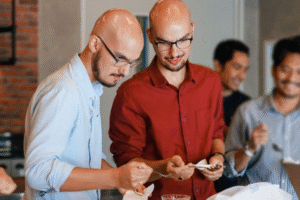
Table of contents
- Caffeine by drink type (the chart)
- How much caffeine is in high street coffee?
- How much caffeine is in your actual mug?
- What actually changes how much caffeine is in your cup
- UK daily caffeine limits
- High-caffeine vs low-caffeine coffees on our shelf
- How to cut caffeine without giving up coffee
- FAQ
Caffeine by Drink Type
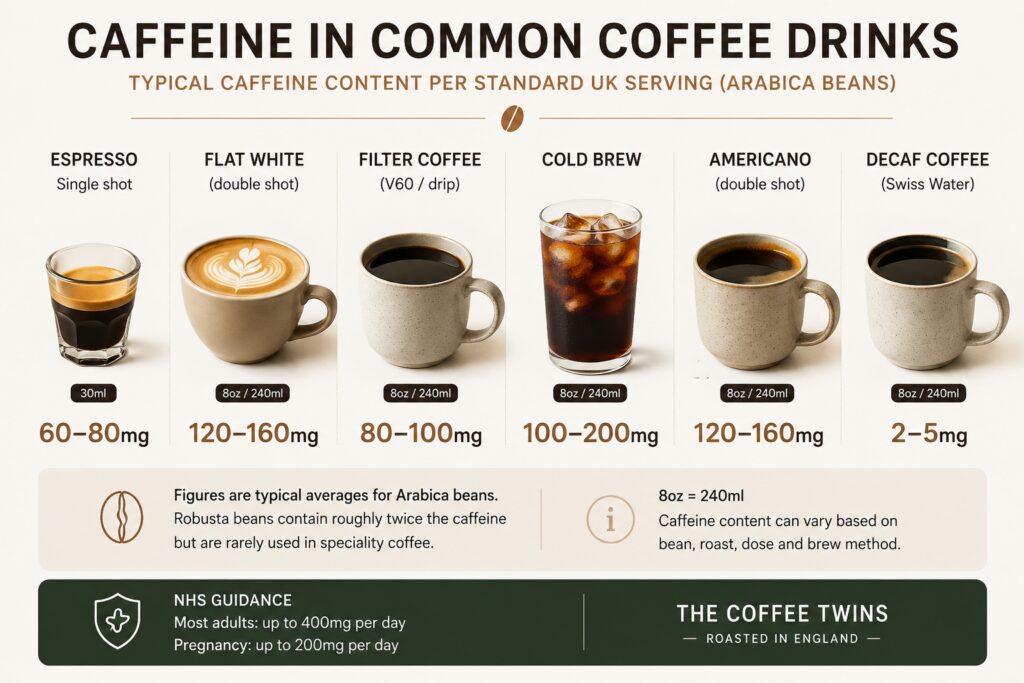
The figures below are typical UK averages for a 240ml serving made with Arabica beans — the speciality coffee standard. Robusta beans contain roughly twice as much caffeine but are rarely used in speciality coffee.
Single espresso (30ml): 63mg (range 60–80mg)
Double espresso (60ml): 126mg (range 120–160mg)
Flat white (single shot): 63mg
Flat white (double shot — most UK cafés): 126mg
Cappuccino (double shot): 126mg
Latte (double shot): 126mg
Americano (double shot): 126mg
Filter coffee (V60, Chemex, drip machine): 95mg per 240ml (range 80–100mg)
Cafetière (French press): 95mg per 240ml (range 80–110mg)
Cold brew (240ml): 100–200mg (concentrate dilutes differently)
Aeropress: 70–130mg depending on recipe
Instant coffee: 62mg per cup (range 30–90mg)
Decaf coffee (Swiss Water): 2–5mg per cup
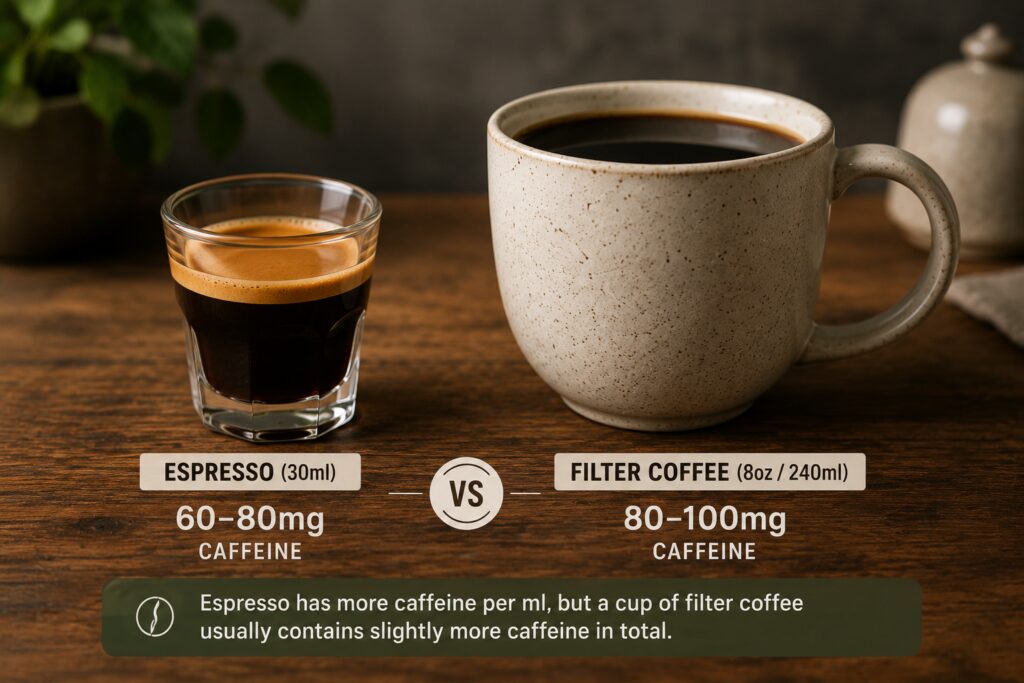
The single biggest misconception: espresso doesn't have more caffeine than filter coffee on a per-serving basis. It has more per millilitre, but you only drink 30ml of it. A 240ml mug of filter coffee gives you 95mg against 63mg for a single shot.
How Much Caffeine Is in High Street Coffee?
Shop-bought coffee is considerably stronger than anything you brew at home, and the gap between chains is wider than most people expect. In August 2026, consumer group Which? tested caffeine levels across Caffè Nero, Costa, Greggs, Pret A Manger and Starbucks.
| Chain | Medium cappuccino |
|---|---|
| Costa | 325mg |
| Greggs | 235mg |
| Caffè Nero | 221mg |
| Pret A Manger | 180mg (355ml) |
| Starbucks | 89mg |
Source: Which?, August 2026.
A single Costa cappuccino therefore delivers more caffeine than four cans of Red Bull. If you drink two, you have passed the recommended daily limit before lunch.
Espresso and flat white by chain
The same pattern holds across other drinks. Costa's espresso shot contains 100mg against 45mg at Starbucks, and Costa's flat white contains 241mg against 89mg. Caffè Nero has changed noticeably since Which? last ran this study in 2023 — its cappuccino caffeine has roughly doubled, while Costa's has stayed level.
Why the gap is so wide
Two things drive it. Chains that blend Robusta into their house espresso get roughly twice the caffeine of a pure Arabica blend, because Robusta beans naturally carry about 2.2% caffeine against 1.2% for Arabica. Shot count matters just as much — a "medium" means two shots at one chain and three at another, so the same drink name can hide a 100mg difference. Since we roast 100% Arabica, our beans sit at the gentler end of that range while still pulling a full-bodied shot.
How Much Caffeine Is in Your Actual Mug?
Almost every caffeine guide quotes figures for an 8oz (240ml) cup, because that is the American standard serving. Very few British people drink coffee from an 8oz cup. A typical UK mug holds 300ml to 350ml, and a large one holds more, so the real figure in your hand is usually higher than the number you have read.
| What you're drinking from | Volume | Filter coffee caffeine |
|---|---|---|
| Small teacup | 200ml | ~79mg |
| Standard US serving (the usual quoted figure) | 240ml | ~95mg |
| Typical UK mug | 300ml | ~119mg |
| Large mug | 400ml | ~158mg |
| Builder's mug | 500ml | ~198mg |
So when a guide tells you a cup of coffee has 95mg, that figure assumes a cup smaller than most British households own. If you drink two large mugs of filter coffee before midday, you have already had roughly 316mg — close to the full daily limit for a healthy adult.
What Actually Changes How Much Caffeine Is in Your Cup
1. The bean type (the biggest factor)
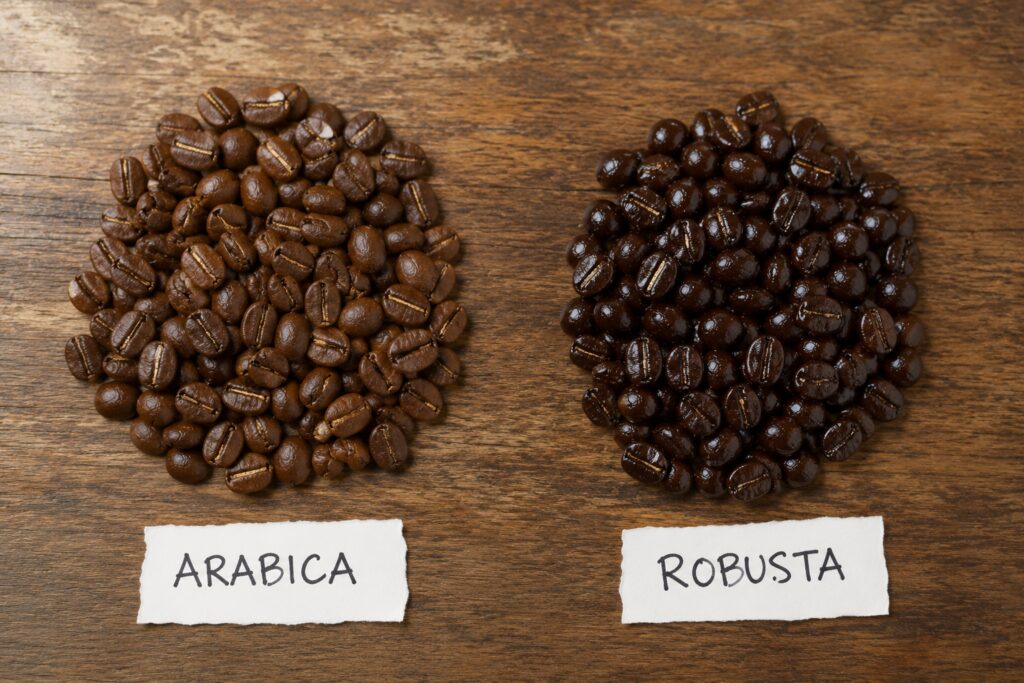
Robusta beans contain almost twice the caffeine of Arabica beans — Robusta is roughly 2.2% caffeine by weight, Arabica is roughly 1.2%. Speciality coffee is almost always 100% Arabica, which means our entire range (including our Strong Coffee Bundle) has less caffeine than supermarket "extra strong" coffees that include Robusta. The trade-off: Robusta tastes bitter and harsh, which is why speciality roasters avoid it.
2. The roast level (a smaller factor than you'd think)
Contrary to popular belief, dark roasts contain slightly less caffeine than light roasts, because roasting breaks down some caffeine molecules. The difference is small (5–10%), but the perception that strong-tasting coffee means more caffeine is incorrect. Our light-roasted Jojo technically has slightly more caffeine than our dark-roasted Audley.
3. The brew method
Longer contact between water and grounds extracts more caffeine. Cold brew steeps for 12–18 hours, which is why it can be higher in caffeine than equivalent hot brews. Espresso has the shortest extraction at 25–30 seconds, giving less total caffeine per shot. If you use an automatic machine, our guide to the best coffee beans for bean to cup machines covers how dose and grind settings change what ends up in the cup.
4. The dose
More coffee grounds means more caffeine. Our recommended brew ratios:
- Filter / V60: 15g coffee : 250g water (1:17)
- Cafetière: 30g coffee : 500g water (1:17)
- Espresso: 18g coffee : 36g espresso (1:2)
5. The grind size
Finer grinds extract more caffeine faster. This is why espresso, which uses a very fine grind, is the most caffeine-dense brew method by volume.
UK Daily Caffeine Limits
The clearest guidance for UK drinkers comes from two sources. The European Food Safety Authority's 2015 scientific opinion concluded that for healthy adults, up to 400mg a day from all sources, and single doses of up to 200mg, do not raise safety concerns. The NHS advises no more than 200mg a day during pregnancy.
- General adult population (EFSA): Up to 400mg per day is considered safe — roughly four 240ml cups of filter coffee, or three double-shot flat whites.
- During pregnancy (NHS): Stay under 200mg per day. Caffeine crosses the placenta and is associated with low birth weight at higher intakes. A single medium Costa cappuccino exceeds this limit on its own.
- While breastfeeding: Caffeine passes into breast milk. Most guidance suggests moderate intake, under 300mg, is safe.
- Children and teenagers: No official UK threshold, although most paediatric guidance suggests under 100mg per day for adolescents.
Note: This is general information, not medical advice. If you're pregnant, breastfeeding, or have a heart or anxiety condition, talk to your GP or midwife about your personal caffeine limits.
High-Caffeine vs Low-Caffeine Coffees on Our Shelf
Among our caffeinated range, the variation in caffeine is smaller than most people assume. All eight of our coffees are 100% Arabica speciality-grade. That said, slight differences exist.
Naturally higher in caffeine (light to medium roasts)
- Jojo — Ethiopian Limu, light roast 2.5/5
- Parrot — Brazilian Cerrado, light roast 2.5/5
- Little Robot — three-origin blend, medium roast 3/5
Naturally slightly lower in caffeine (darker roasts)
Naturally much lower in caffeine (decaffeinated)
- Hufflelump — Swiss Water decaf, 99.9% of caffeine removed. A typical cup contains 2–5mg.
So if strong coffee feels like it hits you harder, that's almost entirely about the flavour intensity rather than the caffeine. The difference between our lightest and darkest caffeinated coffees is roughly 5–10mg per cup, which is negligible.
How to Cut Caffeine Without Giving Up Coffee
If you're trying to reduce your intake — for sleep, anxiety, pregnancy, or because you're drinking six cups a day — here's the approach we recommend to our customers.
1. Replace your evening cup with decaf
Most people consume the bulk of their caffeine after 2pm, when it's most likely to disrupt sleep. Swapping just your afternoon and evening coffees for Hufflelump can cut your daily caffeine by 40–60% without changing the ritual.
2. Switch one filter cup to a single espresso
A single espresso is 63mg. A 240ml filter cup is 95mg. Small change, real savings if you do it daily.
3. Buy your coffee rather than ordering it
This is the change with the biggest numbers behind it. A medium Costa cappuccino at 325mg is more than three times what the same drink costs you in caffeine when made at home with 100% Arabica beans. If you're cutting back, where you buy matters more than what you order.
4. Don't go cold turkey
Sudden caffeine withdrawal causes headaches, fatigue and irritability. Cut your intake by one cup per week, replacing with decaf, rather than stopping all at once.
5. Drink water between coffees
Caffeine is mildly diuretic. Drinking a glass of water between cups slows your overall consumption and reduces the jitter effect.
Frequently Asked Questions
How much caffeine is in a cup of coffee?
A standard 240ml cup of filter coffee made with 100% Arabica beans contains 95mg of caffeine, with a typical range of 80–100mg. A single espresso shot contains 63mg, and a double-shot flat white or cappuccino contains 126mg. Most UK mugs hold 300ml or more, so a typical home mug usually lands between 119mg and 160mg.
How much caffeine is in a Costa cappuccino?
A medium Costa cappuccino contains 325mg of caffeine, according to Which? research published in August 2026. That is more than three times the same drink at Starbucks, which contains 89mg, and it exceeds the 200mg single-dose limit recommended for healthy adults.
How much caffeine is in a single espresso?
A single 30ml espresso shot contains about 63mg of caffeine when made with Arabica beans. High street figures vary considerably: Costa's espresso shot contains 100mg while Starbucks contains 45mg.
Which coffee has the most caffeine?
Coffees made with Robusta beans, mainly supermarket "extra strong" brands, contain roughly twice the caffeine of Arabica-only coffee. Among brew methods, cold brew and large filter coffees deliver the most total caffeine per serving. On the high street, Costa consistently tops the list.
Is espresso stronger than filter coffee?
Per millilitre, yes — espresso is more concentrated. But per serving, a 240ml mug of filter coffee contains 95mg against 63mg for a single 30ml espresso shot. What feels stronger is the flavour intensity rather than the caffeine.
Do dark roasts have more caffeine than light roasts?
No, slightly less. The longer roasting process breaks down some caffeine molecules. The difference between a light and dark roast of the same bean is small at 5–10%, so the common belief that darker means stronger caffeine is incorrect.
How much caffeine is safe per day?
The European Food Safety Authority concluded in 2015 that up to 400mg a day, and single doses up to 200mg, do not raise safety concerns for healthy adults. That is roughly four 240ml cups of filter coffee. The NHS advises no more than 200mg a day during pregnancy.
How much caffeine is in decaf coffee?
Swiss Water process decaf, which is what our Hufflelump uses, has 99.9% of the caffeine removed, leaving 2–5mg per cup. UK law requires decaffeinated coffee to have at least 97% of its caffeine removed.
Does adding milk reduce the caffeine in coffee?
No. Milk dilutes the volume but doesn't remove caffeine. A flat white made from a double espresso has the same caffeine as the double espresso on its own, around 126mg.
Where can I buy low-caffeine speciality coffee in the UK?
The Coffee Twins Hufflelump is a Swiss Water Brazilian decaf — chemical-free decaffeination, proper coffee flavour, 2–5mg of caffeine per cup. £10.50 for 250g. Free UK shipping over £30. Use NEW10 for 10% off your first order.
Jeremiah is co-founder of The Coffee Twins, a UK speciality coffee brand with beans roasted in England. He and his twin brother Raja trained in five-star hotel food and beverage before running their own coffee shop in Farringdon, and their beans are stocked in five-star London hotels including Trafalgar St James. The caffeine figures in this guide are drawn from published research and from our own experience dialling in espresso across hospitality sites.
Browse our 100% Arabica coffee → — free UK shipping over £30, use NEW10 for 10% off your first order.
Summary
A standard UK cup of filter coffee contains 95mg of caffeine per 240ml. A single espresso is 63mg, and a double-shot flat white, latte or cappuccino is 126mg. Because most UK mugs hold 300ml or more, your actual cup is usually closer to 120mg.
High street coffee is a different proposition entirely. A medium Costa cappuccino contains 325mg, which is above the 200mg single-dose limit on its own.
The biggest factor in caffeine content is bean type rather than roast level. All speciality coffee, including everything we roast, is 100% Arabica, which is naturally lower in caffeine than supermarket "extra strong" coffees that blend in Robusta.
To reduce caffeine without giving up coffee, swap your afternoon cup for a Swiss Water decaf like our Hufflelump.
0 Comments