

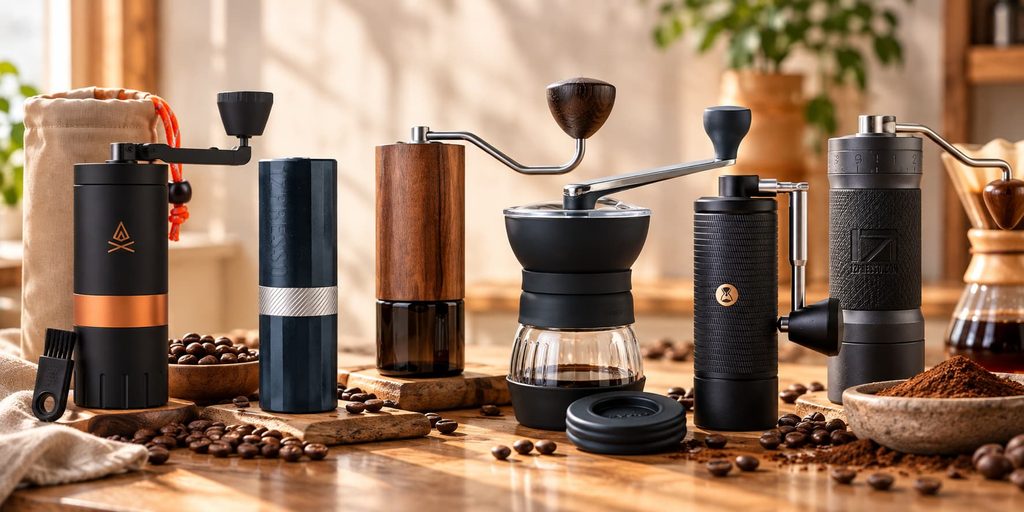
Quick answer: The best manual coffee hand grinder for most UK home brewers in 2026 is the 1Zpresso J-Ultra, delivering precise grind adjustment across espresso, pour over, cafetière, and Moka pot brewing methods. According to speciality coffee industry data, hand grinders have overtaken budget electric grinders for home use because manual grinders deliver burr quality typically found only in £500+ electric options. Our pick-by-budget: 1Zpresso J-Ultra (premium), Timemore C5 Pro (mid-range), Hario Skerton Pro (budget). Our beans are roasted in England to order and stocked in five-star London hotels including Trafalgar St James.
Ready to grind great coffee? Shop the Tasting Pack or start a subscription.
Why trust this guide?

Written by: Jeremiah & Raja, Co-founders, The Coffee Twins
Credentials: UK speciality coffee brand with beans roasted in England. Stocked in five-star London hotels including Trafalgar St James, where we also train hotel staff on machine handling, coffee education, and latte art. Previously ran our own coffee shop in Farringdon after training in five-star hotel food and beverage.
Last reviewed: October 2026
A manual coffee hand grinder is genuinely one of the most impactful speciality coffee purchases you can make because grind quality matters more than any other variable in home brewing. Because hand grinders use the same stepped or stepless burr systems found in premium electric grinders, they deliver café-quality grind consistency at a fraction of the price. This guide covers what makes a great manual coffee hand grinder, which models suit which brewing methods, and our honest recommendations across every budget.
Table of contents
- What is a manual coffee hand grinder?
- Why does your manual grinder matter more than you think?
- What makes a great manual coffee hand grinder?
- Which manual grinder suits your brewing method?
- Our 6 best manual coffee hand grinder picks for 2026
- Manual vs electric coffee grinder: which is better?
- How do you use a manual coffee hand grinder properly?
- Which beans suit manual grinding best?
- FAQ
What is a manual coffee hand grinder?
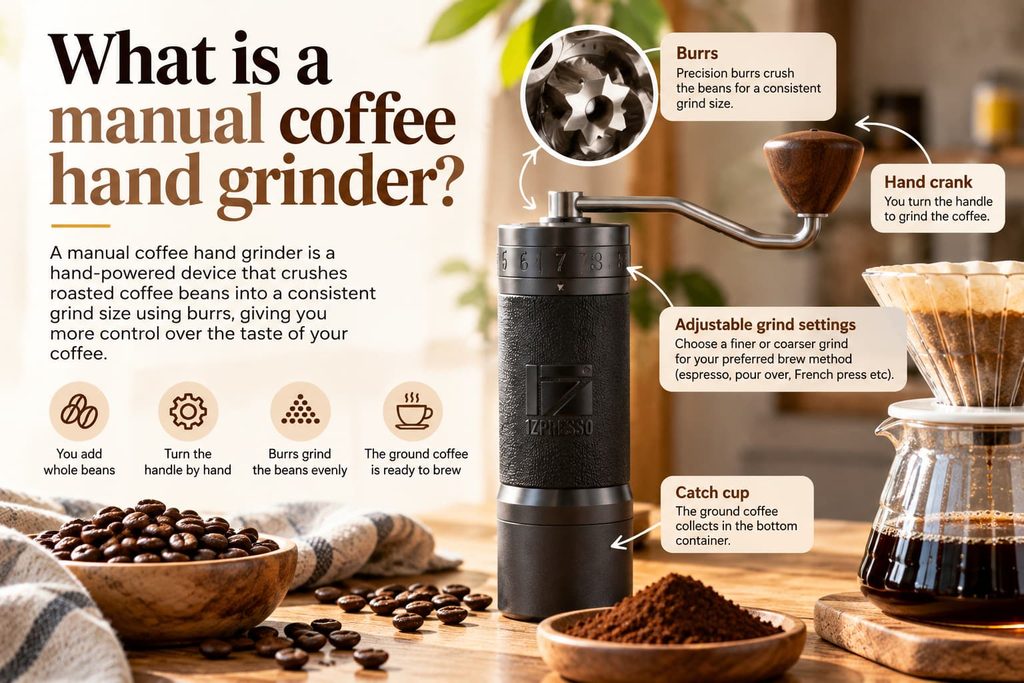
A manual coffee hand grinder is a hand-powered device that uses conical or flat burrs to grind coffee beans to a specific particle size. According to the Specialty Coffee Association, burr-based grinding produces measurably more consistent particle sizes than blade grinders, which directly affects extraction quality and cup consistency.
Burrs vs blades
Manual hand grinders use burrs that crush beans between two toothed surfaces, producing uniform particle sizes. Meanwhile, cheap electric blade grinders chop beans into inconsistent fragments that produce muddy, over-extracted cups regardless of brewing method.
Conical vs flat burrs
Most manual grinders use conical burrs because the design suits hand-powered operation. In particular, conical burrs produce slightly more body and sweetness than flat burrs, which suits most home brewing methods brilliantly.
Stepped vs stepless adjustment
Stepped grinders click between preset grind sizes, while stepless grinders allow infinite fine-tuning. So stepless grinders suit espresso dialling-in better, while stepped grinders are easier for everyday multi-method brewing.
How grind size changes everything
Grind size directly controls extraction speed, with finer grinds extracting faster and coarser grinds slower. See our Medium Fine Coffee Grind guide and Coffee to Water Ratio guide for the full detail.
Why does your manual grinder matter more than you think?
Your manual grinder matters more than most people realise because grind quality accounts for the single biggest controllable variable in home brewing after bean freshness. According to SCA research, grind consistency affects extraction more than water temperature, brewing time, or equipment quality combined.
The cheap grinder trap
Spending £500 on an espresso machine and £20 on a blade grinder produces disappointing coffee because the grinder bottlenecks everything else. Instead, invest in a quality manual grinder (£60-250) and even a budget espresso setup will deliver better results than premium machines fed inconsistent grinds.
Hand grinders match premium electric performance
A £150 manual grinder like the 1Zpresso J-Ultra delivers burr quality typically found in £500+ electric grinders. Meanwhile, hand grinders have no motor to heat the beans during grinding, which preserves delicate flavour compounds in speciality coffee.
Freshness benefits beyond consistency
Grinding fresh for each brew preserves flavour compounds that degrade within days of grinding. In truth, pre-ground coffee loses significant flavour within 24 hours, which is why speciality coffee drinkers grind just before brewing.
Space, noise, and portability
Manual grinders take up less counter space, make no noise, and travel easily for office or holiday brewing. Similarly, this makes them ideal for small UK kitchens where electric grinder space is at a premium.
What makes a great manual coffee hand grinder?
A great manual coffee hand grinder combines quality burr material, precise adjustment, comfortable ergonomics, and solid build. According to speciality coffee industry data, five specific criteria separate genuinely great hand grinders from the ones that disappoint after a few uses.
Burr material and quality
Premium hand grinders use stainless steel or ceramic burrs with precision-machined edges. Specifically, 1Zpresso and Comandante lead the market on burr quality, delivering particle consistency that rivals commercial grinders.
Grind adjustment precision
Precise grind adjustment matters because small changes transform extraction. In particular, stepless or micro-stepped adjustment lets you dial in espresso perfectly, while standard stepped adjustment suits filter brewing methods.
Comfortable hand feel
You’ll turn the handle hundreds of revolutions per week, so ergonomics genuinely matter. Meanwhile, grinders with external grind adjustment, grippy bodies, and smooth bearings make the process effortless rather than tedious.
Build quality that lasts
Quality hand grinders use aluminium or stainless steel bodies with metal internal gearing. Notably, plastic internals wear out within months of regular use, which is why cheap grinders fail quickly.
Capacity for your brewing style
Match grinder capacity to how you brew. So espresso drinkers need 20-30g capacity, pour over drinkers need 25-35g, and cafetière drinkers need 30-40g for standard batches.
Which manual grinder suits your brewing method?
Different brewing methods demand different grinder capabilities, with espresso requiring the most precise adjustment and cafetière the most forgiving. According to SCA brewing guidance, matching grinder choice to primary brewing method prevents expensive upgrade purchases later.
For espresso brewers
Espresso needs fine grinds with micro-adjustment because small changes dramatically affect shot timing. In particular, the 1Zpresso J-Ultra and Comandante C40 both excel here with stepless or micro-stepped adjustment.
For pour over enthusiasts
Pour over suits medium grinds with consistent particle size. Meanwhile, the 1Zpresso Q Air, Timemore C5 Pro, and Comandante C40 all deliver pour over-grade consistency brilliantly.
For cafetière drinkers
Cafetière uses coarse grinds that forgive small inconsistencies. Similarly, budget options like the Hario Skerton Pro work genuinely well for cafetière brewing without needing premium precision.
For multi-method brewers
If you brew espresso, pour over, and cafetière on different days, choose a grinder with broad range and quick adjustment. Above all, the 1Zpresso J-Ultra handles every brewing method brilliantly from espresso to cold brew.
For travel and office use
Compact, durable grinders suit office brewing and travel better than full-sized models. Additionally, the 1Zpresso Q Air and VSSL G25 Java are built specifically for portable use without compromising grind quality.
Our 6 best manual coffee hand grinder picks for 2026
These six manual coffee hand grinders cover every budget from £40 to £300, with each suiting specific brewing styles and user needs. According to our hands-on experience training hotel staff and brewing speciality coffee, these are the hand grinders that genuinely deliver the quality promised.
1. 1Zpresso J-Ultra: Our premium top pick
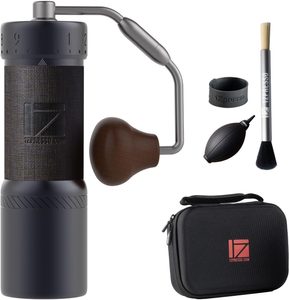
The 1Zpresso J-Ultra on Amazon is our overall top pick for serious home brewers. It features 48mm titanium-coated burrs, external micro-stepped adjustment with 150 clicks per revolution, and 35-40g capacity. Meanwhile, the J-Ultra handles espresso, pour over, cafetière, and cold brew brilliantly within a single grinder.
Best for: Multi-method brewers who want one grinder for everything
Grinds: Espresso through to cold brew
Why we recommend it: Premium burr quality at a fraction of equivalent electric grinder prices
2. Timemore C5 Pro: Our mid-range workhorse
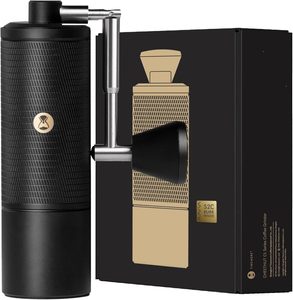
The Timemore C5 Pro on Amazon is our mid-range recommendation for home brewers wanting speciality quality without stretching to premium prices. It features 38mm stainless steel burrs with stepped adjustment, aluminium body, and 25-30g capacity.
Best for: Pour over and cafetière drinkers wanting daily reliability
Grinds: Filter to French press (espresso workable but not ideal)
Why we recommend it: Genuine burr quality at an accessible price point
3. Hario Skerton Pro: Our budget pick
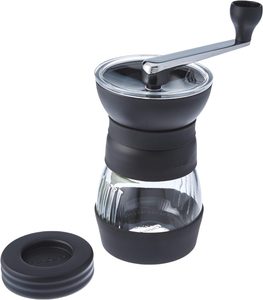
The Hario Skerton Pro on Amazon is our budget recommendation for home brewers starting their speciality coffee journey. It features ceramic conical burrs with stepped adjustment, glass bottom chamber, and 100g capacity.
Best for: Cafetière, filter, and pour over on a tight budget
Grinds: Medium to coarse (not ideal for espresso)
Why we recommend it: Delivers genuine speciality grind quality under £40
4. 1Zpresso Q Air: Our compact pick
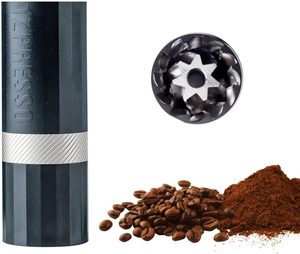
The 1Zpresso Q Air on Amazon is our compact pick for small kitchens, offices, and travel. It features 38mm heptagonal burrs, stepped adjustment, aluminium body, and 25g capacity in a surprisingly small package.
Best for: Travel, office use, and small UK kitchens
Grinds: Pour over to French press
Why we recommend it: Serious grind quality in a genuinely portable size
5. Comandante C40: Our luxury pick
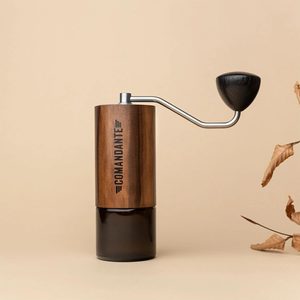
The Comandante C40 on Amazon is our luxury recommendation for brewers wanting the finest manual grinder available. It features Nitro Blade stainless steel burrs, stepless adjustment, hand-finished wood or aluminium bodies, and lifetime build quality.
Best for: Speciality coffee enthusiasts who want the best, period
Grinds: Espresso through to cold brew (though espresso needs the dedicated espresso disc)
Why we recommend it: Industry benchmark for premium manual grinding
6. VSSL G25 Java: Our travel and outdoor pick
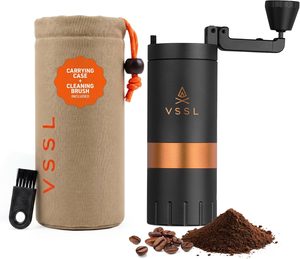
The VSSL G25 Java on Amazon is our pick for travel, camping, and outdoor coffee brewing. It features 50mm stainless steel conical burrs, 25-click adjustment, and militarily rugged construction designed to survive serious travel.
Best for: Camping, hiking, van life, and seriously rugged travel use
Grinds: Espresso to French press
Why we recommend it: Only grinder on this list genuinely built for outdoor abuse
Got your grinder sorted? Pair it with speciality beans. Our Tasting Pack covers Audley, Bobo, and Jojo so you can test your grinder across the roast spectrum. Use NEW10 for 10% off your first order.
Manual vs electric coffee grinder: which is better?
Manual coffee hand grinders match or beat electric grinders under £300 on burr quality, while electric grinders win on speed and convenience for high-volume brewing. According to SCA grinder research, the choice comes down to budget, volume, and brewing frequency rather than quality alone.
Manual grinder advantages
Manual grinders cost less for equivalent burr quality, make no noise, take no counter space, and travel easily. In particular, manual grinders also preserve bean temperature during grinding, which protects delicate flavour compounds in speciality coffee.
Electric grinder advantages
Electric grinders handle high-volume brewing (multiple cups daily or multiple drinkers), require no physical effort, and dose beans automatically with top-end models. Meanwhile, electric grinders become essential if you brew for 4+ people regularly.
When to choose manual
Choose manual if you brew 1-3 cups daily, want premium burr quality on a budget, or value quiet morning brewing. Specifically, manual grinders suit couples brewing together and solo brewers who enjoy the practice.
When to choose electric
Choose electric if you brew multiple cups daily, have household members with different brewing times, or struggle with hand strength or wrist mobility. Similarly, high-end espresso dialling-in benefits from electric grinder consistency.
Our honest recommendation
For most UK home brewers, a quality manual grinder paired with fresh speciality beans delivers better coffee than a budget electric grinder with the same beans. See our Amazon Coffee Grinders guide for more detailed grinder comparisons.
How do you use a manual coffee hand grinder properly?
Using a manual coffee hand grinder properly means weighing beans, adjusting grind size to brewing method, maintaining steady cranking speed, and keeping the grinder clean. According to coffee brewing research, technique matters as much as grinder quality for consistent cup results.
Weigh your beans first
Always weigh beans before grinding using a digital kitchen scale. Because coffee density varies between beans and roasts, scoop measurements produce inconsistent dosing that undermines even premium grinders.
Adjust grind size to brewing method
Set grind size before adding beans using the grinder’s adjustment system. Meanwhile, standard grind sizes are: espresso (very fine, like caster sugar), pour over (medium, like coarse sand), cafetière (coarse, like sea salt).
Maintain steady cranking speed
Turn the handle at a steady, moderate pace rather than racing through the grind. In truth, inconsistent cranking speed produces inconsistent particle sizes, so steady is better than fast.
Clean regularly
Brush out grounds after each use with the included grinder brush. Additionally, deep clean monthly by disassembling and brushing the burr system to remove accumulated coffee oils that affect flavour.
Store properly between uses
Store your grinder in a dry location at room temperature. Notably, humidity damages burrs over time, so avoid storing grinders next to kettles or in bathrooms where moisture accumulates.
Which beans suit manual grinding best?
Speciality-grade beans benefit most from manual grinding because the quality grind preserves the complex flavour characteristics that define speciality coffee. According to our customers, pairing quality manual grinders with speciality beans delivers the biggest step-change in home coffee quality.
For espresso with your manual grinder
Our Audley (Brazil, El Salvador, India) delivers caramel and dark chocolate notes that shine under fine manual grinding. See our Best Coffee Beans for Espresso UK guide for more detail.
For pour over with your manual grinder
Our Jojo (Ethiopian Limu single origin) delivers fruity, winy complexity that medium grinding showcases brilliantly. See our Best Coffee for Pour Over guide for the full technique.
For cafetière with your manual grinder
Our Bobo delivers pecan and toffee character that suits coarse grinding and immersion brewing. See our Best Coffee for Cafetière guide for method detail.
For bold flavour lovers
Our Komodo (Sumatran single origin) delivers spicy, tobacco-hinted character that shines through manual grinding for Moka pot or cafetière brewing.
Explore the range
Start with our Tasting Pack to test your manual grinder across three different coffees. So you can experience how grind quality transforms different bean profiles.
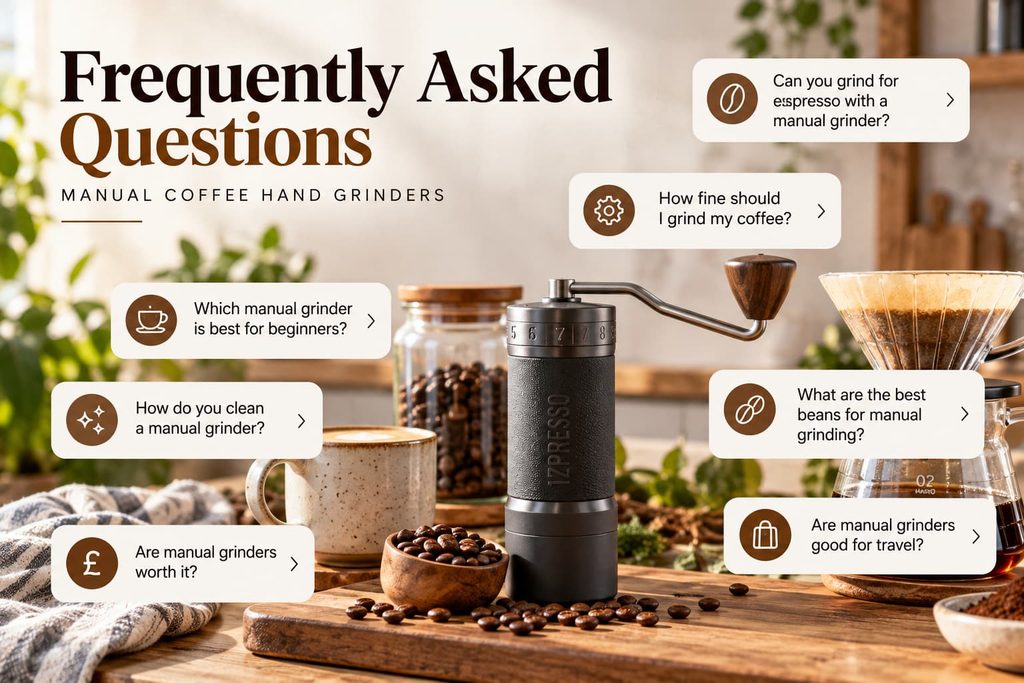
Frequently Asked Questions
What is the best manual coffee hand grinder UK?
The best manual coffee hand grinder for most UK home brewers is the 1Zpresso J-Ultra, delivering premium burr quality and multi-method versatility. For budget brewers, the Hario Skerton Pro delivers genuine speciality grind quality under £40.
Are manual coffee grinders worth it?
Yes, manual coffee grinders are genuinely worth it because they deliver burr quality typically found in £500+ electric grinders at a fraction of the price. Manual grinders also take no counter space, make no noise, and preserve bean temperature during grinding.
How much should I spend on a manual coffee grinder?
Budget £40 for the Hario Skerton Pro (entry-level), £80-150 for mid-range grinders like Timemore C5 Pro, and £150-300 for premium grinders like 1Zpresso J-Ultra or Comandante C40.
Can manual grinders grind for espresso?
Yes, quality manual grinders like the 1Zpresso J-Ultra and Comandante C40 handle espresso grinding brilliantly thanks to micro-stepped or stepless adjustment. Budget manual grinders typically cannot achieve consistent espresso grind.
How long does it take to grind coffee by hand?
Grinding 20g of coffee by hand takes approximately 60-90 seconds depending on grinder efficiency and grind fineness. Premium grinders like the 1Zpresso J-Ultra grind faster than budget options.
What’s the difference between stepped and stepless adjustment?
Stepped grinders click between preset grind sizes, while stepless grinders allow infinite fine-tuning. Stepless suits espresso dialling-in better, while stepped is easier for everyday multi-method brewing.
Do I need a different grinder for espresso and filter?
No, versatile grinders like the 1Zpresso J-Ultra handle both espresso and filter brewing within one grinder. However, dedicated espresso grinders deliver finer adjustment if espresso is your primary method.
How often should I clean my manual grinder?
Brush out grounds after every use with the included brush. Deep clean by disassembling and brushing the burr system monthly to remove accumulated coffee oils that affect flavour.
Are manual grinders good for travel?
Yes, compact manual grinders like the 1Zpresso Q Air and VSSL G25 Java are specifically designed for travel. They deliver speciality grind quality in genuinely portable packages.
Which brand makes the best manual coffee grinders?
1Zpresso leads the premium manual grinder market with the J-Ultra and Q-series. Comandante C40 competes for the luxury segment. Timemore dominates mid-range, and Hario leads budget options.
Summary
A manual coffee hand grinder is genuinely one of the most impactful speciality coffee investments you can make because grind quality bottlenecks everything else in home brewing.
Our ranked picks by budget:
- Premium (£150-250): 1Zpresso J-Ultra: Multi-method top pick
- Mid-range (£80-120): Timemore C5 Pro: Daily reliability
- Budget (£30-50): Hario Skerton Pro: Genuine speciality quality
- Compact (£80-130): 1Zpresso Q Air: Travel and small kitchens
- Luxury (£250-300): Comandante C40: Industry benchmark
- Outdoor (£100-150): VSSL G25 Java: Camping and travel
Pair your new grinder with speciality beans for the full experience. Our Tasting Pack covers Audley, Bobo, and Jojo so you can test your grinder across the roast spectrum. Our beans are roasted in England to order and stocked in five-star London hotels including Trafalgar St James. Use NEW10 for 10% off your first order. Free UK shipping over £30.
Set up a coffee subscription →
Enjoying this article?
If you find our coffee guides useful, you can add The Coffee Twins as a preferred source in Google so our latest articles are easier to find in your search results.
Add The Coffee Twins as a preferred source on Google →
Thanks for supporting our little coffee corner of the internet.
0 Comments