

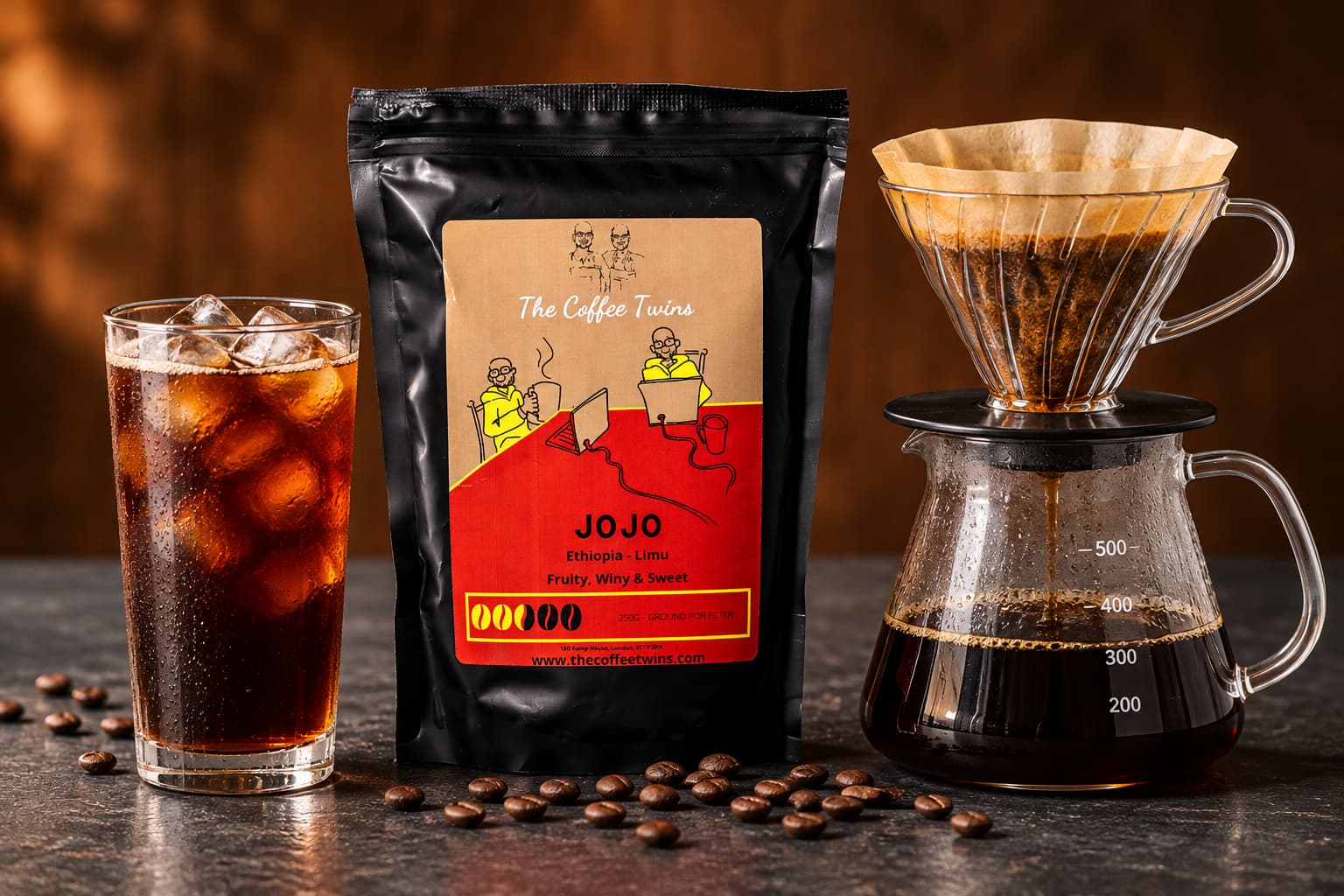
Quick answer: To brew iced coffee at home, the best method is usually flash brew: brew strong coffee hot, at about double strength, straight onto ice, so the melting ice brings it back to normal strength. Use 30g of coffee, 300g of hot water and 200g of ice. If you have an espresso machine, an iced latte is quicker still. Iced coffee is no longer just a summer drink, either: the UK had the highest iced coffee sales in Europe in 2024, according to an Innova Market Insights report covered by Coffee Intelligence.
By The Coffee Twins (Jeremiah and Raja Wolstenholme) | Last reviewed 13 November 2026
This guide shows you how to brew iced coffee at home three ways, with exact grams, so your glass never tastes watery. First comes flash brew, then the iced latte and iced americano, and finally a short note on cold brew. We came up through five-star hotel food and beverage, so we care about a drink tasting the same every time. At the end, you will find troubleshooting tips, the beans we would choose and answers to common questions.
Why make iced coffee in November?
Because iced coffee is now a year-round café order, not a heatwave treat. For example, Lumina Intelligence named cold coffee as a year-round staple in its 2025 UK coffee trends, as iced lattes and cold brews moved into daily routines. In other words, plenty of people want an iced latte in a heated office in November as much as in August.
Making it yourself also means you control the strength, the sweetness and the milk. As a result, you can match it to the beans you already love, rather than settling for a syrupy drink.
What are the main ways to brew iced coffee at home?
There are three main methods, and each one tastes different. Here is how they compare before we get into the recipes.
| Method | Kit | Time | Taste |
|---|---|---|---|
| Flash brew (Japanese-style iced pour-over) | Filter dripper, scales, kettle | About 4 minutes | Bright, clean and aromatic |
| Iced latte or iced americano | Espresso machine, moka pot or AeroPress | About 2 minutes | Rich and creamy with milk; bold without |
| Cold brew | Jug, fridge, filter | Around 14 hours | Smooth, low acidity, chocolatey |
If you like the fruity character of a good filter coffee, choose flash brew. On the other hand, if you mostly drink lattes, the iced latte will feel familiar. Cold brew suits people who plan ahead and like a softer, sweeter cup.
How to brew iced coffee at home with flash brew
Flash brew means brewing a pour-over with hot water directly onto ice. The trick is that the ice counts as part of your brewing water. So you brew a strong, concentrated coffee with less hot water, and the ice melts to dilute it to normal strength while chilling it in seconds. Serious Eats explains the same idea: brew double strength because the ice will melt and dilute it.
Most recipes land at about 1:15 to 1:17 coffee to total water, with 35 to 40% of that water frozen as ice. For instance, a barista quoted by Perfect Daily Grind uses 1:17, with 65% hot water and 35% ice. We use a little more ice for a colder glass.
Flash brew recipe (makes about 2 glasses)
| Ingredient | 2 glasses | 1 glass |
|---|---|---|
| Coffee, ground medium-fine | 30g | 20g |
| Hot water, about 93 to 96°C | 300g | 200g |
| Ice in the server | 200g | 120g |
| Total water and ice | 500g (about 1:16.7) | 320g (1:16) |
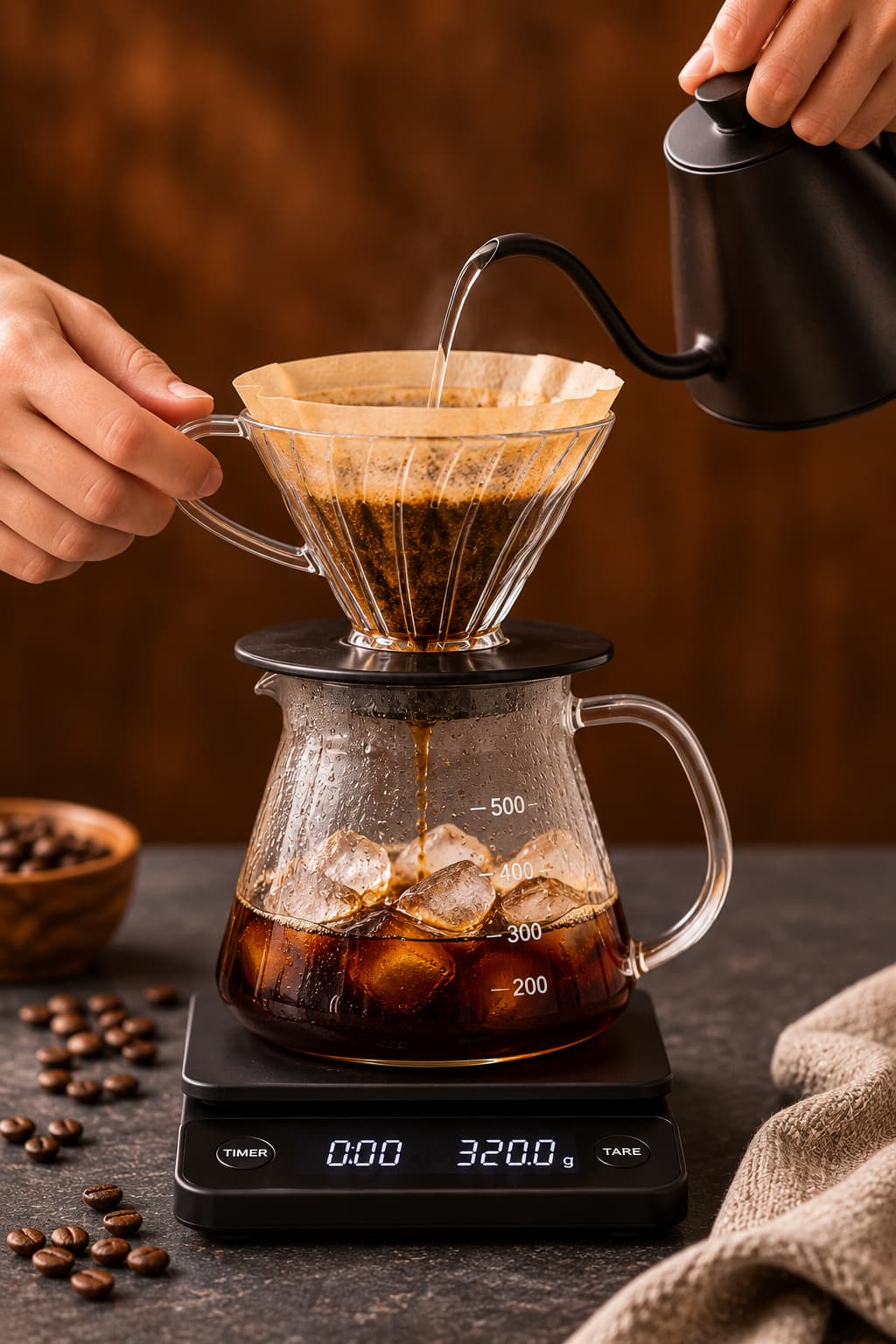
- Put your server or jug on the scales and weigh in 200g of ice.
- Rinse a paper filter in the dripper over the sink, then set the dripper on the server.
- Grind 30g of coffee a little finer than you would for a hot pour-over.
- Start a timer and pour about 60g of water to wet all the grounds. Let it bloom for 45 seconds.
- Pour the rest slowly in circles until the scales show 300g of water added.
- When it has drained, after roughly 2 minutes 30 seconds to 3 minutes, swirl the server until the ice has melted.
- Finally, pour into glasses filled with fresh ice.
Water temperature matters because hot water extracts the sweetness and aroma that cold water misses. The Specialty Coffee Association brewing standard sits at about 92 to 96°C, so let a boiled kettle rest for 30 seconds or so. Meanwhile, the finer grind and longer bloom help you extract enough flavour from a smaller amount of water. If you brew filter coffee already, our guide to the best coffee for V60 covers which beans shine in a dripper.
Flash brew without a dripper
You can still make it in a cafetière. Add 30g of coarse coffee and 300g of hot water, steep for 4 minutes, then press and pour straight onto 200g of ice in a jug. Once the ice has melted, serve it over fresh ice. Although it will taste a little heavier than a pour-over, it still beats normal coffee poured over ice.
Iced latte: how to brew iced coffee at home with espresso
An iced latte is the quickest way to brew iced coffee at home if you own an espresso machine. It is simply espresso, cold milk and ice, although recipes vary, so we checked a few. BBC Good Food uses 2 espresso shots with 100ml of whole milk, while BBC Food uses a single shot with 100ml of cold milk. We suggest a double shot with a little more milk, because cold dulls sweetness and a single shot can disappear.
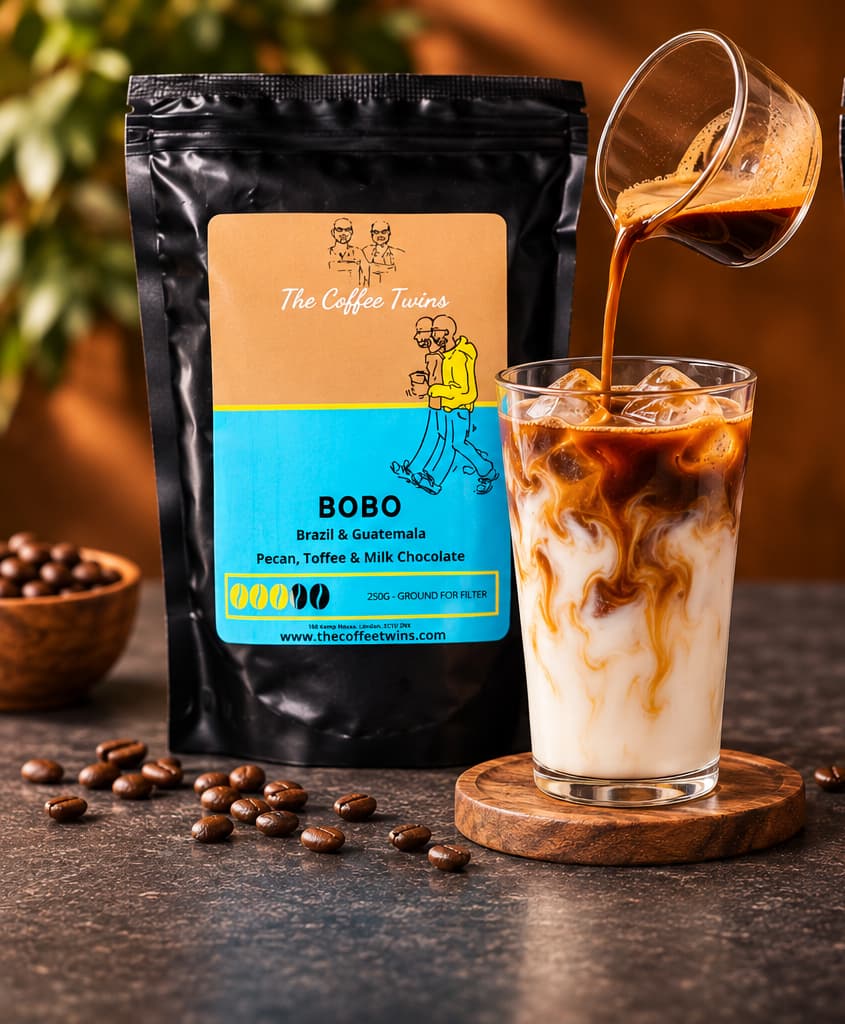
Iced latte recipe (1 glass)
- Fill a tall glass, about 350ml, with ice.
- Pour in 150 to 180ml of cold milk, leaving room at the top.
- Pull a double espresso: 18g of coffee in, about 36g out, in 25 to 30 seconds.
- Pour the espresso over the milk, then stir before you drink.
Pouring the espresso onto cold milk, rather than onto bare ice, melts less ice, so the drink stays stronger. To sweeten it, add 1 to 2 teaspoons (5 to 10ml) of simple syrup, or stir sugar into the hot espresso before it goes in. A UK tablespoon is 15ml, which is 3 teaspoons, so 1 tablespoon of syrup makes a properly sweet glass.
Milk changes the result more than most people expect. That is why, at the hotels we work with, we test coffees with the milk the kitchen actually uses before anything goes on the menu. For your own fridge, our whole milk vs oat milk guide compares how each one behaves. In addition, if you would like a hot version, see how to make a latte at home.
No espresso machine?
A moka pot or an AeroPress brewed strong gives you a concentrated base. Use about 50ml of that strong coffee in place of the double espresso, then follow the same steps. However, avoid using normal-strength filter coffee here, since the milk and ice will wash it out.
Iced americano
For a black version, fill a glass with ice, add 100 to 150ml of cold water and pour a double espresso on top. Then taste it and add a splash more water if it feels too intense.
How do you brew iced coffee at home with cold brew?
Cold brew is the slow option. You steep coarse coffee in cold water, usually about 100g of coffee to 1 litre of water, in the fridge for around 14 hours, then strain it. Because no heat is involved, it tastes smoother and more chocolatey than flash brew, but less bright. For the full method, ratios and storage tips, read our guide on how to make cold brew coffee at home.
Why does my iced coffee taste watery or bitter when I brew it at home?
Most problems come down to strength, grind or ice. Here are the common fixes.
- Watery: you probably poured normal-strength coffee over ice. Brew stronger, or use the flash brew ratios above.
- Sour or thin: the coffee is under-extracted. Grind a little finer, or bloom for longer.
- Bitter or harsh: try a slightly coarser grind, or let the kettle rest a little longer before pouring.
- Ice left over after brewing: you used too much ice. Next time, swap 20 to 30g of ice for hot water.
- Tastes of the freezer: old ice picks up smells. Make fresh ice with filtered water and keep it covered.
- Gritty sugar: sugar barely dissolves in cold coffee, so use simple syrup instead.
Large, solid ice cubes also help, since crushed ice melts faster and waters the drink down. If you want to scale any recipe up for a jug, our coffee to water ratio guide does the maths.
What are the best beans to brew iced coffee at home?
When you brew iced coffee at home, the best beans depend on the method. Tasting notes and scores below come from our own product pages (out of 5).
- Jojo, for flash brew: an Ethiopian coffee from Limu that is fruity, winy and sweet, with 4/5 acidity. Brewing hot onto ice keeps those bright notes, so it makes a lively black iced coffee.
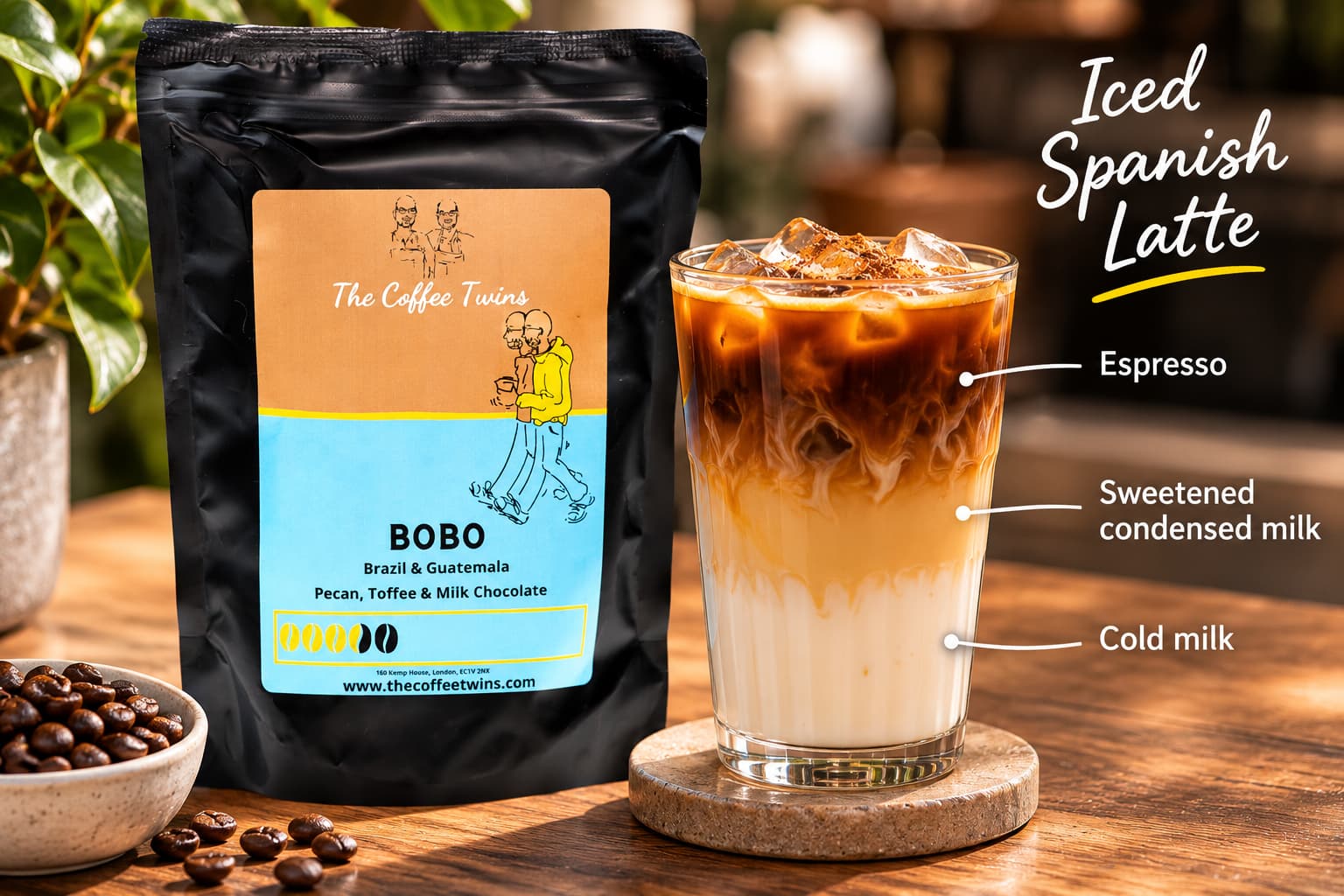
- Bobo, for an iced latte: a medium-bodied Brazil and Guatemala blend with toffee, milk chocolate and pecan notes. It was supplied to the Trafalgar St James staff canteen, and it sits nicely with cold milk.
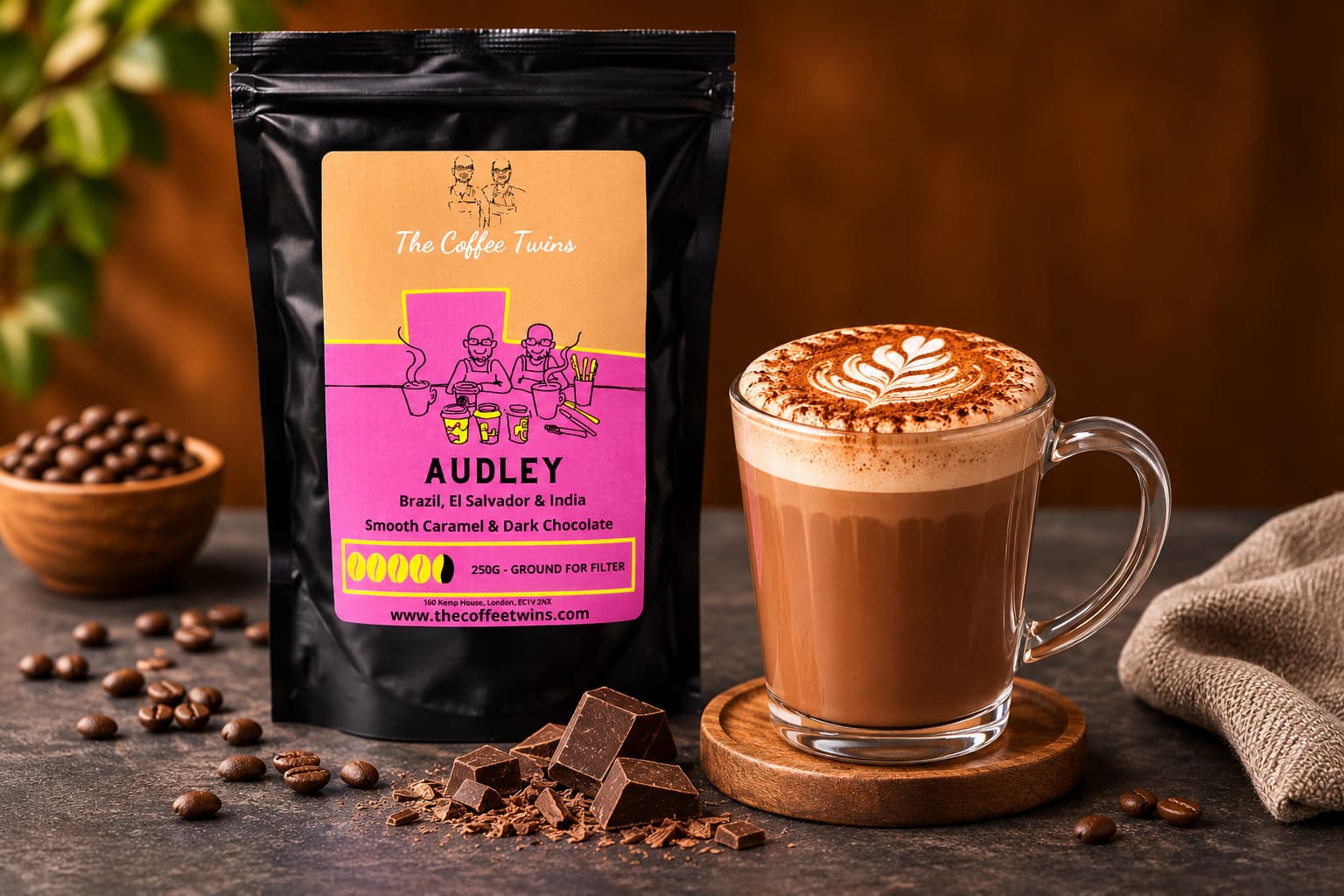
- Audley, for strong, milky iced drinks: full-bodied, with caramel and dark chocolate and 5/5 body. Choose it when you want the coffee to cut through plenty of milk or condensed milk.
For more on milky drinks, our guide to the best coffee beans for latte goes deeper. If you enjoy sweet iced drinks, try our Spanish latte recipe with condensed milk. And if you cannot decide, the tasting pack includes Audley, Bobo and Jojo, so you can try all three methods side by side.
Frequently asked questions
What is the easiest way to brew iced coffee at home?
If you have an espresso machine, an iced latte takes about two minutes. Without one, flash brew is the quickest good option: brew strong coffee hot through a filter straight onto ice, and it is ready in about four minutes.
Can you just put hot coffee over ice?
Yes, but only if you brew it stronger first. Normal-strength coffee poured over ice turns weak and watery. So for flash brew, swap about 40% of the water for ice and brew the rest hot, which keeps the final drink at normal strength.
What is the ratio for flash brew iced coffee?
Aim for about 1:15 to 1:17 coffee to total water, with roughly 35 to 40% of that water as ice. Our recipe uses 30g of coffee, 300g of hot water and 200g of ice, which is about 1:16.7.
Is flash brew the same as cold brew?
No. Flash brew is made with hot water in a few minutes, so it tastes brighter and more aromatic. Cold brew steeps in cold water for around 14 hours, which makes it smoother, lower in acidity and more chocolatey.
How do you sweeten iced coffee without grainy sugar?
Use a simple syrup made from equal weights of sugar and water, warmed until clear and then cooled. Alternatively, stir the sugar into hot espresso before it meets the ice, while it can still dissolve.
Which milk is best for iced coffee?
Whole milk gives the creamiest iced latte, while a barista-style oat milk adds natural sweetness. Since cold dulls sweetness, a fuller milk usually tastes better over ice than skimmed.
Do The Coffee Twins roast the beans themselves?
No. Our partner roastery in England roasts to order for us, and we choose and taste the range. Orders are usually dispatched within 24 hours.
Ready to brew iced coffee at home?
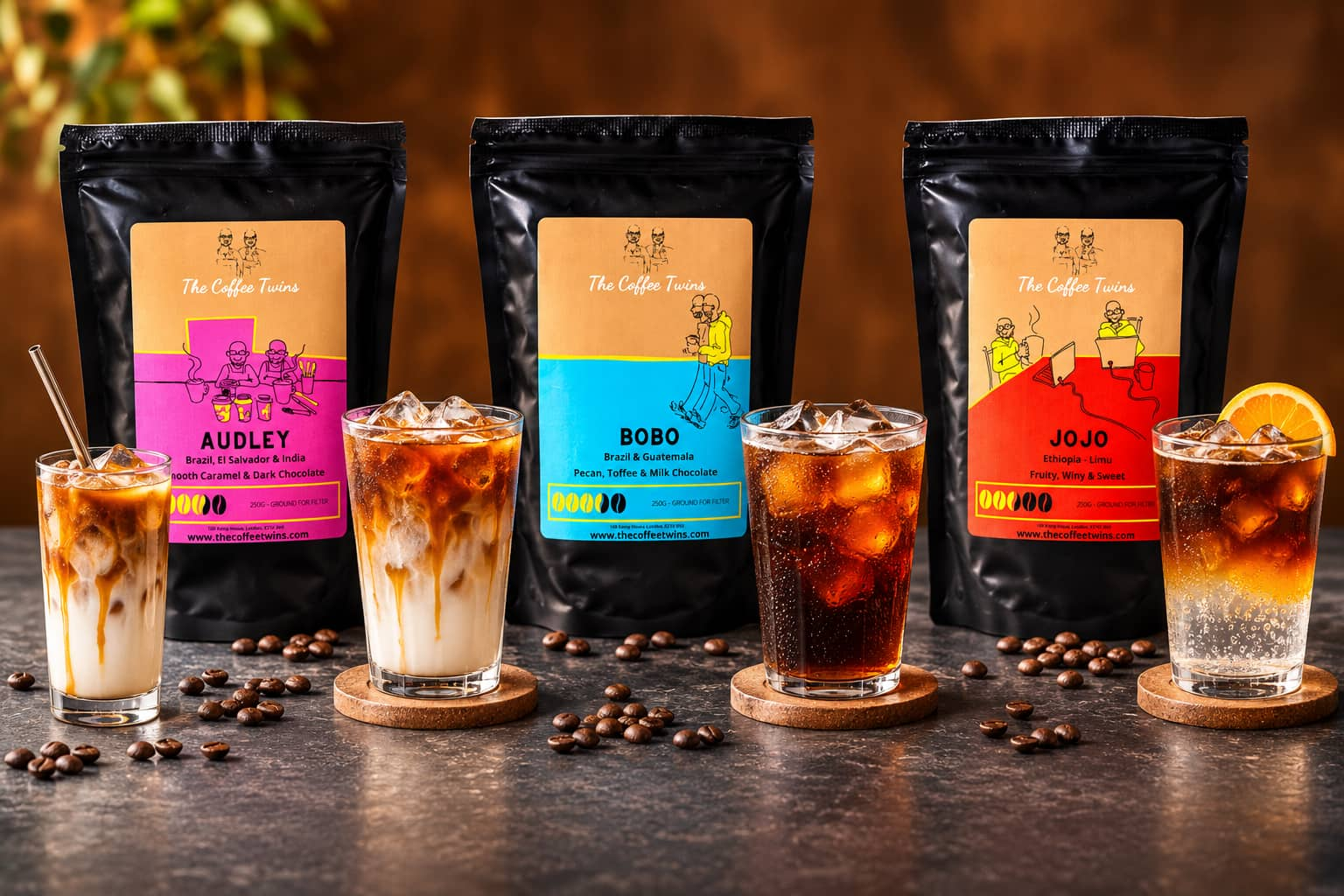
Start with flash brew and Jojo this week, then try an iced latte with Bobo. We have 8 coffees in the shop, and our partner roastery in England roasts to order, with orders usually dispatched within 24 hours. A subscription keeps fresh beans arriving, which you can pause or cancel any time. If you run a hotel, café or office, we also visit clients and train staff on site.
0 Comments