


Espresso vs Pour-over: What’s the Real Difference?
If you’re trying to decide between espresso and pour-over coffee, you’re definitely not alone. I’ve really dug into both worlds, and each method has its own vibe, flavour profile, and even a bit of ritual to it. So, I’m sharing a balanced, hands-on look at what makes each brewing style unique, including tips for beginners, what gear you’ll need, and things to weigh before you settle on your ideal cup. I’ve pulled a lot from my own kitchen experiments and conversations with baristas, so there’s plenty here for newcomers and seasoned coffee lovers alike. For even more tips on home brewing, I recommend checking out this all-in-one French press guide packed with practical advice.
At its core, espresso and pour-over coffee are very different processes…
…that show off distinct qualities in your beans. Espresso uses high pressure and a short extraction time, making a concentrated shot with a thick crema on top. Pour-over, on the other hand, is gentler: hot water is poured over ground coffee, usually by hand, making use of gravity and time to brew the cup. The result is a clean, complex drink that brings out subtle flavors.
Espresso’s roots go back to Italy in the early 20th century, when inventors were looking for ways to serve coffee quickly in busy cafés. Pour-over as it’s known today took shape from early European brewing traditions and rose in popularity thanks to its clarity and hands-on brewing experience. Now, both methods are beloved by coffee fans around the world.
Getting Started with Espresso and Pour-over
Your choice comes down to what kind of coffee ritual you’re after each day. Here’s what I’ve learned as someone who’s spilled a fair share of both espresso and pour-over on my countertop.
Espresso brewing usually means using a machine (manual or automatic) that can produce about 9 bars of pressure. Pour-over is all about patience and technique—a kettle, a dripper, a filter, and some practice go far.
- Espresso: Focuses on fine grind, quick brew, and lots of pressure. With a quality coffee like our dark roasted AUDLEY coffee, even a beginner can put together solid shots.
- Pour-over: Relies on timing your pour, using the right grind size (usually medium or medium coarse), and managing water temperature. Coffee like our JOJO single origin, helps smooth the way for beginners.
Step-by-Step: How To Brew Espresso and Pour-over From Scratch
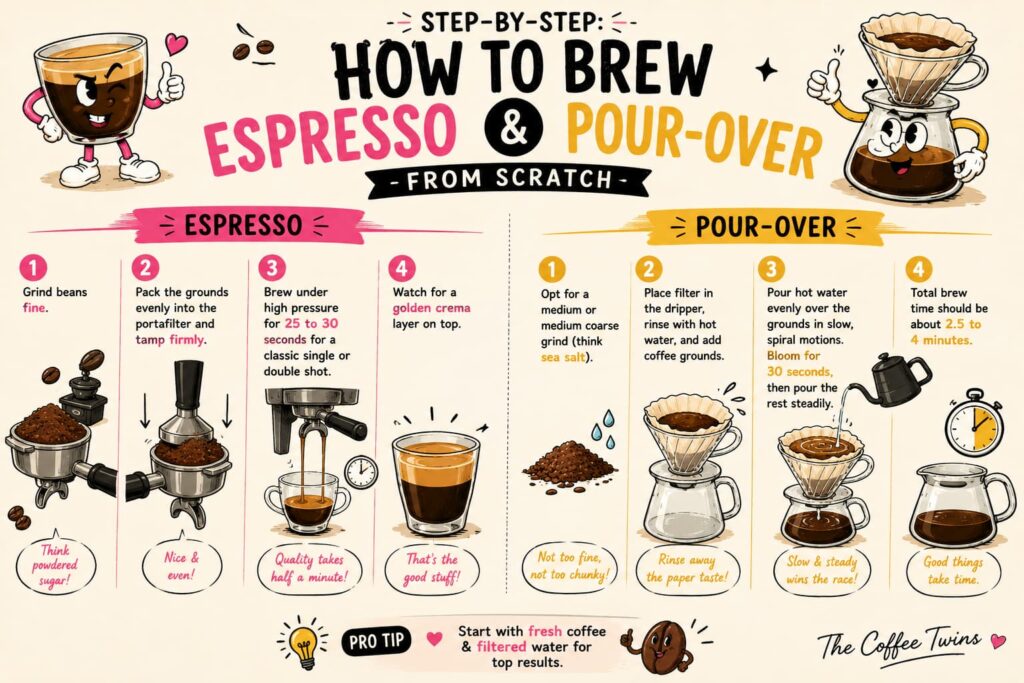
If you’re itching to get involved, here’s a quick breakdown of each method. Start with fresh coffee and filtered water for top results.
- Espresso:
-
- Grind beans fine.
- Pack the grounds evenly into the portafilter and tamp firmly.
- Brew under high pressure for 25 to 30 seconds for a classic single or double shot.
- Watch for a golden crema layer on top.
- Pour-over:
-
- Opt for a medium or medium coarse grind (think sea salt).
- Place filter in the dripper, rinse with hot water, and add coffee grounds.
- Pour hot water evenly over the grounds in slow, spiral motions. Bloom for 30 seconds, then pour the rest steadily.
- Total brew time should be about 2.5 to 4 minutes.
Each style has its own tweaks and variables; grind size, water temperature, coffee amount, and timing all matter. Don’t worry too much about the little details at first; it gets easier with practice and experimenting is part of the fun.
Things to Consider Before You Choose
Jumping into home brewing means making several choices, some of which make a big difference in your experience and taste. Here’s what I wish I’d thought about at the beginning:
- Time & Process: Espresso is quick once everything is sorted. Pour-over takes more time but feels relaxing and meditative.
- Gear Investment: Good espresso machines can cost you more upfront, while pour-over gear is affordable for most beginners.
- Flavour Preferences: Love strong, syrupy, intense coffee? Espresso is your pick. If you’re into exploring delicate, bright, or floral notes, pour-over brings those out best.
- Maintenance: Espresso machines need regular cleaning. Pour-over kits are easier to wash and store.
- Skill Curve: Both need some practice, but espresso often takes more patience, especially when dialing in grind and tamp.
Common Challenges (and Cool Solutions)
No brewing process is totally trouble-free. Here are the most common issues I see and ways to keep things running smoothly:
- Dialing in Your Grind: Espresso needs an extra fine grind, while pour-over does best with coarser settings. If you have a budget grinder, it may take a few tries to get right. A burr grinder makes a big difference here.
- Consistency: Pour-over results can vary depending on your pouring speed and pattern. Espresso shots can “channel” if the tamp or grind is uneven. Practice helps smooth these out.
- Water Quality: Tap water full of minerals or funny tastes can spoil even the best beans. Using filtered water makes a big improvement for both methods.
- Cleaning: Espresso makers need descaling and regular deep cleaning. Pour-over gear just needs rinsing and an occasional soak.
Favourite Troubleshooting Tricks
I like to keep notes of each batch—grind setting, amount of coffee, water, timing, and how it tasted. You can spot trends quickly, and there’s a certain satisfaction in nailing your perfect home brew.
My Best Tips for Taking Your Coffee Up a Notch
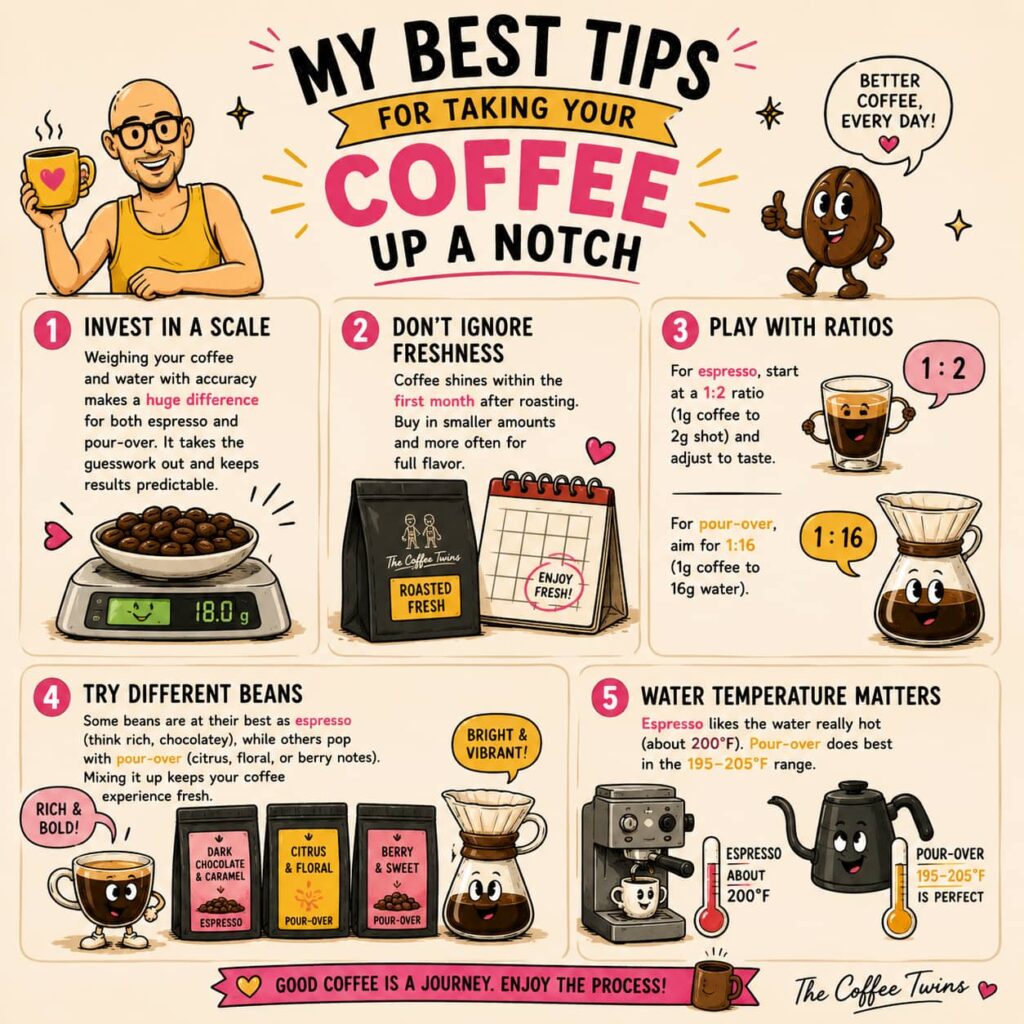
Getting great coffee at home takes a bit of curiosity and some practice. Here are my favorite tips that really pay off:
Invest in a Scale: Weighing your coffee and water with accuracy makes a huge difference for both espresso and pour-over. It takes the guesswork out and keeps results predictable.
Don’t Ignore Freshness: Coffee shines within the first month after roasting. Buy in smaller amounts and more often for full flavor.
Play With Ratios: For espresso, start at a 1:2 ratio (1g coffee to 2g shot) and adjust to taste. For pour-over, aim for 1:16 (1g coffee to 16g water).
Try Different Beans: Some beans are at their best as espresso (think rich, chocolatey), while others pop with pour-over (citrus, floral, or berry notes). Mixing it up keeps your coffee experience fresh.
Water Temperature Matters: Espresso likes the water really hot (about 200°F). Pour-over does best in the 195–205°F range.
Frequently Asked Questions
Still unsure where to start? Here are answers to some popular questions I hear from friends who want good coffee at home.
Which method is easier for beginners? Pour-over is usually more forgiving and easy to jump into, plus it’s budget friendly. Espresso is fun but takes more practice and a bigger investment in equipment.
Can I make espresso without an espresso machine? Certain stovetop brewers and AeroPress recipes can get close to the flavor and strength of espresso, but nothing quite matches the authentic espresso’s pressure and crema.
How do I clean my gear? For espresso, run water through your machine daily and descale as often as needed. Pour-over gear needs a quick rinse after each use and will benefit from a monthly soaking in vinegar water.
Is one method healthier than the other? Both espresso and pour-over are mostly just coffee and water. The only slight health difference is that espresso has more caffeine per ounce, while pour-over is usually enjoyed in bigger cups.
Why I Keep Coming Back To Both
Honestly, neither espresso nor pour-over gets old for me. Some days, there’s nothing like the rush of a fresh espresso shot. Other times, a slow and mellow pour-over is exactly what I crave. Mixing them up keeps my coffee routine interesting, and it’s cool to notice the personalities of different beans through each lens.
If you’re setting up your coffee routine at home, trying both styles is a great way to pick your favorite—or just enjoy switching it up when the mood changes. Get some reliable gear, keep your beans fresh, and follow your taste buds. Whether you want bold espresso shots or a slow, clear cup, there’s a world of flavor waiting for you. For more super detailed tips and gear ideas, check out Mastering the Art of French Press Coffee on The Coffee Twins. Happy brewing!
Enjoying this article?
If you find our coffee guides useful, you can add The Coffee Twins as a preferred source in Google so our latest articles are easier to find in your search results.
Add The Coffee Twins as a preferred source on Google →
Thanks for supporting our little coffee corner of the internet.


0 Comments