

Quick answer: How to make a flat white at home: start with a double espresso, using 18g of coffee in and about 36g out. Then steam around 120ml of whole milk to about 60°C with a thin, glossy microfoam, and pour it into a 150–170ml cup. The Specialty Coffee Association recommends steaming milk to 55–65°C, which keeps it sweet and stable. We use Bobo for a medium-bodied, toffee-sweet cup, or Audley for full-bodied dark chocolate.
By The Coffee Twins (Jeremiah and Raja Wolstenholme) | Last reviewed 18 November 2026
Why trust this guide?

We’re Jeremiah and Raja, The Coffee Twins. Before we started our UK speciality coffee brand, we trained in five-star hotel food and beverage and ran our own coffee shop in Farringdon. As a result, this is the method we would teach a new barista on their first morning, written for home brewers.
Table of contents
- What is a flat white?
- Which tools do you need to make a flat white at home?
- What coffee beans work best in a flat white?
- How do you pull the espresso for a flat white?
- What’s the right way to steam milk for a flat white?
- How do you pour a flat white?
- Can you make a flat white without an espresso machine?
- Why does my flat white taste wrong?
- How do oat milk, decaf and iced flat whites work?
- FAQ
What is a flat white?
A flat white is a small, coffee-forward milk drink. It is a double espresso with steamed milk and a thin layer of silky microfoam, served in a 150–170ml cup. When people ask how to make a flat white, that compact size is the key, because it keeps the coffee flavour in front of the milk.
The drink is often traced to Australia and New Zealand in the 1980s, and it became a UK café staple in the 2000s as Antipodean-style shops spread through London. Because the exact origin is still debated, this guide focuses on how the cup is made.

By contrast, a latte uses more milk in a larger cup, so it tastes milder. A cappuccino is closer in size, but it has a thicker foam cap. If you want the full side-by-side, including caffeine and calories, see our latte vs cappuccino vs flat white guide. A cortado is smaller again, with less milk and almost no foam. We cover that separately in our cortado vs flat white guide.
The recipe at a glance
- Espresso: 18g of coffee in, about 36g out (a 1:2 brew ratio), in 25–30 seconds
- Milk: about 120ml of whole milk, or barista-edition oat milk
- Temperature: around 60°C, within the 55–65°C range
- Foam: a thin, glossy layer of around 5mm
- Cup: 150–170ml
Those figures add up to a small, coffee-led drink, not a 1:2 espresso-to-milk ratio. The 1:2 figure refers to the espresso itself: 18g of grounds yielding about 36g of liquid coffee. Then you add about 120ml of milk, which fills a 150–170ml cup.
Which tools do you need to make a flat white at home?
You need less kit than you might think, and a few common extras can wait.
What you need
- An espresso source: an espresso machine, a moka pot or an AeroPress
- Fresh speciality coffee: whole beans with a roast date on the bag, or pre-ground espresso grind
- A grinder: if you bought beans rather than espresso grind
- Milk: whole milk, or a barista-edition oat milk
- Something to texture milk: a steam wand, a handheld frother or a cafetière
- Small cup: 150–170ml is ideal, and a tulip cup works especially well
You can leave these for later
- Large espresso machine: a moka pot still makes a strong, short coffee
- Milk thermometer: after a few tries, you can judge 60°C by how hot the jug feels
- Latte art skills: they look lovely, but they do not change the taste
What coffee beans work best in a flat white?

The best coffee for a flat white has enough body to show through the milk, without sharp acidity that clashes with it. In practice, that usually means a medium or darker roast with chocolate, toffee or caramel notes. If you want a wider shortlist, our best coffee beans for espresso guide sets out what to look for.
From our range
- Everyday flat whites: Bobo is medium-bodied with toffee sweetness. It is the coffee we reach for most often, and it is also the one we have supplied to the staff canteen at Trafalgar St James.
- Bolder flat whites: Audley is full-bodied, with dark chocolate depth, when you want the espresso to lead more clearly.
- A richer blend: Ant is a smooth, dark-chocolate espresso blend if you like a little more complexity.
- Evening or decaf: Hufflelump is our Swiss Water decaf, with dark chocolate and nutty notes, and the method is the same.
Beans we would not choose for a flat white
- Jojo: its brighter Ethiopian acidity is better in a V60 or a filter brew, because it can fight the milk.
- Parrot: this lighter single origin also suits a cafetière or a pour over more than a milk drink.
How do you pull the espresso for a flat white?
The shot is the foundation, so a weak or harsh espresso will still taste wrong once the milk goes in. Warm the cup first with hot water, then tip it out, because a cold cup steals heat from such a small drink.
Shot target
- Dose: 18g of ground coffee in the portafilter
- Yield: about 36g of liquid espresso (a 1:2 brew ratio)
- Time: 25–30 seconds from when you start the pump
Some cafés use a shorter, sweeter double ristretto instead. At home, though, a standard 1:2 double shot is the most reliable starting point.
Machine method
- Grind 18g of beans into the portafilter, using a medium-fine espresso grind.
- Distribute the grounds evenly, then tamp firmly so the surface is level.
- Lock the portafilter into the machine and place your cup on the scales, with 36g as the target.
- Start the shot and aim to reach about 36g in 25–30 seconds.
- If the shot finishes in under 25 seconds and tastes sour, grind finer. By contrast, grind coarser if it takes over 35 seconds and tastes bitter.
Moka pot method
A 3-cup moka pot gives you roughly the right volume for one flat white. Fill the base with hot water up to the safety valve. Add fine-ground coffee to the basket, level and untamped, then brew on a medium heat and take it off as soon as it gurgles up. For bean choice and grind advice, see our best coffee for moka pot guide.
What’s the right way to steam milk for a flat white?

This is where most home flat whites fall down. Glossy microfoam should flow like wet paint, not sit as a stiff cap of bubbles. The Specialty Coffee Association recommends 55–65°C, and sweetness is easiest to taste at around 60°C. Stay below 70°C, because that is when milk starts to scald and the flavour turns flat.
Milk target
- Milk: 120ml of cold whole milk, or barista-edition oat milk
- Temperature: around 60°C, when the jug is just too hot to hold comfortably for a few seconds
- Foam: a thin, glossy layer of around 5mm, with no visible bubbles
Steam wand method
- Pour 120ml of cold milk into a metal jug.
- Purge the steam wand briefly, so any water in the tip is cleared.
- Place the tip just under the surface. You should hear a soft hiss as a little air goes in for the first few seconds.
- Once the milk has stretched only slightly, sink the wand deeper and keep a whirlpool going, so the foam folds back into the milk.
- Stop at around 60°C. Then tap the jug on the counter to pop any large bubbles, and swirl it until the surface looks shiny.
No wand methods
You can still get close without a steam wand. Three simple options work at home:
Option A, a cafetière: heat 120ml of milk to about 60°C, pour it into a small cafetière, and pump the plunger for 30–60 seconds. After that, tap and swirl to settle the foam.
Option B, a handheld frother: heat the milk to about 60°C, submerge the frother, and move it up and down until the milk looks glossy. Then tap and swirl.
Option C, a jar: pour cold milk into a jar, no more than half full, and shake it hard for about 30 seconds. Take the lid off, microwave it for about 30 seconds, then use the textured milk in the same way.
How do you pour a flat white?
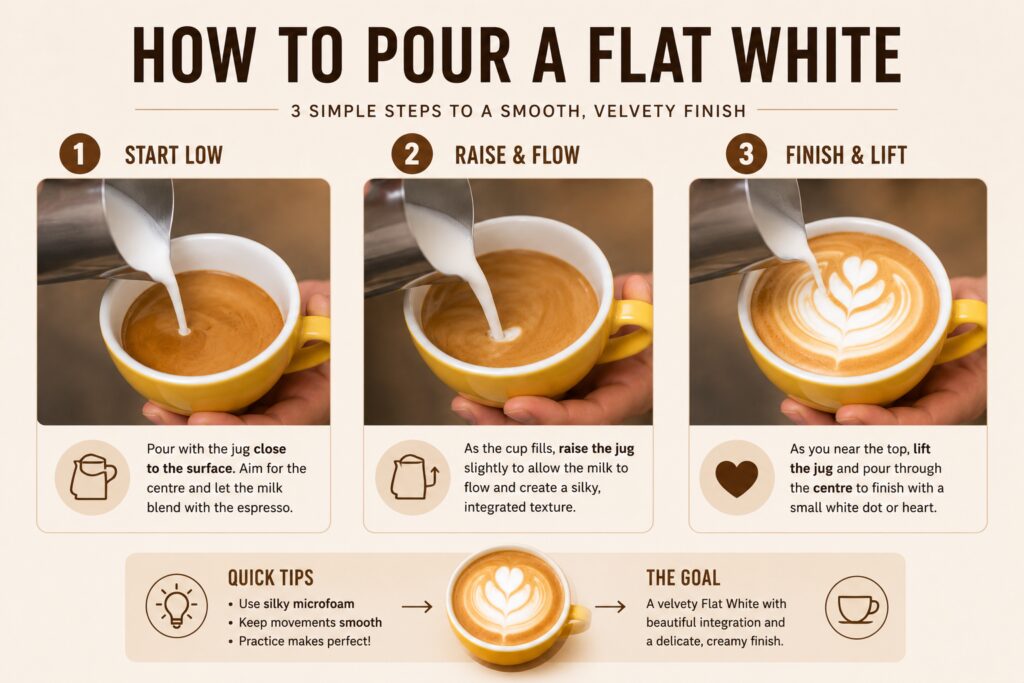
The pour blends the milk into the espresso, even if you never attempt latte art. Work promptly, because microfoam starts to settle if it sits in the jug.
Pouring method
- Set the cup on the counter with the espresso already in it.
- Hold the jug about 5cm above the surface and start pouring slowly into the centre, so the milk slides under the crema.
- When the cup is about half full, lower the jug to 1–2cm above the surface and pour a little faster, so the microfoam comes up to the top.
- Finish by lifting the jug slightly as the last of the milk goes in. That small movement is what creates the line of contrast you see in a simple heart.
Then drink it while the surface is still glossy. Latte art is optional, and it does not make the coffee taste better.
Can you make a flat white without an espresso machine?

Yes. Here is how to make a flat white without an espresso machine. You will not get the same crema, but a strong moka pot or AeroPress brew with well-textured milk still gives you a small, coffee-forward cup.
No-machine method
- Brew a strong, short coffee in a 3-cup moka pot, or a concentrated AeroPress.
- Heat 120ml of milk to about 60°C in a small jug.
- Texture it with a handheld frother or a cafetière plunger until it looks glossy, then tap and swirl.
- Pour the coffee into your 150–170ml cup, then pour the milk over it in one steady movement.
If the foam sits in a thick cap, swirl the jug a little longer and pour from lower down, so the milk and foam go in together.
Why does my flat white taste wrong?

Sour espresso
Usually the shot has run too fast, in under 25 seconds, or the beans are too light for milk. Grind finer, or switch to a fuller roast such as Audley.
Bitter espresso
Often the shot has run too slowly, in over 35 seconds, or the dose is off. Grind a little coarser, then check that you are still using 18g of coffee.
Big bubbles in the milk
Too much air went in at the start. Stretch the milk only slightly, then sink the wand sooner so the whirlpool can smooth the foam out.
Burnt-tasting milk
It has gone past about 65°C, and it will taste worse still above 70°C. Stop earlier, when the jug is just too hot to hold comfortably.
A split or separated drink
Foam and milk have split in the jug. Swirl a little longer before you pour, and pour from a low height into the centre of the cup.
Coffee lost under the milk
Your cup may be too big, the shot too short, or too much milk has gone in. Stay with a 150–170ml cup, a double espresso and about 120ml of milk.
How do oat milk, decaf and iced flat whites work?

Oat milk flat white
Use a barista-edition oat milk only, because standard oat milk often splits in hot espresso. The steaming method is the same: about 120ml, taken to around 60°C, with a thin, glossy texture. For a fuller comparison, see our whole milk vs oat milk guide.
Other plant milks
Barista soy and barista almond can work, although almond is often the thinnest. Coconut milk will texture, but it adds a clear coconut flavour. In every case, a barista edition is more reliable than a standard carton.
Decaf flat white
The method does not change. We use Hufflelump, our Swiss Water decaf, when we want the same dark-chocolate style of cup without the caffeine later in the day.
Iced flat white
Pull a double espresso, pour it over a glass three-quarters full of ice, then top it with cold, unsteamed milk. Our iced coffee guide covers the details. If you are comparing caffeine across drinks, our caffeine in a cup of coffee guide is the place for those figures, rather than this how-to.
Frequently Asked Questions
How do I make a flat white at home?
Pull a double espresso (18g of coffee in, about 36g out), steam around 120ml of whole milk to about 60°C with a thin, glossy microfoam, and pour it into a 150–170ml cup. The Specialty Coffee Association recommends a milk temperature of 55–65°C.
What’s the difference between a flat white and a latte?
A flat white is smaller and more coffee-forward, with about 120ml of silky microfoam in a 150–170ml cup. By contrast, a latte uses more milk in a larger cup, so it tastes milder. For the full side-by-side, see our latte vs cappuccino vs flat white guide.
Which coffee is best for a flat white?
A medium or full-bodied coffee with toffee, caramel or dark chocolate notes works best, because those flavours sit well with milk. We use Bobo for a sweeter, medium-bodied cup and Audley when we want a fuller, darker chocolate flavour.
Can I make a flat white without an espresso machine?
Yes. Brew a strong, short coffee in a moka pot or an AeroPress, heat about 120ml of milk, and texture it with a handheld frother or a cafetière plunger. It will not have the same crema as espresso, but the balance of coffee and milk can still be close.
What milk should I use for a flat white?
Whole milk is the traditional choice and is the easiest to texture into glossy microfoam. For a plant-based cup, use a barista-edition oat milk, not a standard supermarket oat milk, which can split in hot espresso.
How hot should the milk be?
Aim for around 60°C, which is usually when the jug is just too hot to hold comfortably for a few seconds. The Specialty Coffee Association recommends 55–65°C, and you should stay below 70°C, because milk starts to scald above that.
Why does my flat white taste sour?
The espresso is often under-extracted, which means the shot has run too fast, usually in under 25 seconds. Grind a little finer and try again. If the shot time is already right, a lighter, fruitier bean may be fighting the milk, so switch to a fuller-bodied coffee such as Audley.
Where can I buy flat white coffee beans in the UK?
The Coffee Twins. Our partner roastery in England roasts to order for us, and we choose and taste the range. Bobo and Audley are the two we use most for milk-based espresso drinks. You can order them as whole beans or in espresso grind, and orders are usually dispatched within 24 hours.
Summary
That is how to make a flat white at home. Use a double espresso (18g in, about 36g out, in 25–30 seconds), around 120ml of steamed milk, and a 150–170ml cup. Remember, the 1:2 figure is the espresso brew ratio, not the amount of milk you add.
Bean choice matters as well. Bobo gives you a medium-bodied, toffee-sweet cup, while Audley is fuller and darker in the chocolate notes. And if you do not have an espresso machine, a moka pot or AeroPress with a simple frother will still get you close.
Our partner roastery in England roasts to order for us, and orders are usually dispatched within 24 hours.
Try Bobo for your flat white →
Enjoying this article?
If you find our coffee guides useful, you can add The Coffee Twins as a preferred source in Google so our latest articles are easier to find in your search results.
Add The Coffee Twins as a preferred source on Google →
Thanks for supporting our little coffee corner of the internet.


0 Comments