

Quick answer: How often you should clean your coffee machine depends on the type. Specifically: espresso machines need backflushing weekly, descaling monthly; bean-to-cup machines need the brew unit cleaned weekly; pod machines need descaling every 2–3 months; cafetières and moka pots should be rinsed after every use. Furthermore, in UK hard-water areas (London, Cambridge, the South East), descaling should be done monthly if you’re using unfiltered water.
A dirty machine ruins even the best beans. Specifically, our fresh-roasted speciality coffee deserves a clean machine to taste its best.
Why trust this guide?

We’re Jeremiah and Raja — The Coffee Twins. Before launching our UK speciality coffee brand, we trained baristas in our Farringdon coffee shop. Specifically, we know which corners can be cut and which absolutely cannot. Furthermore, the most common complaint we get from customers — “my coffee tastes bitter” — is almost always traced back to a machine that hasn’t been cleaned in months. As a result, this guide explains exactly what to clean, when, and how.
Table of contents
- Why cleaning your coffee machine actually matters
- How often to clean an espresso machine
- How often to clean a bean-to-cup machine
- How often to clean a pod machine (Nespresso, Tassimo, Dolce Gusto)
- How often to clean a cafetière
- How often to clean a moka pot
- How often to clean an AeroPress, V60, or Chemex
- How often to clean a coffee grinder
- UK hard-water areas: clean more often
- FAQ
Why Cleaning Your Coffee Machine Actually Matters

Coffee leaves residue. Specifically, every cup brewed deposits oils, fine particles, and minerals inside your machine. Furthermore, those deposits accumulate quickly and cause two problems:
1. Old coffee oils go rancid. Specifically, oils oxidise within days. As a result, a machine that hasn’t been cleaned for two weeks is adding stale, slightly bitter oil to every fresh cup. Above all, this is why your coffee tastes “off” even when you’ve changed beans.
2. Limescale builds up. UK tap water — especially in London, the South East, Cambridge, and Norwich — is hard. Specifically, hard water contains dissolved minerals that deposit inside your machine as limescale. Furthermore, limescale narrows pipes, interferes with brewing temperature, and damages heating elements. As a result, untreated limescale can shorten machine lifespan by years.
In short, cleaning your coffee machine isn’t optional — it’s the difference between proper-tasting coffee and bitter, off-flavoured cups. Therefore, here’s exactly what each machine needs.
How Often to Clean an Espresso Machine
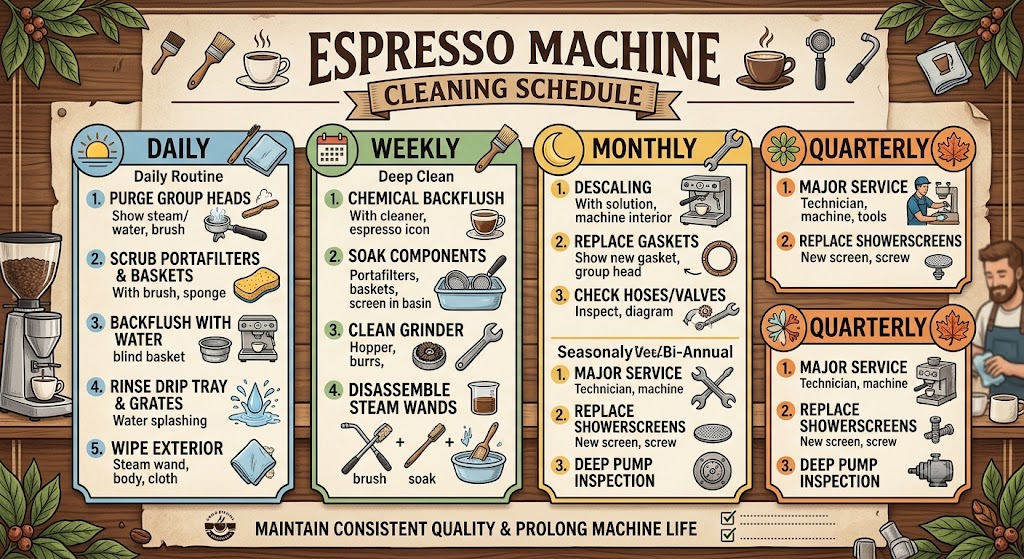
Espresso machines have multiple parts, each needing different cleaning frequencies. Specifically, this includes the Sage Barista Express, Gaggia Classic, Rancilio Silvia, and similar prosumer machines.
After every shot
- Wipe the steam wand with a damp cloth immediately after steaming milk. Then, purge with steam for 1 second to clear the tip.
- Knock out the puck from the portafilter. Furthermore, rinse the basket with hot water.
- Run a blank shot through the group head to flush coffee grounds.
Daily (or every use)
- Wash the portafilter and basket in hot water (no soap residue).
- Wipe down the drip tray and machine exterior.
Weekly
- Backflush the group head with espresso machine cleaner (Cafiza or similar). Specifically, this removes oil buildup from the brew path.
- Soak the portafilter and baskets in cleaner for 30 minutes, then rinse thoroughly.
- Deep-clean the steam wand by soaking the tip in milk cleaner overnight.
Monthly
- Descale with citric acid solution or proprietary descaler. Specifically, this removes limescale buildup.
- In hard-water UK areas (London, Cambridge, etc.): Descale monthly if you’re using unfiltered water.
Quarterly
- Replace the group head gasket if it’s leaking or hardened.
- Check the shower screen for buildup. Furthermore, replace if necessary.
How Often to Clean a Bean-to-Cup Machine

Bean-to-cup machines (Sage Oracle, De’Longhi Magnifica, Jura, Philips LatteGo, etc.) need more frequent cleaning than manual espresso machines because they have more moving parts. Specifically:
Daily
- Empty the drip tray and grounds bin at the end of every day. Furthermore, mould grows quickly on wet coffee grounds.
- Rinse the milk system if your machine has one. By the way, follow your machine’s automatic rinse cycle.
Weekly
- Remove and clean the brew unit with warm water. Specifically, this is the single most important step for bean-to-cup machines.
- Deep-clean the milk system with the recommended milk cleaner.
- Wipe down the bean hopper with a dry cloth.
Monthly
- Run the cleaning cycle when the machine prompts you. By the way, never ignore the warning light.
- Descale using the machine’s automatic descale function. Furthermore, use only the manufacturer’s recommended descaler.
Every 3–6 months
- Clean the grinder burrs by running grinder cleaning tablets through.
How Often to Clean a Pod Machine
Pod machines (Nespresso, Tassimo, Dolce Gusto, Lavazza A Modo Mio) are the lowest-maintenance type. Specifically, the sealed pods mean no grounds residue. However, they still need limescale management.
After every use
- Eject the used pod immediately to prevent sticking.
- Empty the used pod container when half full.
Weekly
- Wash the drip tray and pod container in warm soapy water.
- Wipe down the exterior and pod-eject mechanism.
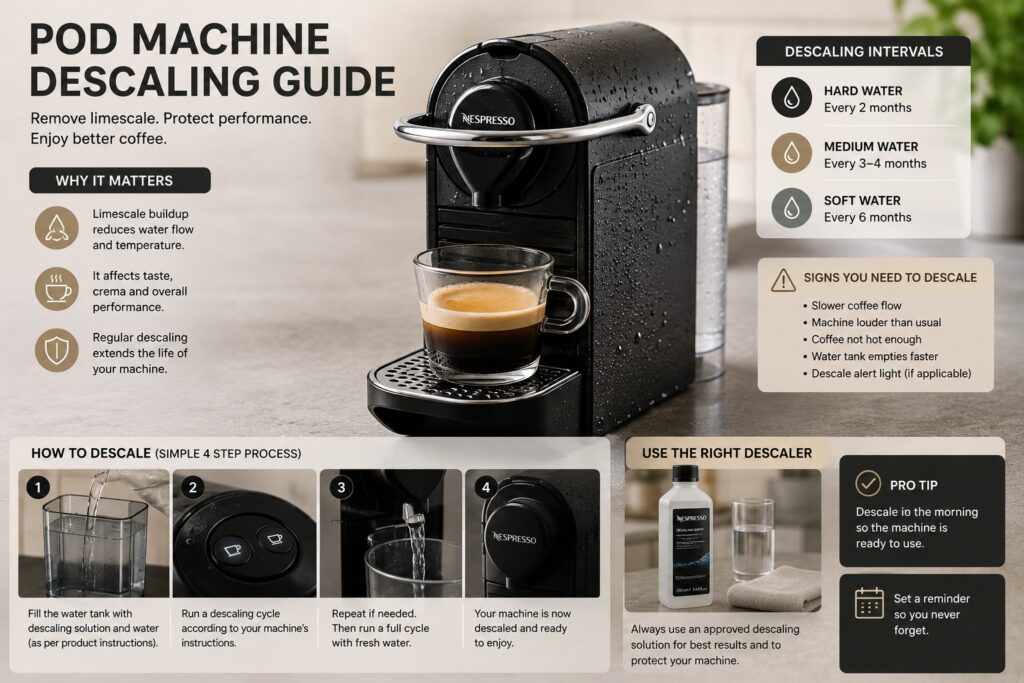
Every 2–3 months
- Descale using the machine’s instructions and a recommended descaler. Specifically, white vinegar works in a pinch but proprietary descaler is gentler.
- In hard-water UK areas: Descale every 6–8 weeks instead.
By the way, if you’ve been considering switching from pods to beans (better value, less waste), our Audley is the closest match to a strong espresso pod — body 5/5, dark roast, smooth caramel and dark chocolate.
How Often to Clean a Cafetière
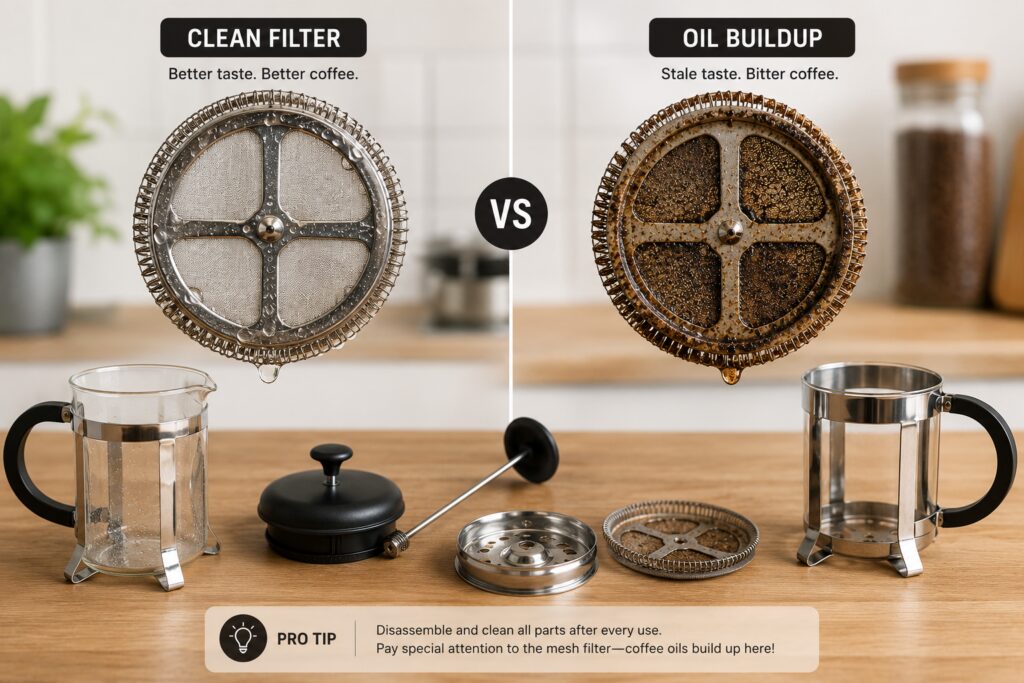
The cafetière (French press) has the simplest cleaning routine but the most consistently neglected. Specifically, residual oils trapped in the metal mesh filter are the biggest culprit for stale-tasting cafetière coffee.
After every use
- Empty the grounds immediately (don’t let them sit in the cafetière).
- Rinse thoroughly with hot water.
- Disassemble the plunger (most modern cafetières unscrew) and rinse all parts.
Weekly
- Soak the disassembled plunger in hot soapy water for 10 minutes. Specifically, focus on the mesh filter where oil builds up.
- Scrub the mesh filter with a soft brush to remove trapped fines.
Monthly
- Deep clean with a solution of warm water and bicarbonate of soda. Furthermore, this removes any stubborn coffee residue from the glass.
- Replace the mesh filter if it’s damaged or warped.
How Often to Clean a Moka Pot
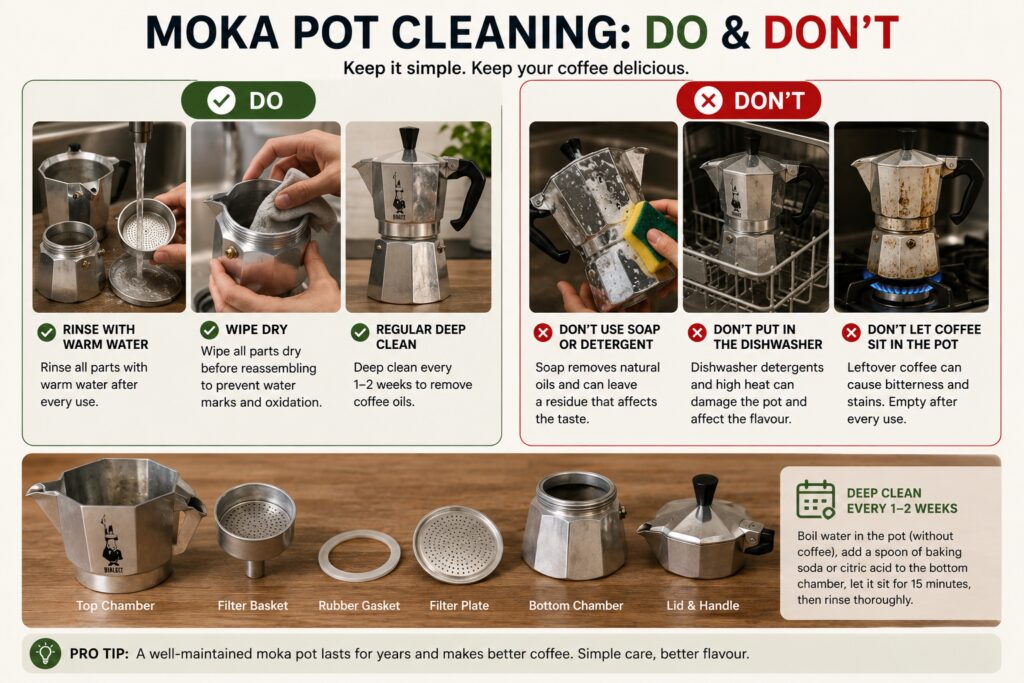
Moka pots (Bialetti and similar) have a specific quirk: never use soap. Specifically, soap damages the natural “seasoning” that builds up over time and gives the moka pot its characteristic flavour.
After every use
- Disassemble the three chambers (base, basket, top).
- Rinse with hot water only. Specifically, no soap, no scrubbing pads.
- Dry thoroughly before reassembling. Furthermore, this prevents rust on aluminium models.
Monthly
- Check the rubber gasket for wear. By the way, replace it once a year or sooner if it’s cracked.
- Check the safety valve isn’t blocked by coffee residue.
Annually
- Replace the rubber gasket and the filter plate.
What about stains?
The brown discoloration that builds up inside is the seasoning — leave it alone. Specifically, that’s what makes moka pot coffee taste better over time. Furthermore, only deep-clean (with a baking soda paste, no scrubbing) if the moka pot has been unused for months and started to smell stale.
How Often to Clean an AeroPress, V60, or Chemex
Paper-filter brewers are the easiest to maintain. Specifically, the paper does most of the cleaning work — coffee grounds and oils stay in the filter, not the brewer.
After every use
- Discard the paper filter and grounds.
- Rinse the brewer with hot water.
Weekly
- Wash with warm soapy water, paying attention to internal ridges and edges.
- For AeroPress: Specifically remove the seal and clean both sides.
Yearly
- Replace the AeroPress rubber seal if it’s hardened or cracked.
How Often to Clean a Coffee Grinder
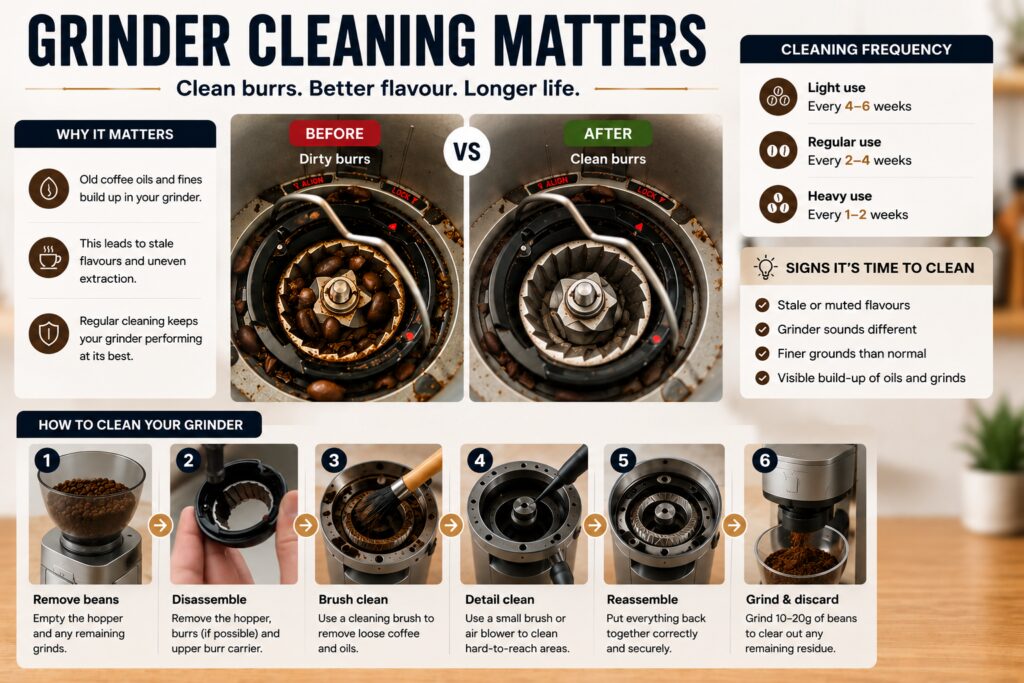
This is the most underrated cleaning task. Specifically, ground coffee oils build up on grinder burrs and go rancid quickly. As a result, an uncleaned grinder adds stale flavour to every fresh batch of beans.
Weekly
- Brush out the grinder chute with a stiff brush.
- Wipe the bean hopper with a dry cloth.
Monthly
- Run grinder cleaning tablets through the burrs (Urnex Grindz or similar). Specifically, this absorbs oil buildup.
- Disassemble the burrs if possible and brush them thoroughly.
UK Hard-Water Areas: Clean More Often
If you live in a hard-water area, your machine needs descaling more frequently. Specifically, UK hard-water areas include:
- London (very hard)
- Cambridge and East Anglia (very hard)
- South East England (hard)
- Midlands (hard)
- Most of Southern England (hard to moderate)
By contrast, soft-water areas include most of Scotland, Wales, the Lake District, and Cornwall.
For hard-water areas specifically
- Descale espresso machines monthly if you’re using unfiltered water
- Descale pod machines every 6–8 weeks instead of every 2–3 months
- Consider a water filter jug for brewing water — specifically Brita, which reduces hardness and removes chlorine
- For espresso enthusiasts: Install an inline water filter or use bottled Volvic for the best taste and minimal limescale
Above all, hard water is the silent killer of espresso machines. Furthermore, descaling regularly saves your machine and your coffee.

Frequently Asked Questions
How often should I clean my coffee machine?
The frequency depends on the type. Specifically, espresso machines need backflushing weekly and descaling monthly. Bean-to-cup machines need the brew unit cleaned weekly. Pod machines need descaling every 2–3 months. Cafetières and moka pots should be rinsed after every use. Furthermore, in UK hard-water areas, descale more frequently.
What happens if I don’t clean my coffee machine?
Three things, none of them good. Specifically, old coffee oils go rancid and add bitter, stale flavour to every fresh cup. Furthermore, limescale builds up inside, interfering with brewing temperature and damaging heating elements. Above all, your coffee will taste worse and your machine’s lifespan will shorten by years.
How often should I descale my coffee machine in London?
London tap water is very hard. Specifically, descale espresso machines monthly if you’re using unfiltered water, and pod machines every 6–8 weeks. Furthermore, using filtered water reduces limescale buildup significantly and can extend the time between descales.
Can I use vinegar to descale my coffee machine?
You can, but it’s not ideal. Specifically, white vinegar works but the smell takes many rinse cycles to remove. Furthermore, proprietary descalers (citric-acid-based) work just as well and don’t leave residue. By the way, some manufacturers void warranties if you use vinegar — check your machine’s manual first.
How do I clean a Sage Barista Express?
Daily: knock the puck, rinse the portafilter, wipe the steam wand. Specifically, weekly: backflush with cleaning tablets, deep-clean the steam wand. Furthermore, monthly: descale and clean the grinder burrs. Above all, run the cleaning cycle when the machine asks.
How often should I clean my Nespresso machine?
Empty the pod container when it’s half full, wipe the drip tray weekly, and descale every 2–3 months. Specifically, in UK hard-water areas, descale every 6–8 weeks instead. Furthermore, never ignore the descale warning light.
Do cafetières need descaling?
No — cafetières don’t have heating elements or internal pipes where limescale builds up. Specifically, they just need rinsing after each use and a weekly soapy wash. Furthermore, the only cleaning challenge is removing coffee oils trapped in the mesh filter.
Where can I buy speciality coffee that deserves a clean machine?
The Coffee Twins — we roast all our coffee in England. Specifically, our 8-coffee range covers every brewer type. £9.50 / 250g, free UK shipping over £30. Use NEW10 for 10% off your first order. Above all, a clean machine + fresh beans = the best home coffee you can make.
Summary
How often you should clean your coffee machine depends on the type:
- Espresso machine: Daily wipe; weekly backflush; monthly descale
- Bean-to-cup machine: Daily empty; weekly brew unit clean; monthly descale
- Pod machine: Weekly wipe; descale every 2–3 months
- Cafetière: Rinse after each use; weekly soapy clean
- Moka pot: Rinse only (no soap); replace gasket annually
- V60/AeroPress/Chemex: Rinse after each use; weekly soapy clean
- Grinder: Weekly brush; monthly cleaning tablets
Furthermore, in UK hard-water areas (London, Cambridge, South East), descale monthly if you’re using unfiltered water.
Above all, a clean machine matters as much as fresh beans. Specifically, even our best coffees will taste bitter through a neglected machine. As a result, regular cleaning is the simplest, cheapest upgrade you can make to your home coffee.
Enjoying this article?
If you find our coffee guides useful, you can add The Coffee Twins as a preferred source in Google so our latest articles are easier to find in your search results.
Add The Coffee Twins as a preferred source on Google →
Thanks for supporting our little coffee corner of the internet.



0 Comments